🔒 Locs are a natural, culturally respectful hairstyle, while dreads (dreadlocks) can sometimes carry negative or misunderstood meanings ⚖️
A few years ago, I met two friends at a salon. One said she had “locs,” while the other proudly called her hair “dreads.” At first, I thought they were the same. But as they talked, I learned there is a clear difference between locs and dreads.
The difference between locs and dreads is not only about hair style, but also about culture, meaning, and care. Many people use both words the same way, but the difference between locs and dreads matters to those who wear them.
If you understand the difference between locs and dreads, you can speak with respect and clarity. This guide will explain the difference between locs and dreads in a very simple way.
Key Difference Between the Both
The main difference is simple:
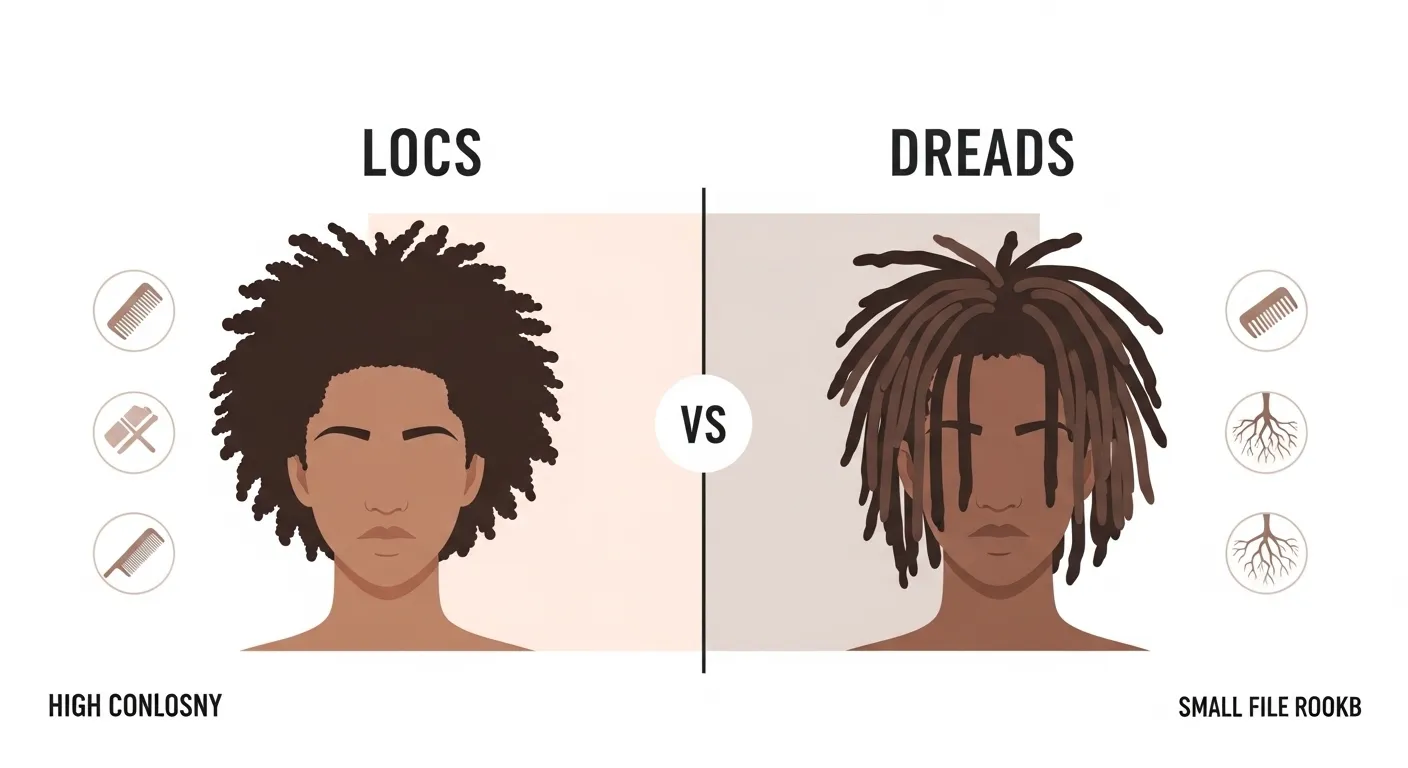
Locs is a respectful and modern term for rope-like hair, while dreads (dreadlocks) has older roots and can carry negative meaning.
Why Is Their Difference Important in Society?
Knowing the difference helps people show respect. Hair is part of identity and culture. Some people feel proud of their locs. Others may not like the word “dreads” because of its past meaning. Learners and experts both need to use the right words. This builds respect in schools, workplaces, and daily life. It also helps avoid offense and confusion.
Pronunciation
- Locs
- US: /lɑːks/
- UK: /lɒks/
- Dreads (Dreadlocks)
- US: /drɛdz/
- UK: /drɛdz/
Linking Hook
Now that you know the basics, let’s explore the difference between locs and dreads in detail.
Difference Between Locs and Dreads
1. Meaning
Locs are simply matted strands of hair formed naturally or by twisting.
Dreads come from “dreadlocks,” which once meant “fearful hair.”
Examples:
- She started her locs for a clean look.
- His locs are neat and even.
- Some people avoid saying dreads.
- The term dreads has a long history.
2. Tone
Locs have a positive or neutral tone.
Dreads may sound negative to some people.
Examples:
- She loves her locs and feels proud.
- Locs are common in modern fashion.
- Some feel “dreads” sounds harsh.
- Others still use the word dreads daily.
3. Cultural Respect
Locs show respect to African heritage.
Dreads may not always feel respectful.
Examples:
- Locs honor culture and identity.
- Many people prefer the word locs today.
- Some avoid the word dreads in formal talk.
- Dreads can cause debate in society.
4. Usage Today
Locs is more common in modern speech.
Dreads is less used in formal settings.
Examples:
- Stylists say “locs” in salons.
- Social media uses “locs” more.
- Some still say dreads casually.
- Old texts use dreadlocks often.
5. Formation
Locs are formed by twisting, braiding, or natural growth.
Dreads also form the same way, but the name differs.
Examples:
- She twisted her locs weekly.
- His locs formed naturally over time.
- Dreads can grow without styling.
- Some use wax for dreads.
6. Style
Locs can be styled in many ways.
Dreads are often seen as rough or free.
Examples:
- She tied her locs in a bun.
- Locs can be colored and cut.
- Dreads may look wild or thick.
- Some like the natural dread style.
7. Perception
Locs are seen as clean and modern.
Dreads may be seen as old or messy.
Examples:
- Locs look neat in offices.
- Many professionals wear locs now.
- Some think dreads are messy.
- Others love the natural dread look.
8. History
Locs is a newer term.
Dreads has older roots linked to fear.
Examples:
- Locs became popular in recent years.
- The word locs is more positive.
- Dreads comes from “dreadlocks.”
- The word has a long past.
9. Personal Choice
People choose locs for identity.
Some still choose the word dreads.
Examples:
- She prefers to say locs.
- He feels locs reflect his style.
- Some proudly say dreads.
- Others reject the term dreads.
10. Social Impact
Locs help promote respect and pride.
Dreads can create mixed feelings.
Examples:
- Locs are accepted in many jobs.
- Locs show cultural pride.
- Dreads may cause debate.
- Some avoid the word in public.
Nature and Behaviour
Locs:
Locs are neat, controlled, and flexible. They can be styled, washed, and shaped easily. People maintain them with care.
Dreads:
Dreads are often seen as free, natural, and less controlled. They may grow without much styling.
Why People Get Confused Between Locs and Dreads
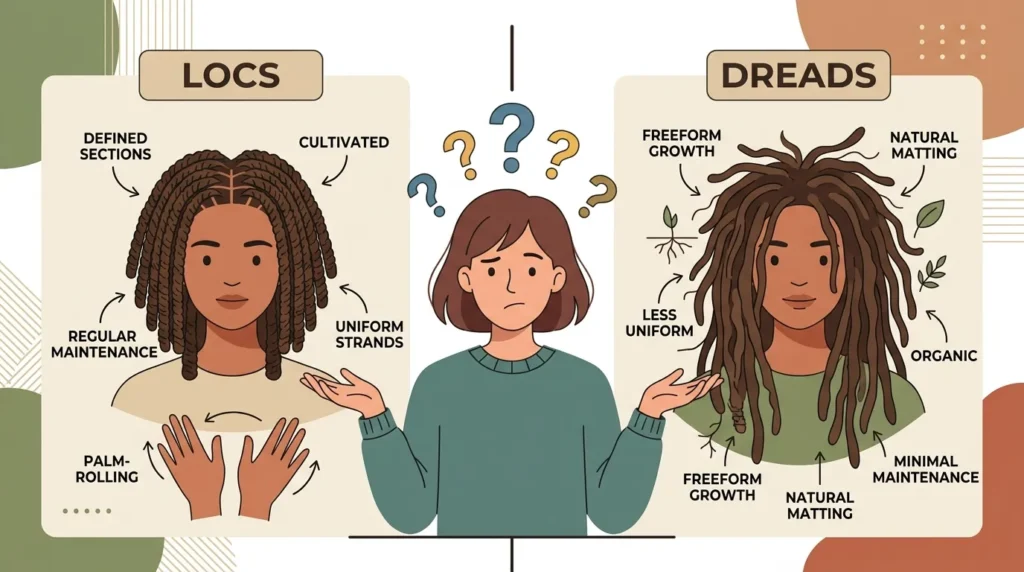
Many people think locs and dreads are the same. Both look alike. Both form in similar ways. Media and daily speech mix the terms. Also, not everyone knows the history behind the words. This causes confusion.
Difference and Similarity
| Feature | Locs | Dreads | Similarity |
| Meaning | Neutral | Can be negative | Both are hair styles |
| Tone | Positive | Mixed | Both used in speech |
| Culture | Respectful | Debated | Linked to heritage |
| Style | Neat | Natural | Same structure |
| Formation | Twisting | Same method | Hair locking |
Which Is Better in What Situation?
Locs:
Locs are better in formal and social settings. They show respect and awareness. In schools, offices, and public talks, “locs” is the safer word. It avoids offense and sounds modern. Many people feel proud using this term.
Dreads:
Dreads may be used in casual talk or personal choice. Some people still like the word and feel connected to it. It depends on comfort and belief. But in formal use, it is better to be careful.
Use in Metaphors and Similes
- “Her locs flowed like ropes of silk.”
- “His locs stood strong like roots of a tree.”
- “His dreads moved like wild waves.”
- “Her dreads looked like tangled vines.”
Connotative Meaning
Locs:
- Positive: Pride, beauty, identity
- Neutral: Hairstyle
Examples:
- Her locs show strength.
- Locs are part of her identity.
Dreads:
- Negative: Fear, roughness
- Neutral: Hair style
Examples:
- Some think dreads look rough.
- He uses the word dreads casually.
Idioms or Proverbs
There are no direct idioms for locs or dreads, but similar ideas exist:
- “Wear your crown with pride.”
Example: She wears her locs like a crown. - “Be true to yourself.”
Example: He keeps his dreads to stay true.
Works in Literature
- “Hair Story: Untangling the Roots of Black Hair in America” – Non-fiction, Ayana Byrd, 2001
- “Twisted: My Dreadlock Chronicles” – Memoir, Bert Ashe, 2015
Movies Related to the Keywords
- Dreadlocks Story – 2014, USA
- Good Hair – 2009, USA
FAQs
1. Are locs and dreads the same?
They look the same, but the meaning and tone differ.
2. Which term is more respectful?
Locs is more respectful.
3. Can I use both words?
Yes, but be aware of context.
4. Do they form differently?
No, both form in similar ways.
5. Why do people prefer locs?
Because it sounds positive and respectful.
How Are Both Useful for Surroundings?
Locs and dreads help express identity. They promote diversity and culture. They also teach others about respect and history. In society, they help people learn acceptance and beauty in different forms.
Final Words for Both
Locs and dreads are more than hair. They carry meaning, history, and identity. Choosing the right word shows awareness and respect.
Conclusion
The difference between locs and dreads is simple but important. Both refer to the same hairstyle, but the words carry different meanings and feelings. Locs is modern, respectful, and widely accepted. Dreads has older roots and may sound negative to some people. By understanding the difference between locs and dreads, we can speak more clearly and respectfully. Language matters, especially when it connects to culture and identity. Always choose words that show respect and understanding. This small change can make a big difference in society.
Read more about!
Difference Between Liquor and Liqueur: Complete Guide
Difference Between Octopus and Squid: Simple Guide

I am James Carter, a professional content writer from the United States. I specialize in writing simple and clear comparison blogs that help students and readers understand difficult topics easily. My writing focuses on everyday language, education, science, and lifestyle topics. I believe that learning should be easy for everyone, so I use simple words and real-life examples in my articles.