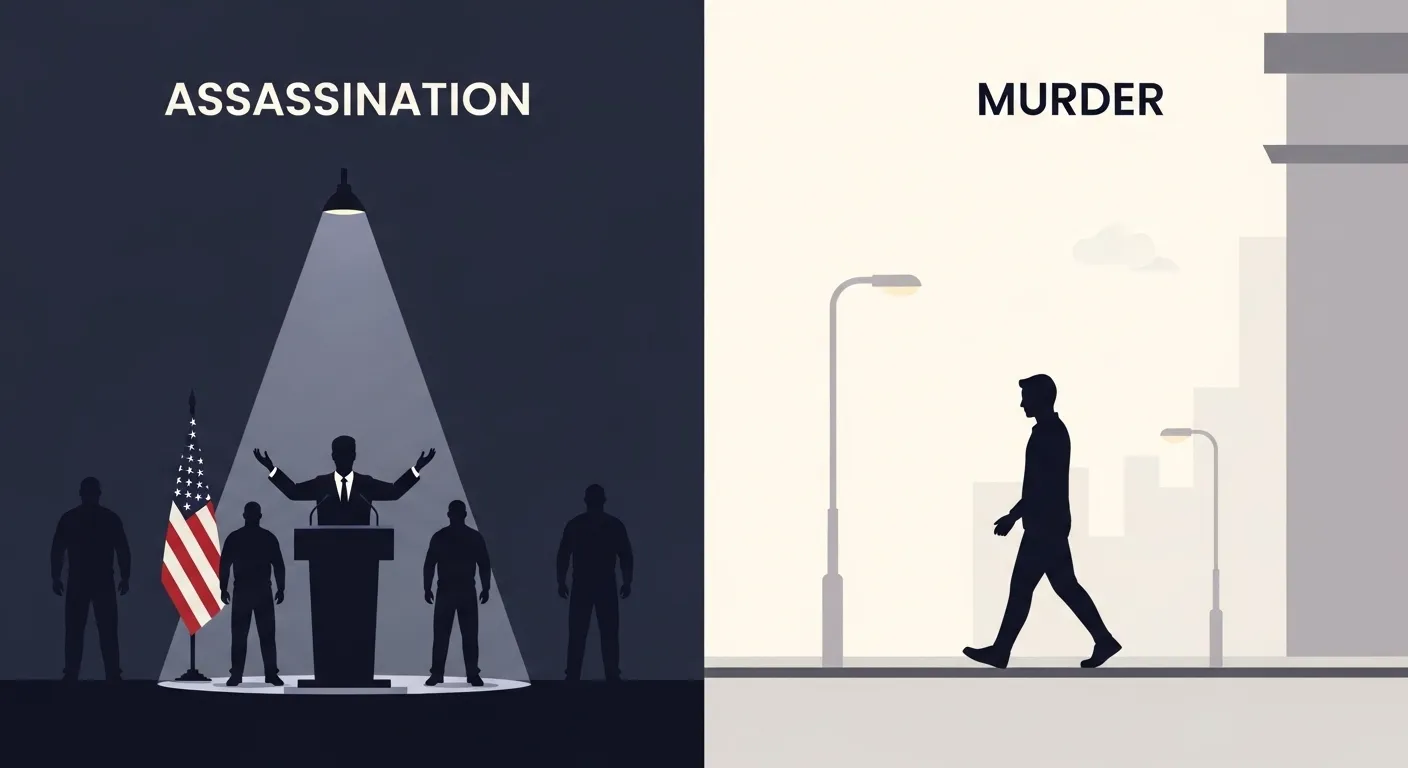
The difference between assassination and murder is that assassination is the targeted killing of an important or public figure, while murder is the unlawful killing of any person.
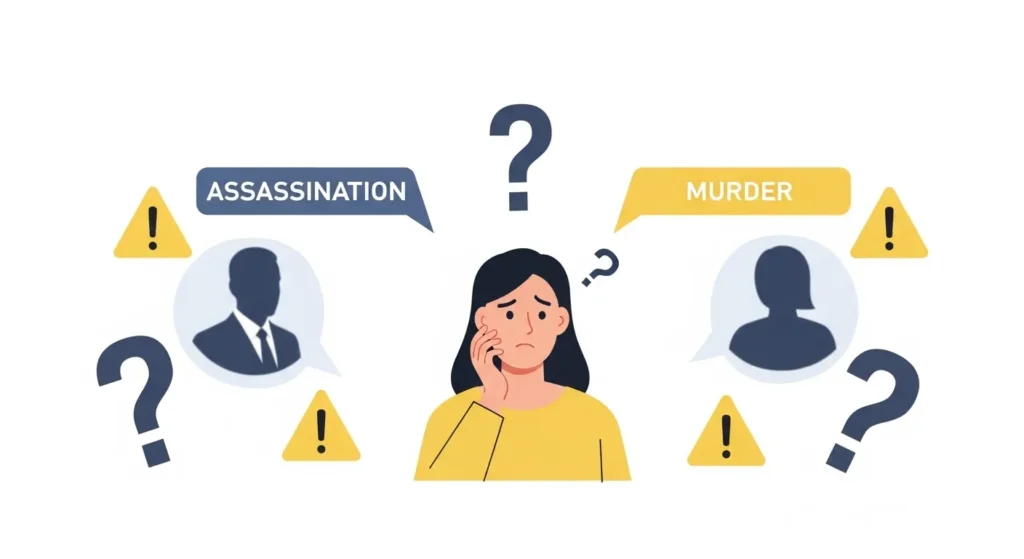
Many people get confused when they hear the term difference between assassination and murder, especially in news, crime reports, or political discussions.
At first glance, both look similar because they involve the unlawful killing of a person. However, the difference between assassination and murder is deeper and depends on intent, target, and context.
In simple words, murder is a general unlawful killing of a person, while assassination is a targeted and often politically motivated killing.
If you search this topic on platforms like Google or see news coverage on YouTube, you will notice both terms used differently depending on context.
In this guide, you’ll clearly understand the difference between assassination and murder, how they work in law, real-life examples, why people confuse them, and how experts define them.
Difference Between Assassination and Murder
The difference between assassination and murder is that assassination is a planned killing of a specific important person (often political or public figure), while murder is the illegal killing of any person without legal justification.
👉 Example: Killing a president is assassination, but killing a random person in a conflict is murder.
Definition of Assassination and Murder
- Assassination: The deliberate killing of a prominent or important person, usually for political, ideological, or strategic reasons.
- Murder: The unlawful killing of any human being with intent or malice, without legal justification.
Pronunciation
- Assassination: /əˌsæsɪˈneɪʃən/
- Murder: /ˈmɜːrdər/ (US), /ˈmɜːdə/ (UK)
Now let’s understand the deeper logic behind both terms.
Comparison: Assassination vs Murder
| Feature | Assassination | Murder |
| Meaning | Targeted killing of a public figure | Unlawful killing of any person |
| Intent | Political or ideological motive | Personal, emotional, or criminal motive |
| Target | Important individuals (leaders, officials) | Any individual |
| Planning | Highly planned | Can be planned or spontaneous |
| Legal Focus | Often treated as aggravated crime | General criminal offense |
| Media Usage | Political news term | General crime term |
| Example | Killing a president | Killing a neighbor |
Key Differences Explained Between Assassination and Murder
1. Type of Target
Assassination focuses on high-profile individuals.
👉 Example: Killing a political leader is assassination.
2. Motivation
Assassination is often political or ideological, while murder is usually personal or emotional.
3. Planning Level
Assassinations are usually carefully planned and executed. Murder may happen suddenly.
4. Public Impact
Assassinations often change political systems or create global attention.
5. Legal Interpretation
Law treats assassination as a severe form of murder but with added political context.
6. Media Usage
News platforms like Meta and Google often label political killings as assassination for clarity.
What is Assassination and How Does It Work?
Assassination is a strategic elimination of a specific target, usually for political or ideological reasons.
In real-world scenarios:
- Political conflicts
- Terror-related activities
- Historical regime changes
👉 Example: The assassination of world leaders often leads to global political shifts.
What is Murder and Why Does It Happen?
Murder is the illegal killing of any person, driven by motives like:
- Personal revenge
- Financial conflict
- Emotional instability
👉 Example: A domestic dispute turning into a fatal incident.
Why Does the Difference Between Assassination and Murder Exist?
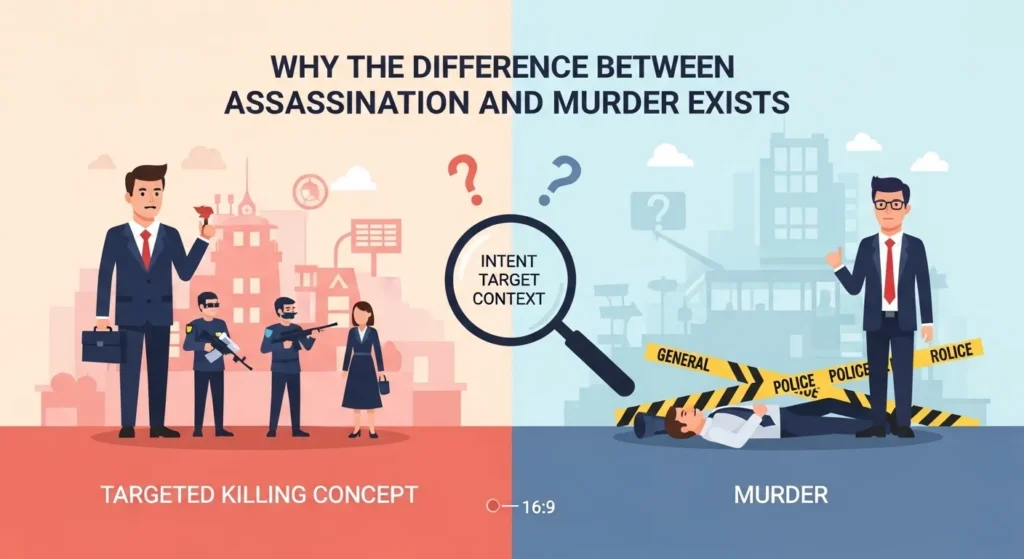
This distinction exists to:
- Classify crime severity
- Understand political impact
- Help law enforcement and media reporting
Without this distinction, all killings would be treated the same, which would create legal confusion.
Where Are These Terms Used in Real Life?
Assassination Usage
- Political news reporting
- Historical events
- Security analysis
Murder Usage
- Criminal law cases
- Police reports
- Court trials
👉 Platforms like YouTube often categorize content differently based on these terms.
Difference and Similarity: Assassination vs Murder
| Feature | Assassination | Murder | Similarity |
| Nature | Targeted killing | General killing | Both are unlawful killings |
| Intent | Political motive | Personal/criminal motive | Both involve intent |
| Victim Type | Public figure | Any person | Both affect humans |
| Planning | Highly strategic | Varies | Both may involve planning |
| Legal Status | Severe crime category | Criminal offense | Both are illegal |
| Impact | Political/global | Personal/local | Both cause harm |
| Media Usage | Specialized term | General term | Both used in reporting |
👉 This table clearly shows the difference and similarity between assassination and murder for quick understanding.
Common Mistakes with Assassination and Murder
1. Thinking Both Mean Same Thing
❌ Mistake: Treating them as identical
✔ Fix: Understand target and motive difference
2. Ignoring Political Context
Assassination always involves higher-level impact
3. Misusing in Media Language
Not all killings in news are assassination
4. Confusing Legal Terms
Law defines them differently based on intent
Real Life Examples
- Political Scenario:
A leader killed during election period → assassination - Criminal Case:
A robbery turning fatal → murder - Historical Example:
Famous leaders killed in wars → assassination - Media Reporting:
News channels classify based on importance
When to Use Each Term
Use assassination when:
- Target is a public/political figure
- Killing is planned and symbolic
Use murder when:
- Any unlawful killing occurs
- No political context exists
Why People Get Confused Between Assassination and Murder
- Both involve killing
- Media uses terms interchangeably
- Lack of legal knowledge
- Emotional reporting in news platforms like Google
How Search Engines Understand This Topic
Search engines like Google analyze:
- User intent (legal vs informational)
- Query structure (“what is assassination”)
- Context from news and law pages
Video platforms like YouTube help users visually understand historical cases, improving engagement signals.
Expert Insight
In legal interpretation, assassination is considered a subcategory of murder with political weight, but not every murder qualifies as assassination.
In professional criminology studies, experts classify crimes based on intent, victim status, and impact level. This classification helps law enforcement agencies and global media maintain clarity in reporting.
FAQs
1. What is the main difference between assassination and murder?
Assassination targets important figures; murder is general killing.
2. Is assassination a type of murder?
Yes, but with political or strategic intent.
3. Can any murder be called assassination?
No, only high-profile targeted killings.
4. Why is assassination more serious?
Because it affects political or public systems.
5. Is murder always personal?
Usually yes, but not always.
6. Do laws treat them differently?
Yes, assassination often has enhanced legal penalties.
7. Why do media use assassination term?
To highlight political importance.
8. Can assassination be legal?
No, it is always illegal.
Conclusion
The difference between assassination and murder becomes clear when we understand intent, target, and impact. Murder refers to any unlawful killing of a person, while assassination is a more specific and politically driven act targeting important individuals.
In real-world understanding, both are serious crimes, but assassination carries a broader social and political impact. Knowing this difference helps in legal awareness, media literacy, and better understanding of global news.
So, the next time you hear the term difference between assassination and murder, remember: one is general crime, the other is targeted political action with wider consequences.
Read more about!
Difference Between Faculty and Staff: Complete Guide
Difference Between Bourbon and Scotch: Complete Guide

I am Emily Johnson, a USA-based content writer who creates easy-to-read blogs on language and daily life topics. I explain complex ideas in simple English for students and beginners so they can understand easily.