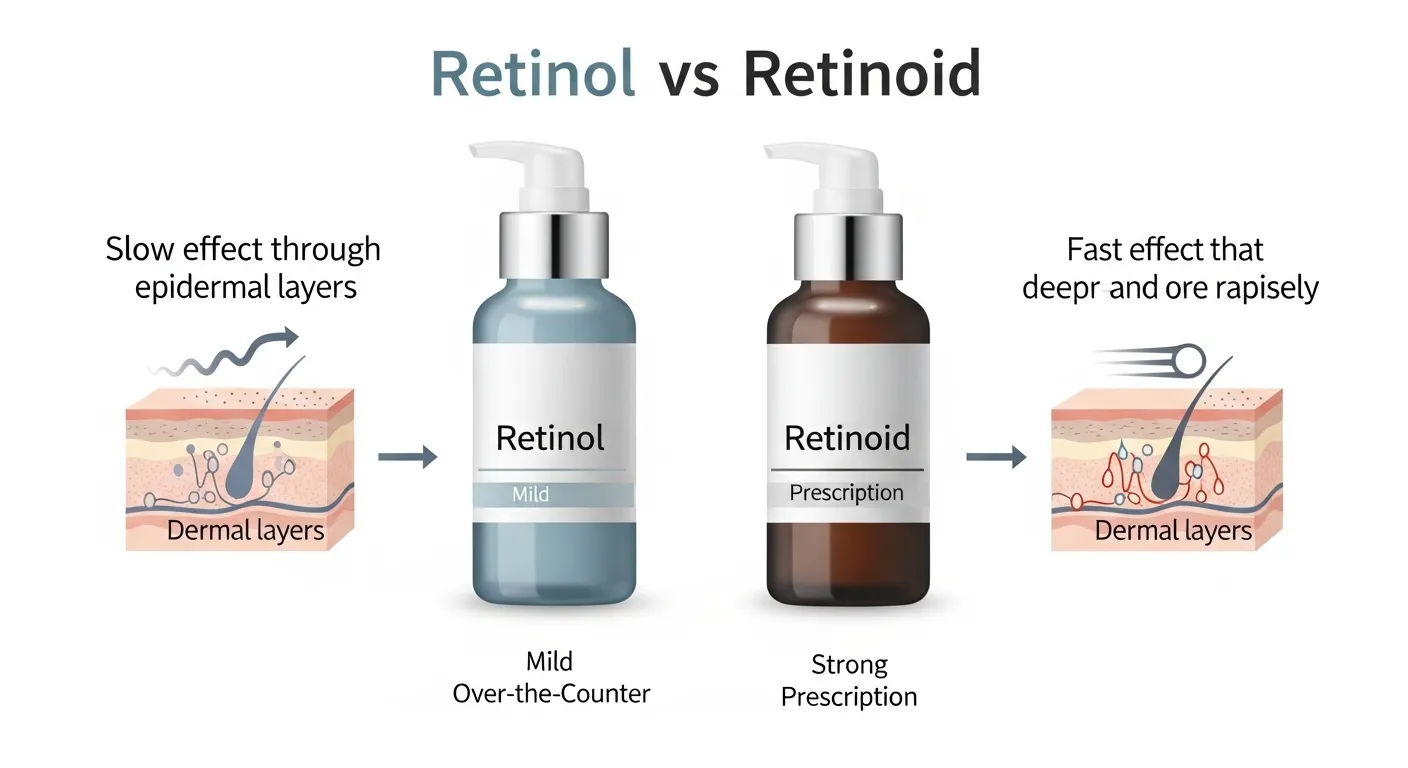
Retinol is a milder, over-the-counter form of retinoid, while retinoids are stronger vitamin A derivatives often used for faster skin results 💊✨
Many skincare users get confused when they hear the difference between retinol and retinoid, especially while shopping on Sephora, Amazon, or dermatologist-recommended skincare brands.
On social platforms like Instagram, TikTok, and YouTube skincare influencers, both terms are often used interchangeably, which creates even more confusion.
In simple words, the difference between retinol and retinoid is about strength and category. Retinoid is the umbrella term for Vitamin A based skincare ingredients, while retinol is a weaker, over-the-counter form of retinoid. Both help with acne, wrinkles, and skin renewal, but they work at different intensities.
In this complete guide, you will learn:
- What retinol is and how it works
- What retinoid means in dermatology
- The difference between retinol and retinoid in skincare science
- Which one is stronger and safer
- How brands like La Roche-Posay, The Ordinary, Neutrogena, and CeraVe use them
- Why dermatologists prefer retinoids for medical treatments
- How Google and YouTube skincare searches categorize these terms
Let’s break it down in a simple, expert, and easy-to-understand way.
🟢Difference Between Retinol and Retinoid
Retinoid is the overall category of Vitamin A skincare ingredients, while retinol is a weaker, over-the-counter form of retinoid used for anti-aging and acne treatment.
👉 Example:
Retinoid (prescription strength) works faster, while retinol (cosmetic strength) works slowly but gently.
🟢 Definition of Retinol and Retinoid
🔹 Retinol:
A mild Vitamin A derivative used in over-the-counter skincare products for anti-aging and acne.
🔹 Retinoid:
A broad class of Vitamin A compounds that includes retinol, tretinoin, adapalene, and stronger prescription treatments.
👉 Simple meaning:
- Retinoid = Family of Vitamin A compounds
- Retinol = One member of that family
🟢 Pronunciation
- Retinol: /ˈrɛtɪnɒl/
- Retinoid: /ˈrɛtɪnɔɪd/
Now let’s explore the difference between retinol and retinoid in detail.
🟢 Comparison: Retinol vs Retinoid
| Feature | Retinol | Retinoid | Similarity |
| Category | Subtype | Parent category | Both are Vitamin A derivatives |
| Strength | Mild | Strong to very strong | Both improve skin health |
| Availability | Over-the-counter | OTC + prescription | Both used in skincare |
| Speed of results | Slow | Faster | Both promote skin renewal |
| Irritation level | Low to moderate | Moderate to high | Both may cause dryness |
| Usage | Daily skincare | Medical treatments | Both treat acne & aging |
| Examples | Retinol creams | Tretinoin, adapalene | Both target skin cells |
👉 This table clearly shows the difference between retinol and retinoid in skincare.
🟢 Key Differences Explained Between Retinol and Retinoid
1. Category Difference
Retinoid is the umbrella term, retinol is a subtype.
👉 Example: All retinols are retinoids, but not all retinoids are retinol.
2. Strength Level
Retinoids include stronger prescription options.
👉 Example: Dermatologists prescribe tretinoin for acne scars.
3. Availability
Retinol is available in cosmetic stores, retinoids often require prescription.
👉 Example: The Ordinary retinol vs prescription tretinoin.
4. Skin Reaction
Retinoids can cause stronger peeling, retinol is gentler.
👉 Example: Beginners prefer retinol to avoid irritation.
5. Speed of Results
Retinoids act faster on skin cell turnover.
👉 Example: Acne clears faster with prescription retinoids.
6. Usage Purpose
Retinol is mainly cosmetic, retinoids are medical-grade treatments.
🟢 Why Retinol and Retinoid Exist in Skincare
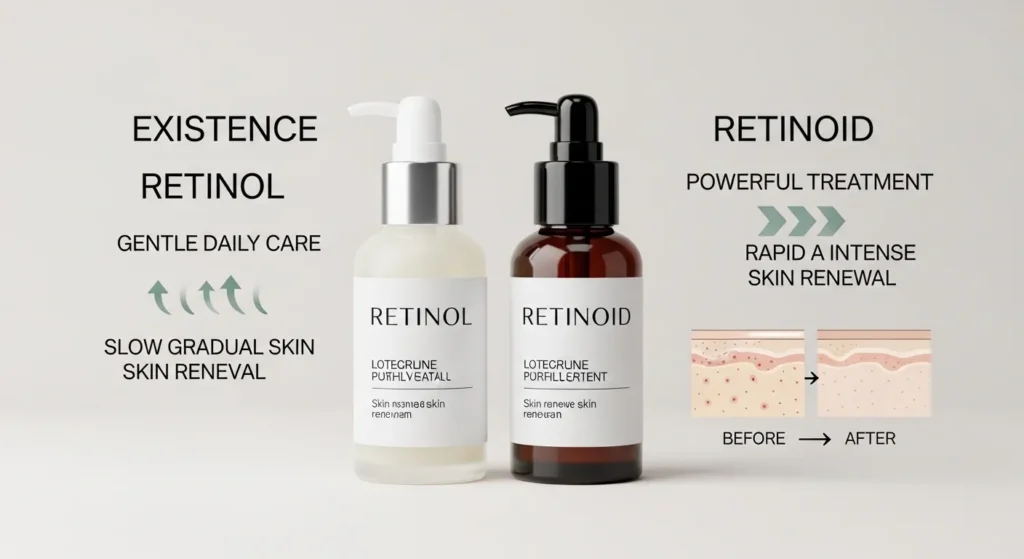
Retinol and retinoids exist because skin aging, acne, and pigmentation require Vitamin A based cell renewal.
According to dermatology studies and global skincare trends on Google Health, WebMD, and Mayo Clinic, Vitamin A compounds help:
- Increase collagen production
- Reduce acne
- Improve skin texture
- Speed up cell turnover
So:
- Retinol = daily skincare solution
- Retinoid = clinical treatment solution
🟢 Real-Life Use of Retinol and Retinoid
🧴 Daily Skincare Routine
- Retinol: Night creams, serums
- Retinoid: Dermatologist prescriptions
💄 Beauty Brands
- Retinol: The Ordinary, Neutrogena, Olay
- Retinoid: Tretinoin, Differin (Adapalene)
🏥 Dermatology Clinics
- Retinoids used for severe acne
- Retinol used for mild aging concerns
🟢 Common Mistakes with Retinol and Retinoid
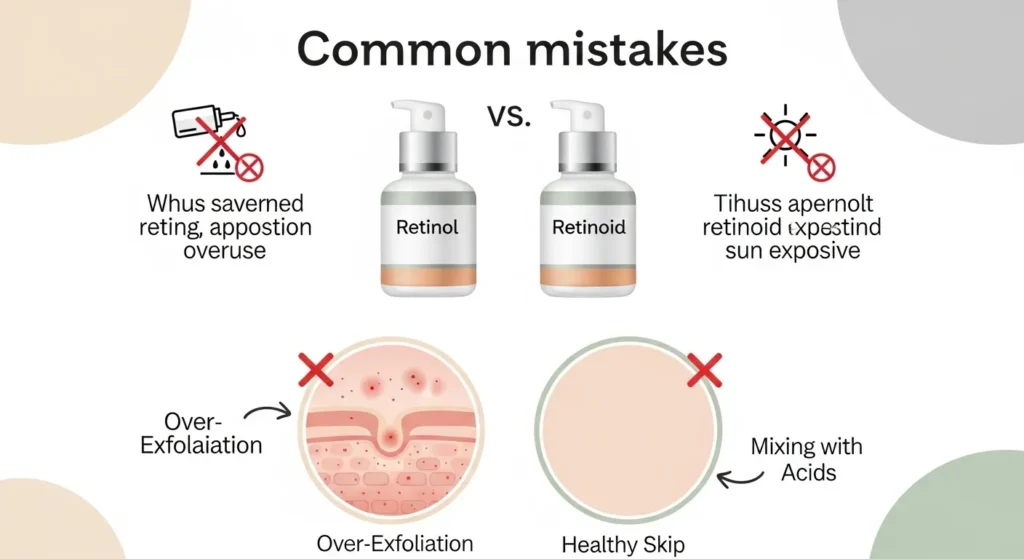
- Thinking both are the same
- Using retinoid without prescription
- Applying too much retinol too fast
- Ignoring skin sensitivity
- Mixing with harsh acids incorrectly
👉 Fix: Always start slow and follow dermatology advice.
🟢 Real Life Examples
- Retinol serum in night skincare routine
- Prescription tretinoin for acne scars
- Anti-aging creams in brands like CeraVe
- Influencer skincare routines on Instagram
- Dermatologist treatment plans
🟢 When to Use Each
- Use retinol for beginners and mild skin issues
- Use retinoids for severe acne or clinical treatment
👉 Simple rule: Retinol = cosmetic care, Retinoid = medical care
🟢 Why People Get Confused
People confuse these terms because:
- Both come from Vitamin A
- Skincare brands use marketing language
- Social media simplifies explanations
- Packaging often doesn’t clarify strength
🟢 How Search Engines Understand Retinol vs Retinoid
Google and AI systems like Google Health Knowledge Graph analyze:
- skincare intent
- dermatology-related queries
- product comparison behavior
Example:
- “retinol cream” → cosmetic intent
- “retinoid for acne” → medical intent
Platforms like YouTube skincare channels also shape user understanding.
🟢 Expert Insight
From a dermatology perspective, retinoids are clinically active molecules that directly influence gene expression in skin cells, while retinol acts as a precursor that converts slowly into active retinoic acid.
In real clinical practice, dermatologists adjust strength based on skin tolerance, age, and acne severity. This is why both retinol and retinoids coexist in skincare medicine.
🟢 FAQs
1. What is the main difference between retinol and retinoid?
Retinoid is the category, retinol is a mild form.
2. Is retinol stronger than retinoid?
No, retinoids are stronger.
3. Can I use retinol daily?
Yes, but start slowly.
4. Do retinoids require prescription?
Some stronger ones do.
5. Which is better for beginners?
Retinol is better.
6. Does retinol remove wrinkles?
Yes, gradually over time.
7. Is retinoid good for acne?
Yes, very effective.
8. Can both be used together?
No, it’s not recommended.
🟢 Conclusion
The difference between retinol and retinoid is essential for anyone serious about skincare. Retinoid is the broader category of Vitamin A derivatives, while retinol is a milder, cosmetic form used in everyday skincare products.
In real skincare routines, retinol is ideal for beginners who want anti-aging benefits with minimal irritation. Retinoids, on the other hand, are stronger and used in dermatology for treating acne, pigmentation, and advanced skin concerns.
Understanding the difference between retinol and retinoid helps you choose the right product based on your skin type, goals, and tolerance level. If you are following a skincare routine influenced by Instagram beauty trends or dermatologist advice, this knowledge helps you avoid mistakes and get better results.
In short: retinol = gentle skincare, retinoid = powerful treatment.
Read more about!
Difference Between Kayak and Canoe: Simple Guide
Difference Between Urban and Suburban: Complete Guide

I am James Carter, a professional content writer from the United States. I specialize in writing simple and clear comparison blogs that help students and readers understand difficult topics easily. My writing focuses on everyday language, education, science, and lifestyle topics. I believe that learning should be easy for everyone, so I use simple words and real-life examples in my articles.