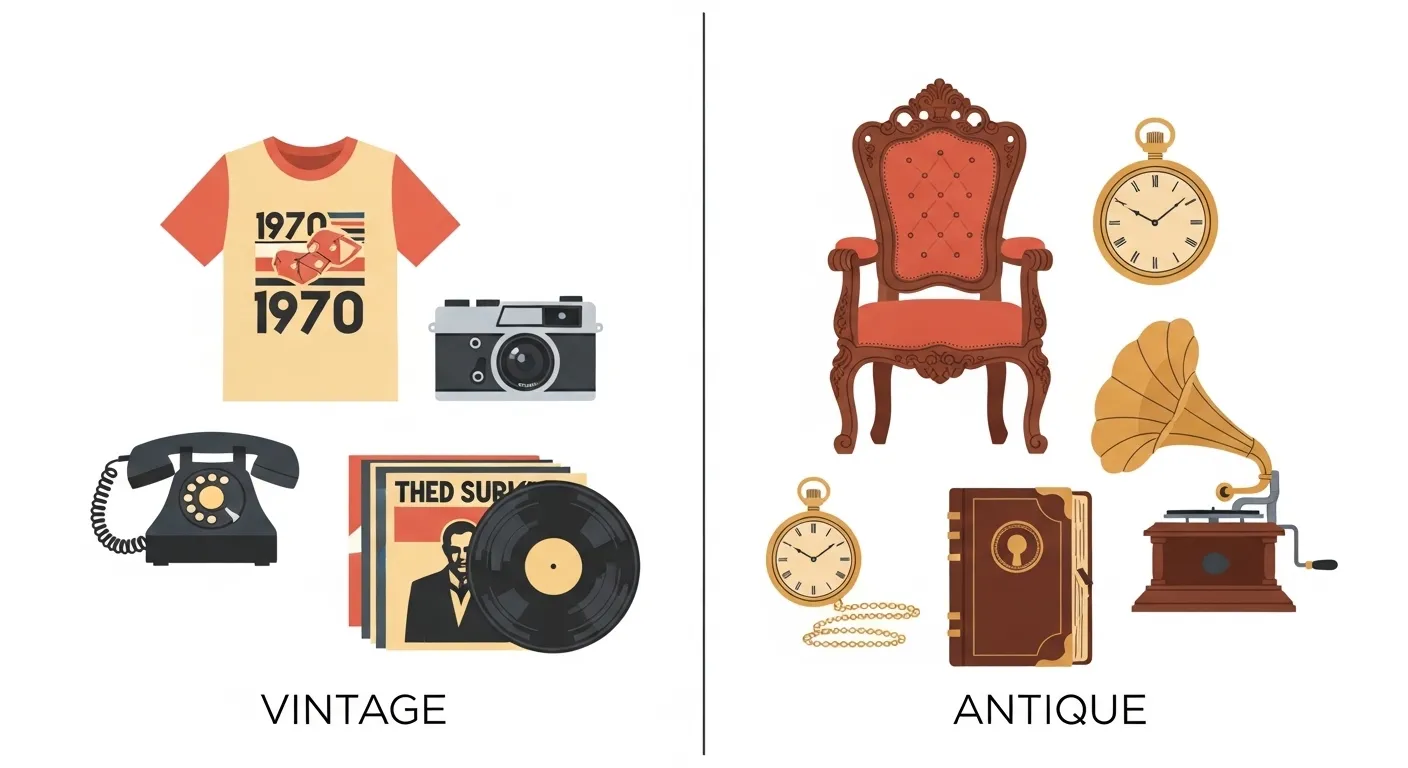
The difference between vintage and antique is that vintage items are 20-99 years old, while antique items are over 100 years old.
Many users get confused when they hear difference between vintage and antique especially while shopping, collecting, or browsing online. In simple words, both terms describe old items, but they are not the same. The difference between vintage and antique mainly comes down to age, value, and historical relevance.
If you’ve ever searched on Google or explored decor ideas on Instagram, you’ve likely seen both terms used interchangeably which adds to the confusion.
In this guide, you’ll clearly understand the difference between vintage and antique, how each term works, where they are used, and how to identify them in real life.
Difference Between Vintage and Antique
The difference between vintage and antique is simple:
- Antique items are 100+ years old
- Vintage items are 20–99 years old
👉 Example: A chair from 1920 is antique, while a jacket from 1980 is vintage.
Definition of Difference Between Vintage and Antique
- Vintage: Items that are 20 to 99 years old, often representing a specific style or era (e.g., 1980s fashion).
- Antique: Items that are at least 100 years old, often valuable due to age, rarity, and historical significance.
Pronunciation
- Vintage: /ˈvɪn.tɪdʒ/ (US & UK similar)
- Antique: /ænˈtiːk/ (US), /ænˈtiːk/ (UK)
Now that pronunciation is clear, let’s understand the concept deeply.
Comparison: Vintage vs Antique
| Feature | Vintage | Antique |
| Age | 20–99 years old | 100+ years old |
| Value | Moderate to high | Usually high |
| Rarity | Sometimes rare | Often rare |
| Usage | Fashion, decor, cars | Collectibles, furniture |
| Historical Importance | Style-based | Time-based significance |
| Market Demand | Trend-driven | Collector-driven |
| Condition | Can vary widely | Often preserved/restored |
| Example | 1970s dress | 1800s table |
Key Differences Explained Between Vintage and Antique
1. Age Difference
Vintage items are newer compared to antiques.
👉 Example: A 1990 watch is vintage, not antique.
2. Value Factor
Antiques usually hold higher value due to rarity.
👉 Example: An antique painting may sell for thousands.
3. Historical Importance
Antiques are tied to history. Vintage is more about style.
4. Usage Context
Vintage is common in fashion and cars. Antiques are common in furniture and collectibles.
5. Market Behavior
Vintage trends change quickly (especially on platforms like Instagram).
Antiques remain stable in value.
6. Condition Expectations
Vintage items can be used casually. Antiques are often preserved carefully.
What is Vintage and How Does It Work?
Vintage refers to items from a specific era that reflect style and trends.
In real scenarios, vintage is heavily used in:
- Fashion industry
- Photography aesthetics
- Car collections
Many users search “what is vintage clothing” on Google because trends keep coming back.
👉 Insight: Vintage is more about style revival than just age.
What is Antique and Why Does It Matter?
Antique items are valuable because they are historical artifacts.
They matter because:
- They show craftsmanship from the past
- They hold cultural value
- They are often rare
👉 Example: Antique furniture from the 1800s reflects handmade quality.
Why Does the Difference Between Vintage and Antique Exist?
This difference exists to:
- Classify items by age
- Help buyers understand value
- Create clear market categories
Without this distinction, pricing and authenticity would become confusing.
Where Are Vintage and Antique Used in Real Life?
Vintage Usage
- Clothing brands
- Car collectors
- Interior design trends
Antique Usage
- Auctions
- Museums
- High-end collectors
👉 Real-world example: A vintage jacket may trend on Instagram, while an antique table may appear in an auction listing.
Difference and Similarity Between Vintage and Antique
| Feature | Vintage | Antique | Similarity |
| Meaning | Old but not very old | Very old item | Both refer to old objects |
| Age Range | 20–99 years | 100+ years | Both depend on time |
| Usage | Fashion, decor | Collectibles, history | Both used in lifestyle |
| Value | Style-based value | Age-based value | Both can be expensive |
| Demand | Trend-driven | Collector-driven | Both have markets |
| Condition | Can be used daily | Often preserved | Both need care |
| Popularity | Social media driven | Auction-driven | Both widely recognized |
This table clearly shows the difference and similarity between vintage and antique for quick understanding.
Common Mistakes with Vintage and Antique
1. Calling All Old Items Antique
❌ Mistake: Thinking 50-year-old items are antique
✔ Fix: Check if item is 100+ years old
2. Ignoring Age Verification
Always verify manufacturing year
3. Confusing Style with Age
Vintage = style, Antique = age
4. Overpaying for Vintage
Not all vintage items are valuable
5. Assuming Antiques Are Always Expensive
Some antiques may have low market demand
Real Life Examples with Vintage and Antique
- Personal Use:
Wearing a vintage denim jacket from the 1980s - Home Decor:
Using antique furniture in a luxury home - Business Use:
Selling vintage items on online marketplaces - Collector Scenario:
Buying antique coins for investment - Industry Example:
Interior designers mixing vintage and antique styles
When to Use Each
Use vintage when:
- You want trendy, retro style
- You’re buying fashion or decor
Use antique when:
- You want historical value
- You’re investing or collecting
Why People Get Confused in Difference Between Vintage and Antique
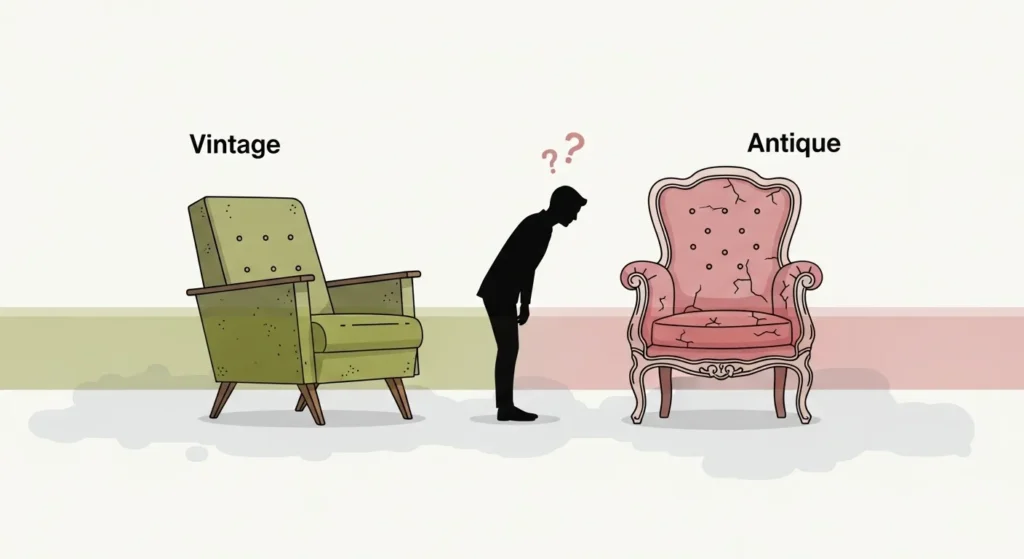
- Both refer to “old items”
- Media uses terms interchangeably
- Lack of knowledge about age rules
- Social platforms like Instagram blur definitions
How Search Engines Understand Difference Between Vintage and Antique

Search engines like Google analyze:
- User intent (comparison vs definition)
- Keyword patterns (“what is vintage”, “antique meaning”)
- Engagement signals
Platforms like YouTube and Meta influence trends by showing visual examples.
👉 Insight: Google ranks content that clearly explains both terms with examples.
Expert Insight
In practical use, most beginners mix up these terms because they focus only on appearance. But professionals like collectors and interior designers always verify age, origin, and context before labeling an item.
In real scenarios, understanding this difference helps avoid overpaying and improves decision-making.
FAQs
1. What is the main difference between vintage and antique?
Antique is 100+ years old, while vintage is 20-99 years old.
2. Is vintage more valuable than antique?
Usually no, antiques are more valuable.
3. Can something be both vintage and antique?
No, they are separate categories based on age.
4. Why is vintage popular today?
Because trends repeat, especially on social media.
5. How do I identify antique items?
Check age, craftsmanship, and materials.
6. Are all antiques expensive?
Not always value depends on rarity and demand.
7. What does vintage style mean?
It refers to designs from past decades.
8. Why do people confuse vintage and antique?
Because both describe old items and are used loosely.
Conclusion
The difference between vintage and antique is clear once you understand the age rule and purpose. Vintage items represent style and trends from the past 20-99 years, while antiques are over 100 years old and carry historical value.
In simple words, vintage is about fashion and nostalgia, while antique is about history and legacy. Understanding this difference helps you make better buying decisions, avoid confusion, and even spot valuable items in real life.
If you’re browsing online, decorating your home, or investing in collectibles, knowing the difference between vintage and antique ensures you stay informed and confident.
Read more about!
Difference Between Duck and Goose: Complete Guide
Difference Between Diffusion and Osmosis: Complete Guide

I am James Carter, a professional content writer from the United States. I specialize in writing simple and clear comparison blogs that help students and readers understand difficult topics easily. My writing focuses on everyday language, education, science, and lifestyle topics. I believe that learning should be easy for everyone, so I use simple words and real-life examples in my articles.