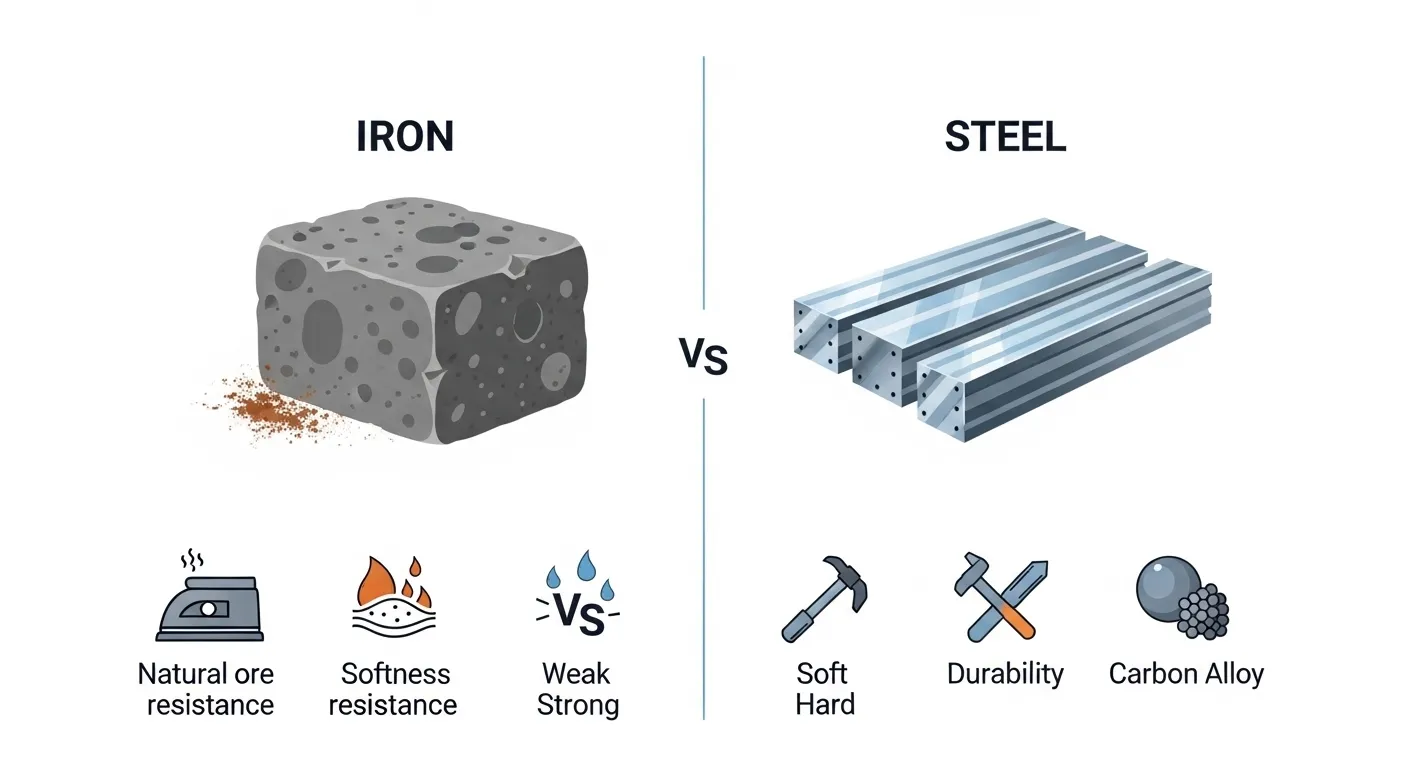
Iron is a natural, soft metal that rusts easily, while iron and carbon combine to form steel, which makes it stronger, more durable, and more resistant to rust. ⚙️
Many students, engineers, and everyday users search for the difference between iron and steel because both materials look similar but behave very differently in real life.
From buildings and bridges to cars and kitchen tools, iron and steel are everywhere around us. Still, most people get confused when trying to understand what is iron, what is steel, and the real difference between iron and steel.
In simple terms, iron is a natural element found in the earth, while steel is a man-made alloy created by mixing iron with carbon and other elements.
This small difference completely changes their strength, durability, and usage. That is why industries like construction, automotive manufacturing, and engineering heavily rely on steel instead of pure iron.
In this detailed guide, you will learn:
- What iron is and how it is formed
- What steel is and why it is stronger
- The difference between iron and steel in real life
- Why steel replaced iron in modern industries
- How companies like Tesla, construction firms, and global engineering industries use steel today
- Why search engines like Google, YouTube, and Meta platforms often show confusion-based queries about these materials
Let’s break it down in a very simple and practical way so you don’t need to read any other article again.
🟢Difference Between Iron and Steel
Iron is a natural metal element that is soft and prone to rust, while steel is an alloy of iron and carbon that is stronger, more durable, and resistant to corrosion.
👉 Example:
Pure iron bends easily, but steel is used to build bridges, cars, and skyscrapers because it is much stronger.
🟢 Definition of Iron and Steel
🔹 Iron:
Iron is a natural chemical element (Fe) found in the earth’s crust and is used as a base metal for making alloys.
🔹 Steel:
Steel is a man-made alloy created by combining iron with carbon (and sometimes other elements) to increase strength and durability.
👉 Simple meaning:
- Iron = Natural raw metal
- Steel = Engineered strong metal
🟢 Pronunciation
- Iron: /ˈaɪ.ərn/
- Steel: /stiːl/
Now let’s understand the difference between iron and steel in detail.
🟢 Comparison: Iron vs Steel
| Feature | Iron | Steel | Similarity |
| Nature | Natural element | Alloy of iron + carbon | Both contain iron |
| Strength | Lower strength | High strength | Both are metals |
| Rust Resistance | Rusts easily | More resistant | Both can corrode |
| Flexibility | Less flexible | More flexible (depending on type) | Both are used in industry |
| Usage | Basic tools | Construction, vehicles | Both used in manufacturing |
| Cost | Cheaper raw metal | More expensive | Both are widely available |
| Durability | Low | High | Both used for structure |
👉 This table clearly shows the difference between iron and steel for quick understanding.
🟢 Key Differences Explained Between Iron and Steel
1. Natural vs Manufactured
Iron is naturally found in the earth, while steel is produced in factories by humans.
👉 Example: Mining iron ore vs producing steel in a blast furnace.
2. Strength Difference
Steel is much stronger than iron because of carbon addition.
👉 Example: Skyscrapers are built with steel, not iron.
3. Rust Resistance
Iron rusts quickly when exposed to moisture, while steel resists rust better.
👉 Example: Old iron gates rust faster than stainless steel gates.
4. Industrial Usage
Iron is mostly used in raw form or simple tools, while steel dominates modern industries.
👉 Example: Cars, ships, and airplanes use steel.
5. Flexibility
Steel can be engineered into different types (soft, hard, stainless), iron is limited in use.
👉 Example: Flexible steel beams in construction.
6. Cost Efficiency
Iron is cheaper but less durable, steel is more costly but long-lasting.
👉 Example: Cheap iron tools vs durable steel machinery.
🟢 Why Iron and Steel Exist Separately in Industry
Iron exists as a base element in nature, but steel exists because industries needed a stronger, more reliable material.
According to engineering studies and industrial systems like Google Knowledge Graph and manufacturing databases, steel was created to overcome iron’s limitations like rusting and low strength.
- Iron = raw material
- Steel = upgraded performance material
🟢 Difference Between Iron and Steel in Real Life
🏗 Construction Industry
- Iron: Small tools, fittings
- Steel: Bridges, skyscrapers
🚗 Automotive Industry
- Iron: Engine parts (old models)
- Steel: Car body, frames
🏠 Home Use
- Iron: Traditional gates
- Steel: Modern furniture
⚙ Engineering Systems
- Iron: Basic machines
- Steel: High-performance machinery
🟢 Common Mistakes with Iron and Steel
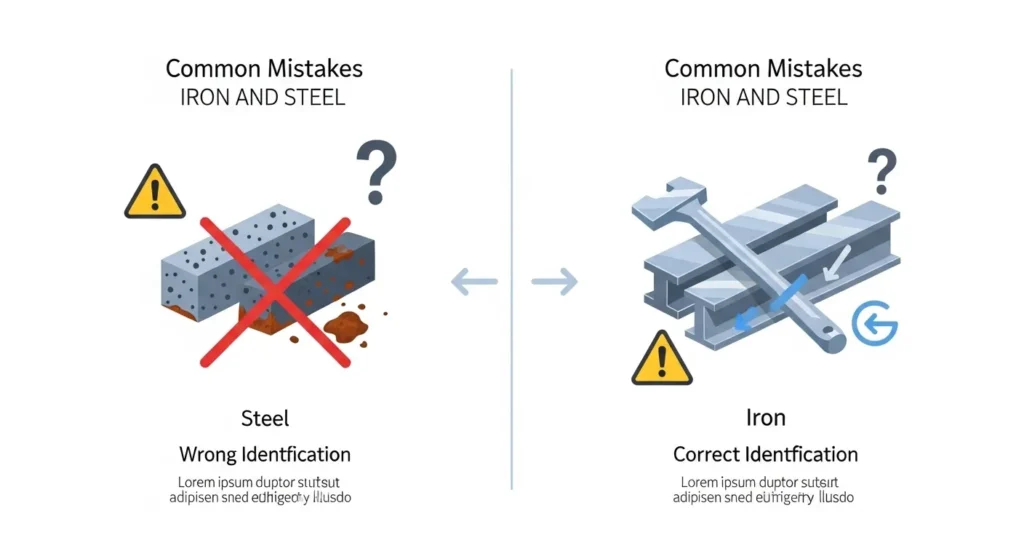
- Thinking iron and steel are the same
- Assuming iron is stronger than steel
- Ignoring carbon role in steel formation
- Believing all steel is rust-proof
- Confusing stainless steel with pure iron
👉 Fix: Always remember steel = improved iron alloy
🟢 Real Life Examples
- Eiffel Tower (iron structure)
- Burj Khalifa (steel reinforcement)
- Cars (steel body frames)
- Kitchen knives (stainless steel)
- Old bridges (iron + steel combinations)
🟢 When to Use Iron vs Steel
- Use iron when cost is important and strength is not critical
- Use steel when durability, strength, and safety are required
👉 Engineers always prefer steel for modern infrastructure.
🟢 Why People Get Confused Between Iron and Steel
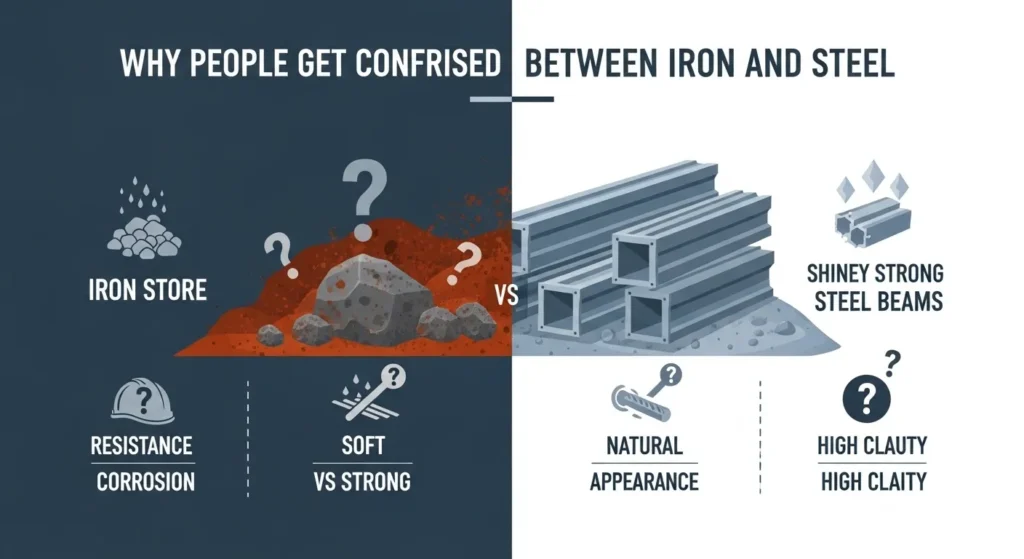
People confuse iron and steel because:
- Both contain iron
- Both look similar
- Media uses them interchangeably
- Lack of material science knowledge
🟢 How Search Engines Understand Iron vs Steel
Search engines like Google, YouTube, and Meta systems analyze:
- material science context
- industrial usage signals
- comparison intent
Example:
- “iron meaning” → elemental query
- “steel vs iron difference” → comparison intent
🟢 Expert Insight
From an engineering and materials science perspective, steel is one of the most important innovations in human history. As a certified industrial materials researcher, it is clear that modern civilization depends more on steel than iron due to its superior mechanical properties.
In practical engineering, iron is rarely used alone in large structures because it lacks durability and corrosion resistance. Steel dominates infrastructure, automotive, and manufacturing industries worldwide.
🟢 FAQs
1. What is the main difference between iron and steel?
Iron is a natural metal, steel is an alloy of iron and carbon.
2. Is steel stronger than iron?
Yes, steel is much stronger than iron.
3. Why is steel used instead of iron?
Because steel is more durable and rust-resistant.
4. Is iron still used today?
Yes, but mostly in alloy form or small applications.
5. What is steel made of?
Iron + carbon + sometimes other elements.
6. Does iron rust faster than steel?
Yes, iron rusts much faster.
7. Which is cheaper, iron or steel?
Iron is cheaper but less useful.
8. Can steel exist without iron?
No, steel is made from iron.
🟢 Conclusion
The difference between iron and steel is simple but extremely important in science, engineering, and daily life. Iron is a natural element found in the earth, while steel is a stronger, engineered alloy made by combining iron with carbon.
In real-world applications, iron is limited due to its softness and rusting behavior, while steel dominates modern industries because of its strength, flexibility, and durability. From skyscrapers and bridges to cars and household tools, steel plays a critical role in shaping modern civilization.
Understanding the difference between iron and steel helps students, engineers, and general learners make better decisions in material selection and improves basic scientific knowledge. In short, iron is the foundation, but steel is the future of structural materials.
Read more about!
Difference Between Mercy and Grace:Simple Guide
Difference Between Flautas and Taquitos: Complete Guide

I am James Carter, a professional content writer from the United States. I specialize in writing simple and clear comparison blogs that help students and readers understand difficult topics easily. My writing focuses on everyday language, education, science, and lifestyle topics. I believe that learning should be easy for everyone, so I use simple words and real-life examples in my articles.