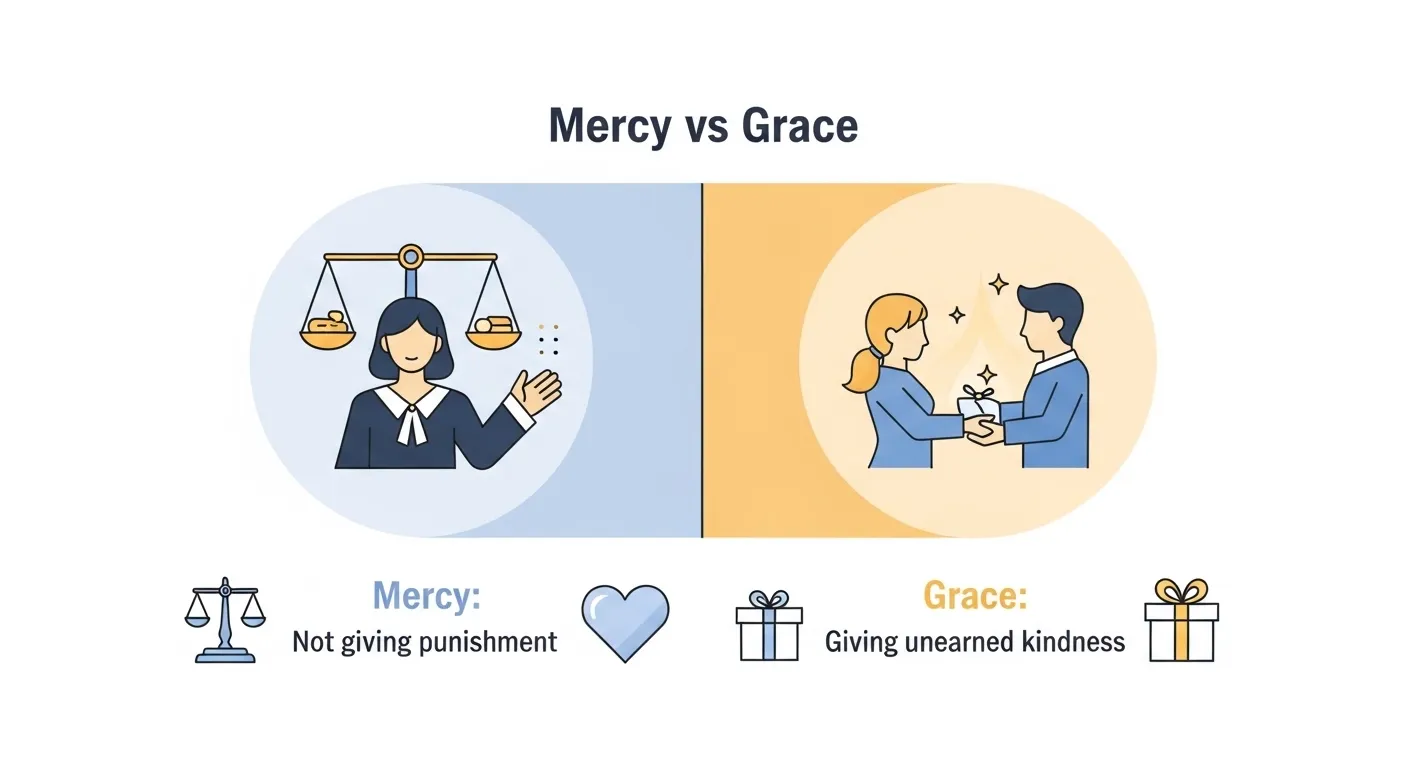
Mercy is not giving punishment that someone deserves, while grace is giving kindness or blessings that someone doesn’t deserve. 💙
Many people search for the difference between mercy and grace because both words are often used in religious, moral, and emotional contexts but they are not the same.
In everyday life, you may hear these terms in churches, Islamic teachings, books, or even motivational speeches. Still, most users feel confused when trying to understand what is mercy, what is grace, and the real difference between mercy and grace.
In simple words, mercy and grace both relate to kindness and compassion, but they work in completely different ways. Mercy is about not receiving punishment you deserve, while grace is about receiving blessings you don’t deserve.
This subtle difference creates a lot of confusion in search engines like Google, and even in educational content on platforms like YouTube, Instagram, and Meta learning pages.
In this guide, you will clearly learn:
- What mercy means in real life
- What grace means in real life
- The difference between mercy and grace with examples
- Why these concepts exist in human morality and psychology
- How they are used in religion, leadership, and daily life
Let’s understand this deeply, in a simple and human way so you don’t need to read another article again.
🟢Difference Between Mercy and Grace
Mercy is when someone does not punish you even if you deserve it.
Grace is when someone gives you something good even if you don’t deserve it.
👉 Example:
If a judge forgives your punishment, that is mercy.
If the judge also gives you help or support afterward, that is grace.
🟢 Definition of Mercy and Grace
🔹 Mercy:
Mercy is compassion shown by not giving punishment or harm that a person deserves.
🔹 Grace:
Grace is unearned kindness, blessings, or help given freely without expectation.
👉 Simple breakdown:
- Mercy = Not getting what you deserve (punishment)
- Grace = Getting what you don’t deserve (blessing)
🟢 Pronunciation
- Mercy: /ˈmɜːr.si/
- Grace: /ɡreɪs/
Now let’s explore the difference between mercy and grace in a deeper and practical way.
🟢 Comparison: Mercy vs Grace
| Feature | Mercy | Grace | Similarity |
| Meaning | Not punishing someone | Giving unearned blessing | Both show kindness |
| Action Type | Withholding punishment | Giving positive help | Both are compassionate |
| Emotional Tone | Forgiveness | Favor and generosity | Both are positive emotions |
| Religious Use | Forgiveness of sins | Divine blessings | Both used in theology |
| Human Example | Forgiving mistake | Helping after mistake | Both improve relationships |
| Outcome | Relief from punishment | Receiving benefits | Both create peace |
| Direction | Prevents harm | Provides benefit | Both come from kindness |
👉 This table clearly shows the difference between mercy and grace for quick understanding.
🟢 Key Differences Explained Between Mercy and Grace
1. Punishment vs Blessing
Mercy removes punishment, while grace adds blessings.
👉 Example: A teacher not punishing a student is mercy; giving extra help is grace.
2. Negative vs Positive Action
Mercy is stopping something bad. Grace is giving something good.
👉 Example: Not firing an employee is mercy; giving a bonus is grace.
3. Deserved vs Undeserved
Mercy relates to what someone deserves; grace relates to what they don’t deserve.
👉 Example: Legal pardon vs financial gift.
4. Emotional Nature
Mercy is emotional forgiveness, grace is generous giving.
👉 Example: A parent forgiving a mistake vs buying a gift afterward.
5. Religious Meaning
In Christianity and Islamic teachings, mercy refers to forgiveness, while grace refers to divine blessings.
👉 Example: God forgiving sins (mercy) and granting paradise (grace).
6. Human Behavior
Mercy is reactive, grace is proactive.
👉 Example: Mercy responds to wrongdoing; grace exists without wrongdoing.
7. Real-Life Leadership
Good leaders use mercy in conflict situations and grace in reward systems.
👉 Example: Not punishing failure vs giving promotion.
🟢 Why Mercy and Grace Exist in Human Psychology
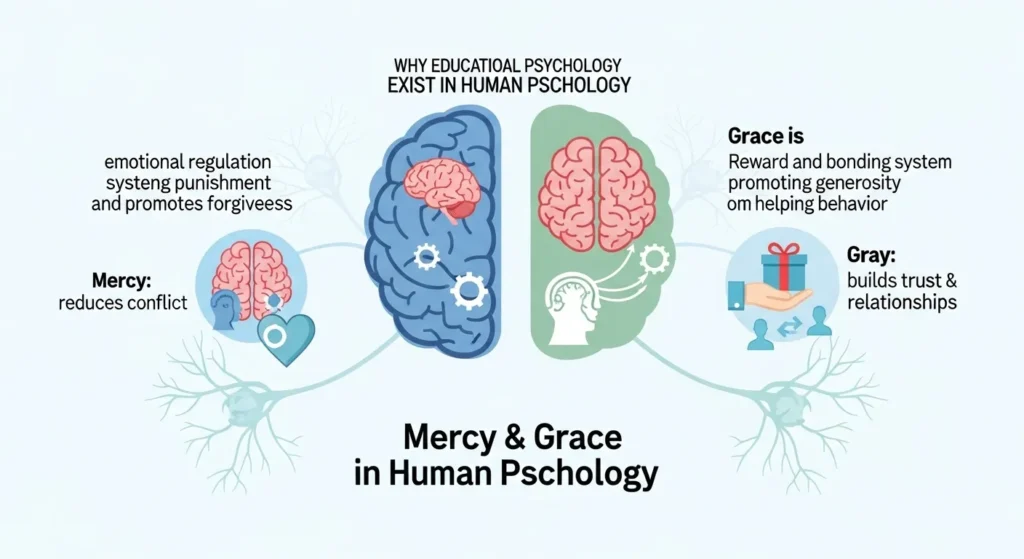
Mercy and grace exist because humans are social and emotional beings. According to psychology and behavioral studies discussed in modern Google Knowledge Graph systems, humans need both forgiveness and generosity to maintain balance in society.
- Mercy prevents revenge cycles
- Grace builds trust and loyalty
Without mercy, societies become harsh. Without grace, societies become emotionally cold.
🟢 Real-Life Examples of Mercy and Grace
🏫 Education System
- Mercy: Teacher ignores small mistake
- Grace: Teacher gives extra marks
🏢 Workplace (Google / Meta / YouTube environment)
- Mercy: Manager avoids punishment for delay
- Grace: Manager gives bonus or appreciation
🏥 Healthcare
- Mercy: Doctor reduces penalty fees
- Grace: Doctor offers free treatment
🏠 Family Life
- Mercy: Parents forgive mistake
- Grace: Parents give gifts or support
🟢 Common Mistakes with Mercy and Grace
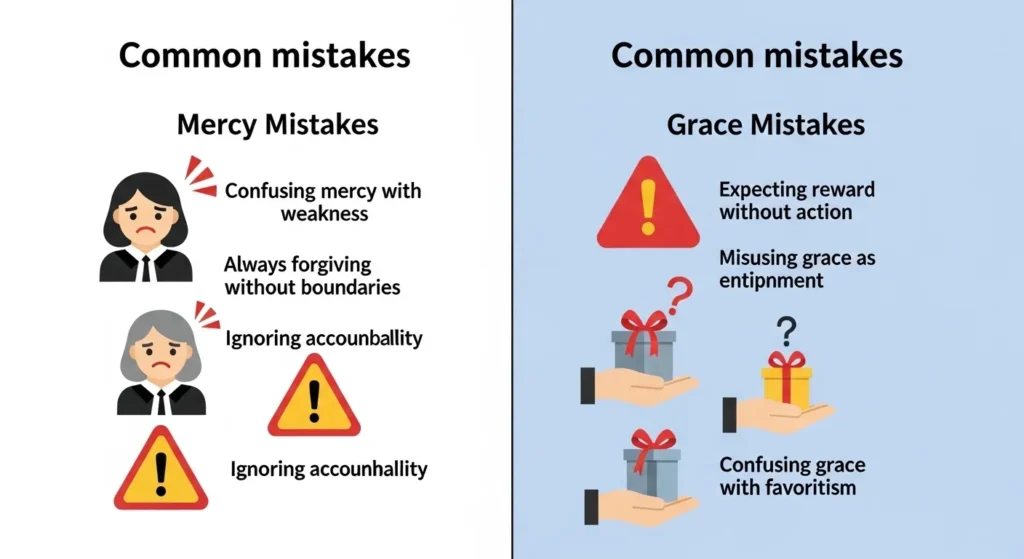
- Thinking mercy and grace are the same
- Using grace only in religious context
- Confusing forgiveness with reward
- Believing mercy always includes reward
- Not understanding emotional difference
👉 Fix: Always remember mercy = forgiveness, grace = blessing.
🟢 When to Use Mercy and Grace
- Use mercy when someone makes a mistake
- Use grace when you want to reward or uplift someone
👉 Best leaders, teachers, and parents use both effectively.
🟢 Why People Get Confused
People confuse mercy and grace because:
- Both involve kindness
- Both appear in religious texts
- Both feel emotionally similar
- Media uses them interchangeably
🟢 How Search Engines Understand Mercy vs Grace
Modern search engines like Google AI systems and NLP models analyze:
- context of forgiveness
- emotional tone
- reward vs punishment structure
Example:
- “God is merciful” → forgiveness context
- “Grace of God” → blessing context
Platforms like Instagram and YouTube also categorize these based on emotional and religious content signals.
🟢 Expert Insight
From a moral and psychological perspective, mercy and grace represent two core dimensions of human kindness. Mercy prevents harm, while grace creates growth.
In real-world leadership and counseling experience, professionals often say:
- Mercy builds peace
- Grace builds transformation
A balanced personality uses both strategically in relationships, business, and social life.
🟢 FAQs
1. What is the main difference between mercy and grace?
Mercy is not punishing, grace is giving blessings.
2. Can mercy exist without grace?
Yes, mercy can exist alone.
3. Is grace stronger than mercy?
Not stronger, just different in function.
4. Why is grace important?
It provides unearned support and growth.
5. Is mercy only religious?
No, it is used in daily life too.
6. Can humans show grace?
Yes, through generosity and kindness.
7. What is an example of mercy?
Forgiving someone’s mistake.
8. What is an example of grace?
Helping someone after forgiving them.
🟢 Conclusion
The difference between mercy and grace is simple but very meaningful in human life, religion, and psychology. Mercy means not giving punishment that someone deserves, while grace means giving blessings or help that someone does not deserve.
In real life, mercy brings forgiveness and peace, while grace brings growth and opportunity. Both are essential for building strong relationships, emotional intelligence, and leadership qualities.
Understanding the difference between mercy and grace helps you become more emotionally aware, more compassionate, and more balanced in decision-making. If in family, workplace, or society, applying both concepts wisely can transform how you treat others and how others respond to you.
Read more about!
Difference Between Lamb and Goat: Easy Guide
Difference Between Diffusion and Osmosis: Complete Guide

I am Emily Johnson, a USA-based content writer who creates easy-to-read blogs on language and daily life topics. I explain complex ideas in simple English for students and beginners so they can understand easily.