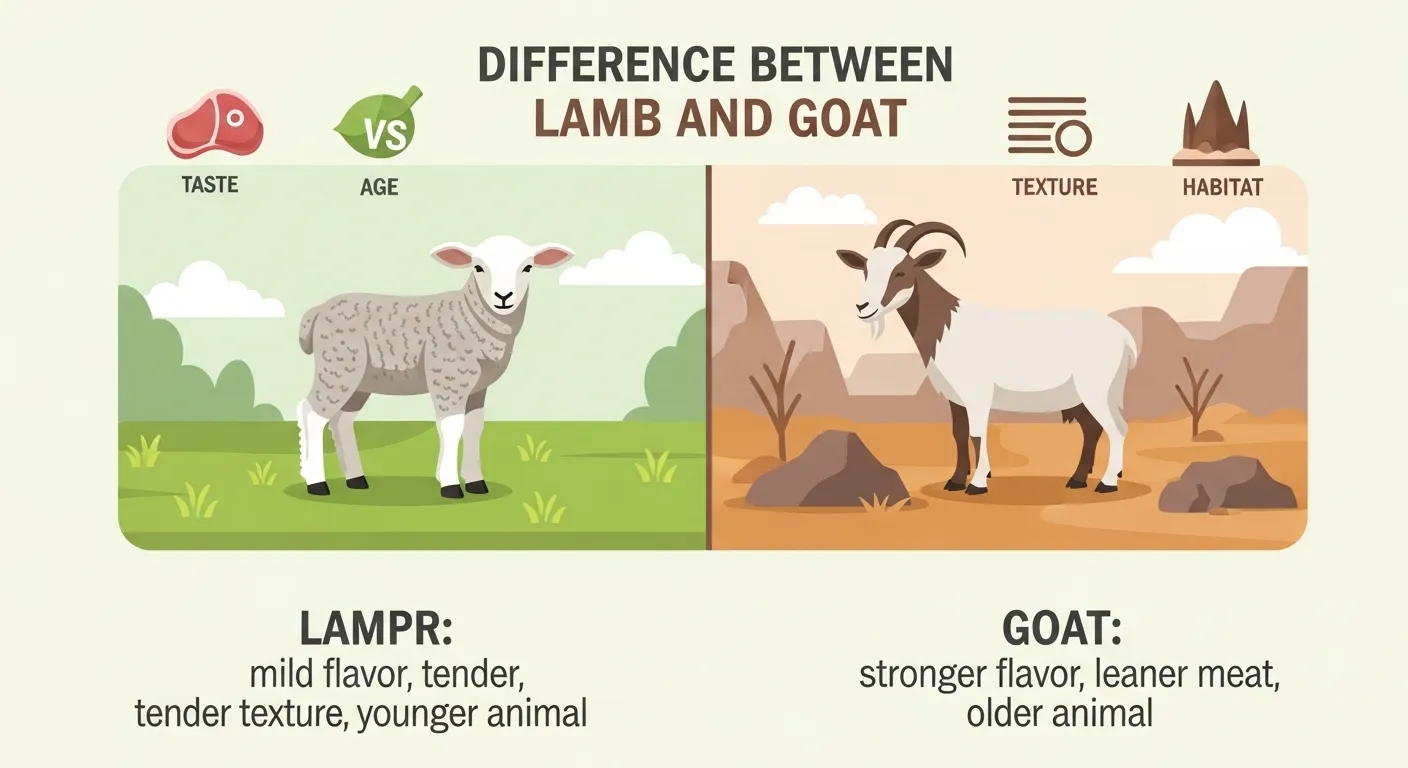
🐑 Lamb comes from young sheep (milder, softer meat), while 🐐 goat has a stronger flavor and firmer texture.
Many people get confused when they see meat labeled as lamb or goat, especially in markets, restaurants, or grocery stores. The difference between lamb and goat is not just about taste it also includes age, texture, smell, nutrition, and cooking style
. This confusion is very common in countries where both meats are widely consumed, such as South Asia, the Middle East, and parts of Europe.
Understanding the difference between lamb and goat helps you choose the right meat for cooking, health, and taste preferences. Many users search on Google, YouTube, and even Instagram cooking pages asking what is lamb, what is goat meat, and why they taste different.
In simple words, lamb comes from a young sheep, while goat meat comes from a goat animal, and both behave differently in cooking.
In this detailed guide, you will learn everything about the difference between lamb and goat, including taste, texture, nutrition, cooking methods, and real-life usage. Let’s make it simple and clear so you never get confused again.
Difference Between Lamb and Goat
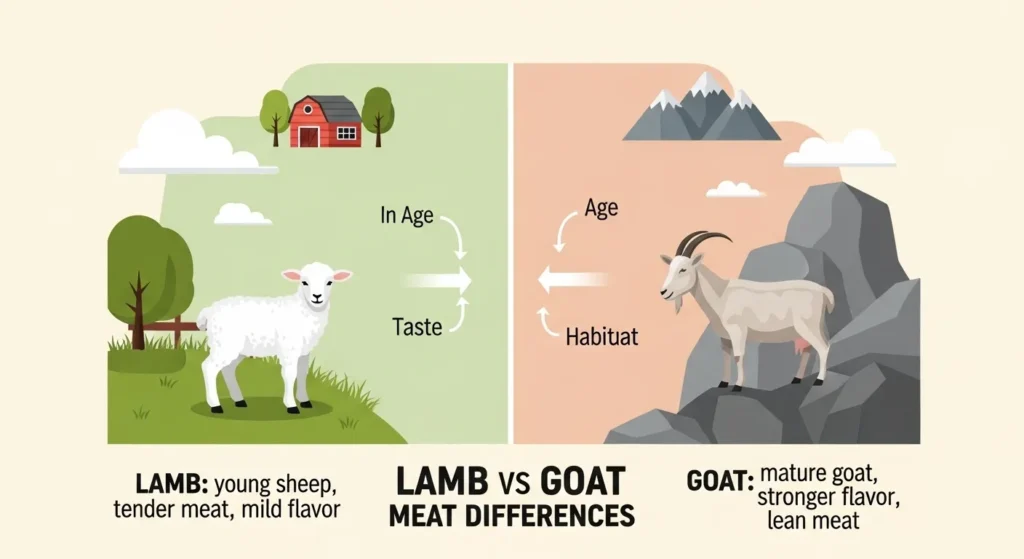
Lamb is meat from a young sheep and is soft, mild, and tender. Goat meat comes from goats and is slightly tougher, stronger in flavor, and leaner.
👉 Example:
- Lamb is used in soft curries and roasted dishes
- Goat is used in spicy curries and slow cooking recipes
Definition of Lamb and Goat
- Lamb: Meat from a young sheep (usually under 1 year old), known for its soft texture and mild taste.
- Goat: Meat from a mature goat, known for its strong flavor, lean texture, and slightly chewy consistency.
✔ Lamb = Soft + Mild + Tender
✔ Goat = Strong + Lean + Firm
Pronunciation
Understanding pronunciation helps learners and buyers identify the difference between lamb and goat easily in global markets and restaurants:
- Lamb → /læm/ (LAM)
- Goat → /ɡoʊt/ (GOHT)
These terms are commonly used in global platforms like Google Food Search, YouTube cooking channels, Meta recipe pages, and food delivery apps like Uber Eats and DoorDash.
Comparison: Lamb vs Goat
| Feature | Lamb | Goat | Similarity |
| Animal source | Young sheep | Goat animal | Both are red meat |
| Taste | Mild and soft | Strong and earthy | Both flavorful |
| Texture | Tender and juicy | Firm and chewy | Both used in curries |
| Fat content | Slightly higher fat | Very lean meat | Both protein-rich |
| Cooking time | Cooks faster | Takes longer | Both need heat cooking |
| Popular dishes | Roast, kebabs | Curry, stew | Both used globally |
| Smell | Mild aroma | Strong smell | Both depend on cooking style |
👉 This table clearly shows the difference between lamb and goat for quick understanding.
Key Differences Explained Between Lamb and Goat
1. Animal Age Difference
- Lamb comes from young sheep
- Goat meat comes from mature goats
✔ Example: lamb is usually under 12 months old
2. Taste Difference
- Lamb has a mild, buttery taste
- Goat has a strong, gamey flavor
✔ Example: goat curry is more spicy and bold
3. Texture Difference
- Lamb is soft and tender
- Goat is slightly tough
✔ Example: lamb melts quickly in mouth
4. Cooking Style
- Lamb is best for roasting and grilling
- Goat is best for slow cooking
✔ Example: goat biryani takes longer cooking time
5. Nutrition Difference
- Goat is leaner and lower in fat
- Lamb has slightly higher fat content
✔ Example: goat is often preferred in fitness diets
6. Regional Preference
- Lamb is popular in Western countries
- Goat is widely used in Asia and Middle East
✔ Example: lamb chops vs goat curry
Why Lamb and Goat Exist as Separate Meats
The reason we distinguish the difference between lamb and goat is because both come from different animals with different biological structures. This affects:
✔ Taste
✔ Texture
✔ Cooking time
✔ Nutritional value
Platforms like Google Food Knowledge Graph, YouTube cooking tutorials, and Meta recipe pages categorize them separately for better food classification.
WHEN TO USE LAMB
Use lamb when:
✔ You want soft and mild meat
✔ You are grilling or roasting
✔ You prefer less strong smell
✔ Example: lamb roast, lamb kebab
WHEN TO USE GOAT
Use goat when:
✔ You want spicy curry dishes
✔ You prefer lean meat
✔ You are slow cooking (biryani, stew)
✔ Example: goat curry, mutton biryani
WHY PEOPLE GET CONFUSED
✔ In many countries, “mutton” is used for both
✔ Both are red meat and look similar
✔ Restaurants sometimes mislabel dishes
✔ Lack of awareness in food markets
This is why the difference between lamb and goat is one of the most searched food topics on Google.
Real-Life Examples
Home Cooking:
- Lamb roast for special dinners
- Goat curry for family meals
Restaurants:
- Lamb steak in Western cuisine
- Goat biryani in South Asian restaurants
Fitness Diet:
- Goat meat used in low-fat diets
- Lamb used for energy-rich meals
Food Apps:
- Uber Eats lists lamb burgers separately
- DoorDash shows goat curry as specialty dish
Common Mistakes with Lamb and Goat
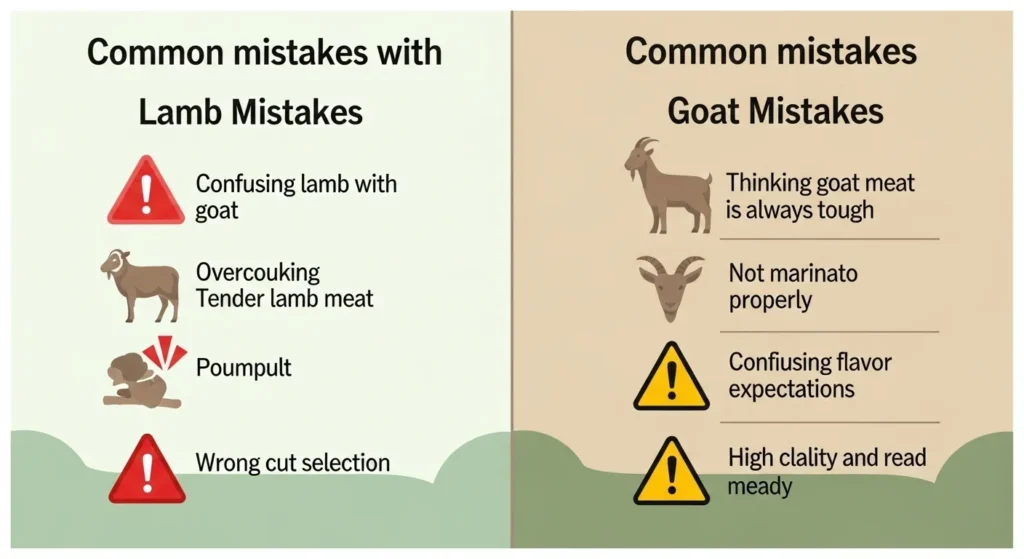
- Calling both “mutton” without knowing difference
- Using same cooking time for both meats
- Assuming both taste same
- Overcooking lamb (makes it dry)
- Undercooking goat (makes it tough)
✔ Fix: Always adjust cooking style based on meat type
How Search Engines Understand Lamb vs Goat
Google and AI systems analyze:
✔ User intent (food comparison searches)
✔ Culinary classification
✔ Nutrition queries
✔ Recipe context
Platforms like YouTube cooking channels and Instagram food creators help rank content by engagement, visuals, and recipe clarity.
Expert Insight
From a culinary expert perspective, the difference between lamb and goat is essential for cooking accuracy. In real kitchen environments, chefs always choose meat based on texture and cooking method.
Most professional chefs agree that lamb is more beginner-friendly, while goat requires experience due to its strong flavor and longer cooking time. Understanding this difference improves cooking results and food quality significantly.
FAQs
1. What is the main difference between lamb and goat?
Lamb comes from sheep, goat comes from goats.
2. Which meat is softer?
Lamb is softer and more tender.
3. Which meat is healthier?
Goat is leaner and lower in fat.
4. Does lamb taste like goat?
No, lamb is mild while goat is stronger.
5. Which cooks faster?
Lamb cooks faster than goat.
6. Is goat meat called mutton?
In some regions, yes.
7. Which is more expensive?
Lamb is usually more expensive.
8. Which is better for beginners?
Lamb is easier to cook.
Conclusion
The difference between lamb and goat is important for cooking, nutrition, and food selection. Lamb comes from young sheep and is soft, mild, and easy to cook. Goat comes from mature goats and is stronger in flavor, leaner, and needs slow cooking.
Understanding the difference between lamb and goat helps you choose the right meat for your recipe, if you are cooking at home, ordering from a restaurant, or following a diet plan. Many beginners confuse both, but once you learn their texture, taste, and cooking style, the difference becomes very clear.
In simple words, lamb is best for soft, rich dishes, while goat is best for spicy and slow-cooked meals. Knowing this difference improves your cooking skills and food experience significantly.
Read more about!
Difference Between Pilsner and Lager: Explained Simply
Difference Between Latte and Mocha: Complete Guide

I am James Carter, a professional content writer from the United States. I specialize in writing simple and clear comparison blogs that help students and readers understand difficult topics easily. My writing focuses on everyday language, education, science, and lifestyle topics. I believe that learning should be easy for everyone, so I use simple words and real-life examples in my articles.