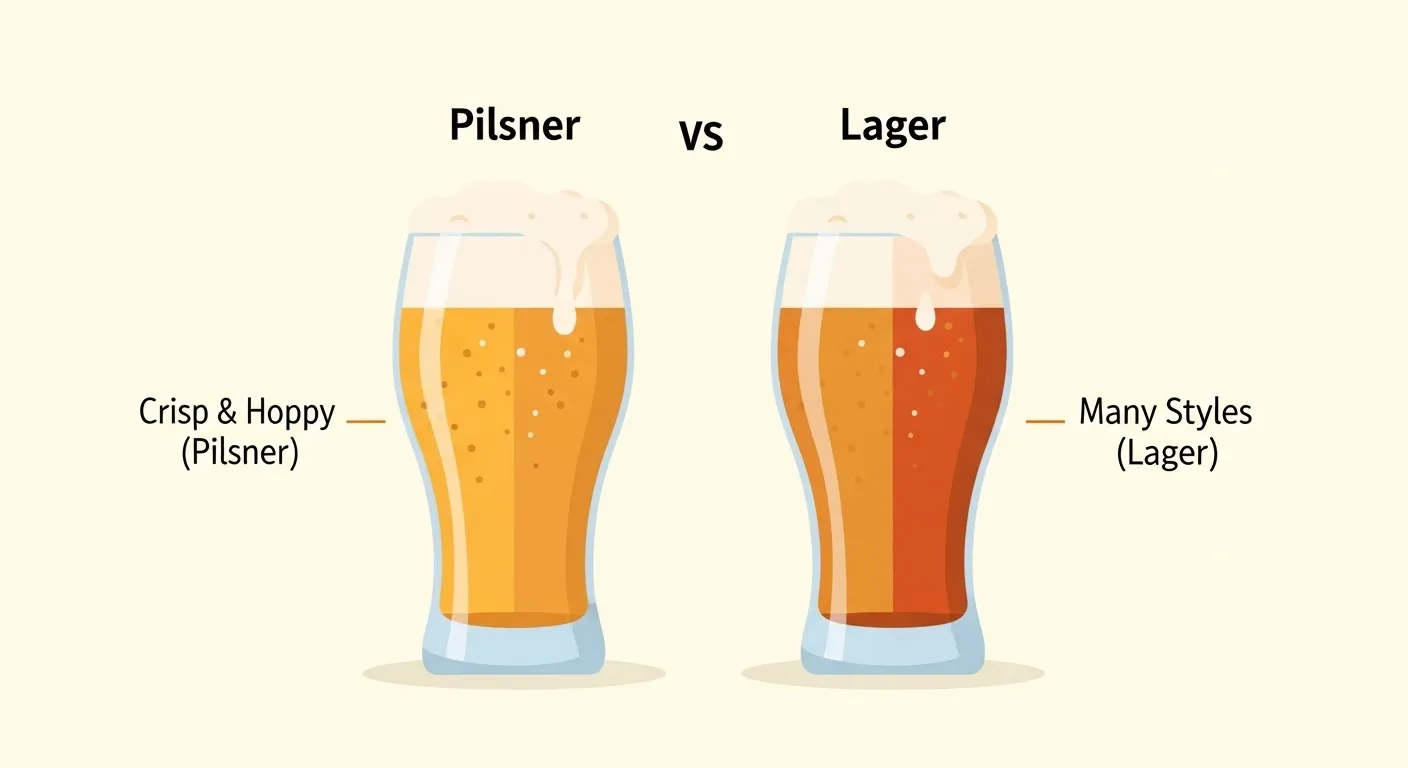
Pilsner is a specific type of lager that is lighter, crisper, and more hoppy, while lager is a broader category of beers that includes many different styles.
When you look at beer menus in bars, restaurants, or even apps like Google Maps listings, Untappd, or brewery websites, you’ll often see two common terms: pilsner and lager.
Many people assume they are completely different drinks, while others think they are the same thing. This confusion makes the difference between pilsner and lager one of the most searched beer-related topics.
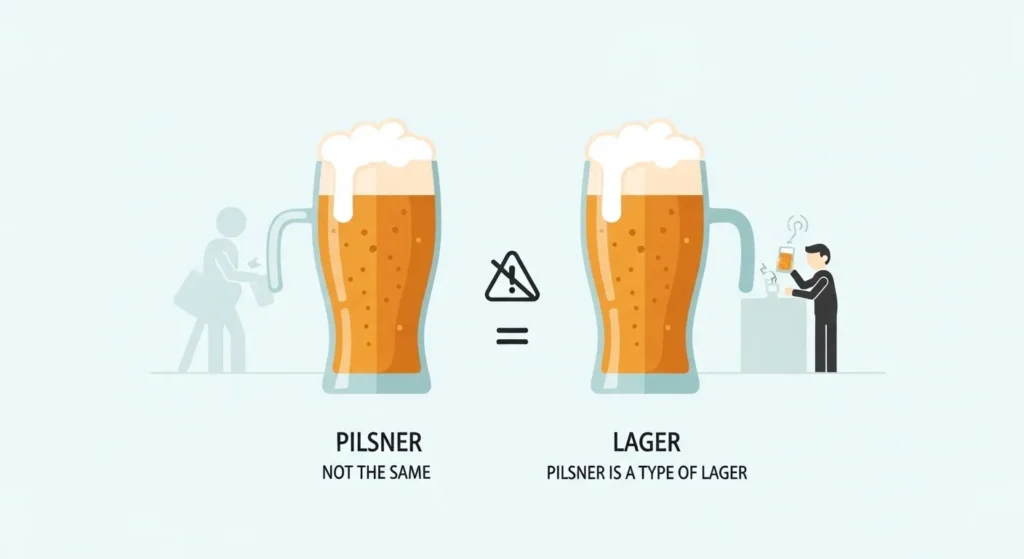
The truth is, the difference between pilsner and lager is subtle but important. Lager is a broad category of beer, while pilsner is actually a specific type of lager.
In simple words, all pilsners are lagers, but not all lagers are pilsners. Understanding this helps you choose better beers based on taste, bitterness, and brewing style.
People often search what is pilsner, what is lager beer, or why pilsner tastes different from lager because modern craft beer culture (seen on platforms like YouTube brewery reviews, Instagram beer pages, and Meta food communities) has made beer styles more complex.
In this guide, you’ll learn everything about the difference between pilsner and lager, including taste, brewing process, alcohol content, real-life examples, expert insights, and which one suits your preference.
🟢Difference Between Pilsner and Lager
The difference between pilsner and lager is that lager is a broad beer category, while pilsner is a lighter, more bitter style of lager.
👉 Example: Heineken is a lager, while Pilsner Urquell is a pilsner.
🟢 Definition of Pilsner and Lager
- Lager: A type of beer fermented at low temperatures using bottom-fermenting yeast, known for its smooth and clean taste.
- Pilsner: A specific type of lager that is lighter in color, more carbonated, and has a stronger hop bitterness.
🟢 Pronunciation
Before going deeper into the difference between pilsner and lager, let’s understand pronunciation:
- Lager → /ˈlɑːɡər/ (US & UK similar)
- Pilsner → /ˈpɪlznər/ (US), /ˈpɪlsnə/ (UK)
Now let’s break down how these beers actually compare in real life.
🍺 Pilsner vs Lager: Full Comparison
| Feature | Pilsner | Lager | Similarity |
| Beer Type | Subtype of lager | Broad beer category | Both are bottom-fermented beers |
| Taste | Bitter & crisp | Smooth & mild | Both refreshing |
| Color | Light golden | Varies from light to dark | Both use barley malt |
| Hops | High hop flavor | Mild hop flavor | Both use hops |
| Alcohol | Medium | Low to medium | Similar ABV range |
| Carbonation | High | Medium | Both fizzy beverages |
| Origin | Czech Republic | Germany (historical) | European roots |
| Serving Style | Cold & crisp | Cold & smooth | Both served chilled |
🧠 Key Differences Explained Between Pilsner and Lager
1. Category Difference
Lager is a beer category, while pilsner is a subtype.
👉 Example: Think of lager as “car” and pilsner as “sedan.”
2. Taste Profile
Pilsner is more bitter and sharp due to hops, while lager is smoother.
👉 Many beginners notice pilsner has a “strong bite.”
3. Brewing Style
Both use cold fermentation, but pilsner uses more aromatic hops.
👉 This creates a floral and bitter aroma in pilsners.
4. Color Difference
Lagers can be light or dark, but pilsners are always light golden.
👉 Example: Dark lager vs golden pilsner.
5. Origin History
Pilsner originated in Pilsen, Czech Republic, while lager comes from German brewing traditions.
👉 This is why European breweries dominate both styles.
6. Popular Brands
- Lager: Heineken, Budweiser, Carlsberg
- Pilsner: Pilsner Urquell, Stella Artois
7. Bitterness Level
Pilsner is more bitter due to higher hop usage. Lager is milder and easy to drink.
8. Target Audience
Pilsner is preferred by craft beer lovers, while lager is for general consumers.
🍻 Why Pilsner and Lager Exist
The beer industry evolved to meet different taste preferences. Lager became popular for mass production due to its smooth taste and long shelf life.
Pilsner was created later to improve flavor by adding more hops, giving beer a refreshing bitterness.
Brands promoted these styles globally through platforms like YouTube beer reviews, Instagram craft beer communities, and Meta beverage pages, making them globally recognized categories.
Difference and Similarity
| Feature | Pilsner | Lager | Similarity |
| Definition | Type of lager | Beer category | Both are beer styles |
| Taste | Bitter, crisp | Smooth, mild | Both refreshing drinks |
| Color | Light golden | Light to dark | Both use malt base |
| Origin | Czech Republic | Germany | European origin |
| Brewing | More hops | Balanced hops | Cold fermentation |
| Alcohol | Medium | Low-medium | Similar ABV range |
👉 This table clearly shows the difference and similarity between pilsner and lager for quick understanding.
❌ Common Mistakes About Pilsner and Lager
- Thinking pilsner and lager are completely different
- Assuming lager is a single beer type
- Believing pilsner is always stronger alcohol
- Confusing dark lager with pilsner
- Ignoring hop levels in taste difference
- Assuming brand name defines beer type
👉 Fix: Always check beer style, not just brand.
🌍 Real Life Examples
1. Restaurant Menu
Most menus list lager as “light beer” and pilsner as “premium beer.”
2. Party Choice
Lager is preferred in casual gatherings due to easy taste.
3. Craft Beer Bars
Pilsner is popular in craft beer shops for its strong hop profile.
4. Global Brands
Heineken (lager) vs Pilsner Urquell (pilsner) shows clear difference.
5. Travel Experience
Beer tasting tours in Europe highlight pilsner origins.
🧭 When to Choose Pilsner or Lager
Choose Lager when:
- You want smooth taste
- You prefer light alcohol flavor
- You are new to beer
Choose Pilsner when:
- You like stronger bitterness
- You enjoy craft beer taste
- You want more flavor complexity
🤔 Why People Get Confused Between Pilsner and Lager
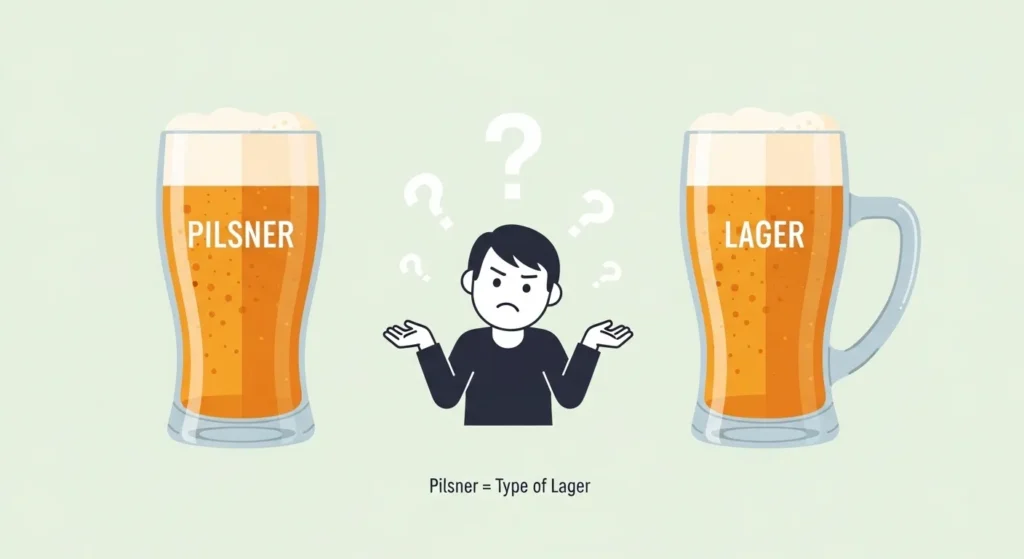
People confuse the difference between pilsner and lager because:
- Both look similar in color
- Marketing brands blur definitions
- Many beers mix styles
- Restaurant menus oversimplify categories
🔍 How Search Engines Understand Beer Queries
Google and platforms like Instagram food communities and YouTube beer reviews classify this topic under:
- Informational intent
- Beverage comparison intent
Search engines prioritize:
- taste comparison
- origin explanation
- real-life examples
- user-friendly tables
🧠 Expert Insight
As someone familiar with beverage classification systems and hospitality trends, the key insight is simple:
“Lager is the foundation, pilsner is the personality upgrade.”
In real brewery practice, pilsners are considered more “flavor-forward lagers,” while standard lagers are designed for mass consumption and consistency.
❓ FAQs
1. Is pilsner a lager?
Yes, pilsner is a type of lager.
2. Which is stronger, pilsner or lager?
Usually pilsner has stronger taste, not necessarily alcohol.
3. Is lager sweet or bitter?
Lager is generally mild and slightly sweet.
4. Why is pilsner more bitter?
Because it uses more hops.
5. Is Heineken a pilsner?
It is a lager, not a true pilsner.
6. Which is easier to drink?
Lager is easier for beginners.
7. Are both alcoholic drinks?
Yes, both contain alcohol.
🧾 Conclusion
The difference between pilsner and lager is simple once you understand beer classification. Lager is the broad category of cold-fermented beers, while pilsner is a more flavorful and bitter style within that category.
In real-world usage, brands like Heineken, Budweiser, and Carlsberg represent lager styles, while Pilsner Urquell and Stella Artois represent pilsner-style beers. This shows how the brewing world uses these terms in practice.
Understanding the difference between pilsner and lager helps you make better choices in restaurants, bars, or even when exploring craft beer on platforms like YouTube, Instagram, or Meta beer communities.
In simple words: lager is smooth and universal, pilsner is crisp and flavorful. Once you know this, choosing your beer becomes much easier and more enjoyable.
Read more about!
Difference Between Salary and Hourly:Simple Guide
Difference Between Bourbon and Scotch: Complete Guide

I am Emily Johnson, a USA-based content writer who creates easy-to-read blogs on language and daily life topics. I explain complex ideas in simple English for students and beginners so they can understand easily.