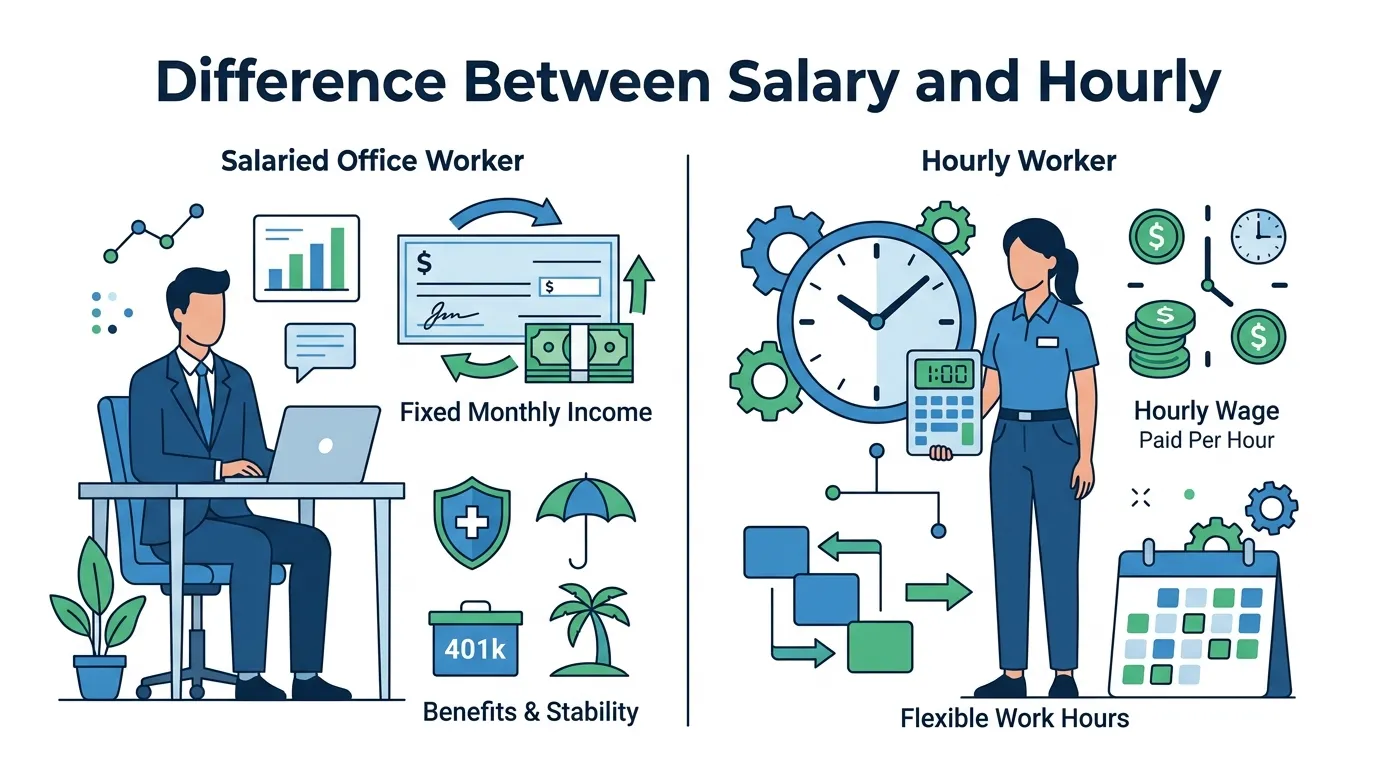
Salary is a fixed regular payment for a job, while hourly pay is based on the number of hours worked.
When you start working, one of the biggest confusions is the difference between salary and hourly pay. Many people see job ads on LinkedIn, Indeed, or Google Jobs, and wonder why some jobs say “$50,000 per year” while others say “$20 per hour.” This is exactly where the concept of difference between salary and hourly becomes important.
In simple words, the difference between salary and hourly is how you are paid for your work time. Salary workers receive a fixed amount every month or year, while hourly workers are paid based on the number of hours they work.
Many users search what is salary, what is hourly wage, or how pay systems work because they want clarity before choosing a job.
In this guide, you will learn the complete difference between salary and hourly, how both systems work, real-world examples, pros and cons, and which one is better depending on your lifestyle and career goals.
Difference Between Salary and Hourly
The difference between salary and hourly is simple:
Salary is a fixed income paid regularly regardless of hours worked, while hourly pay depends on the exact number of hours you work.
👉 Example: A salaried employee earns $3000/month even if they work extra hours, while an hourly worker earns $15 per hour and gets paid only for the hours worked.
Definition of Salary and Hourly Pay
- Salary: A fixed payment given to an employee on a monthly or yearly basis, regardless of working hours.
- Hourly Pay: A wage system where employees are paid based on the number of hours they actually work.
Pronunciation
To understand the difference between salary and hourly, let’s also see how they are pronounced:
- Salary → /ˈsæləri/ (US & UK)
- Hourly → /ˈaʊərli/ (US & UK)
Now let’s break down the real-world working system behind both.
Salary vs Hourly Pay:Comparison
| Feature | Salary | Hourly | Similarity |
| Payment Style | Fixed monthly/yearly income | Paid per hour worked | Both are income systems |
| Income Stability | Stable income | Varies with hours | Both provide earnings |
| Overtime Pay | Often not extra | Paid extra for overtime | Both reward work effort |
| Flexibility | Less flexible schedule | More flexible timing | Both require work commitment |
| Job Type | Office/professional jobs | Part-time/service jobs | Both are employment types |
| Work Hours | Fixed expectations | Flexible based on shifts | Both require attendance |
| Benefits | Often includes perks | Limited benefits | Both provide compensation |
| Risk Level | Lower income risk | Higher income variation | Both depend on employer |
Key Differences Explained Between Salary and Hourly
1. Payment Structure Difference
Salary workers get fixed income monthly. Hourly workers earn based on time worked.
👉 Example: A teacher earns salary even in holidays, but a waiter earns only for shifts worked.
2. Overtime Payment System
Hourly jobs usually pay extra for overtime. Salary jobs may or may not include extra pay.
👉 Search intent: do salaried employees get overtime?
3. Income Stability
Salary gives predictable income. Hourly income depends on available shifts.
👉 Example: Retail workers may earn more during holidays.
4. Work-Life Balance
Salary jobs may require extra unpaid hours. Hourly jobs strictly follow time schedules.
5. Job Security Perception
Salary jobs are often seen as more stable, especially in companies like Google, Meta, and Microsoft. Hourly jobs are common in retail, food service, and freelancing platforms.
6. Career Growth Opportunities
Salary roles often include promotions. Hourly jobs depend on experience and availability.
7. Flexibility Level
Hourly jobs are more flexible for students or part-time workers. Salary jobs require fixed commitments.
8. Benefits & Perks
Salary employees may get insurance, bonuses, and paid leave. Hourly workers may not always receive these.
Why Salary and Hourly Systems Exist
The salary system exists for long-term employee stability and company planning. Big organizations like Amazon, Apple, and Google prefer salary systems for structured roles.
The hourly system exists for flexible workforce management. Platforms like Uber, Fiverr, and YouTube gig economy models rely heavily on hourly or task-based payment systems.
Difference Between Salary and Hourly (Deep Explanation)
Payment Logic
Salary = fixed commitment
Hourly = time-based output
Employer Perspective
Companies use salary for predictable roles and hourly for flexible labor.
Employee Perspective
Salary provides stability; hourly provides control over working hours.
Economic System Role
Both systems balance labor demand in global economies.
Difference and Similarity
| Feature | Salary | Hourly | Similarity |
| Income Type | Fixed payment | Variable payment | Both are earnings |
| Payment Cycle | Monthly/Yearly | Weekly/Hourly | Both follow schedule |
| Flexibility | Low | High | Both require job commitment |
| Overtime | Often fixed | Paid separately | Both reward effort |
| Job Security | Higher | Medium | Both depend on employer |
| Benefits | More common | Less common | Both may include perks |
| Work Structure | Fixed role | Shift-based | Both require responsibilities |
👉 This table clearly shows the difference and similarity between salary and hourly for quick understanding.
❌ Common Mistakes About Salary and Hourly
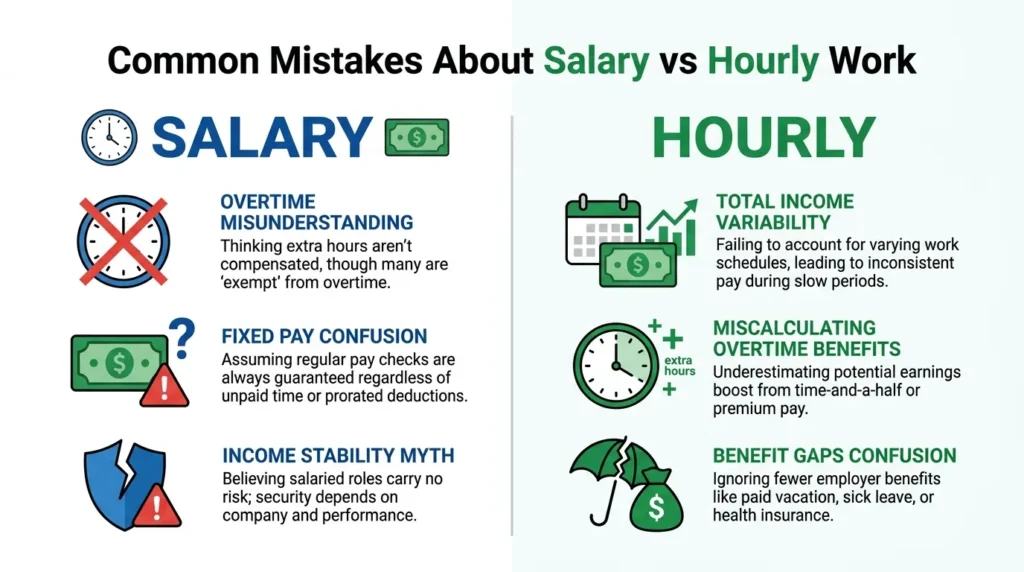
- Thinking salary means “no extra work”
- Assuming hourly jobs have no stability
- Believing hourly always pays less
- Ignoring overtime rules
- Not checking contract details
- Confusing salary with fixed workload
👉 Fix: Always read job contract carefully.
Real Life Examples
1. Corporate Job (Salary)
A software engineer at Google earns a fixed annual salary.
2. Part-Time Job (Hourly)
A café worker earns per hour depending on shifts.
3. Freelancing (Hourly-Based)
A freelancer on Fiverr charges per hour or project.
4. Healthcare Sector
Nurses may be salaried or hourly depending on hospital policy.
5. Delivery Services
Drivers working with Uber Eats often earn hourly or per delivery.
When to Use Salary vs Hourly
Choose Salary if:
- You want stability
- You prefer fixed income
- You work in corporate roles
Choose Hourly if:
- You want flexibility
- You are a student or part-time worker
- You prefer control over schedule
Why People Get Confused Between Salary and Hourly
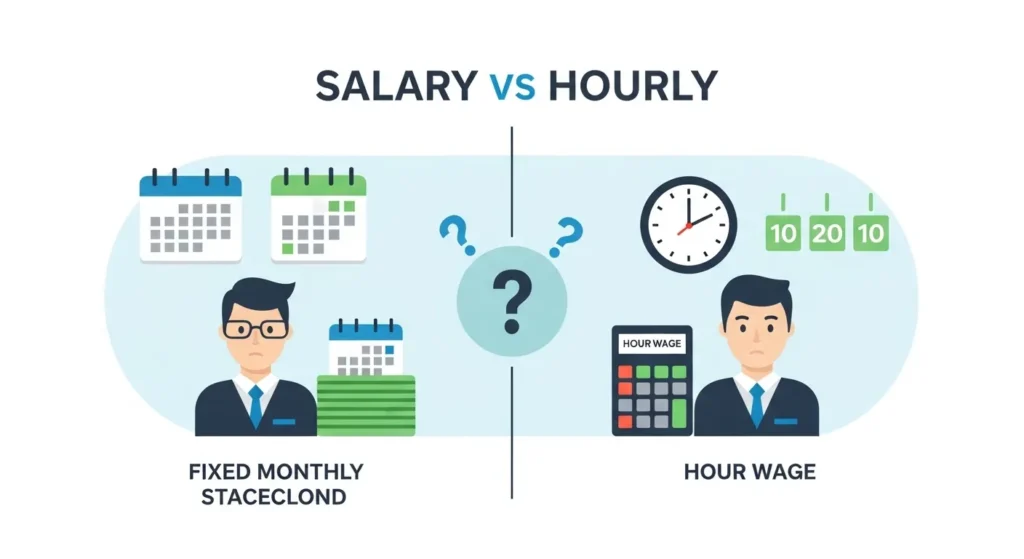
Many users confuse these systems due to:
- Job listings on LinkedIn and Indeed
- Different country labor laws
- Misleading job advertisements
- Social media explanations on YouTube or Instagram
In some regions, salary and hourly jobs overlap, making it harder to understand.
How Search Engines Understand Salary vs Hourly Intent
Search engines like Google analyze queries such as:
- “salary vs hourly difference”
- “which is better salary or hourly”
- “how does hourly pay work”
They classify this as informational + comparison intent and rank content that includes:
- clear definitions
- real examples
- tables and comparisons
- user-focused explanations
Expert Insight
From HR and payroll industry perspective, both salary and hourly systems are essential for workforce balance.
In practical corporate environments, companies like Meta, Google, and Amazon use salary for long-term employees, while hourly systems dominate in retail and logistics sectors.
Experienced HR professionals suggest choosing based on:
- lifestyle needs
- financial stability
- career growth path
FAQs
1. What is the main difference between salary and hourly?
Salary is fixed income; hourly is based on time worked.
2. Which is better salary or hourly?
It depends on your lifestyle and financial goals.
3. Do hourly workers get overtime pay?
Yes, most hourly workers get extra pay for overtime.
4. Is salary always higher than hourly?
Not always, it depends on job type.
5. Can a job be both salary and hourly?
Some jobs mix both systems.
6. Which is better for students?
Hourly jobs are usually better for flexibility.
7. Do salaried employees get paid extra hours?
Sometimes, depending on company policy.
Conclusion
The difference between salary and hourly is one of the most important concepts in understanding modern work systems. Salary provides a fixed and stable income, while hourly pay gives flexibility and direct payment for time worked.
In real-world usage, salary jobs are common in corporate sectors like Google, Meta, and Microsoft, while hourly jobs dominate industries like retail, freelancing, and services. Understanding the difference between salary and hourly helps you choose the right career path based on your financial goals, lifestyle, and work preferences.
In simple words, salary is about stability, and hourly is about flexibility. Neither is better universally it depends on your personal needs. If you want security and long-term planning, salary is ideal. If you want freedom and flexible income, hourly pay is better. This complete understanding ensures you make smarter job decisions in today’s competitive job market.
Read more about!
Difference Between Roasting and Baking: Easy Guide
Difference Between Parfum and Toilette: Complete Guide

I am Emily Johnson, a USA-based content writer who creates easy-to-read blogs on language and daily life topics. I explain complex ideas in simple English for students and beginners so they can understand easily.