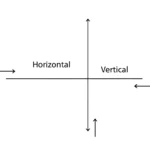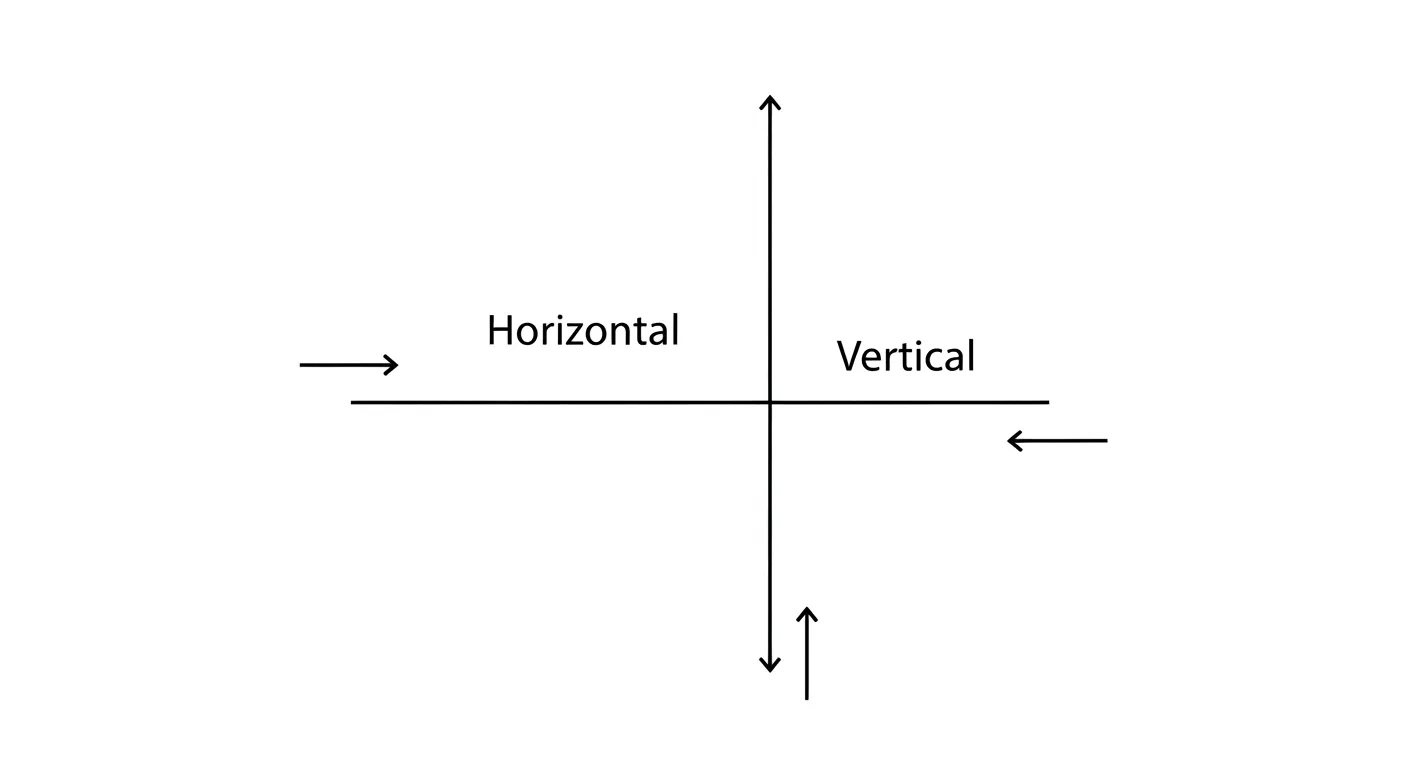
Horizontal means side-to-side (left to right), while vertical means up-and-down (top to bottom).
When you study shapes, design, or even scrolling on Google, Instagram, YouTube, or mobile apps, you often hear the terms horizontal and vertical.
At first, they seem simple, but many users still get confused about the difference between horizontal and vertical in real life.
The difference between horizontal and vertical is important in math, design, architecture, data charts, and even smartphone usage.
In simple words, horizontal means side-to-side direction, while vertical means up-and-down direction. But there is much more depth when we look at how these directions are used in real systems.
People often search what is horizontal, what is vertical, or difference between horizontal and vertical lines because they want clarity for studies, design work, or technical understanding.
In this guide, you will learn the complete difference between horizontal and vertical, real-life applications, expert insights, tables, examples, and why this concept matters in modern digital systems.
🟢Difference Between Horizontal and Vertical
The difference between horizontal and vertical is that horizontal refers to a side-to-side direction (left to right), while vertical refers to an up-and-down direction (top to bottom).
👉 Example: A sleeping person is horizontal, while a standing person is vertical.
🟢 Definition of Horizontal and Vertical
- Horizontal: A direction or line that runs left to right, parallel to the horizon.
- Vertical: A direction or line that runs up and down, perpendicular to the horizon.
🟢 Pronunciation
To better understand the difference between horizontal and vertical, let’s look at pronunciation:
- Horizontal → /ˌhɒr.ɪˈzɒn.təl/ (UK), /ˌhɔːr.ɪˈzɑːn.t̬əl/ (US)
- Vertical → /ˈvɜː.tɪ.kəl/ (UK & US same)
Now let’s explore how these directions are used in real systems.
Horizontal vs Vertical:Comparison
| Feature | Horizontal | Vertical | Similarity |
| Direction | Left to right | Top to bottom | Both describe orientation |
| Position | Parallel to ground | Perpendicular to ground | Both used in geometry |
| Example | Sleeping position | Standing position | Both describe human posture |
| Use in Design | Wide layouts | Tall layouts | Both used in UI design |
| Graph Representation | X-axis | Y-axis | Both used in charts |
| Movement | Sideways motion | Up/down motion | Both show direction |
| Website Layout | Menu bars | Scroll pages | Both used in web design |
| Perception | Wide view | Tall view | Both affect visuals |
🧠 Key Differences Explained Between Horizontal and Vertical
1. Direction Difference
Horizontal goes left to right, vertical goes up and down.
👉 Example: A road map shows horizontal streets and vertical streets.
2. Real-Life Positioning
Horizontal = lying down
Vertical = standing up
👉 Search intent: horizontal vs vertical examples in real life
3. Design & UI Usage
In web design, Instagram feed layout, and YouTube thumbnails, horizontal layouts are used for wide content, while vertical layouts are used for mobile scrolling.
4. Mathematical Representation
In graphs:
- Horizontal = X-axis
- Vertical = Y-axis
5. Technology Usage
Smartphones, Google UI, and Meta platforms use vertical scrolling because users naturally scroll up and down.
6. Architectural Use
Buildings grow vertically (skyscrapers), while roads expand horizontally.
7. Motion Difference
Horizontal motion is sideways (like sliding a drawer), vertical motion is up/down (like elevator movement).
8. Visual Perception
Horizontal gives a wide view, vertical gives height perception.
🧠 Why Horizontal and Vertical Exist
The concept of horizontal and vertical directions comes from geometry and human perception of space.
The horizon line we see naturally creates a horizontal reference. Gravity defines vertical direction (up-down).
In modern systems:
- Google Maps uses both directions for navigation
- Instagram feed is vertical scrolling
- YouTube thumbnails use horizontal layout
This structure helps humans process information visually.
📱 Difference Between Horizontal and Vertical in Digital World
Horizontal in Digital UI
Used in menus, sliders, and image galleries.
Vertical in Digital UI
Used in scrolling feeds like Instagram, TikTok, and Facebook.
👉 Example: TikTok uses vertical scrolling for full-screen engagement.
Difference and Similarity
| Feature | Horizontal | Vertical | Similarity |
| Orientation | Side-to-side | Up-and-down | Both define direction |
| Usage in Apps | Sliders, menus | Feeds, scrolling | Both improve UX |
| Geometry Role | X-axis | Y-axis | Both part of coordinate system |
| Human Example | Sleeping posture | Standing posture | Both physical positions |
| Architecture | Roads, bridges | Buildings, towers | Both structural designs |
| Movement Type | Lateral movement | Vertical movement | Both describe motion |
👉 This table clearly shows the difference and similarity between horizontal and vertical for quick understanding.
❌ Common Mistakes About Horizontal and Vertical
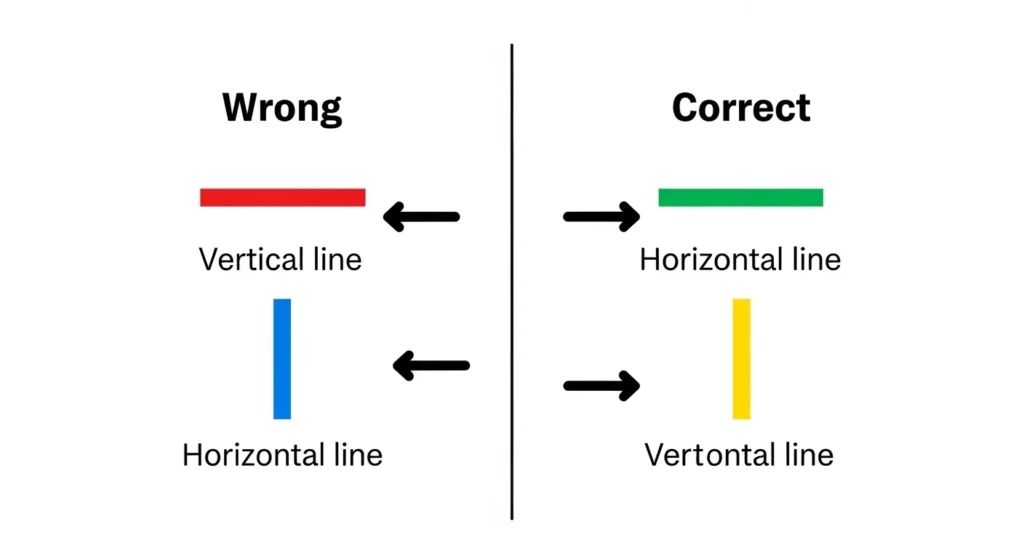
- Confusing axis directions
- Thinking both mean the same thing
- Misunderstanding graph representation
- Mixing UI layout concepts
- Ignoring real-life examples
- Using wrong terminology in design work
👉 Fix: Always connect direction with real-world examples.
🌍 Real Life Examples
1. Human Posture
Sleeping = horizontal
Standing = vertical
2. Architecture
Skyscrapers grow vertically.
3. Transportation
Roads move horizontally across land.
4. Mobile Apps
Instagram scroll = vertical
Image gallery = horizontal
5. Education (Math)
Graphs use X (horizontal) and Y (vertical) axes.
🧭 When to Use Horizontal vs Vertical
Use Horizontal when:
- Designing wide layouts
- Showing comparisons
- Creating menus or sliders
Use Vertical when:
- Designing mobile apps
- Showing lists or feeds
- Representing height or growth
🤔 Why People Get Confused Between Horizontal and Vertical
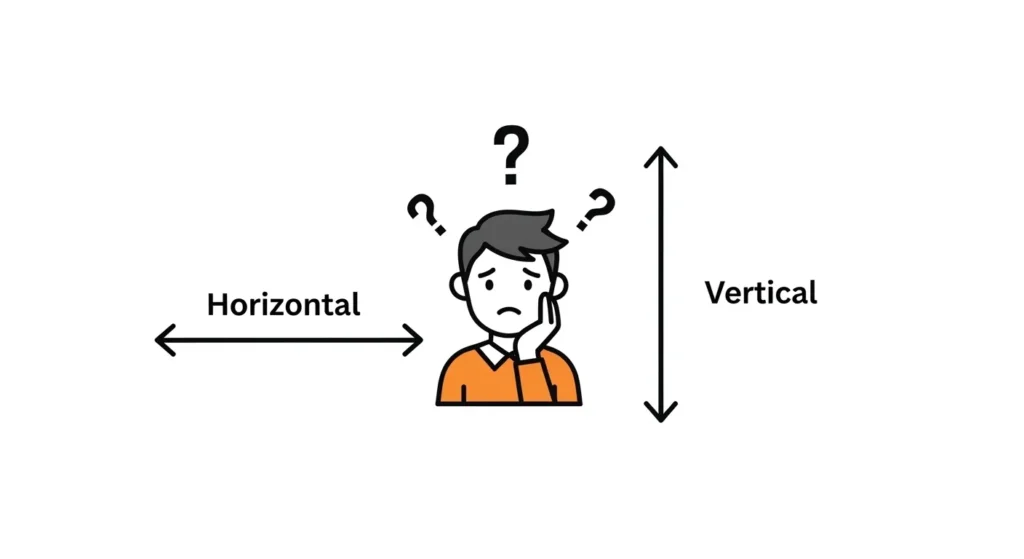
People get confused because:
- Both are used in design and math
- UI apps like Instagram and YouTube mix layouts
- Visual perception varies by context
- Teaching methods sometimes lack real examples
- Digital and physical meanings overlap
🔍 How Search Engines Understand Horizontal vs Vertical Intent
Search engines like Google classify this query as:
- Informational intent
- Educational + design-related query
They rank content based on:
- Clear definitions
- Visual comparison tables
- Real-world examples
- NLP queries like “horizontal vs vertical difference in design”
🧠 Expert Insight
From a design and geometry perspective, horizontal and vertical are fundamental spatial orientation concepts.
Professionals in UX/UI design at companies like Google, Meta, and Microsoft use these directions to improve user experience.
In real-world design systems:
Horizontal layouts improve comparison readability, while vertical layouts improve scrolling engagement.
Certified UI designers often use both directions strategically depending on platform behavior.
❓ FAQs
1. What is the main difference between horizontal and vertical?
Horizontal is side-to-side; vertical is up-and-down.
2. What is horizontal used for?
It is used in wide layouts, graphs, and UI menus.
3. What is vertical used for?
It is used in scrolling, height representation, and lists.
4. Is X-axis horizontal or vertical?
X-axis is horizontal.
5. Is Y-axis horizontal or vertical?
Y-axis is vertical.
6. What is an example of horizontal?
A person lying down.
7. What is an example of vertical?
A standing tree or building.
🧾 Conclusion
The difference between horizontal and vertical is one of the most fundamental concepts in geometry, design, and real-world spatial understanding. Horizontal refers to a side-to-side direction, while vertical refers to an up-and-down direction.
In practical usage, horizontal layouts are widely used in web design, UI systems like Google and YouTube, and architectural planning, while vertical layouts dominate mobile apps like Instagram and TikTok due to scrolling behavior.
Understanding the difference between horizontal and vertical helps in multiple fields including mathematics, design, engineering, and everyday life. In simple words, horizontal represents width and balance, while vertical represents height and growth.
Once you clearly understand this concept, you can easily apply it in studies, design work, and digital platforms without confusion. This makes the topic not only simple but also highly practical in real-world applications.
Read more about!
Difference Between Moissanite and Diamond:Complete Guide

I am Emily Johnson, a USA-based content writer who creates easy-to-read blogs on language and daily life topics. I explain complex ideas in simple English for students and beginners so they can understand easily.