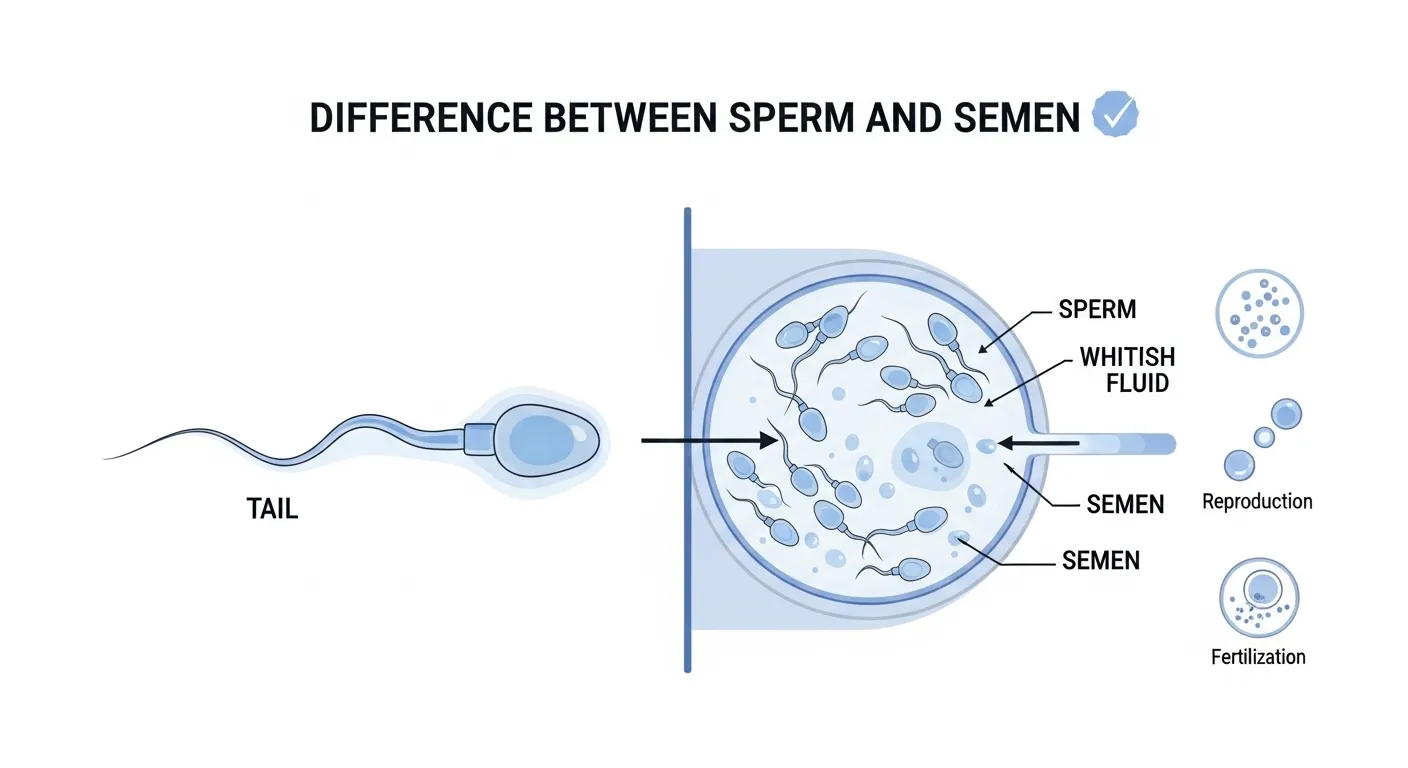
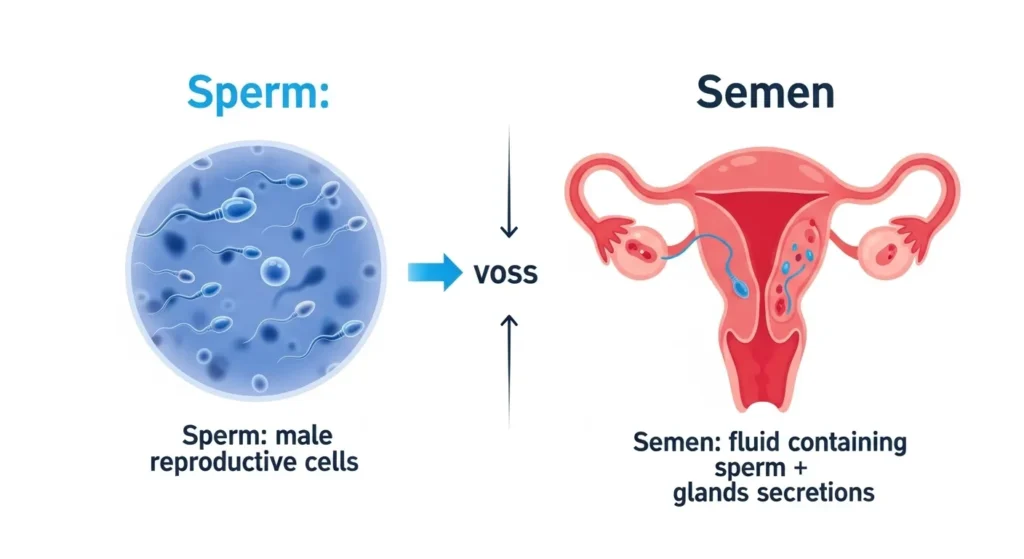
Sperm 🧬 are the male reproductive cells that fertilize an egg, while semen is the fluid that carries and protects sperm during ejaculation.
Many users often search for the difference between sperm and semen, especially when learning about human biology, reproduction, or health. At first, these two terms seem interchangeable, and many people use them as if they mean the same thing. But in reality, they are very different.
Here’s the clear answer: the difference between sperm and semen is that sperm are microscopic reproductive cells, while semen is the fluid that carries and protects those cells. In simple words, sperm are the “cells,” and semen is the “transport medium.”
Understanding the difference between sperm and semen is important for students, couples, and anyone interested in reproductive health.
In this complete guide, you’ll learn definitions, functions, real-life examples, biological processes, and expert insights so you’ll never confuse these terms again.
Difference Between Sperm and Semen
The difference between sperm and semen is that sperm are male reproductive cells responsible for fertilization, while semen is the fluid that contains sperm and helps deliver them during ejaculation.
👉 Example: During ejaculation, semen is released, and it contains millions of sperm cells.
Definition of Sperm and Semen
- Sperm: A microscopic male reproductive cell produced in the testes that fertilizes the female egg.
- Semen: A fluid mixture containing sperm and other substances that nourish and transport sperm.
Pronunciation
- Sperm
- US: /spɜːrm/
- UK: /spɜːm/
- Semen
- US: /ˈsiːmən/
- UK: /ˈsiːmən/
Now that basics are clear, let’s explore the deeper biological differences.
Difference Between Sperm and Semen
| Feature | Sperm | Semen | Similarity |
| Meaning | Reproductive cell | Fluid containing sperm | Both part of reproduction |
| Function | Fertilize egg | Transport sperm | Work together |
| Structure | Microscopic cell | Liquid mixture | Produced in male body |
| Production | Testes | Seminal glands | Controlled by hormones |
| Visibility | Not visible alone | Visible fluid | Both present during ejaculation |
| Role | Genetic contribution | Protection and nourishment | Essential for reproduction |
| Quantity | Millions per sample | Measured in volume | Both vary by health |
Key Differences Explained Between Sperm and Semen
1. Basic Definition
The main difference between sperm and semen is their identity.
- Sperm = cell
- Semen = fluid
👉 Example: Like fish (sperm) swimming in water (semen).
2. Function in Reproduction
Sperm directly fertilizes the egg. Semen supports and carries sperm.
👉 Without semen, sperm cannot travel effectively.
3. Structure and Composition
Sperm has a head, midpiece, and tail. Semen contains proteins, enzymes, and nutrients.
4. Production Process
Sperm is produced in the testes, while semen is formed by mixing fluids from glands like seminal vesicles and prostate.
5. Visibility
Sperm is microscopic, while semen is visible to the naked eye.
6. Role in Fertility
Healthy sperm count and quality are essential for fertility, but semen quality also matters for transport.
7. Quantity and Measurement
Sperm is counted in millions per milliliter, while semen is measured in volume (ml).
Why Do Sperm and Semen Exist Separately?
Biologically, sperm alone cannot survive long outside the body. Semen provides:
- Nutrition
- Protection
- Mobility
👉 This separation ensures higher chances of fertilization.
Difference and Similarity Between Sperm and semen
| Feature | Sperm | Semen | Similarity |
| Meaning | Male reproductive cell | Fluid carrying sperm | Both reproductive |
| Function | Fertilization | Transport | Work together |
| Form | Cell | Liquid | Produced in male body |
| Visibility | Invisible alone | Visible | Present together |
| Production | Testes | Glands | Hormone-controlled |
| Role | Genetic material | Support system | Essential for reproduction |
| Measurement | Count-based | Volume-based | Health indicators |
This table clearly shows the difference and similarity between sperm and semen for quick understanding.
What is the Difference Between Sperm and Semen in Real Life?
In real scenarios:
- During ejaculation, semen is released
- Sperm inside semen travels toward the egg
👉 Most beginners confuse the two because they appear together.
How Does the Difference Between Sperm and Semen Affect Health?
Understanding this difference helps in:
- Fertility testing
- Medical diagnosis
- Reproductive health awareness
Platforms like Google and YouTube often show educational content explaining these concepts.
Common Mistakes with Sperm and Semen
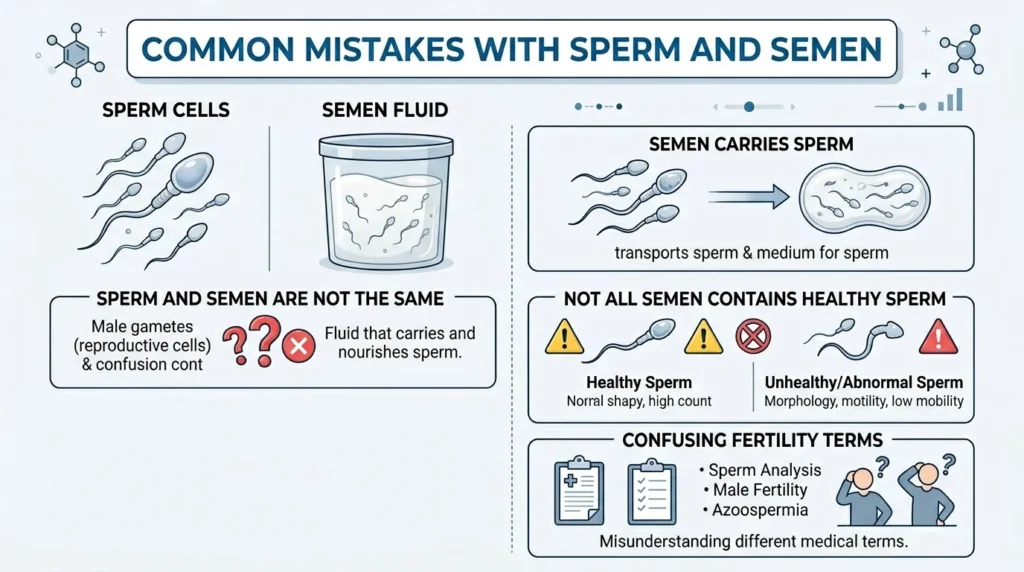
- Thinking both are the same
👉 They are different - Assuming semen equals fertility
👉 Sperm quality matters more - Ignoring sperm count
👉 Important for reproduction - Misunderstanding function
👉 Semen supports, sperm fertilizes
Real-Life Examples with Sperm and Semen
- 🧬 Fertility tests in clinics
- 🧬 Biology education
- 🧬 Medical research
- 🧬 Family planning
👉 In practical use, doctors analyze both sperm count and semen quality.
When to Use Each (Sperm vs Semen)
- Use sperm when referring to reproductive cells
- Use semen when referring to the fluid released
👉 This improves clarity in communication.
Why People Get Confused Between Sperm and Semen
- Similar context
- Lack of education
- Media usage
- Scientific terminology confusion
How Search Engines Understand This Topic
Search engines analyze:
- Informational intent
- Educational queries
- Health-related searches
Platforms like Meta and Instagram spread awareness through educational content.
Expert Insight
From a biological and medical perspective, sperm and semen must work together for successful reproduction. Healthy semen improves sperm survival, while healthy sperm ensures fertilization.
“In practical use, fertility specialists always analyze both sperm quality and semen composition.”
FAQs
1. What is the main difference between sperm and semen?
Sperm is a cell; semen is the fluid carrying it.
2. Can semen exist without sperm?
Yes, but it won’t lead to fertilization.
3. Is sperm visible?
No, it’s microscopic.
4. What is semen made of?
Fluids, nutrients, and sperm cells.
5. Which is important for pregnancy?
Both are important.
6. How many sperm are in semen?
Millions per ejaculation.
7. Does semen affect fertility?
Yes, it supports sperm survival.
Conclusion
The difference between sperm and semen is simple yet important. Sperm are the reproductive cells responsible for fertilization, while semen is the fluid that carries, protects, and nourishes them.
In simple words, sperm is the “key,” and semen is the “vehicle.” Without semen, sperm cannot function effectively, and without sperm, reproduction cannot occur.
Understanding this difference between sperm and semen helps improve knowledge about human biology, fertility, and health. If you’re a student or just curious, this clarity ensures you never confuse these two essential biological terms again.
Read more about!
Difference Between IBS and IBD:Simple Guide
Difference Between Urban and Suburban: Complete Guide

I am James Carter, a professional content writer from the United States. I specialize in writing simple and clear comparison blogs that help students and readers understand difficult topics easily. My writing focuses on everyday language, education, science, and lifestyle topics. I believe that learning should be easy for everyone, so I use simple words and real-life examples in my articles.