🩺 IBS causes functional gut issues without inflammation, while IBD involves chronic gut inflammation.
A young office worker often feels stomach pain after meals. Some days he has cramps and needs the bathroom fast. He thinks it is stress.
His friend says, “Maybe it is IBS.” Another person says, “It could be IBD.” Now he feels confused. Are they the same or different? This is where the difference between IBS and IBD becomes very important.
The difference between IBS and IBD is a key topic in health. Both affect the gut, but they are not the same. The difference between IBS and IBD is about cause, damage, and treatment. Many people mix them up because the symptoms look similar.
When you understand the difference between IBS and IBD, you can take better care of your health. The difference between IBS and IBD helps patients, students, and doctors make the right decisions and avoid fear.
Key Difference Between the Both
The main difference between IBS and IBD is:
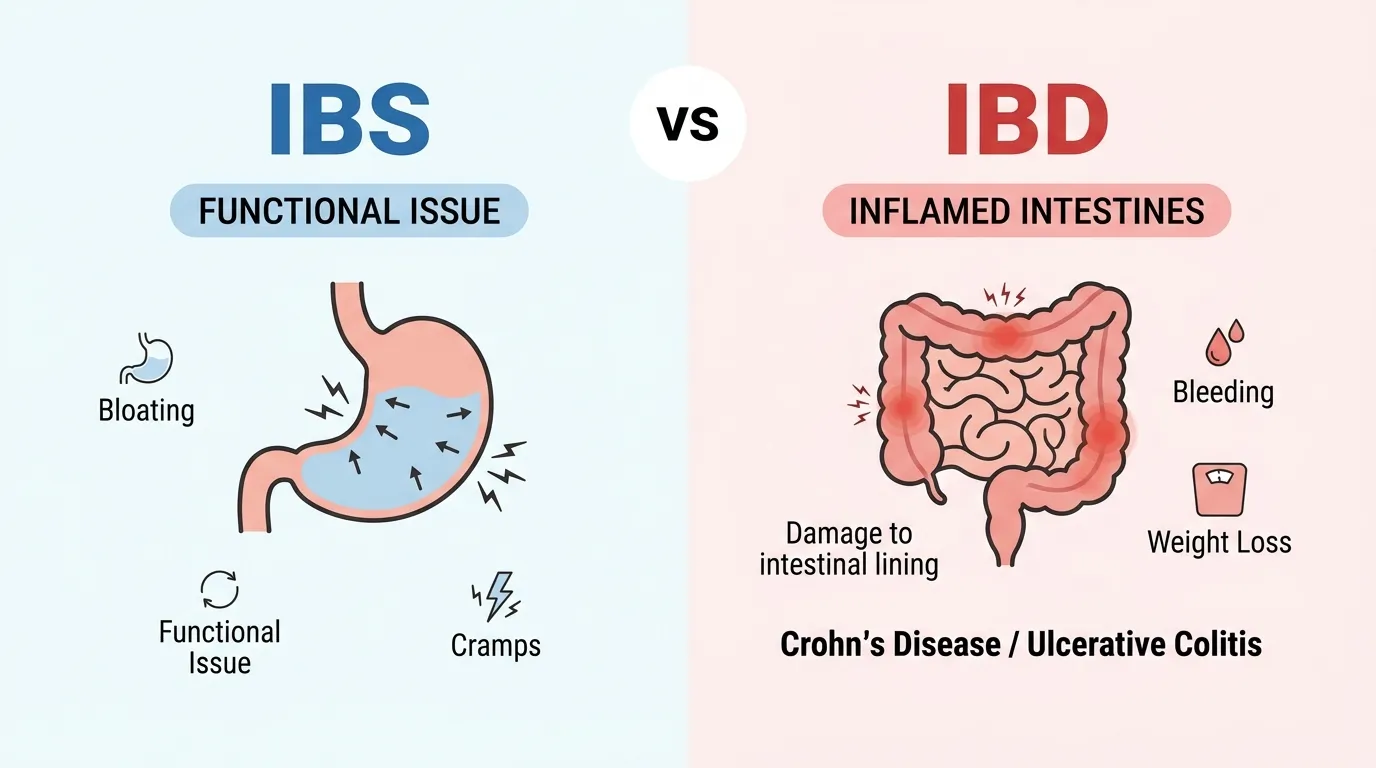
- IBS is a functional disorder (no visible damage)
- IBD is an inflammatory disease (with damage in the gut)
Why Is Their Difference Important for Learners and Experts?
Knowing the difference between IBS and IBD is important because:
- It helps in correct diagnosis
- It guides proper treatment
- It reduces fear and confusion
- It improves public health awareness
This knowledge helps society stay informed and healthy.
Pronunciation
- IBS (US): eye-bee-ess
- IBS (UK): eye-bee-ess
- IBD (US): eye-bee-dee
- IBD (UK): eye-bee-dee
Linking Hook
Now let’s explore the difference between IBS and IBD in detail with simple points and easy examples.
Difference Between IBS and IBD
1. Full Form
IBS stands for Irritable Bowel Syndrome.
IBD stands for Inflammatory Bowel Disease.
- Example 1: IBS causes discomfort.
- Example 2: IBD causes inflammation.
2. Nature
IBS is functional. IBD is inflammatory.
- Example 1: IBS shows no visible damage.
- Example 2: IBD damages the intestine.
3. Causes
IBS is linked to stress and diet. IBD is linked to immune system issues.
- Example 1: IBS worsens with anxiety.
- Example 2: IBD involves immune attack.
4. Symptoms
IBS causes pain and bloating. IBD causes pain with severe symptoms.
- Example 1: IBS causes gas.
- Example 2: IBD causes bleeding.
5. Severity
IBS is usually mild. IBD can be serious.
- Example 1: IBS affects daily comfort.
- Example 2: IBD may need hospital care.
6. Diagnosis
IBS is diagnosed by symptoms. IBD needs tests.
- Example 1: IBS needs no major scan.
- Example 2: IBD needs colonoscopy.
7. Damage
IBS does not damage tissue. IBD damages tissue.
- Example 1: IBS leaves gut normal.
- Example 2: IBD causes ulcers.
8. Treatment
IBS is managed by diet and stress control. IBD needs medicine.
- Example 1: IBS improves with food change.
- Example 2: IBD needs strong drugs.
9. Types
IBS has subtypes (constipation, diarrhea). IBD includes Crohn’s Disease and Ulcerative Colitis.
- Example 1: IBS-C causes constipation.
- Example 2: Crohn’s affects deep layers.
10. Long-Term Risk
IBS has low risk. IBD has higher risk.
- Example 1: IBS rarely causes serious harm.
- Example 2: IBD can lead to complications.
Nature and Behaviour of IBS and IBD
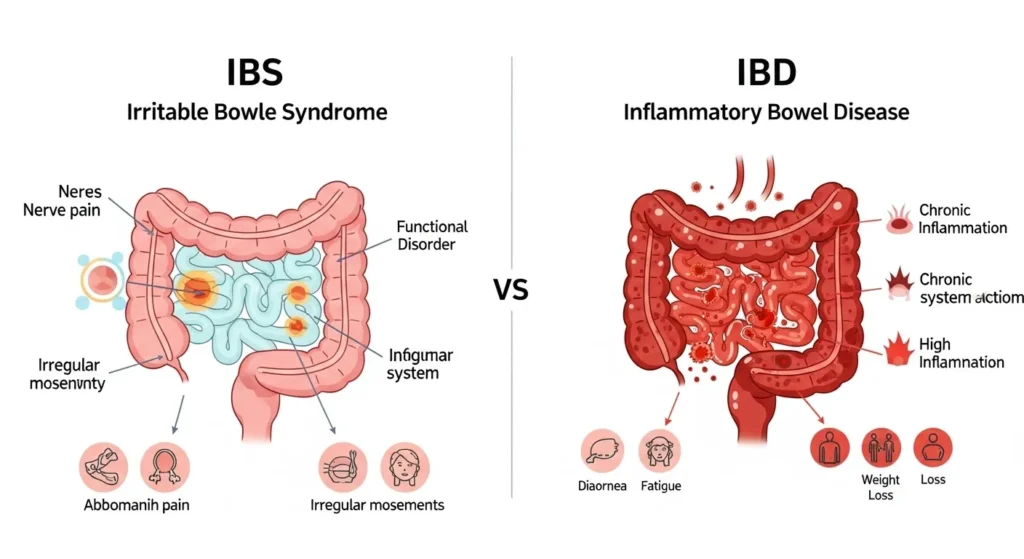
IBS:
It is gentle but annoying. It comes and goes, is linked to stress and food, and does not damage the gut.
IBD:
It is serious and long-term. It causes inflammation, damages the gut, and requires medical care and monitoring.
Why People Get Confused About Their Use
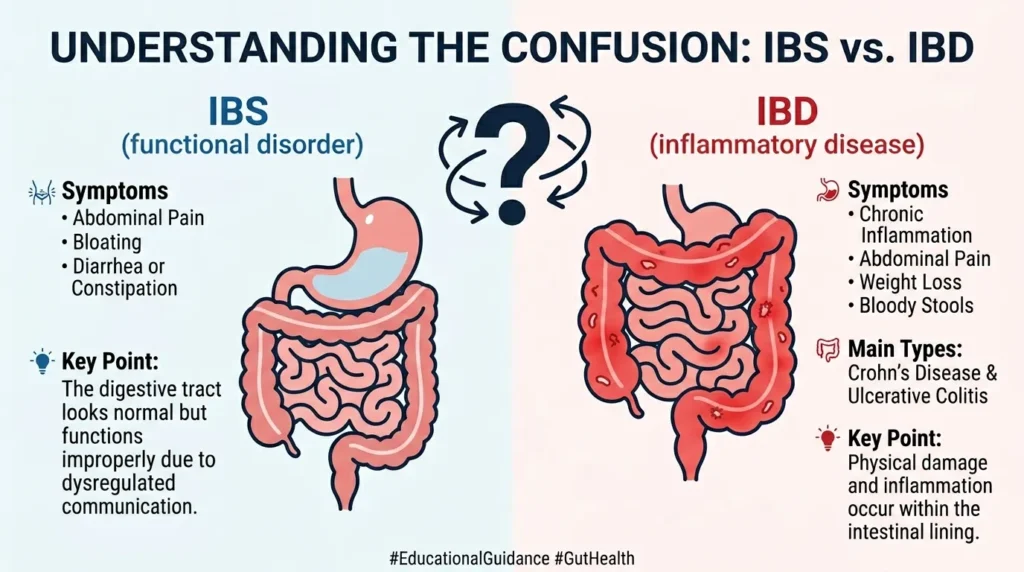
People get confused because:
- Both affect the digestive system
- Both have similar symptoms
- Both names sound alike
This makes the difference between IBS and IBD hard to understand at first.
Difference and Similarity
| Feature | IBS | IBD |
| Type | Functional | Inflammatory |
| Damage | No | Yes |
| Severity | Mild | Serious |
| Treatment | Diet | Medicine |
| Risk | Low | Higher |
Which Is Better in What Situation?
IBS is better in terms of severity because it is less harmful. It does not damage the gut. It can be controlled with diet, stress control, and simple care. People with IBS can live a normal life with small changes. It is uncomfortable but not dangerous.
IBD needs more attention because it is serious. It requires medical treatment and regular check-ups. It can cause damage if ignored. In this case, early diagnosis and proper care are very important. It is not about better or worse, but about proper management.
How Are the Keywords Used in Metaphors and Similes
- “His mind was like IBS always unsettled.”
- “Her anger was like IBD deep and damaging.”
Connotative Meaning
- IBS: Neutral to negative (discomfort)
- Example: “His day felt like IBS uneasy.”
- IBD: Negative (serious illness)
- Example: “The problem spread like IBD.”
Idioms or Proverbs Related
No direct idioms, but similar phrases:
- “Gut feeling”
- Example: IBS affects gut feeling.
- “Deep trouble”
- Example: IBD shows deep trouble.
Works in Literature
- Gut: The Inside Story of Our Body’s Most Underrated Organ (Non-fiction, Giulia Enders, 2015)
- The Good Gut (Health, Justin Sonnenburg, 2015)
Movies Related to the Topic
- The Doctor (1991, USA)
- Patch Adams (1998, USA)
FAQs
1. Are IBS and IBD the same?
No, they are different conditions.
2. Which is more serious?
IBD is more serious.
3. Can IBS turn into IBD?
No, they are separate conditions.
4. Is IBS dangerous?
No, it is not life-threatening.
5. Does IBD need treatment?
Yes, it needs medical care.
How Are Both Useful for Surroundings
Understanding IBS and IBD helps people care for their health.It spreads awareness, helps doctors treat patients better, and improves the quality of life in society.
Final Words for Both
IBS and IBD may sound similar, but they are very different. Knowing their difference helps you stay informed and safe.
Conclusion
The difference between IBS and IBD is simple but very important. IBS is a functional disorder with no damage, while IBD is an inflammatory disease that harms the gut. Both share some symptoms, which causes confusion. However, their causes, treatment, and risks are very different. By understanding the difference between IBS and IBD, people can make better health decisions and avoid fear. This knowledge helps patients, students, and society stay informed and healthy.
Read more about!
Difference Between Parameter and Statistic: Easy Guide
Difference Between Flautas and Taquitos: Complete Guide

I am Emily Johnson, a USA-based content writer who creates easy-to-read blogs on language and daily life topics. I explain complex ideas in simple English for students and beginners so they can understand easily.