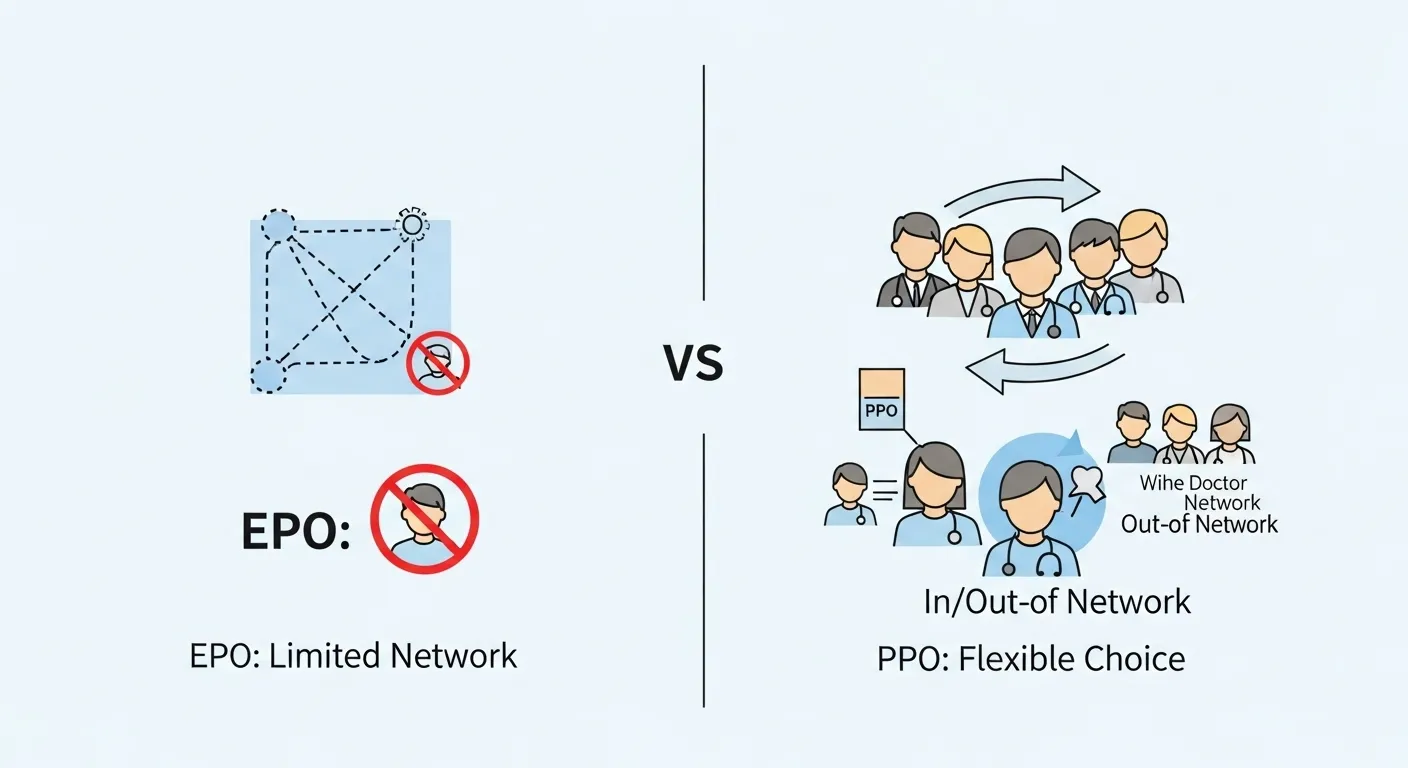
EPO plans require you to stay within a network with no referrals, while PPO plans offer more flexibility to see both in-network and out-of-network providers, usually at a higher cost.
When you start exploring health insurance options on platforms like Google, insurance websites, or employer benefit portals, two common terms often appear: EPO and PPO plans.
Many people get confused about the difference between EPO and PPO because both are managed healthcare networks, but they work in very different ways.
The difference between EPO and PPO is important when choosing medical insurance, especially in countries like the US where healthcare systems depend heavily on network-based coverage.
In simple words, EPO gives you lower cost but limited flexibility, while PPO gives you more freedom but usually at a higher cost.
Users often search what is EPO insurance, what is PPO plan, or which is better EPO or PPO because choosing the wrong plan can directly affect healthcare costs and access to doctors.
In this complete guide, you will learn the full difference between EPO and PPO, how they work, real-world usage, expert insights, and which plan is better for your lifestyle.
🟢Difference Between EPO and PPO
The difference between EPO and PPO is that EPO (Exclusive Provider Organization) only covers in-network doctors, while PPO (Preferred Provider Organization) allows both in-network and out-of-network care.
👉 Example: With EPO, you must visit approved hospitals only, but with PPO you can visit almost any doctor, even outside the network.
🟢 Definition of EPO and PPO
- EPO (Exclusive Provider Organization): A health insurance plan where you must use doctors and hospitals within a fixed network, except in emergencies.
- PPO (Preferred Provider Organization): A flexible insurance plan that allows you to visit both in-network and out-of-network healthcare providers, usually at higher cost.
🟢 Pronunciation
To better understand the difference between EPO and PPO, let’s look at pronunciation:
- EPO → /ˌiː.piːˈoʊ/
- PPO → /ˌpiː.piːˈoʊ/
Now let’s understand how these insurance systems actually work in real life.
EPO vs PPO: Full Comparison
| Feature | EPO Plan | PPO Plan | Similarity |
| Doctor Choice | Limited network only | Wide network + outside providers | Both cover healthcare services |
| Cost | Lower premiums | Higher premiums | Both require monthly payment |
| Referrals | Usually not required | Not required | Both offer direct specialist access |
| Flexibility | Low flexibility | High flexibility | Both allow doctor visits |
| Out-of-Network | Not covered | Partially covered | Both have network systems |
| Emergency Care | Covered | Covered | Both support emergencies |
| Paperwork | Minimal | More documentation | Both require claims process |
| Ideal For | Budget users | Flexible users | Both are insurance plans |
🧠 Key Differences Explained Between EPO and PPO
1. Network Access Difference
EPO restricts you to a specific network of doctors. PPO allows more freedom.
👉 Example: With EPO, you cannot visit outside doctors without paying full cost.
2. Cost Structure Difference
EPO is cheaper monthly. PPO is more expensive due to flexibility.
👉 Search intent: why PPO is expensive
3. Referral System
EPO usually does NOT require referrals. PPO also doesn’t, but EPO is stricter on networks.
4. Out-of-Network Coverage
PPO gives partial coverage outside network. EPO gives almost none except emergencies.
5. Flexibility Level
PPO is highly flexible for travelers or people with specific doctors. EPO is rigid but simple.
6. Claim Process
EPO is simpler with fewer claims. PPO may require more paperwork.
7. Healthcare Control
EPO is controlled by insurer network. PPO gives patients more freedom.
8. Best Use Case
EPO is good for budget-conscious individuals. PPO is better for people who want medical freedom.
🧠 Why EPO and PPO Systems Exist
The EPO system was created to reduce healthcare costs by limiting provider networks. It helps insurance companies negotiate lower rates with hospitals.
The PPO system was created to offer flexibility and patient choice, especially for people who travel or want specialist access.
Companies like Google, Meta, and Amazon often offer PPO plans to employees because of flexibility, while EPO plans are used in cost-saving corporate packages.
Difference and Similarity
| Feature | EPO | PPO | Similarity |
| Coverage Type | Network-only | Network + outside | Both cover medical care |
| Monthly Cost | Lower | Higher | Both require premiums |
| Doctor Choice | Restricted | Flexible | Both allow doctor access |
| Emergency Care | Covered | Covered | Both support emergencies |
| Referrals | Rarely needed | Not required | Both support direct care |
| Paperwork | Less | More | Both involve claims |
| Flexibility | Low | High | Both serve healthcare needs |
👉 This table clearly shows the difference and similarity between EPO and PPO for quick understanding.
❌ Common Mistakes About EPO and PPO
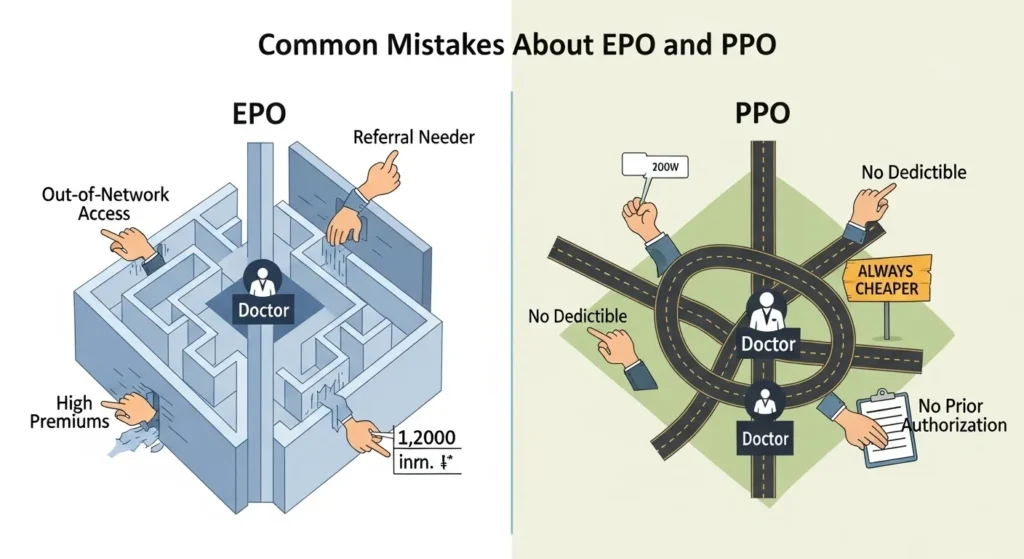
- Thinking PPO is always better
- Ignoring network restrictions in EPO
- Not checking out-of-network costs
- Assuming emergency rules are different
- Choosing based only on premium cost
- Not reading policy details carefully
👉 Fix: Always compare network coverage, not just price.
🌍 Real Life Examples
1. Student Example
A student chooses EPO for lower monthly cost.
2. Corporate Employee
A tech worker at Google uses PPO for flexibility.
3. Family Healthcare
Families often choose PPO for specialist access.
4. Emergency Case
Both EPO and PPO cover emergency hospital visits.
5. Frequent Traveler
PPO is better for people traveling across cities or countries.
🧭 When to Use EPO vs PPO
Choose EPO when:
- You want lower insurance cost
- You are okay with limited doctors
- You rarely travel
Choose PPO when:
- You want full flexibility
- You travel often
- You want specialist access
🤔 Why People Get Confused Between EPO and PPO
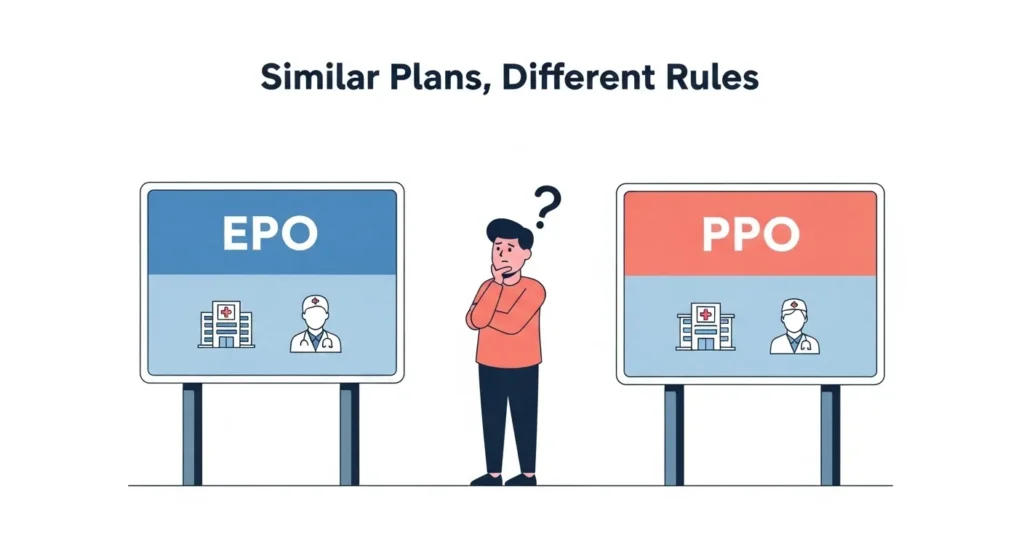
People often confuse these plans because:
- Both are managed care insurance systems
- Both sound similar in name
- Employers don’t explain clearly
- Websites like Google insurance ads and Meta ads simplify them too much
- Benefits overlap in emergency situations
🔍 How Search Engines Understand EPO vs PPO Intent
Search engines like Google classify this as:
- Informational intent
- Healthcare comparison intent
They rank content based on:
- clear explanations
- comparison tables
- real-life examples
- NLP queries like “EPO vs PPO which is better”
🧠 Expert Insight
From a healthcare insurance expert perspective, the choice between EPO and PPO depends on financial control vs flexibility.
Certified insurance advisors often explain:
“EPO reduces cost by limiting access, while PPO increases freedom but raises premiums.”
In real insurance planning, PPO is preferred for professionals and travelers, while EPO is chosen for cost-effective healthcare coverage.
❓ FAQs
1. What is the main difference between EPO and PPO?
EPO limits doctors; PPO allows more flexibility.
2. Which is cheaper, EPO or PPO?
EPO is usually cheaper.
3. Does PPO cover out-of-network doctors?
Yes, partially.
4. Is EPO good for families?
Yes, if budget is a priority.
5. Which is better for travel?
PPO is better for frequent travelers.
6. Do both require referrals?
Usually no.
7. Which is more flexible?
PPO is more flexible.
🧾 Conclusion
The difference between EPO and PPO is one of the most important concepts in health insurance selection. EPO plans focus on cost savings and controlled provider networks, while PPO plans focus on flexibility and wider healthcare access.
In real-world usage, companies like Google, Meta, and large corporations offer PPO plans for employees who need flexibility, while EPO plans are common in budget-focused insurance packages.
Understanding the difference between EPO and PPO helps you make smarter healthcare decisions based on your lifestyle, budget, and medical needs. If you want lower costs and don’t mind restrictions, EPO is ideal. If you want freedom to choose doctors and specialists, PPO is the better option.
In simple terms, EPO = affordability, PPO = flexibility. Once you understand this core idea, choosing the right health insurance becomes much easier and more practical in real life.
Read more about!
Difference Between Horizontal and Vertical:Simple Guide
Difference Between PNG and JPG: Complete Guide

I am James Carter, a professional content writer from the United States. I specialize in writing simple and clear comparison blogs that help students and readers understand difficult topics easily. My writing focuses on everyday language, education, science, and lifestyle topics. I believe that learning should be easy for everyone, so I use simple words and real-life examples in my articles.