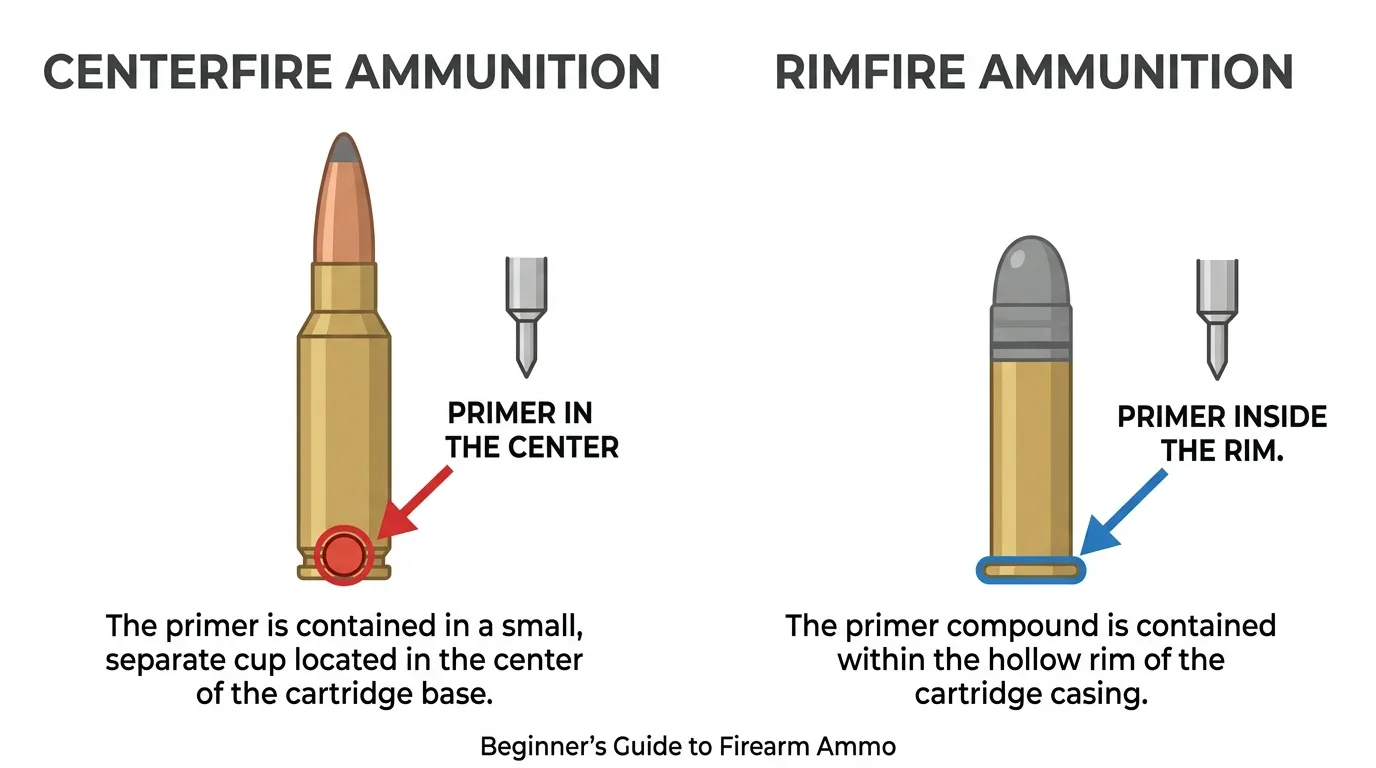
The difference between centerfire and rimfire is that centerfire cartridges have a primer in the center for more power and reliability, while rimfire cartridges use primer inside the rim and are cheaper with lighter recoil.
The difference between centerfire and rimfire is one of the most important concepts in firearms and ammunition. Many beginners get confused because both types of cartridges may look similar from the outside, yet they work very differently inside the firearm.
In simple words, the difference between centerfire and rimfire comes down to where the primer is located and how the cartridge ignites.
If you have ever searched “what is centerfire ammo,” “rimfire vs centerfire explained,” or “which ammunition is better for hunting or self-defense,” you are not alone.
The difference between centerfire and rimfire affects power, reliability, price, recoil, reloadability, and real-world use.
In this complete guide, you will learn:
- What centerfire and rimfire ammunition really mean
- How each system works
- Their advantages and disadvantages
- Real-life examples
- Common beginner mistakes
- Which option is better for hunting, sport shooting, training, or survival
By the end, you will fully understand the difference between centerfire and rimfire without needing another article.
Difference Between Centerfire and Rimfire
The main difference between centerfire and rimfire ammunition is the location of the primer.
- Centerfire cartridges have a primer in the center of the base.
- Rimfire cartridges contain primer material inside the rim of the cartridge base.
For example:
- A 9mm pistol round is centerfire.
- A .22 LR cartridge is rimfire.
Centerfire ammo is stronger, reloadable, and more reliable, while rimfire ammo is cheaper and commonly used for training and small-game shooting.
Definition of Difference Between Centerfire and Rimfire
- Centerfire: A cartridge where the firing pin strikes a primer located in the center of the cartridge base to ignite the powder.
- Rimfire: A cartridge where the firing pin crushes the outer rim of the cartridge to ignite primer material stored inside the rim.
Example:
- .308 Winchester = Centerfire
- .22 Long Rifle (.22 LR) = Rimfire
Pronunciation
- Centerfire
US: /ˈsen-tər-fīr/
UK: /ˈsen-tə-fahyuh/ - Rimfire
US: /ˈrim-fīr/
UK: /ˈrim-fahyuh/
Now that the definitions are clear, let’s understand how these systems actually work in real firearms.
Centerfire vs Rimfire Comparison
| Feature | Centerfire | Rimfire |
| Primer Location | Center of cartridge base | Inside cartridge rim |
| Power Level | High power | Lower power |
| Reliability | Very reliable | Less reliable |
| Reloadable | Usually reloadable | Rarely reloadable |
| Cost | More expensive | Cheaper |
| Common Use | Hunting, defense, military | Training, plinking, small game |
| Cartridge Strength | Strong brass casing | Thin casing |
| Recoil | Moderate to heavy | Very light |
| Popular Example | 9mm, .308, 5.56 NATO | .22 LR, .17 HMR |
| Lifespan | Durable and long-lasting | More sensitive to damage |
Key Differences Explained Between Centerfire and Rimfire
1. Primer Design
The biggest difference between centerfire and rimfire is primer placement.
In centerfire cartridges, the primer sits in the middle. The firing pin hits this center primer directly.
In rimfire cartridges, the firing pin crushes the rim edge instead.
Real-life example:
A Glock 19 firing 9mm uses centerfire ammunition. A Ruger .22 rifle uses rimfire ammo.
2. Power and Performance
Centerfire ammunition handles much higher pressure.
That is why military rounds, hunting calibers, and self-defense ammunition are almost always centerfire.
Rimfire rounds are weaker and better for small targets or beginner practice.
Example:
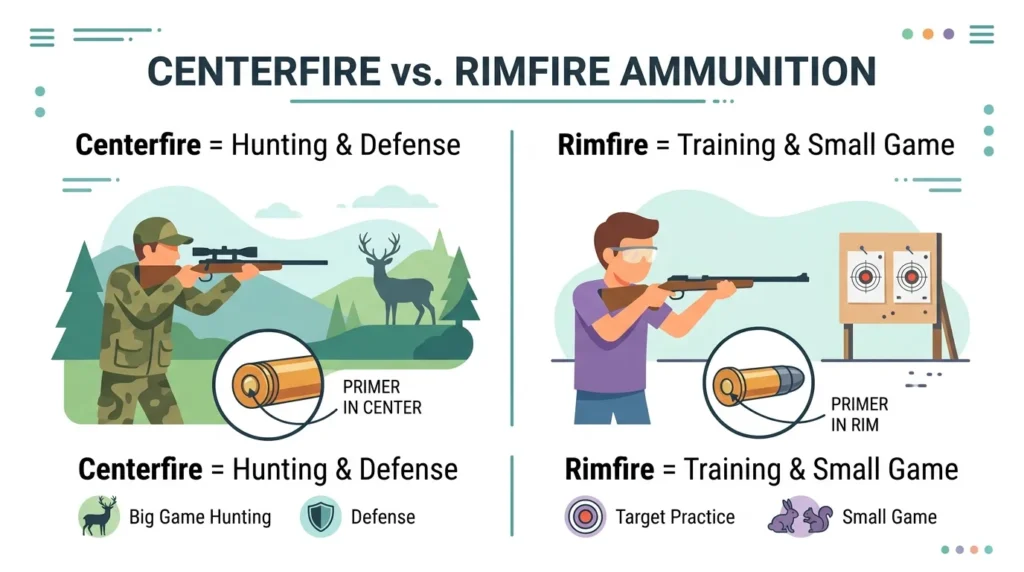
A .22 LR rimfire works well for rabbits. A .308 centerfire is suitable for deer hunting.
3. Reliability
Most professionals trust centerfire because it misfires less often.
Rimfire cartridges can sometimes fail because the primer compound inside the rim may spread unevenly.
In practical use, law enforcement and military agencies depend heavily on centerfire systems because reliability matters in life-threatening situations.
4. Reloadability
Centerfire cartridges are easy to reload because the primer can be replaced.
Rimfire cartridges are generally disposable.
Many experienced shooters reload centerfire ammo to save money or customize performance.
5. Cost Difference
Rimfire ammunition is usually much cheaper.
This is one reason beginners love .22 LR rifles and pistols.
A shooter may fire hundreds of rimfire rounds during practice without spending too much money.
6. Recoil Experience
Rimfire firearms produce very light recoil.
Centerfire guns create stronger recoil due to higher pressure and power.
This matters for:
- Beginner comfort
- Accuracy training
- Long shooting sessions
7. Real-World Applications
Centerfire dominates:
- Self-defense
- Military use
- Tactical shooting
- Big-game hunting
Rimfire dominates:
- Youth training
- Target practice
- Pest control
- Recreational shooting
Difference and Similarity Between Centerfire and Rimfire
| Feature | Centerfire | Rimfire | Similarity |
| Basic Function | Uses center primer | Uses rim primer | Both fire bullets |
| Ammunition Type | High-pressure cartridges | Low-pressure cartridges | Both use powder ignition |
| Shooting Purpose | Defense and hunting | Training and plinking | Both used in firearms |
| Cost | Higher | Lower | Both sold worldwide |
| Reloading | Possible | Difficult | Both use brass cases |
| Popular Users | Hunters, military | Beginners, hobby shooters | Both used by civilians |
| Reliability | More dependable | Less dependable | Both can misfire rarely |
| Firearm Compatibility | Used in larger calibers | Used in smaller calibers | Both require compatible guns |
This table clearly shows the difference and similarity between centerfire and rimfire for quick understanding.
How Does Centerfire Ammunition Work?
A centerfire cartridge works through a simple but powerful process:
- Trigger is pulled
- Firing pin strikes center primer
- Primer ignites gunpowder
- Expanding gas pushes bullet forward
Because the primer is centered, ignition is more controlled and consistent.
That consistency is why centerfire ammunition dominates modern firearms technology.
How Does Rimfire Ammunition Work?
Rimfire ammunition stores primer compound inside the cartridge rim.
When the firing pin crushes the rim:
- Primer ignites
- Powder burns
- Bullet exits barrel
This design is cheaper to manufacture but weaker overall.
Most beginners first experience shooting through rimfire firearms like the .22 LR.
Why Does the Difference Between Centerfire and Rimfire Matter?
Many users think ammunition type only affects price. That is not true.
The difference between centerfire and rimfire affects:
- Accuracy
- Safety
- Power
- Hunting capability
- Firearm lifespan
- Self-defense effectiveness
Choosing the wrong ammunition type for your purpose can create frustration or poor performance.
Is Centerfire Better Than Rimfire?
The answer depends on your goal.
Centerfire is better for:
- Self-defense
- Tactical shooting
- Hunting large animals
- Long-range accuracy
- Professional use
Rimfire is better for:
- Cheap training
- Beginner learning
- Low recoil shooting
- Recreational target practice
Most firearm owners eventually use both systems for different purposes.
Why Is Rimfire So Popular Among Beginners?
Many new shooters start with rimfire because:
- Ammo costs less
- Recoil feels softer
- Noise is lower
- Firearms are easier to control
In real scenarios, instructors often recommend .22 LR rifles to help beginners develop accuracy before moving to stronger centerfire calibers.
Why Professionals Prefer Centerfire Ammunition
Military organizations, law enforcement agencies, and experienced hunters usually prefer centerfire systems.
Why?
Because centerfire offers:
- Better reliability
- More stopping power
- Improved durability
- Better ballistic performance
This is why calibers like:
- 9mm
- .223 Remington
- .308 Winchester
- 5.56 NATO
remain industry standards worldwide.
Organizations like NATO standardized centerfire ammunition because modern combat requires dependable performance under extreme conditions.
Common Centerfire Calibers
Popular centerfire cartridges include:
- 9mm
- .45 ACP
- .223 Remington
- 5.56 NATO
- .308 Winchester
- 6.5 Creedmoor
These are commonly used for:
- Defense
- Tactical training
- Hunting
- Competitive shooting
Common Rimfire Calibers
Popular rimfire cartridges include:
- .22 LR
- .22 Magnum
- .17 HMR
These are widely used for:
- Small-game hunting
- Pest control
- Youth shooting sports
- Practice sessions
Common Mistakes With Centerfire and Rimfire
1. Thinking Rimfire and Centerfire Are Interchangeable
They are not compatible.
A firearm designed for rimfire cannot safely fire centerfire ammo.
Fix:
Always check caliber markings carefully.
2. Assuming Rimfire Is Weak and Useless
Many people underestimate rimfire cartridges.
A .22 LR can still be dangerous and effective for small-game hunting.
Fix:
Treat every firearm seriously regardless of caliber.
3. Using Centerfire for Cheap Practice Only
Some beginners spend too much money practicing with expensive centerfire ammo.
Fix:
Use rimfire training for basic accuracy drills.
4. Believing All Ammunition Is Reloadable
Rimfire ammunition is rarely practical to reload.
Fix:
Understand cartridge design before investing in reloading equipment.
5. Ignoring Reliability Differences
Rimfire cartridges misfire more frequently than centerfire rounds.
Fix:
Use quality ammunition brands for better consistency.
Real-Life Examples With Centerfire and Rimfire
Example 1: Personal Use
A beginner buys a .22 LR rimfire rifle to learn safe shooting basics.
Example 2: Home Defense
A homeowner chooses a 9mm centerfire handgun for reliability and stopping power.
Example 3: Hunting
A hunter uses:
- Rimfire for rabbits
- Centerfire for deer
Different targets require different power levels.
Example 4: Competitive Shooting
Professional shooters often train with rimfire to reduce ammunition costs while improving accuracy skills.
Example 5: Industry and Military Use
Military systems globally rely on centerfire ammunition because combat environments demand reliability under stress.
When to Use Each
| Situation | Best Choice |
| Beginner practice | Rimfire |
| Home defense | Centerfire |
| Big-game hunting | Centerfire |
| Cheap target shooting | Rimfire |
| Tactical applications | Centerfire |
| Youth training | Rimfire |
Why People Get Confused Between Centerfire and Rimfire
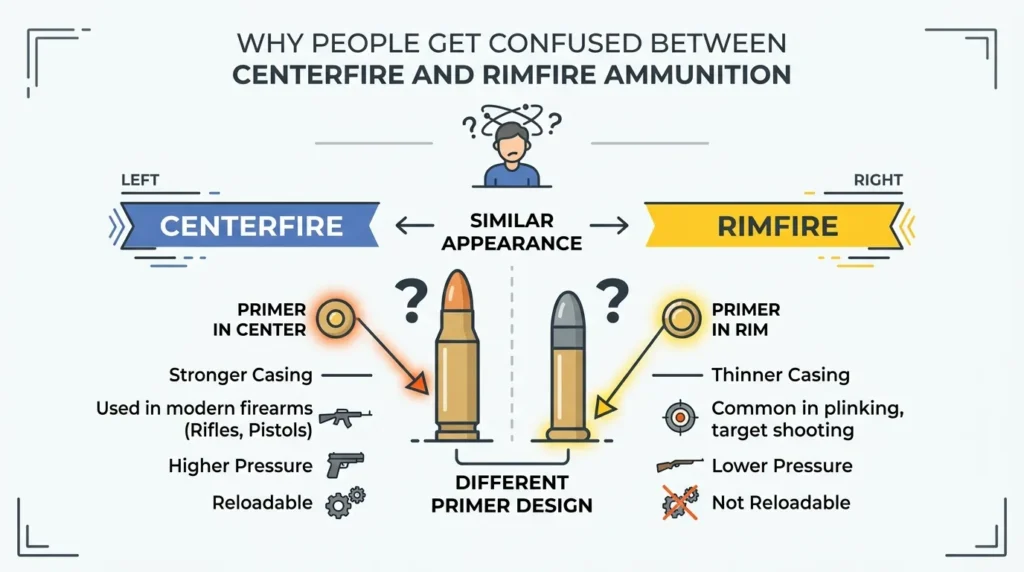
Many users get confused because:
- Both cartridges look similar
- Firearms terminology sounds technical
- Movies rarely explain ammunition types
- Social media clips oversimplify firearms knowledge
Platforms like YouTube and Instagram often show firearm content without explaining ammunition systems clearly.
As a result, beginners may assume all bullets work the same way.
How Search Engines Understand Difference Between Centerfire and Rimfire and User Intent
Search engines like Google analyze search intent carefully.
When users search:
- “what is rimfire ammo”
- “centerfire vs rimfire for hunting”
- “difference between centerfire and rimfire”
Google understands that users want:
- Comparison content
- Beginner explanations
- Buying guidance
- Safety information
Modern systems prioritize:
- Clear tables
- Practical examples
- Helpful explanations
- User satisfaction signals
That is why detailed comparison articles rank better than short definitions.
Expert Insight
In practical firearm training environments, instructors usually recommend rimfire platforms first because they help shooters develop trigger control without recoil anxiety.
However, experienced professionals almost always transition to centerfire systems for serious defensive or hunting use.
Most beginners focus only on ammunition cost. But experienced shooters evaluate:
- reliability
- terminal performance
- firearm durability
- long-term shooting goals
Understanding these deeper factors helps users choose the right system rather than simply the cheaper one.
FAQs
What is the main difference between centerfire and rimfire?
The main difference is primer placement. Centerfire has a center primer, while rimfire stores primer material inside the rim.
Is centerfire more powerful than rimfire?
Yes. Centerfire ammunition handles higher pressure and delivers more power.
Why is rimfire cheaper?
Rimfire cartridges are simpler and cheaper to manufacture.
Can rimfire be used for self-defense?
It can, but centerfire is generally preferred because it is more reliable.
What is the most popular rimfire cartridge?
The .22 Long Rifle (.22 LR) is the most popular rimfire cartridge worldwide.
Why do beginners use rimfire?
Rimfire offers lower recoil, less noise, and lower cost.
Is 9mm centerfire or rimfire?
9mm ammunition is centerfire.
Can centerfire cartridges be reloaded?
Yes. Most centerfire cartridges are reloadable.
Which is better for hunting?
For small animals, rimfire works well. For larger game, centerfire is better.
Why does centerfire dominate military use?
Because it provides better reliability, durability, and ballistic performance.
Conclusion
The difference between centerfire and rimfire is much more than just cartridge design. It affects firearm performance, reliability, recoil, cost, hunting capability, and defensive effectiveness.
In simple words:
- Centerfire ammunition is stronger, reloadable, and trusted for defense, hunting, and professional use.
- Rimfire ammunition is affordable, lightweight, and ideal for beginners, training, and recreational shooting.
Most shooters eventually realize both systems serve different purposes. Rimfire helps build skills economically, while centerfire delivers the power and reliability needed for demanding situations.
Understanding the difference between centerfire and rimfire also helps users make safer and smarter firearm decisions. If you are a beginner buying your first rifle or an experienced shooter comparing ammunition systems, knowing how each cartridge works gives you a major advantage.
The best choice depends on your real-world goal:
- Want cheap practice? Choose rimfire.
- Need reliability and power? Choose centerfire.
Once you understand these differences clearly, firearm terminology becomes much easier to navigate.
Read more about!
Difference Between PNG and JPG: Complete Guide
Difference Between Latte and Mocha: Complete Guide

I am James Carter, a professional content writer from the United States. I specialize in writing simple and clear comparison blogs that help students and readers understand difficult topics easily. My writing focuses on everyday language, education, science, and lifestyle topics. I believe that learning should be easy for everyone, so I use simple words and real-life examples in my articles.