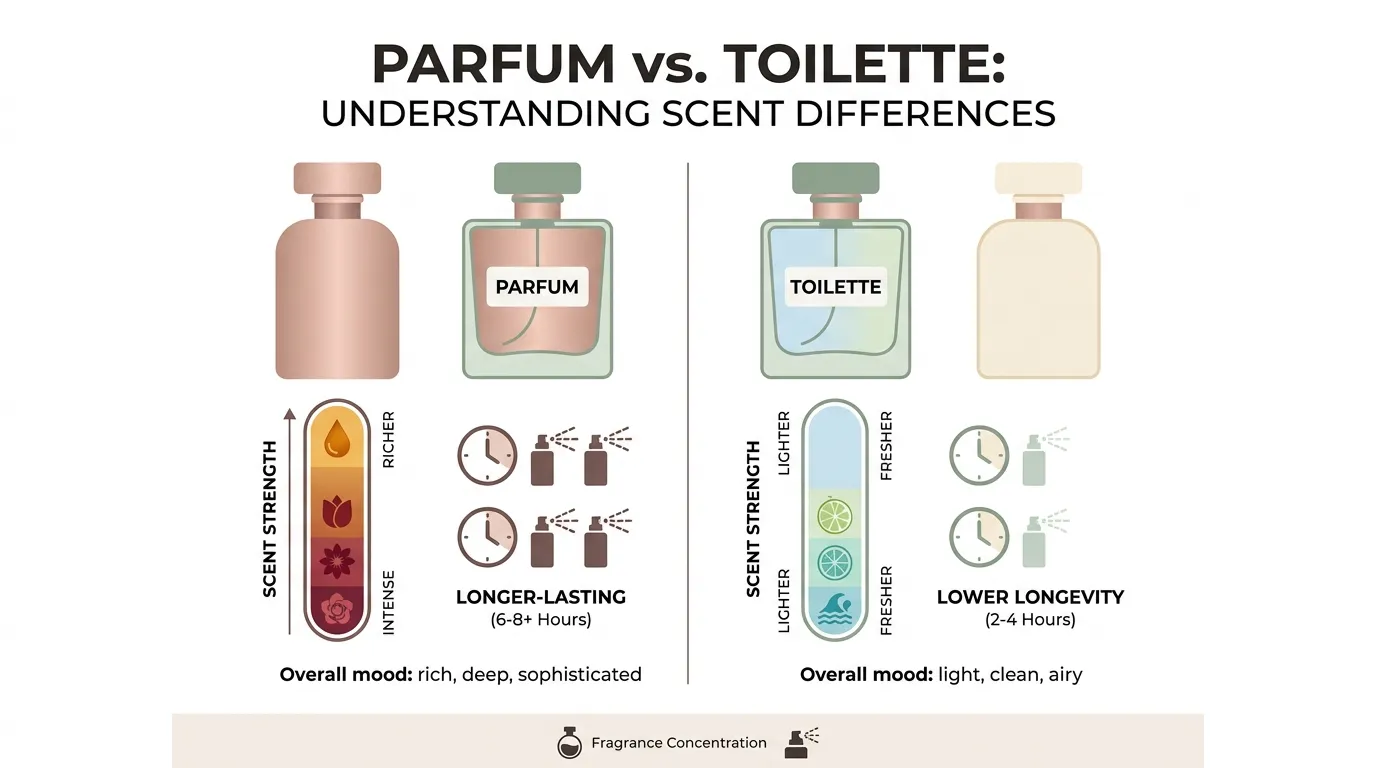
The difference between parfum and toilette is that parfum has a higher fragrance oil concentration for a stronger, longer-lasting scent, while toilette is lighter, fresher, and better for daily use.
The difference between parfum and toilette is one of the most searched fragrance questions online. Many people stand in perfume stores looking at labels like Eau de Parfum and Eau de Toilette without knowing which one lasts longer, smells stronger, or suits daily use better.
In simple words, the difference between parfum and toilette mainly comes down to fragrance oil concentration, longevity, intensity, and price.
If you have ever searched:
- “What is parfum?”
- “What is eau de toilette?”
- “Which perfume lasts longer?”
- “Difference between parfum and toilette for men and women?”
you are not alone.
This guide explains everything clearly using real-life examples, expert insights, beginner-friendly language, and practical buying advice. You will learn how fragrance concentration works, why brands create multiple perfume versions, when to use each type, and which one gives better value in real-world use.
By the end, you will fully understand the difference between parfum and toilette without needing another article.
Difference Between Parfum and Toilette
The main difference between parfum and toilette is fragrance oil concentration.
- Parfum (Perfume) contains a higher concentration of fragrance oils, usually 20–40%, so it lasts longer and smells richer.
- Eau de Toilette (Toilette) contains a lighter concentration, usually 5–15%, making it fresher and less intense.
For example:
- Chanel No. 5 Parfum lasts much longer than its Eau de Toilette version.
Parfum is ideal for long wear and luxury depth, while toilette works well for daily freshness and casual use.
Definition of Difference Between Parfum and Toilette
- Parfum: A highly concentrated fragrance with rich oils that provide long-lasting scent and deeper aroma.
- Toilette: A lighter fragrance formula with lower oil concentration designed for fresher and shorter wear.
Example:
- Dior Sauvage Parfum = stronger and longer-lasting
- Dior Sauvage Eau de Toilette = lighter and fresher
Pronunciation
- Parfum
US: /par-FUM/
UK: /pɑː-FYUM/ - Toilette
US: /twah-LET/
UK: /twah-LET/
Now that the basic definitions are clear, let’s understand why fragrance companies use these different perfume categories.
Parfum vs Toilette Comparison
| Feature | Parfum | Toilette |
| Fragrance Oil Concentration | 20–40% | 5–15% |
| Longevity | 8–12+ hours | 3–6 hours |
| Scent Strength | Rich and deep | Light and fresh |
| Price | More expensive | More affordable |
| Best Use | Evening, formal events | Daily wear, office |
| Spray Amount Needed | Less | More |
| Skin Projection | Stronger | Softer |
| Weather Preference | Better in winter | Better in summer |
| Luxury Feel | Premium and elegant | Casual and refreshing |
| Common Users | Fragrance collectors | Everyday users |
Key Differences Explained Between Parfum and Toilette
1. Fragrance Concentration
The biggest difference between parfum and toilette is the amount of perfume oil inside the bottle.
Parfum contains more concentrated oils, which creates a stronger scent.
Toilette contains more alcohol and water, making it lighter.
Real-life example:
One spray of parfum may last an entire dinner event, while toilette may require reapplication during the day.
2. Longevity on Skin
Parfum lasts much longer because it evaporates slowly.
Toilette fades faster due to lower concentration.
Example:
A parfum may stay noticeable for 10 hours, while toilette may disappear after 4 hours depending on skin chemistry.
3. Scent Intensity
Parfum smells richer, warmer, and more luxurious.
Toilette usually feels airy, fresh, and energetic.
Many users prefer toilette during daytime because it feels cleaner and less overwhelming.
4. Price Difference
Parfum costs more because it contains higher-quality fragrance oils.
Luxury brands spend heavily on premium perfume ingredients.
Example:
A 100ml parfum from Dior or Tom Ford can cost significantly more than the toilette version.
5. Best Situations for Use
Parfum works best for:
- Weddings
- Evening dinners
- Winter seasons
- Formal occasions
Toilette works best for:
- Office wear
- Gym refresh
- School or college
- Hot weather
6. Spray Application
Because parfum is stronger, fewer sprays are needed.
Toilette often requires heavier application.
In practical use, overapplying parfum can become overpowering in small rooms.
7. Skin and Climate Performance
Warm weather increases fragrance evaporation.
That is why lighter toilette fragrances feel more comfortable in summer.
Parfum performs especially well in colder weather because the oils evaporate slowly.
Difference and Similarity Between Parfum and Toilette
| Feature | Parfum | Toilette | Similarity |
| Purpose | Long-lasting luxury scent | Fresh everyday fragrance | Both improve personal scent |
| Concentration | Higher perfume oils | Lower perfume oils | Both contain aromatic compounds |
| Usage Style | Elegant and formal | Casual and light | Both used by men and women |
| Price Range | Premium pricing | Budget-friendly | Both sold globally |
| Longevity | Lasts longer | Shorter wear time | Both fade over time |
| Packaging | Often luxury-focused | Often simpler | Both available in spray bottles |
| Seasonal Preference | Winter and evening | Summer and daytime | Both work year-round |
| Brand Availability | Luxury fragrance lines | Mainstream fragrance lines | Both offered by top perfume brands |
This table clearly shows the difference and similarity between parfum and toilette for quick understanding.
How Does Fragrance Concentration Work?
Fragrance concentration determines:
- How strong the scent feels
- How long it lasts
- How much projection it creates
Perfume formulas contain:
- Fragrance oils
- Alcohol
- Water
Higher oil concentration means:
- richer scent
- slower evaporation
- better longevity
Lower concentration means:
- lighter feel
- fresher opening
- faster fade
This is the scientific reason behind the difference between parfum and toilette.
Why Does the Difference Between Parfum and Toilette Exist?
Many beginners think brands create parfum and toilette versions just for marketing. That is not fully true.
The fragrance industry creates multiple concentrations because users need different scent experiences.
Some people want:
- subtle freshness
- workplace-safe scents
- budget-friendly options
Others prefer:
- luxury projection
- deep richness
- long-lasting performance
Different fragrance concentrations help brands serve multiple lifestyles.
Is Parfum Better Than Toilette?
Not always.
The better option depends on:
- climate
- budget
- skin type
- occasion
- personal preference
Choose Parfum if you want:
- strong longevity
- premium scent depth
- fewer reapplications
- luxury feel
Choose Toilette if you want:
- lighter freshness
- affordable pricing
- daytime comfort
- soft projection
Most fragrance enthusiasts own both types.
Why Do Many Users Prefer Toilette for Daily Wear?
Many users get confused and assume stronger automatically means better.
In reality, lighter scents are often more practical.
Toilette works well because:
- it feels breathable
- it is office-friendly
- it avoids scent fatigue
- it suits hot climates
In countries with warm weather, toilette fragrances can feel much more comfortable than heavy parfum formulas.
Why Luxury Fragrance Collectors Prefer Parfum
Fragrance collectors usually appreciate parfum because it offers:
- deeper complexity
- smoother transitions
- premium ingredients
- longer dry-down performance
Luxury houses like Chanel, Creed, and Maison Francis Kurkdjian often release parfum versions for enthusiasts seeking refined performance.
Common Types of Fragrance Concentrations
Understanding the full fragrance scale helps clarify the difference between parfum and toilette.
| Type | Oil Concentration |
| Parfum | 20–40% |
| Eau de Parfum (EDP) | 15–20% |
| Eau de Toilette (EDT) | 5–15% |
| Eau de Cologne | 2–5% |
| Body Mist | 1–3% |
Most users mistakenly compare parfum directly with perfume spray without understanding this concentration hierarchy.
Common Mistakes With Parfum and Toilette
1. Thinking Expensive Means Automatically Better
A costly parfum may not suit every lifestyle.
Fix:
Choose based on usage and comfort, not price alone.
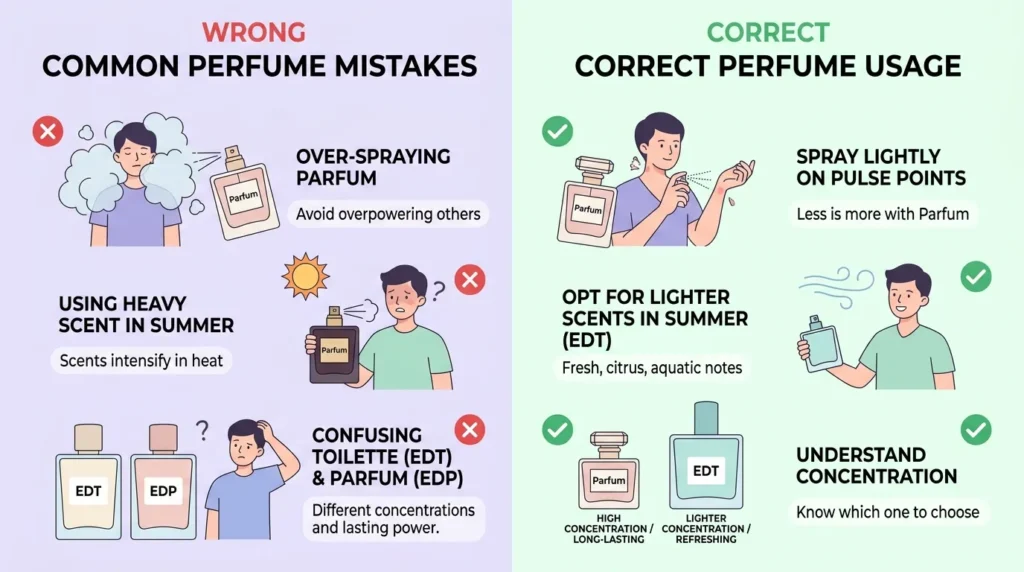
2. Overapplying Parfum
Many beginners spray parfum like body mist.
Fix:
Use only 1–3 sprays because parfum is concentrated.
3. Expecting Toilette to Last All Day
Toilette is designed to feel lighter.
Fix:
Carry a travel spray for reapplication.
4. Ignoring Skin Chemistry
Fragrances smell different on different people.
Fix:
Always test perfume on skin before buying.
5. Using Heavy Parfum in Hot Weather
Strong fragrances may feel overwhelming in summer.
Fix:
Use toilette or fresher scents during warm seasons.
Real-Life Examples With Parfum and Toilette
Example 1: Office Use
A professional uses Eau de Toilette during work because it smells clean without overpowering coworkers.
Example 2: Wedding Event
A parfum performs better during long evening events because it lasts through dinner and dancing.
Example 3: Gym or Casual Outing
A light toilette works well after workouts or daytime errands.
Example 4: Luxury Fragrance Collection
Collectors often buy parfum versions because they appreciate fragrance depth and long dry-down phases.
Example 5: Business and Retail Industry
Perfume retailers frequently recommend toilette to first-time buyers because it is affordable and easier to wear daily.
When to Use Each
| Situation | Best Choice |
| Office | Toilette |
| Wedding | Parfum |
| Summer Weather | Toilette |
| Winter Season | Parfum |
| Daily Use | Toilette |
| Luxury Events | Parfum |
| Budget Shopping | Toilette |
| Long-lasting Wear | Parfum |
Why People Get Confused Between Parfum and Toilette
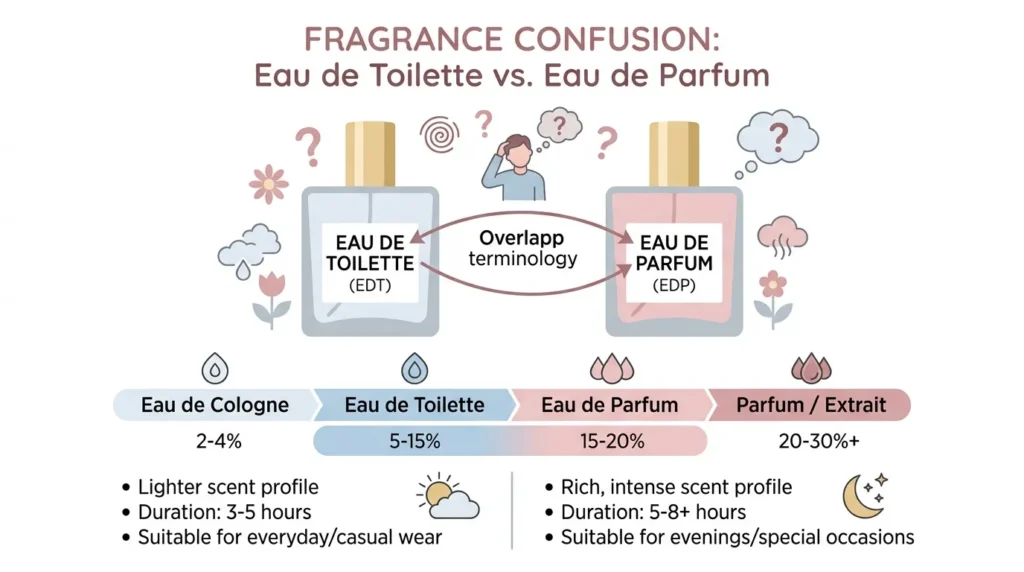
Several reasons create confusion:
- French fragrance terminology
- Similar packaging
- Marketing language
- Social media perfume trends
- Misleading online reviews
Platforms like YouTube and Instagram are full of fragrance influencers discussing “performance” and “projection,” which sometimes overwhelms beginners.
Many users also think “parfum” and “perfume” are identical terms, which adds more confusion.
How Search Engines Understand Difference Between Parfum and Toilette and User Intent
Search engines like Google analyze fragrance-related searches carefully.
When users type:
- “difference between parfum and toilette”
- “which lasts longer parfum or toilette”
- “best perfume concentration”
Google recognizes comparison intent and informational intent together.
Modern ranking systems prioritize:
- quick answer sections
- comparison tables
- practical buying advice
- real-world examples
That is why detailed fragrance guides perform better than short definitions in search results.
Social media platforms owned by Meta also influence fragrance trends heavily through influencer marketing and short-form video reviews.
Expert Insight
In real fragrance consulting scenarios, professionals rarely recommend parfum purely based on strength. Instead, they consider:
- climate
- personality
- workplace environment
- age group
- scent tolerance
Most beginners focus only on longevity. But experienced fragrance users understand that comfort and versatility matter just as much.
For example:
A heavy oud-based parfum may perform beautifully at formal dinners but feel overwhelming in crowded daytime environments.
Meanwhile, a fresh citrus toilette may not last all day, yet it creates a cleaner and more approachable scent profile.
This balance is what separates casual perfume buyers from fragrance enthusiasts.
FAQs
What is the main difference between parfum and toilette?
The main difference is fragrance oil concentration. Parfum contains more oils and lasts longer than toilette.
Does parfum last longer than toilette?
Yes. Parfum typically lasts 8–12 hours, while toilette lasts around 3–6 hours.
Why is parfum more expensive?
Parfum contains higher-quality and more concentrated fragrance oils, increasing production cost.
Is toilette better for summer?
Yes. Toilette feels lighter and fresher in hot weather.
Can men use parfum and toilette?
Absolutely. Both fragrance types are available for men and women.
What is better for office use?
Most professionals prefer toilette because it projects softly and feels less overpowering.
Is Eau de Parfum the same as parfum?
No. Eau de Parfum has lower concentration than pure parfum.
Why do fragrances smell different on skin?
Skin chemistry, temperature, and body oils affect fragrance performance.
How many sprays of parfum should I use?
Usually 1–3 sprays are enough because parfum is highly concentrated.
Which fragrance type is best for beginners?
Toilette is often easier for beginners because it is lighter, cheaper, and more versatile.
Conclusion
Understanding the difference between parfum and toilette helps you choose fragrances more confidently and avoid expensive buying mistakes.
In simple words:
- Parfum is richer, stronger, and longer-lasting because it contains higher fragrance oil concentration.
- Toilette is lighter, fresher, and more suitable for daily wear.
Neither option is universally better. The right choice depends on your lifestyle, weather, budget, and personal scent preference.
If you want elegance, deep projection, and luxury longevity, parfum is usually the better fit. If you prefer freshness, comfort, and casual everyday wear, toilette makes more practical sense.
Most experienced fragrance users eventually own both because each serves a different purpose. In real-world use, the smartest fragrance strategy is not choosing the strongest scent it is choosing the right scent for the right situation.
Once you understand fragrance concentration clearly, perfume shopping becomes much easier and far less confusing.
Read more about!
Difference Between Flautas and Taquitos: Complete Guide
Difference Between Bourbon and Scotch: Complete Guide

I am Emily Johnson, a USA-based content writer who creates easy-to-read blogs on language and daily life topics. I explain complex ideas in simple English for students and beginners so they can understand easily.