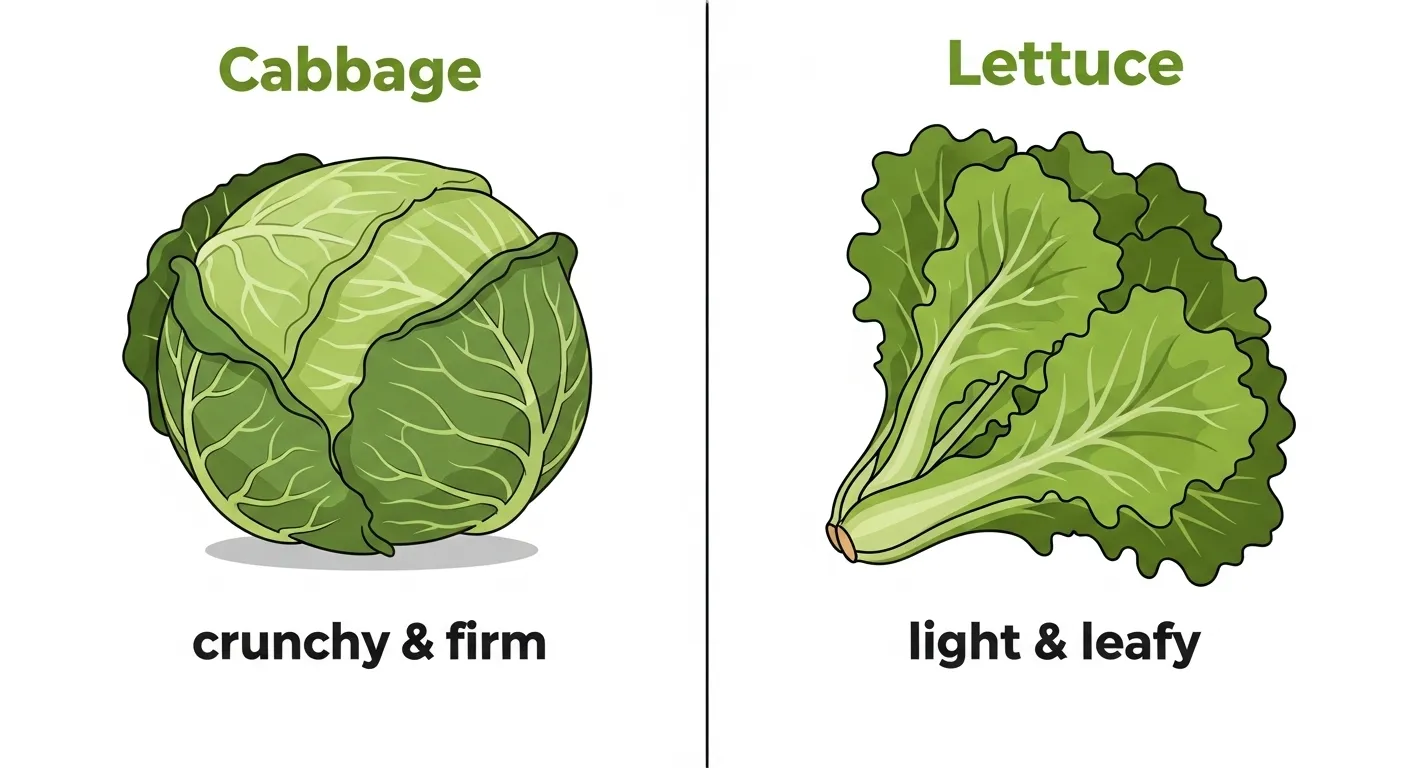
🥬 Cabbage is dense, crunchy, and often cooked, while lettuce is light, leafy, and mostly eaten raw in salads.
One day, a new cook went to the vegetable market to buy salad ingredients. He saw two green vegetables that looked almost the same. One seller called it cabbage, while another called it lettuce.
The cook became confused and asked about the difference between cabbage and lettuce. The shopkeeper explained that even though they look similar, they are very different vegetables.
This small moment shows why people often search for the difference between cabbage and lettuce. Both vegetables are leafy and green, but their taste, texture, and use are not the same.
Understanding the difference between cabbage and lettuce helps people cook better meals and choose the right vegetable for salads or cooking. When we learn the difference between cabbage and lettuce, we can also understand more about vegetables used in kitchens around the world.
🔑 Key Difference Between the Both
The main difference is texture and use. Cabbage has thick and firm leaves, while lettuce has soft and light leaves.
🌍 Why Their Difference Is Important for Learners and Experts
Knowing the difference between cabbage and lettuce helps cooks, nutrition students, and farmers. Chefs must choose the right vegetable for salads, soups, or cooked dishes.
In society, these vegetables are part of daily meals in many countries. Farmers grow them in different ways, and markets sell them for different uses. Understanding the difference between cabbage and lettuce helps people prepare healthy food and avoid confusion when buying vegetables.
🔊 Pronunciation
Cabbage
- US: /ˈkæbɪdʒ/
- UK: /ˈkæbɪdʒ/
Lettuce
- US: /ˈletɪs/
- UK: /ˈletɪs/
Before we explore further, let us clearly examine the difference between cabbage and lettuce step by step.
🥗 Difference Between Cabbage and Lettuce
1. Leaf Texture
Cabbage has thick and firm leaves. Lettuce has soft and delicate leaves.
Examples of cabbage:
- Green cabbage
- Red cabbage
Examples of lettuce:
- Iceberg lettuce
- Romaine lettuce
2. Taste
Cabbage has a stronger taste. Lettuce has a mild taste.
Examples of cabbage:
- Cooked cabbage in soup
- Fried cabbage dish
Examples of lettuce:
- Fresh lettuce salad
- Lettuce sandwich filling
3. Cooking Use
Cabbage is often cooked. Lettuce is usually eaten raw.
Examples of cabbage:
- Stir-fried cabbage
- Cabbage soup
Examples of lettuce:
- Caesar salad
- Lettuce wraps
4. Leaf Shape
Cabbage leaves are tightly packed. Lettuce leaves are loose and open.
Examples of cabbage:
- Round cabbage head
- Compact red cabbage
Examples of lettuce:
- Loose leaf lettuce
- Romaine lettuce head
5. Color Variety
Cabbage comes in green, purple, and white shades. Lettuce is usually green but can be light red.
Examples of cabbage:
- Purple cabbage
- Pale green cabbage
Examples of lettuce:
- Green iceberg lettuce
- Red leaf lettuce
6. Nutritional Use
Cabbage is rich in vitamin C and fiber. Lettuce is light and hydrating.
Examples of cabbage:
- Cabbage salad with carrots
- Fermented cabbage dish
Examples of lettuce:
- Fresh garden salad
- Lettuce in burgers
7. Shelf Life
Cabbage lasts longer in storage. Lettuce spoils faster.
Examples of cabbage:
- Stored cabbage in refrigerator
- Pickled cabbage
Examples of lettuce:
- Fresh lettuce leaves
- Packed salad lettuce
8. Weight
Cabbage heads are heavier. Lettuce heads are lighter.
Examples of cabbage:
- Large cabbage head
- Heavy red cabbage
Examples of lettuce:
- Light iceberg lettuce
- Small lettuce head
9. Culinary Role
Cabbage works well in hot dishes. Lettuce works best in cold dishes.
Examples of cabbage:
- Cabbage stew
- Fried cabbage meal
Examples of lettuce:
- Cold salad bowl
- Lettuce wrap meal
10. Texture After Cooking
Cabbage stays firm when cooked. Lettuce becomes soft and wilted.
Examples of cabbage:
- Steamed cabbage
- Boiled cabbage dish
Examples of lettuce:
- Warm lettuce salad
- Wilted lettuce leaves
Nature and Behaviour of Both
Cabbage:
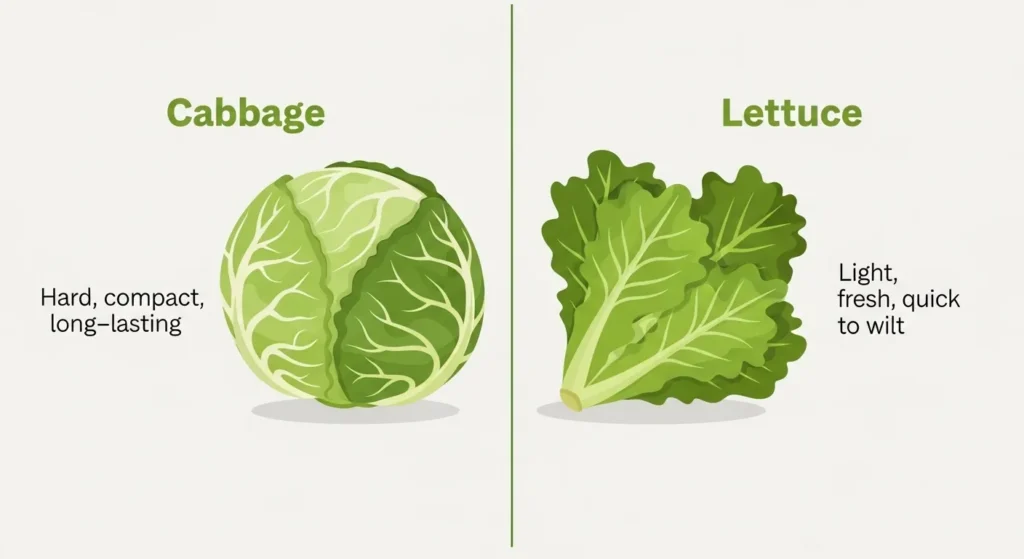
Cabbage is strong and dense. It grows as a tight round head. Its leaves are thick and can handle cooking.
Lettuce:
Lettuce is soft and delicate. Its leaves grow loosely and stay fresh for salads and sandwiches.
🤔 Why People Are Confused About Their Use
Many people feel confused because both vegetables are green and leafy. They can also look similar when placed in markets. From a distance, cabbage and lettuce heads may appear almost the same.
Difference and Similarity
| Feature | Cabbage | Lettuce | Similarity |
| Leaf texture | Thick | Soft | Both leafy vegetables |
| Taste | Stronger | Mild | Both used in food |
| Cooking | Often cooked | Usually raw | Both healthy |
| Shape | Tight head | Loose leaves | Both green plants |
| Shelf life | Longer | Shorter | Both sold in markets |
🍽️ Which Is Better in What Situation?
Cabbage:
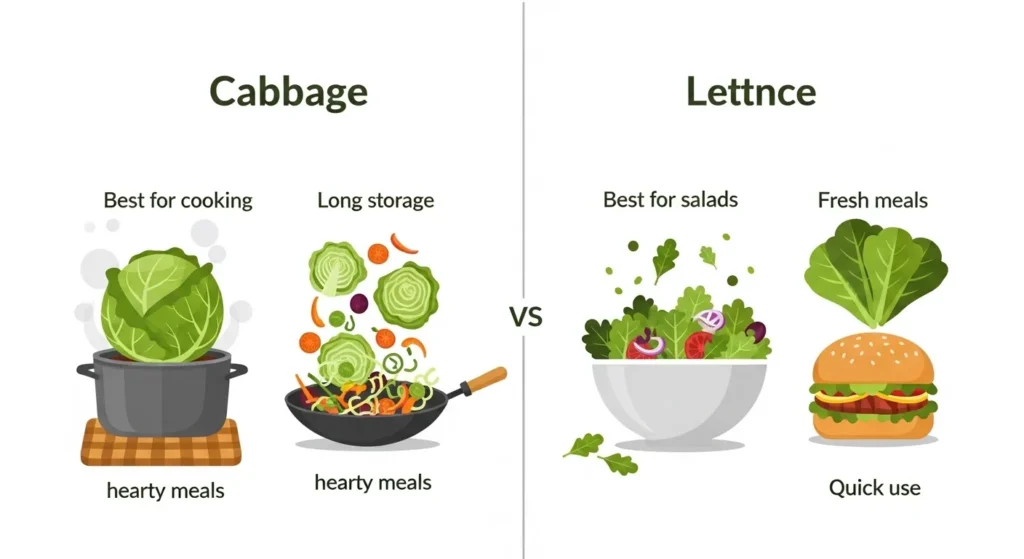
Cabbage is better for cooking dishes such as soups, stir-fries, and stews. Its thick leaves stay firm even when heated. This makes it perfect for hot meals and long cooking.
Lettuce:
Lettuce is better for fresh meals like salads and sandwiches. Its light and crisp leaves give a refreshing taste. It is also popular in burgers and wraps because it adds crunch.
🎭 How Cabbage and Lettuce Are Used in Metaphors and Similes
People sometimes use these vegetables in figurative language.
Cabbage examples
- “His head felt like a cabbage after a long day.”
- “The market was full like a field of cabbages.”
Lettuce examples
- “Money stacked like lettuce in the wallet.”
- “The salad looked fresh like garden lettuce.”
Connotative Meaning
Cabbage
Sometimes neutral or humorous.
Example: “He joked that his brain felt like cabbage after the exam.”
Lettuce
Often positive or slang for money.
Example: “He saved a lot of lettuce this year.”
Idioms and Expressions
Use your cabbage
Meaning: Use your brain.
Example: “You must use your cabbage to solve this puzzle.”
Lettuce (slang for money)
Example: “She earned a lot of lettuce from the business.”
📚 Works in Literature
- The Cabbage Patch Fib – Children’s Story, Paul Hutchens, 1984
- The Lettuce Diaries – Memoir, Amanda Hesser, 2007
🎬 Movies Related to the Words
- The Cabbage Soup 1981, France
- Cloudy with a Chance of Meatballs (features lettuce scenes) 2009, United States
❓ Frequently Asked Questions
1. Is cabbage the same as lettuce?
No. They are different vegetables with different textures and uses.
2. Which is better for salads?
Lettuce is usually better for fresh salads.
3. Can cabbage be eaten raw?
Yes. It is often used in coleslaw.
4. Which vegetable lasts longer?
Cabbage usually lasts longer in storage.
5. Which one is lighter to eat?
Lettuce is lighter and more refreshing.
🌱 How Cabbage and Lettuce Are Useful for Surroundings
Both vegetables provide healthy nutrients and are easy to grow in farms and gardens. Farmers grow them in many parts of the world. They also support local markets and food supply.
Cabbage and lettuce help people eat more vegetables and maintain balanced diets. Their farming also supports agriculture and food security.
Final Words for Both
Cabbage is firm, strong, and great for cooking. Lettuce is soft, fresh, and perfect for salads. Both vegetables play important roles in healthy meals.
Conclusion
The difference between cabbage and lettuce becomes clear when we examine their texture, taste, and culinary use. Cabbage has thick leaves and works well in cooked dishes, while lettuce has soft leaves and is best for fresh salads and sandwiches. Although they look similar in markets, their uses in the kitchen are quite different. Understanding the difference between cabbage and lettuce helps cooks, shoppers, and students choose the right vegetable for each meal. Both vegetables remain important parts of healthy diets and everyday cooking around the world.
Read more about!
Theater vs Theatre:Quick Key Difference Guide

I am Emily Johnson, a USA-based content writer who creates easy-to-read blogs on language and daily life topics. I explain complex ideas in simple English for students and beginners so they can understand easily.