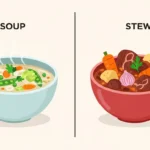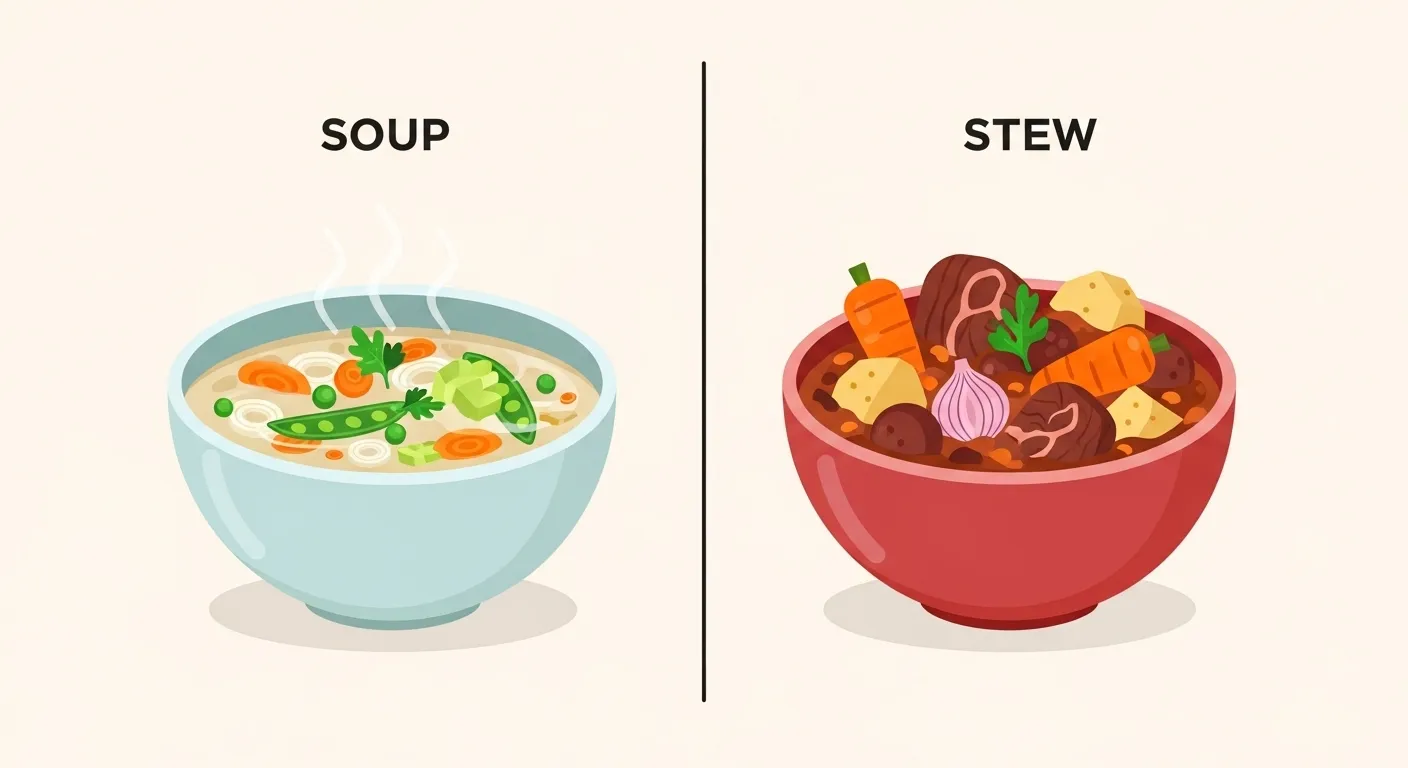
🍲 Soup is lighter and more liquid-based, while stew is thicker, heartier, and packed with solid ingredients.
On a cold evening, many people enjoy a warm bowl of food. Some choose soup, while others like stew. A young cook once asked his grandmother, “Is this soup or stew?” She smiled and said that many people mix them, but they are not the same. This small moment shows why learning the difference between stew and soup is useful.
Both foods are warm, tasty, and full of flavor. Yet the difference between stew and soup lies in how they are cooked and served.
Many new cooks often ask about the difference between stew and soup because both look similar in a bowl. However, once you understand the difference between stew and soup, it becomes easy to tell them apart.
In kitchens around the world, people make both dishes every day. Learning the difference between stew and soup helps cooks choose the right dish for the right time.
🔑 Key Difference Between the Both
The main difference is the amount of liquid and the cooking style. Soup has more liquid and is usually thin. Stew has less liquid and is thick with large pieces of food.
🌍 Why Their Difference Is Important for Learners and Experts
Knowing the difference between stew and soup helps people cook better meals. Cooking students must learn the right terms. Professional chefs also use these words in menus and recipes. If a cook writes “soup” but serves a stew, people may feel confused.
In society, food language matters. Restaurants, cooking schools, and food writers use correct names for dishes. So understanding the difference between stew and soup improves communication in cooking and food culture.
🔊 Pronunciation
Soup
- US: /suːp/
- UK: /suːp/
Stew
- US: /stuː/
- UK: /stjuː/
Before we explore deeper, let us now look closely at the real difference between stew and soup in cooking and daily use.
🍜 Difference Between Stew and Soup
1. Amount of Liquid
Soup has more liquid. Stew has less liquid.
Examples of soup:
- Chicken soup with broth
- Tomato soup
Examples of stew:
- Beef stew with thick gravy
- Vegetable stew
2. Thickness
Soup is thin. Stew is thick.
Examples of soup:
- Clear vegetable soup
- Miso soup
Examples of stew:
- Irish beef stew
- Lamb stew
3. Cooking Time
Soup cooks faster. Stew cooks slowly for a long time.
Examples of soup:
- Noodle soup
- Corn soup
Examples of stew:
- Slow cooked beef stew
- Bean stew
4. Size of Ingredients
Soup uses small pieces. Stew uses large chunks.
Examples of soup:
- Chicken noodle soup
- Lentil soup
Examples of stew:
- Beef and potato stew
- Fish stew
5. Cooking Method
Soup is often boiled quickly. Stew is simmered slowly.
Examples of soup:
- Egg drop soup
- Clear broth soup
Examples of stew:
- Moroccan lamb stew
- Chicken stew
6. Serving Style
Soup is often served as a starter. Stew is served as a main meal.
Examples of soup:
- Cream of mushroom soup
- Pumpkin soup
Examples of stew:
- Beef stew with bread
- Chicken vegetable stew
7. Use of Broth
Soup depends on broth. Stew uses thick gravy.
Examples of soup:
- Chicken broth soup
- Vegetable broth soup
Examples of stew:
- Brown beef stew
- Thick pork stew
8. Texture
Soup feels light. Stew feels heavy and filling.
Examples of soup:
- Light vegetable soup
- Clear seafood soup
Examples of stew:
- Thick potato stew
- Meat stew
9. Cooking Container
Soup can cook in many pots. Stew often cooks in a deep pot or slow cooker.
Examples of soup:
- Stove cooked tomato soup
- Instant noodle soup
Examples of stew:
- Dutch oven beef stew
- Slow cooker stew
10. Meal Purpose
Soup can be a light meal. Stew is usually a full meal.
Examples of soup:
- Diet vegetable soup
- Starter soup at restaurants
Examples of stew:
- Farmer beef stew
- Winter vegetable stew
Nature and Behaviour of Both
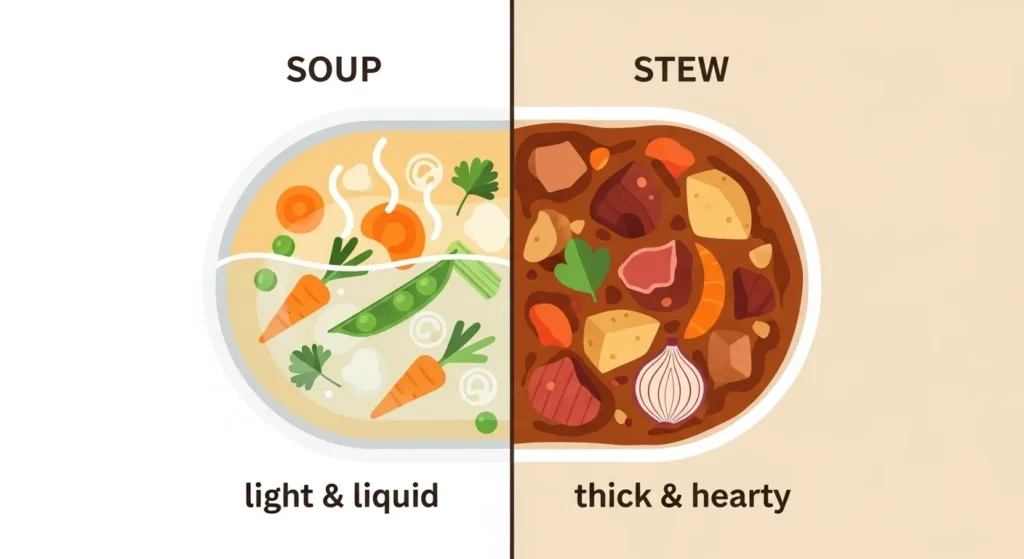
Soup:
Soup is light and watery. It flows easily in a bowl. People drink it with a spoon or sometimes sip it.
Stew:
Stew is thick and rich. It stays heavy in the bowl. People eat it slowly because it is filling.
🤔 Why People Are Confused About Their Use
People get confused because both stew and soup are cooked in liquid. Both use vegetables, meat, or beans. They also look similar in bowls. In many homes, people use the names in a loose way. So the difference becomes unclear.
📊 Table Showing Difference and Similarity
| Feature | Soup | Stew | Similarity |
| Liquid | More | Less | Both use liquid |
| Thickness | Thin | Thick | Both can have vegetables |
| Cooking time | Short | Long | Both cooked in pot |
| Meal role | Starter | Main meal | Both warm dishes |
| Texture | Light | Heavy | Both comforting foods |
🥘 Which Is Better in What Situation?
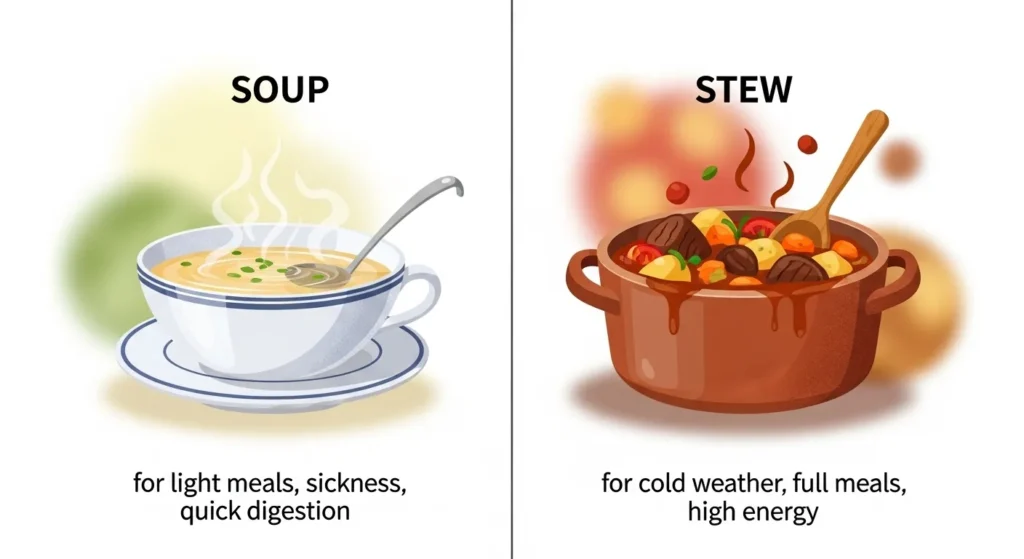
Soup:
Soup is better when you want a light meal. It is good when someone is sick. It is also great as a starter before dinner. Many people drink soup in cold weather.
Stew:
Stew is better when you want a full meal. It is rich and filling. Farmers and workers often enjoy stew because it gives more energy.
🎭 How Stew and Soup Are Used in Metaphors and Similes
Sometimes these words appear in figurative language.
Soup metaphors:
- “The city was a soup of noise and smoke.”
- “Ideas mixed like soup in his mind.”
Stew metaphors:
- “He sat there and stewed in anger.”
- “Her mind was a stew of thoughts.”
Connotative Meaning
Soup
- Usually neutral or positive
Example: “Grandmother’s soup feels warm and caring.”
Stew
- Neutral but sometimes negative
Example: “He is stewing in anger.”
Idioms and Proverbs
In the soup
Meaning: In trouble
Example: “He lost the money and now he is in the soup.”
Stew in your own juice
Meaning: Face the result of your actions
Example: “She refused help, so she must stew in her own juice.”
📚 Works in Literature
- Stone Soup – Folktale retold by Marcia Brown, Children’s Literature, 1947
- Stew – Play by Zora Howard, Drama, 2020
🎬 Movies Related to the Words
- Stone Soup – 1989, United States
- Burning Stew – 2005, France
❓ Frequently Asked Questions
1. Is stew thicker than soup?
Yes. Stew is thicker because it has less liquid.
2. Can stew become soup?
Yes. If more liquid is added, stew can turn into soup.
3. Is soup always a starter?
No. Some soups are full meals.
4. Is stew healthier than soup?
Both can be healthy. It depends on ingredients.
5. Why does stew cook longer?
Slow cooking makes the meat soft and the flavor strong.
🌱 How Stew and Soup Are Useful for Our Surroundings
Both dishes help reduce food waste. People can use leftover vegetables and meat to cook them. This helps families save money and protect food resources.
Soup and stew also bring people together. Families often share these warm dishes in winter. Restaurants serve them to comfort guests.
Final Words for Both
Soup is light, warm, and simple. Stew is thick, rich, and filling. Both are loved foods across cultures.
Conclusion
Understanding the difference between stew and soup is easy once you look at their liquid, thickness, and cooking method. Soup is usually light and watery, while stew is thick and full of large pieces of food. Both dishes are warm and comforting, but they serve different roles in a meal. Soup often works as a starter or a light dish, while stew is usually a full and hearty meal. Learning the difference between stew and soup helps cooks, food lovers, and students use the right words in cooking and conversation. In the end, both foods have a special place in kitchens around the world, bringing warmth and flavor to every table.
Read more about!
Pro V1 vs Pro V1x:Simple Difference Guide

I am James Carter, a professional content writer from the United States. I specialize in writing simple and clear comparison blogs that help students and readers understand difficult topics easily. My writing focuses on everyday language, education, science, and lifestyle topics. I believe that learning should be easy for everyone, so I use simple words and real-life examples in my articles.