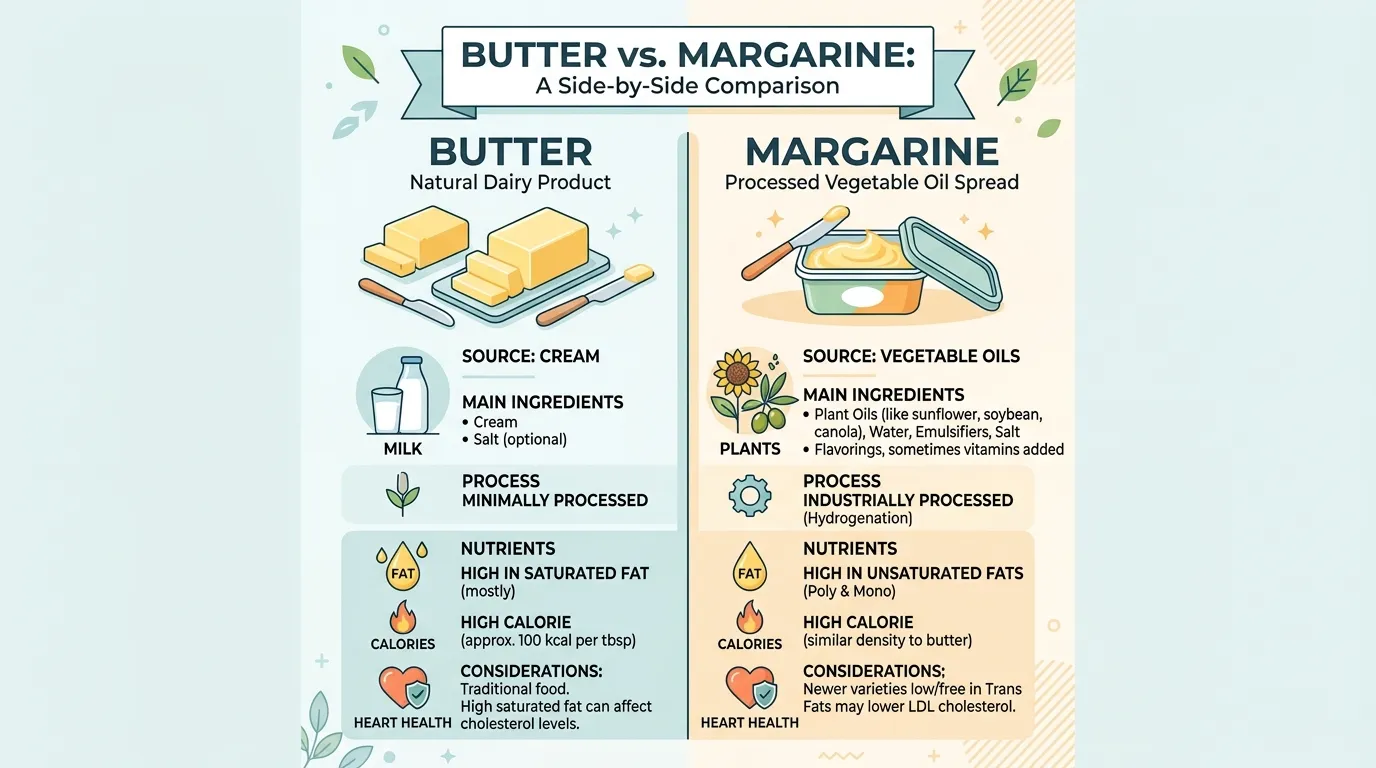
Butter is a natural dairy product made from cream, while margarine is a processed butter alternative usually made from vegetable oils.
The difference between margarine and butter is one of the most searched food comparison topics because many people want to know which spread is healthier, tastier, and better for cooking.
Some people use butter for baking, while others prefer margarine for heart health or lower saturated fat. That is why the difference between margarine and butter often creates confusion in kitchens, fitness plans, and even grocery shopping decisions.
In simple words, butter is made from dairy cream, while margarine is usually made from vegetable oils. But the real story goes deeper. The difference between margarine and butter also involves nutrition, processing methods, cholesterol, taste, texture, calories, and cooking performance.
Many users search questions like:
- What is healthier: butter or margarine?
- Is margarine better for weight loss?
- Why do doctors recommend soft margarine?
- Can butter replace margarine in baking?
In this complete guide, you will learn everything clearly with real examples, expert insights, comparison tables, friendly explanations, and practical usage tips.
Difference Between Margarine and Butter
Butter is a natural dairy product made from churned cream, while margarine is a processed spread usually made from vegetable oils.
For example:
- Butter is commonly used in baking cookies for rich flavor.
- Margarine is often chosen by people trying to reduce saturated fat intake.
Butter usually has a richer taste, while margarine often contains more unsaturated fats and may support heart-health goals depending on the ingredients.
Definition of Difference Between Margarine and Butter
- Butter: A dairy product made by churning cream or milk fat. It contains natural animal fats and has a rich creamy flavor.
- Margarine: A butter substitute mainly made from vegetable oils, water, and emulsifiers. It is designed to spread easily and often contains unsaturated fats.
Example:
Butter comes from milk, while margarine comes mostly from plant oils like soybean, sunflower, or canola oil.
Pronunciation
- Butter
- US Pronunciation: BUH-ter
- UK Pronunciation: BUH-tuh
- Margarine
- US Pronunciation: MAR-juh-rin
- UK Pronunciation: MAR-juh-reen
Now that the basic meanings are clear, let’s understand the deeper comparison between margarine and butter and why so many people mix them up.
Comparison: Margarine vs Butter
| Feature | Butter | Margarine |
| Main Source | Made from dairy cream | Made from vegetable oils |
| Taste | Rich and creamy | Mild or slightly oily |
| Fat Type | Higher in saturated fat | Higher in unsaturated fat |
| Cholesterol | Contains cholesterol | Usually cholesterol-free |
| Texture | Hard when cold | Often softer and spreadable |
| Processing | More natural | More processed |
| Baking Result | Better flavor in baking | Better moisture in some recipes |
| Heart Health | Should be limited in excess | Some versions are heart-friendlier |
| Vitamins | Natural vitamin A | Often fortified with vitamins |
| Vegan Friendly | No | Some types are vegan |
Key Differences Explained Between Margarine and Butter
1. Source of Ingredients
Butter comes from animal milk fat. Margarine comes mainly from plant oils. This is the biggest difference between margarine and butter.
Real-life example:
People following vegan diets usually choose margarine because butter contains dairy.
2. Fat Composition
Butter contains more saturated fat. Margarine generally contains more polyunsaturated and monounsaturated fats.
Many nutrition apps and fitness platforms track saturated fat intake because high intake may affect heart health over time.
3. Processing Method
Butter is relatively simple to produce. Margarine often goes through industrial processing to stabilize oils and improve texture.
Most beginners think all margarine is unhealthy, but modern soft margarine is very different from older trans-fat versions.
4. Taste and Flavor
Butter has a deeper, richer flavor. Margarine tastes lighter and less creamy.
Professional bakers often prefer butter for pastries and cakes because flavor matters heavily in baking quality.
5. Cooking Performance
Butter burns faster because of milk solids. Margarine generally handles heat differently depending on oil content.
In practical cooking:
- Butter works well for sauces.
- Margarine may work better for spreading and certain frying needs.
6. Shelf Life
Margarine usually lasts longer because vegetable oils are processed for stability.
Butter spoils faster if stored incorrectly.
7. Health Perception
Many users believe margarine is always healthier. In reality, the healthiest choice depends on ingredients, portion size, and overall diet.
Modern nutrition experts recommend checking labels rather than assuming one is always superior.
Difference and Similarity Between Margarine and Butter
| Feature | Butter | Margarine | Similarity |
| Purpose | Used as a spread and cooking fat | Used as a spread and cooking fat | Both replace cooking oils in recipes |
| Appearance | Yellow creamy block | Yellow soft spread | Both look visually similar |
| Usage | Baking, frying, spreading | Baking, frying, spreading | Both are kitchen staples |
| Calories | High calorie food | Also calorie-dense | Both provide energy |
| Texture | Firmer when cold | Softer and smoother | Both melt under heat |
| Flavor | Rich dairy taste | Neutral or buttery flavor | Both improve food taste |
| Storage | Refrigerated | Refrigerated | Both require cool storage |
| Availability | Dairy section | Spread section | Both are globally available |
This table clearly shows the difference and similarity between margarine and butter for quick understanding.
What Is Healthier: Margarine or Butter?
This is the most searched question online.
The answer depends on:
- ingredients
- portion size
- personal health goals
- medical conditions
Butter May Be Better If:
- You prefer natural foods
- You avoid processed products
- You want richer flavor
Margarine May Be Better If:
- You want lower saturated fat
- You follow a plant-based diet
- You need cholesterol-free spreads
Modern health organizations and nutrition systems often recommend soft margarine made with healthy oils instead of hard stick margarine containing trans fats.
Why Do Many People Prefer Butter?
Butter remains popular because of taste and tradition.
In real scenarios:
- Restaurants often use butter for premium flavor.
- Bakers use butter for flaky pastries.
- Home cooks trust butter for classic recipes.
Food creators on platforms like YouTube and Instagram frequently show butter-based recipes because audiences associate butter with comfort food and rich texture.
Why Has Margarine Become Popular?
Margarine became widely used when people started focusing on heart health and cholesterol reduction.
Brands promoted margarine as a healthier alternative because vegetable oils contain more unsaturated fats.
Fitness apps and diet trackers now analyze:
- calorie intake
- fat ratios
- saturated fat levels
This is why margarine often appears in weight-management meal plans.
How Does Baking Change with Margarine and Butter?
This is where many beginners get confused.
Butter in Baking
Butter creates:
- richer flavor
- crisp texture
- flaky layers
Examples:
- croissants
- cookies
- pie crusts
Margarine in Baking
Margarine often creates:
- softer texture
- more moisture
- easier spreading
Examples:
- soft cakes
- budget-friendly recipes
Professional chefs usually choose butter for premium desserts, but margarine is common in commercial baking because it costs less and stays stable longer.
Common Mistakes with Margarine and Butter
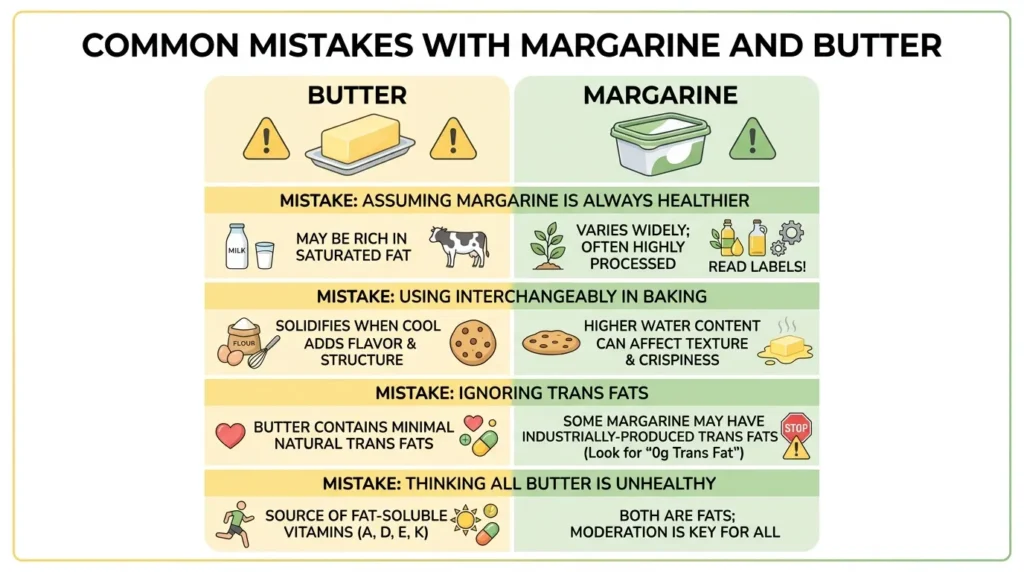
1. Thinking All Margarine Contains Trans Fat
Older margarine products had harmful trans fats. Modern soft margarine often contains little or no trans fat.
Fix:
Always read nutrition labels carefully.
2. Using Margarine Instead of Butter Without Recipe Adjustment
Some recipes depend on butter fat content.
Fix:
Check baking instructions before swapping ingredients.
3. Assuming Butter Is Completely Unhealthy
Butter can fit into balanced diets when used moderately.
Fix:
Focus on portion control instead of fear.
4. Ignoring Ingredient Quality
Cheap margarine products may contain additives and lower-quality oils.
Fix:
Choose products with simple ingredient lists.
5. Believing “Low Fat” Means Healthy
Some low-fat spreads add sugar or artificial ingredients.
Fix:
Compare full nutrition labels, not just marketing claims.
Real-Life Examples with Margarine and Butter
1. Home Cooking
A family may use butter for breakfast toast because of flavor but use margarine for sandwiches due to easier spreading.
2. Fitness Diet Plans
Gym users sometimes choose plant-based margarine to reduce saturated fat intake.
3. Commercial Bakeries
Large bakeries often use margarine because it lowers costs and improves shelf stability.
4. Restaurant Cooking
Luxury restaurants frequently use butter in sauces because customers expect richer taste.
5. Vegan Lifestyle
People avoiding dairy use vegan margarine alternatives made from olive or avocado oil.
When to Use Each
Use Butter When:
- flavor matters most
- baking pastries
- making creamy sauces
- cooking traditional recipes
Use Margarine When:
- reducing saturated fat
- needing easy spreadability
- following vegan diets
- managing cholesterol intake
In practical use, many households actually use both products for different situations.
Why People Get Confused Between Margarine and Butter
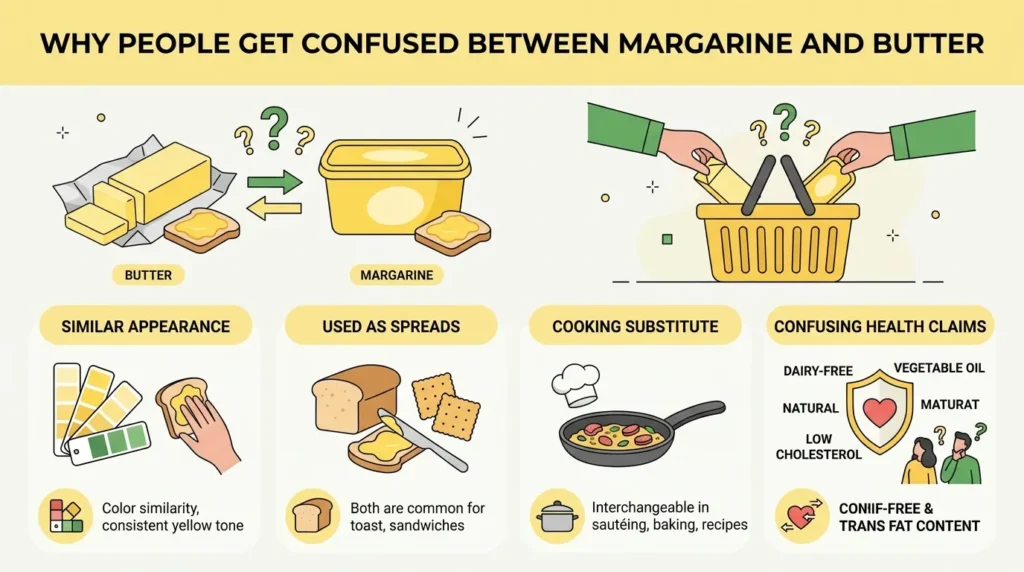
Similar Appearance
Both products look yellow and creamy.
Marketing Language
Packaging often uses words like:
- buttery spread
- plant butter
- creamy blend
This confuses buyers.
Recipe Substitutions
Many recipes allow substitution, making people think they are identical.
Social Media Influence
Food creators on Meta platforms frequently simplify cooking advice, which sometimes removes nutritional context.
How Search Engines Understand Margarine vs Butter and User Intent
Search engines like Google analyze user intent carefully.
When users search:
- “difference between margarine and butter”
- “is margarine healthier than butter”
- “butter vs margarine for baking”
Google tries to understand:
- health intent
- cooking intent
- comparison intent
- buying intent
Search algorithms also track:
- engagement time
- user satisfaction
- content depth
- semantic relevance
That is why modern articles must answer beginner and advanced questions together.
Platforms like YouTube rank recipe videos higher when users watch longer and interact more.
Expert Insight
From a nutrition and food science perspective, neither butter nor margarine is automatically “good” or “bad.” What matters most is:
- overall diet quality
- ingredient transparency
- cooking purpose
- portion size
In real-world nutrition counseling, experts often recommend:
- limiting heavily processed fats
- choosing products with minimal trans fats
- balancing saturated and unsaturated fats
Most beginners focus only on calories, but professionals also examine ingredient sourcing, fatty acid composition, and processing methods.
FAQs
What is the main difference between margarine and butter?
Butter is made from dairy cream, while margarine is mainly made from vegetable oils.
Is margarine healthier than butter?
Sometimes. Soft margarine with healthy oils may support heart health better than butter.
Can I replace butter with margarine in baking?
Yes, but texture and flavor may change depending on the recipe.
Does butter contain cholesterol?
Yes. Butter contains natural cholesterol because it comes from dairy fat.
Why was margarine invented?
Margarine was created as a cheaper alternative to butter.
Which tastes better: butter or margarine?
Most people think butter has a richer flavor.
Is margarine vegan?
Some types are vegan because they contain plant oils instead of dairy.
Why do fitness diets prefer margarine sometimes?
Because some margarine products contain less saturated fat.
Does butter spoil faster than margarine?
Usually yes, especially if not refrigerated properly.
Which is better for toast?
That depends on preference:
- butter gives richer taste
- margarine spreads more easily
Conclusion
Understanding the difference between margarine and butter helps people make smarter cooking and nutrition decisions. Butter is a traditional dairy product known for its rich flavor and natural ingredients, while margarine is a plant-based alternative often designed for lower saturated fat and easier spreading.
The right choice depends on your goals. If flavor, baking quality, and natural dairy taste matter most, butter is usually preferred. If you want lower cholesterol intake, vegan options, or more unsaturated fats, margarine may fit better.
In real-life use, many households combine both depending on the recipe and health needs. The important thing is understanding ingredients, reading nutrition labels, and using either product in moderation.
Now you clearly know the complete difference between margarine and butter, including health factors, baking performance, cooking uses, similarities, expert insights, and practical examples.
Read more about!
Difference Between Autobiography and Biography: Full Guide
Difference Between Urban and Suburban: Complete Guide

I am Emily Johnson, a USA-based content writer who creates easy-to-read blogs on language and daily life topics. I explain complex ideas in simple English for students and beginners so they can understand easily.