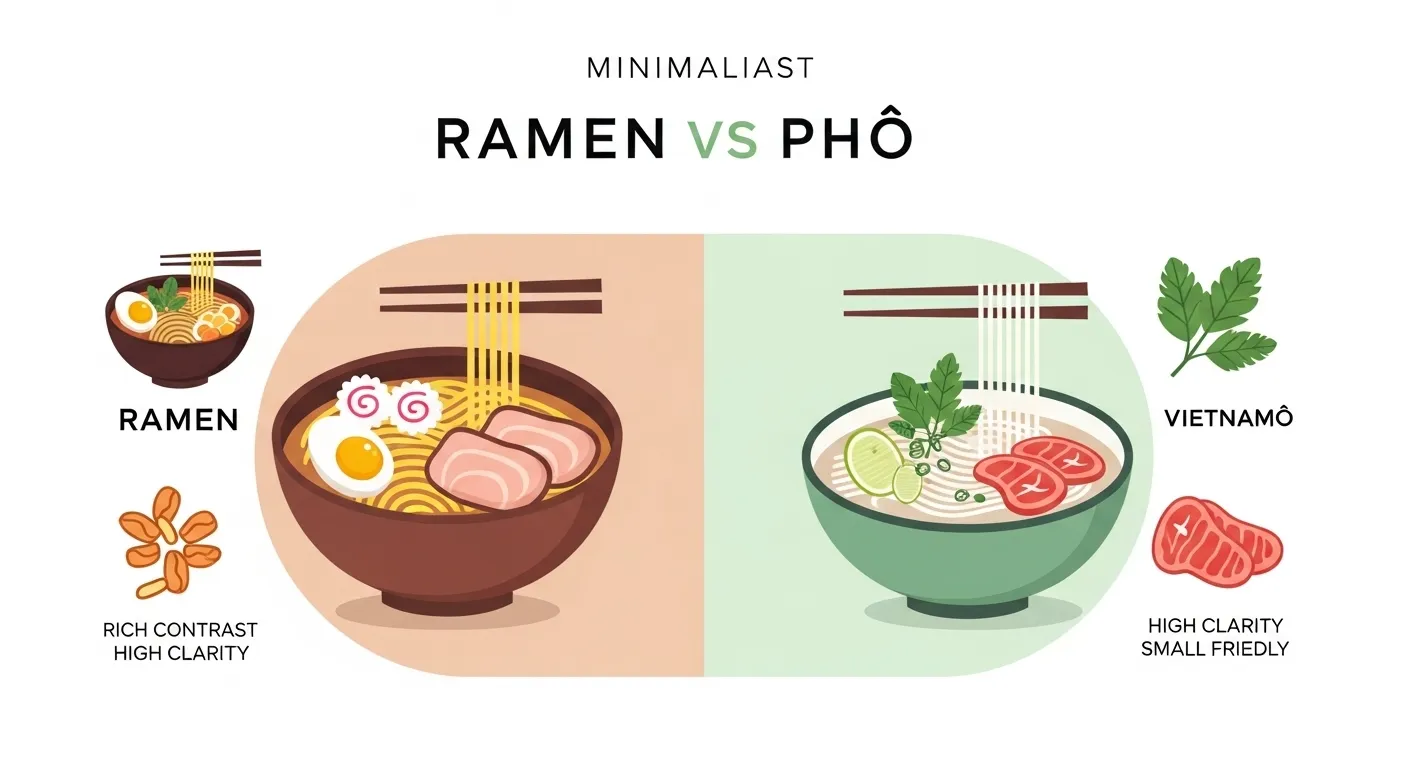
🍜 Ramen is a Japanese noodle soup with rich, often fatty broth, while pho is a Vietnamese noodle soup with a lighter, aromatic broth.
One evening, a traveler visited an Asian restaurant and saw two popular dishes on the menu: ramen and pho. Both looked like bowls of noodle soup, but they came from different countries and had unique flavors. The traveler wondered about the difference between ramen and pho and asked the waiter for help.
Many people face the same question when exploring Asian cuisine. At first glance, both dishes seem similar because they contain noodles, broth, and toppings. However, the difference between ramen and pho lies in their ingredients, cooking style, and cultural origins.
Understanding the difference between ramen and pho helps food lovers enjoy each dish more deeply. When people know the difference between ramen and pho, they can better appreciate the rich food traditions behind these famous noodle soups.
🔑 Key Difference Between the Both
The main difference is origin and flavor. Ramen comes from Japan and usually has a rich, thick broth, while pho comes from Vietnam and has a light, clear broth with herbs.
🌍 Why Their Difference Is Important for Learners and Experts
Knowing the difference between ramen and pho is useful for chefs, food students, and travelers. Each dish reflects the culture and cooking traditions of its country.
In society, food connects people and cultures. Learning the difference between ramen and pho helps people understand international cuisines and respect culinary traditions. It also helps customers choose the dish they prefer in restaurants.
🔊 Pronunciation
Ramen
- US: /ˈrɑːmən/
- UK: /ˈrɑːmən/
Pho
- US: /fʌ/ or /fə/
- UK: /fɜː/
Now let us explore the difference between ramen and pho step by step.
🍲Difference Between Ramen and Pho
1. Country of Origin
Ramen comes from Japan. Pho comes from Vietnam.
Examples of ramen:
- Japanese ramen restaurants
- Tokyo-style ramen bowls
Examples of pho:
- Vietnamese pho restaurants
- Traditional Hanoi pho
2. Broth Type
Ramen broth is usually thick and rich. Pho broth is light and clear.
Examples of ramen:
- Pork bone broth
- Miso broth
Examples of pho:
- Beef broth with spices
- Chicken pho broth
3. Noodle Type
Ramen uses wheat noodles. Pho uses rice noodles.
Examples of ramen:
- Thin wheat ramen noodles
- Curly ramen noodles
Examples of pho:
- Flat rice noodles
- Soft pho noodles
4. Flavor Profile
Ramen has a strong and salty taste. Pho has a light and aromatic flavor.
Examples of ramen:
- Soy sauce ramen
- Miso ramen
Examples of pho:
- Pho with star anise flavor
- Pho with fresh herbs
5. Toppings
Ramen toppings are rich and hearty. Pho toppings are fresh and herbal.
Examples of ramen:
- Boiled eggs
- Pork slices
Examples of pho:
- Fresh basil
- Bean sprouts
6. Cooking Method
Ramen broth may cook for many hours to become thick. Pho broth cooks slowly with spices for a clear taste.
Examples of ramen:
- Long-simmered pork broth
- Miso-based ramen soup
Examples of pho:
- Beef broth with cinnamon
- Clear chicken pho broth
7. Serving Style
Ramen is often served with heavy toppings. Pho is served with herbs and lime on the side.
Examples of ramen:
- Bowl with egg and pork
- Ramen with seaweed
Examples of pho:
- Bowl with herbs and lime
- Pho with bean sprouts
8. Cultural Use
Ramen is a common Japanese comfort food. Pho is a traditional Vietnamese street food.
Examples of ramen:
- Japanese noodle shops
- Quick ramen meals
Examples of pho:
- Vietnamese street stalls
- Family pho restaurants
9. Spice and Seasoning
Ramen uses soy sauce, miso, or salt seasoning. Pho uses spices like star anise and cinnamon.
Examples of ramen:
- Soy-based ramen broth
- Salt-based ramen broth
Examples of pho:
- Broth with star anise
- Broth with cloves
10. Appearance
Ramen broth looks thicker and darker. Pho broth looks clearer and lighter.
Examples of ramen:
- Dark soy ramen broth
- Thick miso ramen soup
Examples of pho:
- Clear beef pho broth
- Light chicken pho broth
Nature and Behaviour of Both
Ramen:
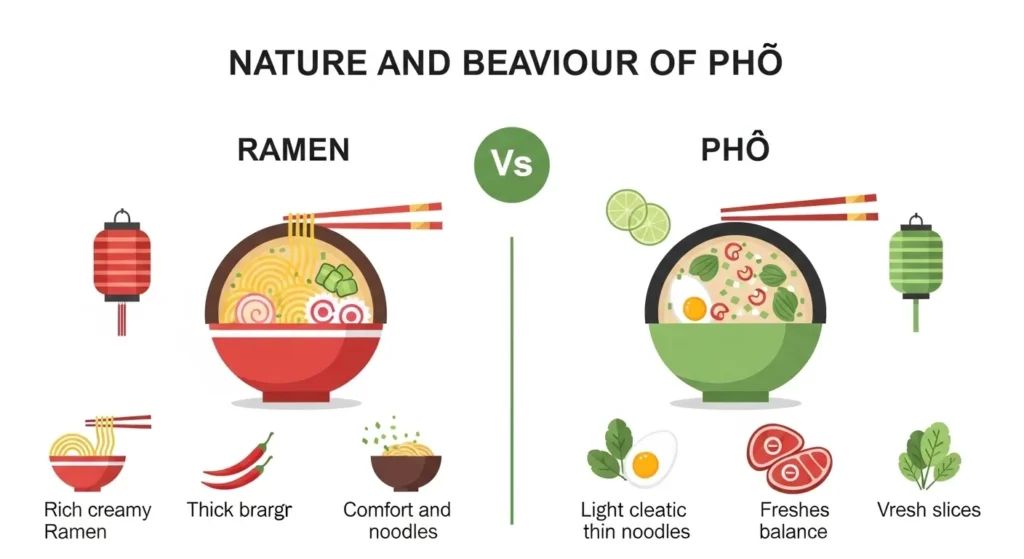
Ramen is a rich noodle soup from Japan. It usually has thick broth, wheat noodles, and hearty toppings like pork and eggs.
Pho:
Pho is a traditional Vietnamese noodle soup. It features light broth, rice noodles, fresh herbs, and aromatic spices.
🤔 Why People Are Confused About Their Use
People often feel confused because both dishes look like noodle soup served in bowls. Restaurants sometimes display similar images, and both include broth, noodles, and toppings. This visual similarity causes confusion.
Difference and Similarity
| Feature | Ramen | Pho | Similarity |
| Origin | Japan | Vietnam | Both Asian soups |
| Broth | Thick and rich | Light and clear | Both broth-based |
| Noodles | Wheat noodles | Rice noodles | Both use noodles |
| Flavor | Strong and salty | Light and aromatic | Both flavorful |
| Toppings | Eggs and pork | Herbs and sprouts | Both customizable |
🍜 Which Is Better in What Situation?
Ramen:
Ramen is better when someone wants a rich and filling meal. The thick broth and hearty toppings make it a comforting dish, especially in cold weather or when someone wants strong flavors.
Pho:
Pho is better when someone prefers a lighter and fresh meal. The clear broth and fresh herbs create a refreshing taste, which many people enjoy during warm weather or when they want a gentle flavor.
🎭 How Ramen and Pho Are Used in Metaphors and Similes
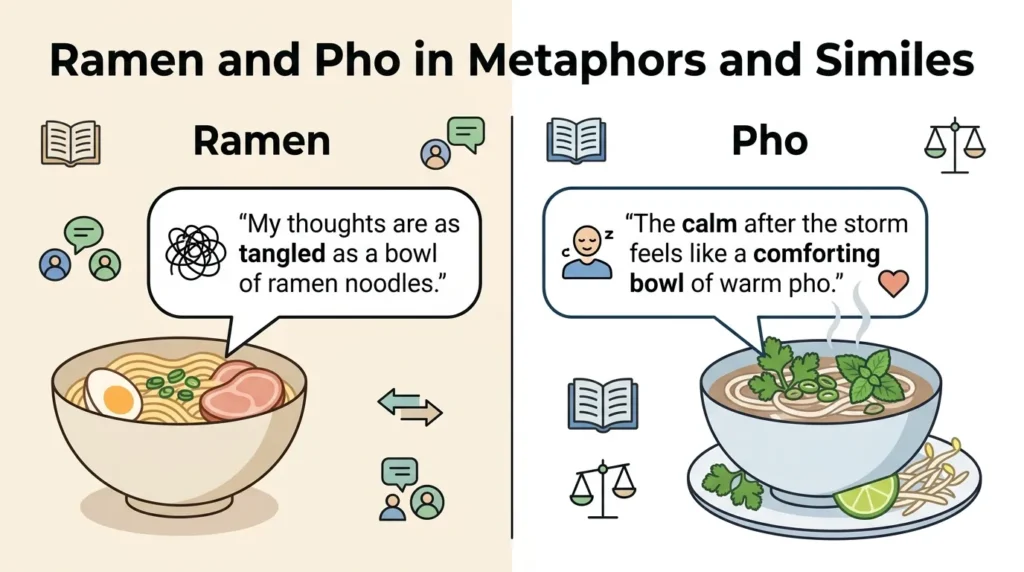
These words sometimes appear in creative descriptions.
Ramen examples
- “The soup was as rich as ramen broth.”
- “His cooking style was layered like ramen.”
Pho examples
- “Her cooking was light like pho broth.”
- “The aroma spread like pho spices.”
Connotative Meaning
Ramen
Positive meaning connected with comfort food and rich flavor.
Example: “A bowl of ramen warmed him on a cold day.”
Pho
Positive meaning connected with freshness and tradition.
Example: “Pho reminds many people of Vietnamese culture.”
Idioms or Expressions
There are no common English idioms directly using ramen or pho, but they appear in modern food conversations.
Examples:
- “Let’s grab ramen tonight.”
- “Pho is my comfort soup.”
📚 Works in Literature
- The Ramen King and I Memoir, Andy Raskin, 2007
- Pho: Vietnamese Street Food Cookbook, Tracey Lister & Andreas Pohl, 2009
🎬 Movies Related to the Words
- Ramen Heads – 2017, Japan
- The Search for General Tso (features Asian food culture) – 2014, United States
❓ FAQs
1. What is the main difference between ramen and pho?
Ramen comes from Japan with thick broth, while pho comes from Vietnam with light broth.
2. Are the noodles the same?
No. Ramen uses wheat noodles, while pho uses rice noodles.
3. Which soup is lighter?
Pho is usually lighter than ramen.
4. Which soup has stronger flavor?
Ramen usually has stronger and richer flavor.
5. Can both dishes include meat?
Yes. Both ramen and pho often include meat toppings.
🌍 How Ramen and Pho Are Useful for Surroundings
Ramen and pho help share cultural traditions around the world. They bring people together through food and restaurant experiences.
These dishes also support the global food industry by inspiring chefs, restaurants, and culinary creativity.
Final Words for Both
Ramen and pho are both famous noodle soups with unique flavors and traditions. Each dish represents the culture of its country.
Conclusion
The difference between ramen and pho mainly lies in their origin, ingredients, and flavor. Ramen is a Japanese noodle soup with rich broth, wheat noodles, and hearty toppings. Pho is a Vietnamese noodle soup with light broth, rice noodles, and fresh herbs. Although both dishes look similar, their taste and cooking traditions are different. Understanding the difference between ramen and pho allows people to appreciate the unique qualities of each dish and enjoy the diverse world of Asian cuisine.
Read more about!
Difference Between Agitator and Impeller: Complete Guide
Difference Between Brandy and Cognac: Complete Guide

I am James Carter, a professional content writer from the United States. I specialize in writing simple and clear comparison blogs that help students and readers understand difficult topics easily. My writing focuses on everyday language, education, science, and lifestyle topics. I believe that learning should be easy for everyone, so I use simple words and real-life examples in my articles.