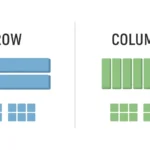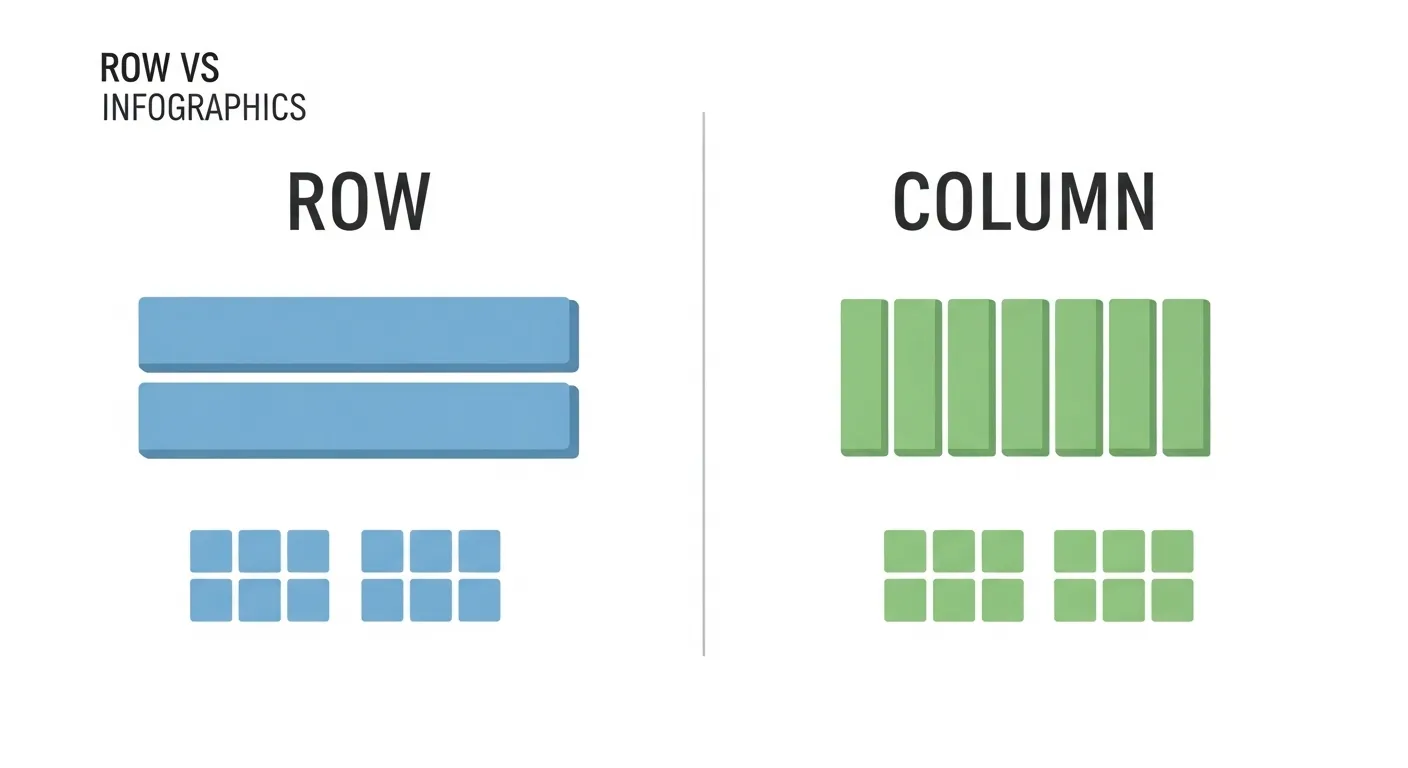
📊 A row is a horizontal arrangement of data, while a column is a vertical arrangement of data.
A teacher once asked students to organize numbers in a table. Some students wrote numbers across the page, while others wrote them from top to bottom. Soon, the teacher explained that numbers written across form a row, and numbers written from top to bottom form a column. This small activity helped students understand the difference between row and column.
Many people see rows and columns in spreadsheets, tables, and databases every day. However, they sometimes forget the difference between row and column. A row runs horizontally across a table, while a column runs vertically from top to bottom.
Understanding the difference between row and column helps people organize data clearly. When students, teachers, and professionals know the difference between row and column, they can work better with charts, spreadsheets, and information systems.
🔑 Key Difference Between the Both
The main difference is direction.
A row goes from left to right (horizontal), while a column goes from top to bottom (vertical).
🌍 Why Their Difference Is Important for Learners and Experts
Understanding the difference between row and column is very important in education, business, and technology. Students use rows and columns in mathematics and tables. Office workers use them in spreadsheets and databases.
In society, organized information helps people make better decisions. Rows and columns allow large amounts of data to be arranged clearly and logically. Learning the difference between row and column helps people read charts, manage data, and understand reports.
🔊 Pronunciation
Row
- US: /roʊ/
- UK: /rəʊ/
Column
- US: /ˈkɑːləm/
- UK: /ˈkɒləm/
Now let us clearly explore the difference between row and column step by step.
📑Difference Between Row and Column
1. Direction
Rows run horizontally. Columns run vertically.
Examples of rows:
- A row of numbers across a spreadsheet
- A row of seats in a classroom
Examples of columns:
- A column of numbers going downward
- A column of names in a list
2. Position in a Table
Rows move from left to right. Columns move from top to bottom.
Examples of rows:
- Row 1 in a spreadsheet
- Row 5 showing student data
Examples of columns:
- Column A for names
- Column B for marks
3. Identification
Rows are usually numbered. Columns are usually labeled with letters.
Examples of rows:
- Row 1
- Row 10
Examples of columns:
- Column A
- Column C
4. Data Arrangement
Rows often represent individual records. Columns represent categories.
Examples of rows:
- One row showing one student’s data
- One row showing one product
Examples of columns:
- Column for age
- Column for price
5. Visual Appearance
Rows appear as horizontal lines of data. Columns appear as vertical lines.
Examples of rows:
- A horizontal line of numbers
- A horizontal line of text
Examples of columns:
- A vertical list of names
- A vertical list of prices
6. Use in Spreadsheets
Rows store records in spreadsheets. Columns store types of information.
Examples of rows:
- Row containing one employee’s data
- Row containing one order record
Examples of columns:
- Column showing salary
- Column showing department
7. Use in Databases
Rows represent individual entries. Columns represent fields.
Examples of rows:
- One row representing a customer
- One row representing a product
Examples of columns:
- Column for customer ID
- Column for product price
8. Reading Order
Rows are usually read across. Columns are read downwards.
Examples of rows:
- Reading a table line by line
- Reading a list across the page
Examples of columns:
- Reading numbers down the page
- Reading names in a vertical list
9. Example in Everyday Life
Rows appear in many real-life settings. Columns also appear in daily structures.
Examples of rows:
- Row of seats in a theater
- Row of plants in a garden
Examples of columns:
- Column of numbers in a bill
- Column of text in a newspaper
10. Use in Data Analysis
Rows help track individual items. Columns help compare categories.
Examples of rows:
- One row showing daily sales
- One row showing test results
Examples of columns:
- Column comparing prices
- Column comparing scores
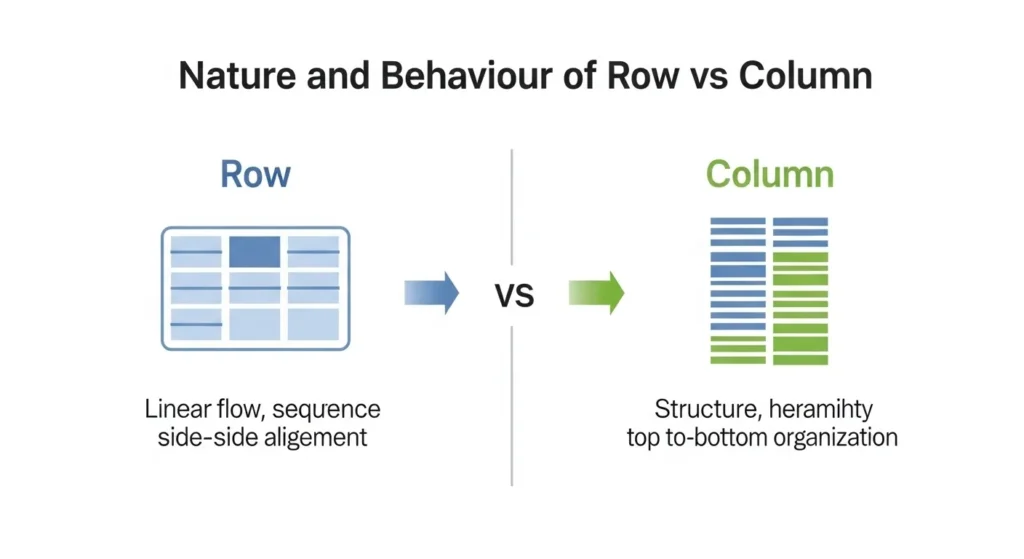
Nature and Behaviour of Both
Row:
A row is a horizontal arrangement of data or objects. It runs from left to right and usually represents one complete record.
Column:
A column is a vertical arrangement of data or objects. It runs from top to bottom and usually represents a specific category of information.
🤔 Why People Are Confused About Their Use
Many people feel confused because rows and columns appear together in tables and spreadsheets. Beginners may forget which direction belongs to each word. The similar use in data tables also creates confusion.
Difference and Similarity
| Feature | Row | Column | Similarity |
| Direction | Horizontal | Vertical | Both organize data |
| Position | Left to right | Top to bottom | Both in tables |
| Label | Numbers | Letters | Both identifiers |
| Function | Record | Category | Both store information |
| Use | Spreadsheets | Spreadsheets | Both used in data systems |
📈 Which Is Better in What Situation?
Row:
Rows are better when you want to display full records of information. For example, in a spreadsheet, one row may show all details about a single student or product. Rows help people view complete information quickly.
Column:
Columns are better when comparing a specific type of information. For example, a column can show prices or ages for many items. This makes it easier to analyze and compare data.
🎭 How Row and Column Are Used in Metaphors and Similes
These words sometimes appear in descriptive language.
Row examples
- “The houses stood in a row like soldiers.”
- “The chairs formed a neat row.”
Column examples
- “The smoke rose in a column into the sky.”
- “The soldiers marched like a strong column.”
Connotative Meaning
Row
Usually neutral. It describes arrangement or order.
Example: “The books were placed in a row.”
Column
Neutral meaning related to structure or organization.
Example: “The newspaper printed the article in a column.”
Idioms or Expressions
Row after row
Meaning: many lines in sequence.
Example: “The farm had row after row of crops.”
Fifth column
Meaning: secret supporters inside a group.
Example: “The government feared a fifth column inside the country.”
📚 Works in Literature
- Database Systems: The Complete Book Academic Text, Hector Garcia-Molina, 2008
- The Visual Display of Quantitative Information Non-fiction, Edward Tufte, 1983
🎬 Movies Related to the Words
There are no well-known movies specifically titled Row or Column, but both words frequently appear in data, science, and technology discussions.
❓ Frequently Asked Questions
1. What is the main difference between row and column?
A row is horizontal, while a column is vertical.
2. How are rows labeled in spreadsheets?
Rows are labeled with numbers.
3. How are columns labeled in spreadsheets?
Columns are labeled with letters.
4. Where are rows and columns used?
They are used in spreadsheets, tables, and databases.
5. Why are rows and columns important?
They help organize and display data clearly.
🌍 How Row and Column Are Useful for Surroundings
Rows and columns help organize information in schools, offices, and businesses. They make data easy to read and understand.
In technology and data science, rows and columns allow computers to store and analyze large amounts of information. This organization supports research, business decisions, and digital systems.
Final Words for Both
Rows and columns are basic tools for organizing information. They help structure data so people can easily read and understand it.
Conclusion
The difference between row and column mainly relates to direction and function in a table. A row runs horizontally across the table and usually represents a complete record of information. A column runs vertically from top to bottom and represents a specific category of data. Understanding the difference between row and column helps students, professionals, and researchers organize and analyze information efficiently. Whether in spreadsheets, databases, or charts, rows and columns remain essential tools for clear and structured data management.
Read more about!
Stew vs Soup:Quick Difference Guide

I am Emily Johnson, a USA-based content writer who creates easy-to-read blogs on language and daily life topics. I explain complex ideas in simple English for students and beginners so they can understand easily.