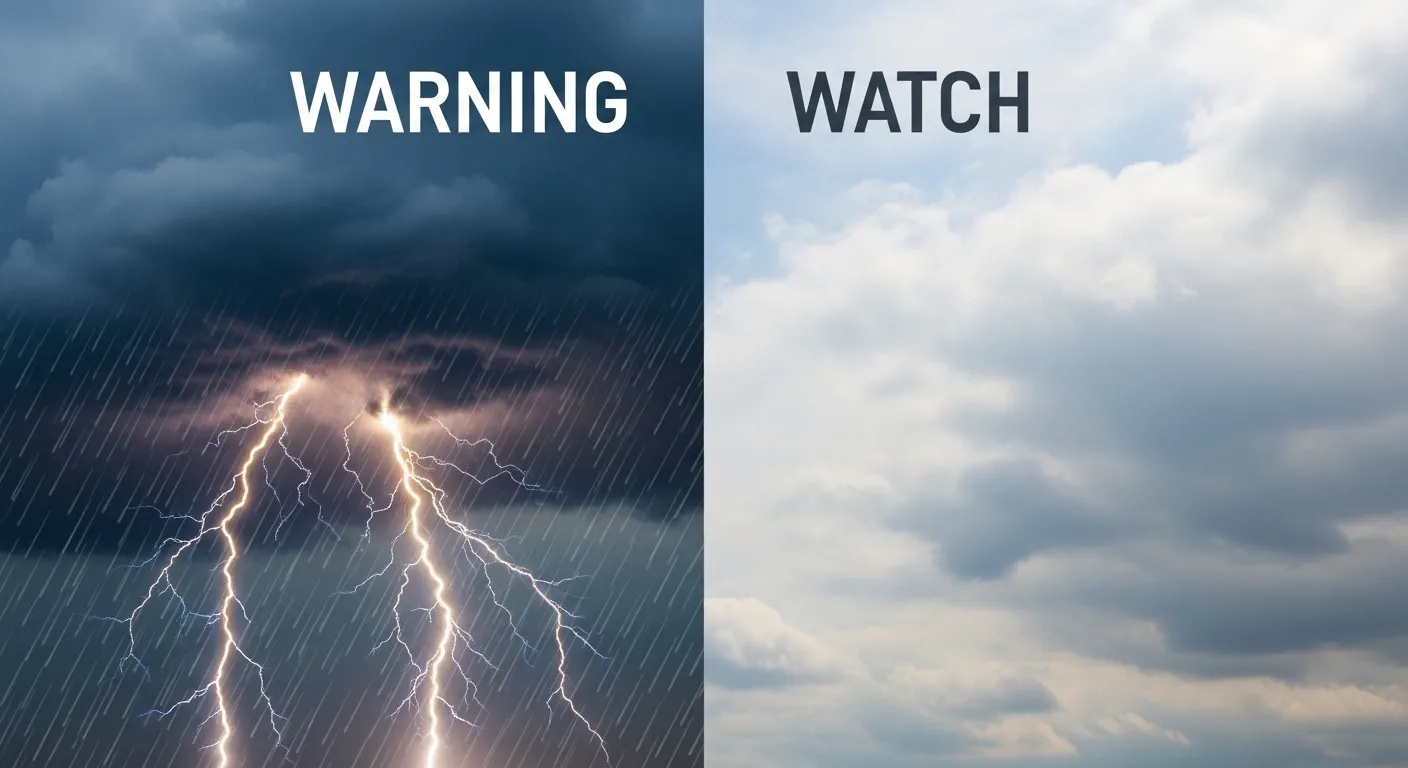
⚠️ Warning vs Watch: A watch means conditions are favorable for danger, a warning means the danger is happening now.
One evening, a family sits at home watching the news. The weather reporter says, “There is a storm watch in your area.” The family stays calm but alert. Later, a new message comes: “A storm warning has been issued.”
Now they feel serious and start to act fast. This moment shows the difference between warning and watch in real life.
The difference between warning and watch is very important, especially in weather and safety. Many people hear these words but do not fully understand them.
The difference between warning and watch is about timing and danger level. One means be ready, the other means take action now.
When you understand the difference between warning and watch, you can protect yourself and others. The difference between warning and watch helps people stay safe and make quick decisions in emergencies.
Key Difference Between the Both
The main difference between warning and watch is:
- Watch means conditions are possible
- Warning means danger is happening or about to happen
Why Is Their Difference Important for Learners and Experts?
Knowing the difference between warning and watch is important because:
- It helps people act at the right time
- It reduces risk during disasters
- It improves safety awareness
- It supports emergency planning
This knowledge can save lives and protect communities.
Pronunciation
- Warning (US): wor-ning
- Warning (UK): waw-ning
- Watch (US): wach
- Watch (UK): woch
Linking Hook
Now let’s explore the difference between warning and watch in detail with simple points and clear examples.
Difference Between Warning and Watch
1. Meaning
Warning means danger is near or happening. Watch means danger is possible.
- Example 1: A flood warning means water is rising now.
- Example 2: A flood watch means rain may cause floods.
2. Urgency
Warning is urgent. Watch is less urgent.
- Example 1: Warning needs quick action.
- Example 2: Watch needs attention only.
3. Action Needed
Warning needs action. Watch needs preparation.
- Example 1: Warning means leave area.
- Example 2: Watch means stay alert.
4. Timing
Warning happens later stage. Watch happens earlier stage.
- Example 1: Warning after storm forms.
- Example 2: Watch before storm forms.
5. Risk Level
Warning has high risk. Watch has lower risk.
- Example 1: Warning shows real danger.
- Example 2: Watch shows possible danger.
6. Use in Weather
Warning used for storms, floods, etc. Watch used for possible events.
- Example 1: Tornado warning is serious.
- Example 2: Tornado watch is early alert.
7. Public Response
Warning causes action. Watch causes awareness.
- Example 1: People move during warning.
- Example 2: People prepare during watch.
8. Duration
Warning is short and intense. Watch lasts longer.
- Example 1: Warning lasts few hours.
- Example 2: Watch may last a day.
9. Authority Use
Both are issued by authorities, but warning is stronger.
- Example 1: Warning from weather office.
- Example 2: Watch from same office earlier.
10. Impact
Warning affects immediate safety. Watch affects planning.
- Example 1: Warning protects lives now.
- Example 2: Watch helps future planning.
Nature and Behaviour of Warning and Watch
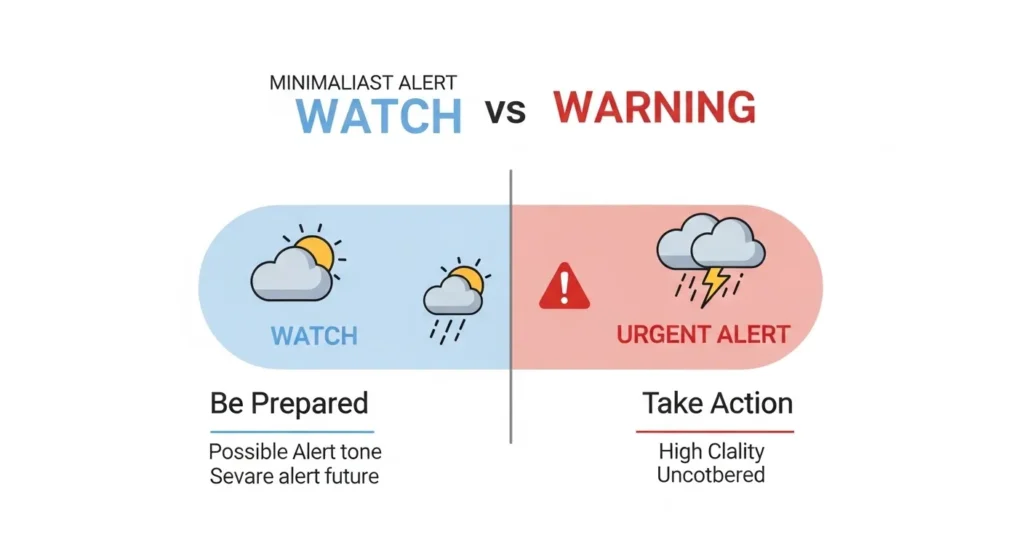
Warning:
It is strong and urgent.It demands action, signals real danger, and is serious and time-sensitive.
Watch:
It is calm and alerting. It suggests caution, gives time to prepare, and is preventive in nature.
Why People Get Confused About Their Use
People get confused because:
- Both are used in weather alerts
- Both sound similar
- Both relate to danger
This makes the difference between warning and watch hard to understand at first.
Difference and Similarity
| Feature | Warning | Watch |
| Meaning | Danger happening | Danger possible |
| Urgency | High | Medium |
| Action | Act now | Be ready |
| Timing | Late stage | Early stage |
| Risk | High | Lower |
Which Is Better in What Situation?
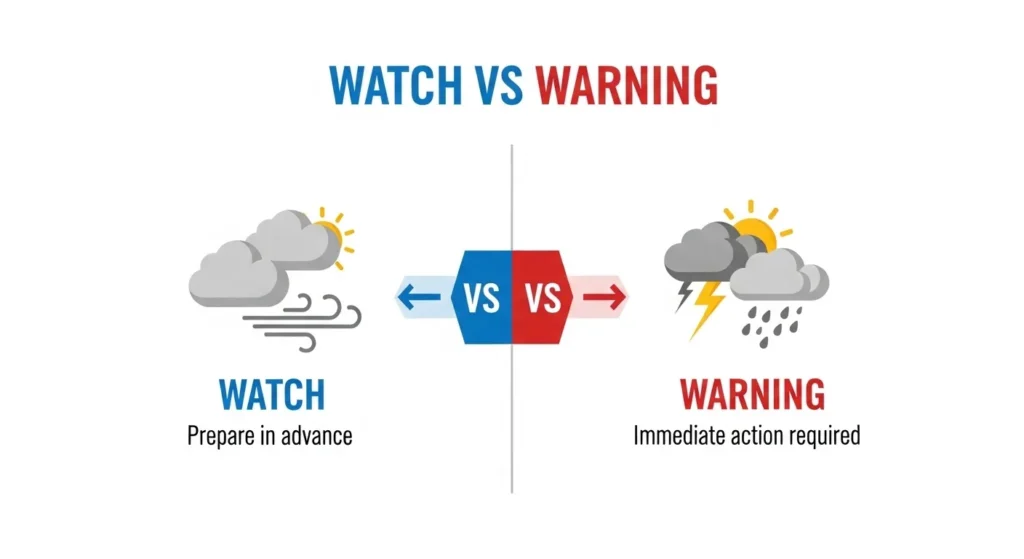
Warning is better when there is real danger. It tells people to act fast, is used in emergencies like storms, floods, or fires, and helps protect lives and reduce harm. In such cases, warning is very important and must be taken seriously.
Watch is better when danger is not yet certain. It gives people time to prepare, helps in planning and staying alert, is useful for early awareness and prevention, and allows people to get ready without panic.
How Are the Keywords Used in Metaphors and Similes
- “His anger was like a warning clear and strong.”
- “Her eyes were on watch like a guard.”
Connotative Meaning
- Warning: Negative (danger, alert)
- Example: “That sound was a warning sign.”
- Watch: Neutral (attention, care)
- Example: “He kept a watch on the situation.”
Idioms or Proverbs Related
- “A word of warning”
- Example: He gave a word of warning before the storm.
- “Keep watch”
- Example: Soldiers keep watch at night.
Works in Literature
- The Warning (Thriller, Kathryn Croft, 2019)
- The Watch (Fantasy, Sergei Lukyanenko, 1998)
Movies Related to the Topic
- End of Watch (2012, USA)
- Warning (2021, USA/Canada)
FAQs
1. Are warning and watch the same?
No, they have different meanings.
2. Which is more serious?
Warning is more serious.
3. What should I do during a watch?
Stay alert and prepare.
4. What should I do during a warning?
Take action immediately.
5. Who issues them?
Weather and safety authorities.
How Are Both Useful for Surroundings
Both help keep people safe. Watch gives time to prepare. Warning tells people to act fast. Together, they reduce harm and protect communities.
Final Words for Both
Warning and watch are simple words but very powerful. Knowing their difference can save lives and improve safety.
Conclusion
The difference between warning and watch is simple but very important. A watch means conditions are possible, while a warning means danger is real or near. Both are used to protect people, but they serve different roles. Many people confuse them, but understanding the difference between warning and watch helps in making better decisions during emergencies. This knowledge is useful for everyone, from students to experts. It helps keep people safe and aware in critical situations.
Read more about!
Difference Between EKG and ECG :Quick Guide
Difference Between Urban and Suburban: Complete Guide

I am James Carter, a professional content writer from the United States. I specialize in writing simple and clear comparison blogs that help students and readers understand difficult topics easily. My writing focuses on everyday language, education, science, and lifestyle topics. I believe that learning should be easy for everyone, so I use simple words and real-life examples in my articles.