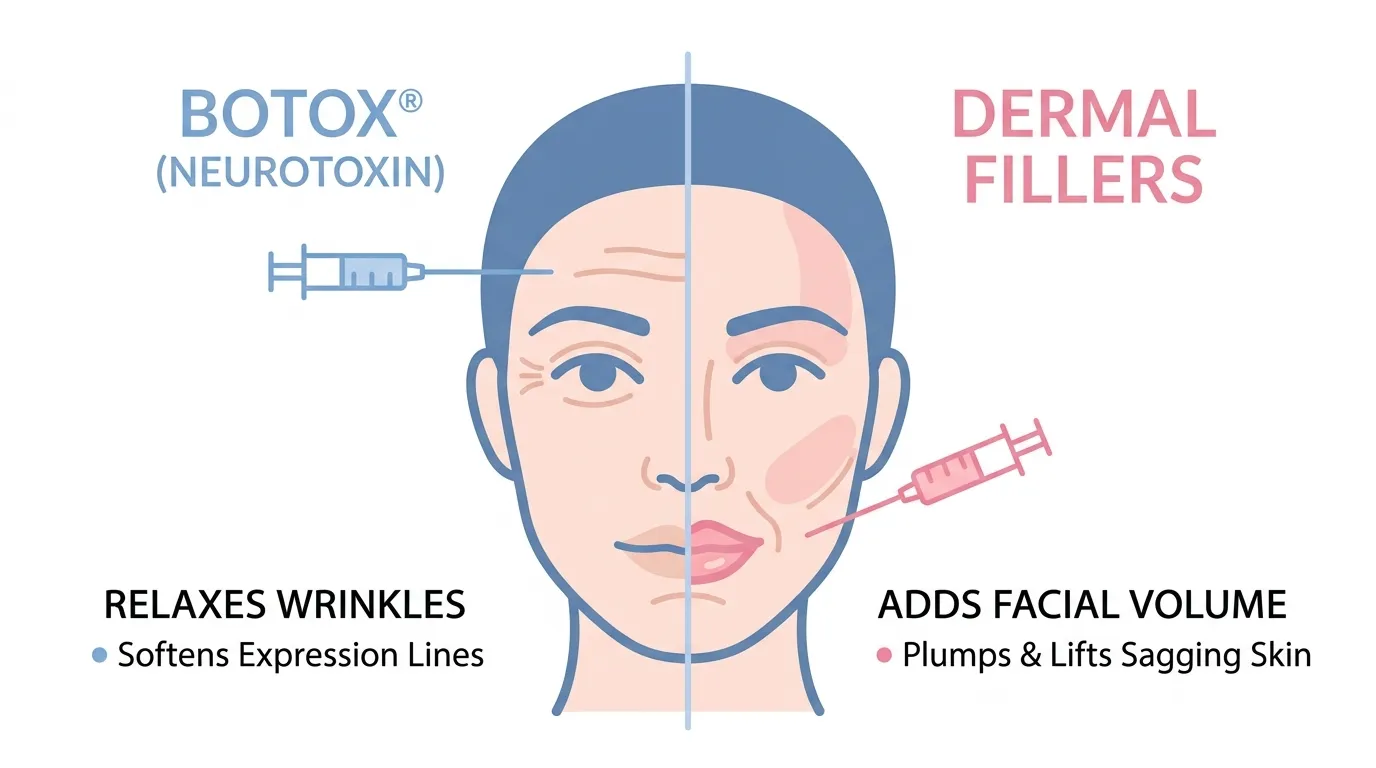
💉 Botox relaxes muscles to reduce wrinkles, while dermal fillers add volume to smooth lines and enhance facial features.
Many people searching for cosmetic treatments often ask about the difference between Botox and fillers. At first, both procedures may seem similar because they are popular anti-aging treatments used to improve facial appearance.
However, Botox and fillers work in completely different ways. Understanding the difference between Botox and fillers helps people choose the right treatment for wrinkles, volume loss, facial contouring, and skin rejuvenation.
In simple words, Botox relaxes muscles to reduce dynamic wrinkles, while fillers add volume beneath the skin to restore fullness and shape. This distinction is extremely important because using the wrong treatment may not deliver the expected results.
Today, platforms like Instagram, YouTube, TikTok, and Google are filled with beauty trends, facial transformation videos, and skincare discussions. Because of this, many beginners become confused about which cosmetic option they actually need.
This complete guide explains:
- What Botox and fillers are
- Their major differences
- Real-life treatment examples
- Benefits and risks
- When to use each
- Common mistakes
- Expert cosmetic insights
- FAQs people search online
Difference Between Botox and Fillers
Botox relaxes facial muscles to reduce wrinkles caused by movement, while fillers add volume to areas that look hollow, thin, or saggy.
Real Example:
- Botox is commonly used for forehead lines and crow’s feet.
- Fillers are commonly used for lips, cheeks, and smile lines.
Definition of Botox and Fillers
Botox:
Botox is an injectable treatment made from botulinum toxin that temporarily relaxes muscles to reduce wrinkles caused by facial expressions.
Fillers:
Dermal fillers are injectable gel-like substances used to restore lost volume, smooth lines, and enhance facial contours.
Simple Example:
Botox softens forehead wrinkles, while fillers make lips or cheeks appear fuller.
Pronunciation
| Word | US Pronunciation | UK Pronunciation |
| Botox | BOH-toks | BOH-toks |
| Fillers | FIL-urz | FIL-uhz |
Although both procedures are cosmetic injectables, their purpose and function are very different. Let’s understand this clearly through comparisons and practical examples.
Difference Between Botox and Fillers
| Feature | Botox | Fillers |
| Main Purpose | Relax muscles | Add volume |
| Best For | Dynamic wrinkles | Hollow or sagging areas |
| Common Areas | Forehead, crow’s feet | Lips, cheeks, jawline |
| How It Works | Blocks muscle signals | Fills space beneath skin |
| Main Ingredient | Botulinum toxin | Hyaluronic acid or similar gels |
| Results Duration | 3–6 months | 6–24 months |
| Facial Movement | Reduced temporarily | Usually unchanged |
| Treatment Goal | Smooth expression lines | Restore fullness and contour |
| Common Users | Wrinkle prevention | Facial enhancement |
Key Differences Explained Between Botox and Fillers
1. Botox Relaxes Muscles, Fillers Add Volume
This is the biggest difference between Botox and fillers.
Botox stops certain muscles from moving too strongly. Fillers physically add volume under the skin.
Real-Life Example:
- Forehead wrinkles often improve with Botox.
- Thin lips improve with fillers.
2. They Treat Different Types of Wrinkles
Botox works best on dynamic wrinkles caused by repeated facial movement.
Fillers work best on static wrinkles caused by aging and volume loss.
Dynamic Wrinkles:
- Forehead lines
- Crow’s feet
- Frown lines
Static Wrinkles:
- Smile lines
- Sunken cheeks
- Hollow under-eyes
3. Treatment Areas Are Different
Botox usually targets upper-face wrinkles.
Fillers are more common in lower-face contouring and volume restoration.
Common Botox Areas:
- Forehead
- Between eyebrows
- Around eyes
Common Filler Areas:
- Lips
- Cheeks
- Jawline
- Nasolabial folds
4. Results Feel Different
Botox creates smoother facial movement.
Fillers physically reshape facial structure.
Practical Insight:
Many beginners expect Botox to “fill” wrinkles, but Botox mainly reduces muscle activity.
5. Duration of Results
Fillers often last longer than Botox depending on product type and body metabolism.
Average Duration:
- Botox: 3–6 months
- Fillers: 6–24 months
6. Prevention vs Restoration
Botox is often used earlier to prevent wrinkles.
Fillers are commonly used later to restore lost volume.
Real Scenario:
People in their late 20s or early 30s may start preventive Botox before deep wrinkles appear.
7. Facial Expression Impact
Too much Botox may reduce facial movement temporarily.
Fillers usually maintain natural muscle movement if applied correctly.
Why Botox and Fillers Exist Separately
Many people ask:
“Why not use just one treatment?”
The answer is simple. Aging affects the face in multiple ways.
Some problems come from:
- Muscle movement
- Repeated expressions
Other problems come from:
- Volume loss
- Skin thinning
- Collagen reduction
Botox handles muscle activity.
Fillers handle volume loss.
That is why cosmetic specialists often combine both treatments for balanced results.
What Is Botox Used For?
Botox is commonly used for:
- Forehead wrinkles
- Crow’s feet
- Frown lines
- Bunny lines
- Jaw slimming
- Excessive sweating treatment
Real Scenario:
Office professionals often choose Botox because it creates a refreshed appearance without surgery.
What Are Fillers Used For?
Fillers help restore youthful facial shape and fullness.
Common Uses:
- Lip enhancement
- Cheek contouring
- Jawline definition
- Chin shaping
- Under-eye correction
- Smile line treatment
Real Scenario:
Many social media influencers use fillers to improve facial symmetry and camera appearance.
Difference and Similarity Between Botox and Fillers
| Feature | Botox | Fillers | Similarity |
| Procedure Type | Injectable treatment | Injectable treatment | Both are non-surgical |
| Main Function | Relaxes muscles | Adds volume | Both improve facial appearance |
| Popular Areas | Upper face | Lips and cheeks | Both target aging signs |
| Recovery Time | Minimal downtime | Minimal downtime | Both are quick procedures |
| Results Duration | Shorter | Longer | Both require maintenance |
| Pain Level | Mild discomfort | Mild discomfort | Both use small needles |
| Cosmetic Goal | Smooth wrinkles | Restore fullness | Both support facial rejuvenation |
| Popularity | Anti-aging treatment | Contouring treatment | Both trend heavily online |
This table clearly shows the difference and similarity between Botox and fillers for quick understanding.
Why Social Media Increased Interest in Botox and Fillers
Platforms like Instagram, TikTok, and YouTube dramatically increased public interest in cosmetic injectables.
Beauty influencers regularly share:
- Before-and-after results
- Lip filler transformations
- Botox maintenance routines
- Facial contouring trends
This online exposure made cosmetic procedures more mainstream than ever before.
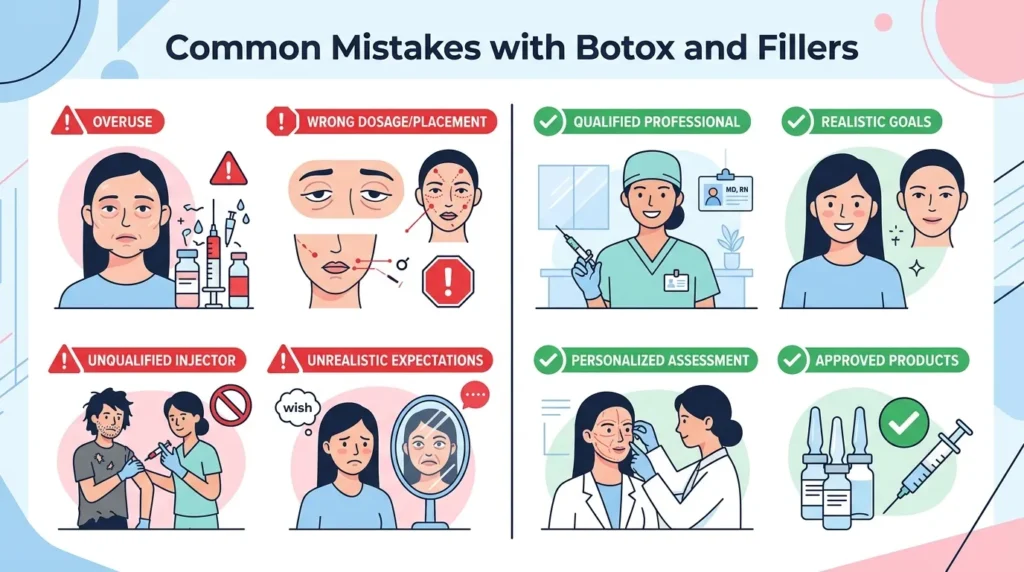
Common Mistakes with Botox and Fillers
1. Thinking Botox and Fillers Are the Same
This is the most common mistake.
Correction:
Botox relaxes muscles. Fillers add volume.
2. Using Fillers for Dynamic Wrinkles
Deep expression lines caused by movement may respond better to Botox.
3. Overfilling the Face
Too much filler can create an unnatural appearance.
Better Approach:
Natural enhancement usually produces better long-term results.
4. Choosing Unqualified Providers
Low-cost injectors may increase risks and poor outcomes.
Fix:
Always choose licensed medical professionals.
5. Expecting Permanent Results
Neither Botox nor fillers are permanent treatments.
Maintenance sessions are usually required.
Real Life Examples with Botox and Fillers
Example 1: Corporate Professional
A 35-year-old professional uses Botox to reduce forehead wrinkles before presentations and meetings.
Example 2: Social Media Influencer
An influencer chooses lip fillers to improve facial balance in photos and videos.
Example 3: Aging Volume Loss
A person in their 50s uses cheek fillers to restore facial fullness lost during aging.
Example 4: Wedding Preparation
Many people get Botox or fillers before weddings or major events for a refreshed appearance.
Example 5: Medical Use
Botox is also used medically for migraines, muscle spasms, and excessive sweating.
When to Use Each
Use Botox When:
- Wrinkles appear during facial movement
- Forehead lines become noticeable
- Crow’s feet develop
- Prevention is the main goal
Use Fillers When:
- Volume loss appears
- Lips look thin
- Cheeks appear hollow
- Facial contouring is desired
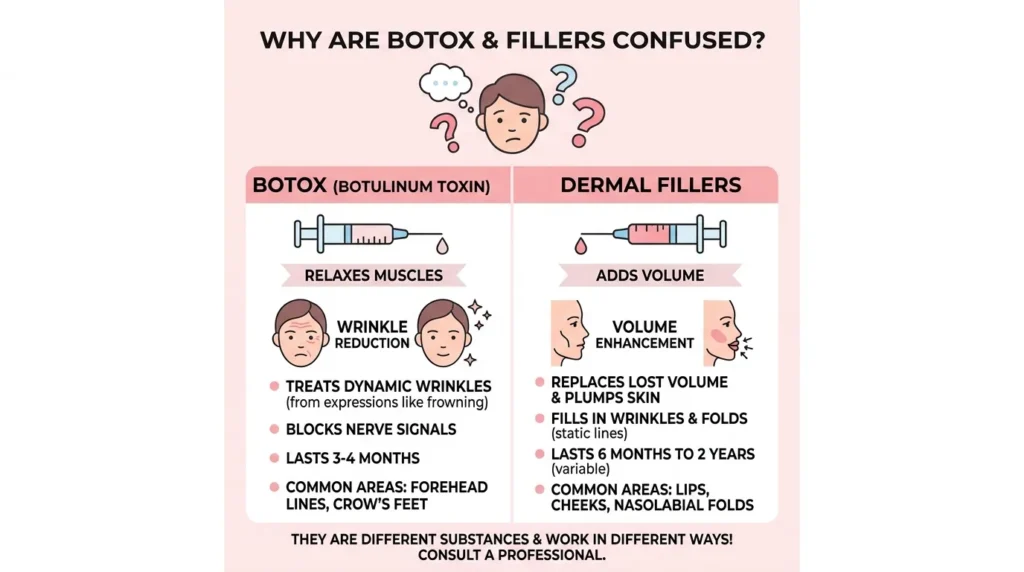
Why People Get Confused Between Botox and Fillers
1. Both Are Injectables
Most people simply call both treatments “face injections.”
2. Celebrity Culture
Celebrities often combine both procedures, making differences harder to notice.
3. Social Media Simplification
Short-form videos rarely explain technical differences properly.
4. Cosmetic Marketing
Some clinics use broad terms like “anti-aging injections,” which confuses beginners.
5. Similar Cosmetic Goals
Both aim to create a younger and smoother appearance.
How Search Engines Understand Botox vs Fillers and User Intent
Search engines like Google recognize that users searching “difference between Botox and fillers” usually want:
- Quick definitions
- Before-and-after understanding
- Safety information
- Cost comparisons
- Treatment areas
- Decision-making help
Modern systems also analyze:
- User engagement
- Helpful explanations
- Medical clarity
- Experience-based writing
- Real-world examples
That is why detailed educational content performs better in beauty and cosmetic search rankings.
Platforms like YouTube and Instagram also influence user searches because beauty trends heavily affect cosmetic procedure demand.
Expert Insight
In practical cosmetic medicine, Botox and fillers are not competitors. They solve different aging concerns. Skilled practitioners often combine both treatments strategically to achieve balanced, natural-looking facial rejuvenation.
Most beginners believe wrinkles only come from aging skin, but facial aging also involves:
- Muscle activity
- Fat loss
- Bone structure changes
- Collagen reduction
That is why personalized treatment plans matter more than simply choosing the most popular procedure online.
Natural results almost always come from moderation, proper facial assessment, and experienced injectors.
FAQs
What is the main difference between Botox and fillers?
Botox relaxes muscles, while fillers add volume beneath the skin.
Which lasts longer: Botox or fillers?
Fillers usually last longer than Botox.
Is Botox safer than fillers?
Both are generally safe when performed by qualified professionals.
Can Botox fill lips?
No. Lip enhancement usually requires fillers.
Do fillers freeze facial movement?
Usually no. Fillers mainly restore volume rather than affect muscles.
At what age should someone start Botox?
Some people begin preventive Botox in their late 20s or early 30s.
Are fillers painful?
Most filler procedures involve mild discomfort and numbing cream.
Can Botox and fillers be combined?
Yes. Many cosmetic treatment plans combine both for balanced results.
Conclusion
Understanding the difference between Botox and fillers helps people choose the right cosmetic treatment based on their facial concerns and beauty goals. Although both procedures improve appearance, they work in very different ways.
Botox reduces muscle movement to soften dynamic wrinkles like forehead lines and crow’s feet. Fillers restore lost volume and improve facial contours in areas like lips, cheeks, and jawlines.
Many users get confused because both are injectable anti-aging treatments promoted heavily across social media and beauty industries. However, knowing their core difference makes treatment decisions much easier.
If you remember one simple idea, remember this:
- Botox = relaxes muscles
- Fillers = restore volume
That single distinction explains most practical differences between the two cosmetic procedures.
Read more about!
Difference Between Gas and Diesel: Complete Guide
Difference Between Metaphor and Analogy: Simple Guide

I am James Carter, a professional content writer from the United States. I specialize in writing simple and clear comparison blogs that help students and readers understand difficult topics easily. My writing focuses on everyday language, education, science, and lifestyle topics. I believe that learning should be easy for everyone, so I use simple words and real-life examples in my articles.