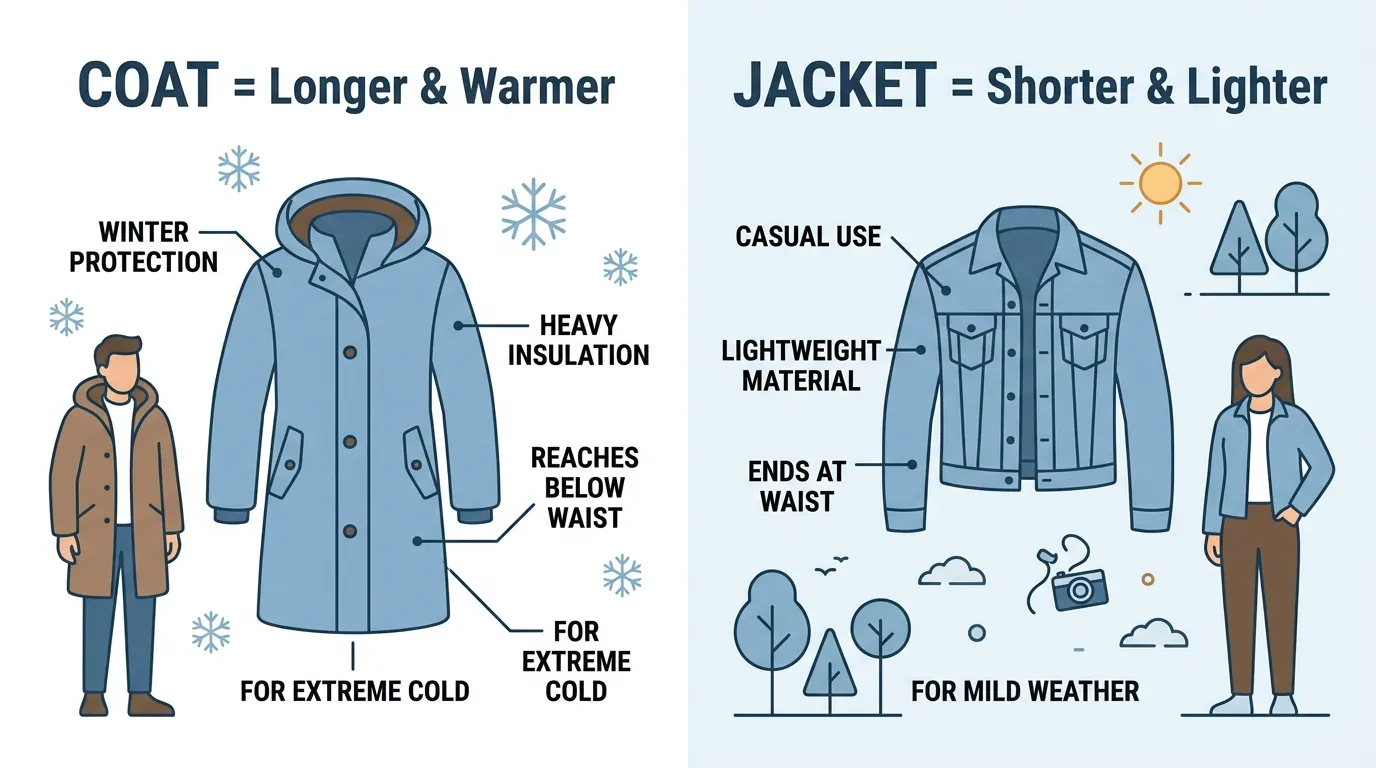
A coat is usually longer and warmer for cold weather, while a jacket is shorter, lighter, and used for style or mild protection.
Many people stand in clothing stores or scroll through fashion websites and wonder about the difference between coat and jacket. At first glance, they seem similar because both are outerwear pieces designed to provide warmth and style.
However, the difference between a coat and a jacket becomes clear when you look at length, material, weather use, fashion purpose, and layering.
In simple words, a Coat is usually longer, warmer, and designed for colder weather, while a Jacket is shorter, lighter, and more versatile for casual or moderate weather conditions.
People search for the difference between coat and jacket because they want to choose the right outfit for winter, fashion styling, business wear, travel, or daily use.
In this complete guide, you’ll learn definitions, real-life examples, style comparisons, practical usage tips, fashion insights, and modern outerwear trends in a simple beginner-friendly way.
Difference Between Coat and Jacket
A coat is usually longer, heavier, and made for colder weather, while a jacket is shorter, lighter, and commonly used for casual wear or mild temperatures.
Simple Example
A wool overcoat worn during snowfall is a coat.
A denim bomber worn during spring weather is a jacket.
Definition of Coat and Jacket
- Coat: A long outer garment designed mainly for warmth and protection during cold weather.
- Jacket: A shorter outer garment used for fashion, light warmth, or layering.
Quick Example
A trench coat covers much of the body.
A leather jacket usually stops around the waist.
Pronunciation
- Coat
- US: KOHT
- UK: KOHT
- Jacket
- US: JAK-it
- UK: JAK-it
Now that the basic meanings are clear, let’s understand why fashion experts, shoppers, and even online search engines treat coats and jackets differently.
Difference Between Coat and Jacket
| Feature | Coat | Jacket | Similarity |
| Length | Usually longer | Usually shorter | Both are outerwear |
| Warmth Level | Higher insulation | Moderate warmth | Both protect from weather |
| Weather Use | Cold winter conditions | Mild or cool weather | Both improve comfort |
| Material | Wool, heavy fabric | Denim, leather, cotton, nylon | Both use fashion fabrics |
| Style Purpose | Formal or winter-focused | Casual or sporty | Both affect fashion appearance |
| Weight | Heavier | Lighter | Both can be layered |
| Coverage | Covers hips or legs | Ends near waist or hips | Both protect upper body |
| Fashion Use | Elegant and formal | Versatile and trendy | Both are style essentials |
This table clearly shows the difference and similarity between coat and jacket for quick understanding.
Key Differences Explained Between Coat and Jacket
1. Length Difference
The biggest difference is length.
Coats are generally longer and may reach the thighs, knees, or below. Jackets are shorter and stop around the waist or hips.
Real-Life Example
A winter overcoat worn in snow covers more body area than a biker jacket.
2. Warmth and Insulation
Coats are designed for colder climates and usually contain thicker materials or insulation.
Jackets provide lighter warmth suitable for spring, autumn, or indoor layering.
Practical Insight
In real winter conditions, jackets alone may not provide enough protection in freezing temperatures.
3. Fashion and Formality
Coats often appear more formal and elegant. Jackets are commonly casual or sporty.
Example
A trench coat works well for business meetings.
A varsity jacket suits casual streetwear.
4. Material Differences
Coats commonly use:
- wool
- cashmere
- heavy polyester
- insulated fabrics
Jackets often use:
- denim
- leather
- cotton
- nylon
This material difference changes comfort and appearance.
5. Seasonal Usage
Coats are mainly winter garments. Jackets can be worn almost year-round depending on the design.
6. Mobility and Flexibility
Jackets allow easier movement because they are shorter and lighter.
That’s why athletes, bikers, and travelers often prefer jackets.
What Is a Coat?
Coat is a long outerwear garment primarily designed for warmth and weather protection.
Common Types of Coats
- trench coat
- overcoat
- pea coat
- parka
- raincoat
- wool coat
Why Coats Exist
Historically, coats were created for protection against cold weather, rain, and wind during travel or outdoor work.
Today, coats also represent elegance and premium fashion.
What Is a Jacket?
Jacket is a shorter outer garment used for fashion, comfort, and moderate weather protection.
Common Types of Jackets
- denim jacket
- bomber jacket
- leather jacket
- varsity jacket
- windbreaker
- puffer jacket
Modern Usage
Jackets became popular because they combine mobility, comfort, and style in daily life.
Why the Difference Between Coat and Jacket Matters in Fashion
Many beginners think the terms are interchangeable, but fashion industries classify them differently.
In Fashion Retail
Brands organize products separately because:
- coats target winter buyers
- jackets target casual and transitional weather users
Online stores and platforms also categorize them differently for style inspiration.
Difference Between Coat and Jacket in Winter
Coats in Winter
Coats are ideal for:
- snow
- freezing temperatures
- formal winter styling
- long outdoor exposure
Jackets in Winter
Some insulated jackets work in winter, especially puffer jackets, but lighter jackets may not provide enough warmth.
Important Insight
A heavy winter jacket can sometimes perform like a coat, which is why many users get confused.
Difference Between Coat and Jacket for Men and Women
Fashion styling changes slightly depending on gender trends.
Men’s Coats
Often focus on:
- structure
- formal wear
- long silhouettes
Women’s Coats
Frequently include:
- tailored fits
- fashion-forward cuts
- oversized winter styles
Jackets for Both
Jackets are generally more universal and casual across all fashion categories.
Real Life Examples With Coat and Jacket
1. Office Wear Example
A businessman wearing a wool overcoat during winter uses a coat for warmth and formal appearance.
2. Casual Fashion Example
A teenager wearing a denim jacket for daily college use chooses comfort and style.
3. Travel Example
Travelers often carry lightweight jackets because they are easier to pack.
4. Motorcycle Example
Bikers prefer leather jackets because they allow mobility and protection.
5. Luxury Fashion Industry Example
Designer brands promoted frequently showcase coats during winter fashion launches.
Common Mistakes With Coat and Jacket
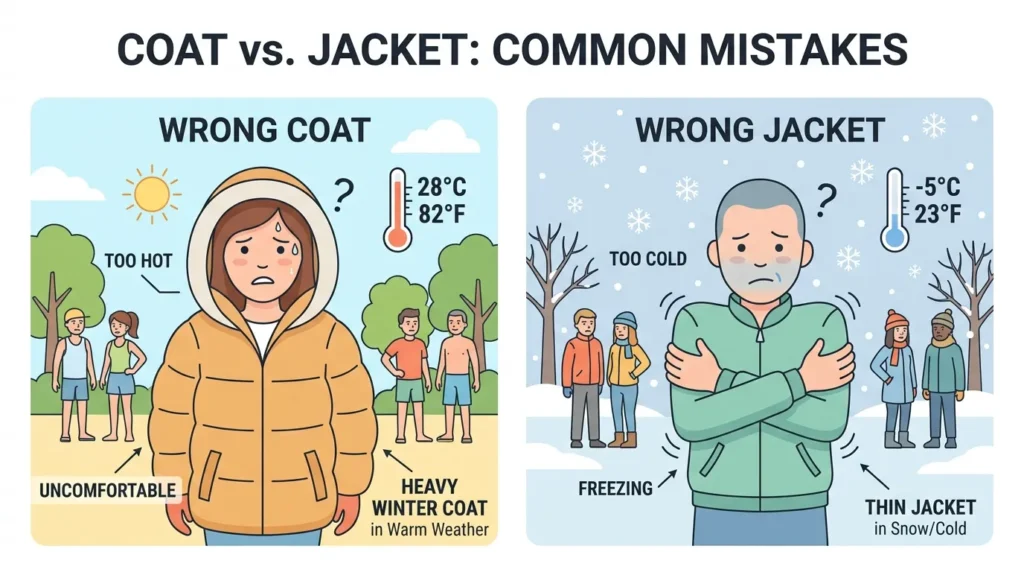
| Mistake | Correction |
| Calling every outerwear piece a jacket | Length and purpose matter |
| Wearing light jackets in extreme cold | Coats provide stronger insulation |
| Assuming coats are always formal | Some coats are casual |
| Confusing puffer coats and puffer jackets | Length helps identify them |
| Ignoring weather conditions | Outerwear should match climate |
Quick Tip
If the garment is long and built mainly for cold protection, it’s usually a coat.
When to Use Each
Use a Coat When:
- temperatures are very cold
- formal dressing is needed
- you need maximum warmth
- traveling in winter climates
Example
A wool coat is ideal for snowy business travel.
Use a Jacket When:
- weather is mild
- mobility matters
- casual fashion is preferred
- layering is needed
Example
A bomber jacket works perfectly for evening outings in cool weather.
Why People Get Confused Between Coat and Jacket
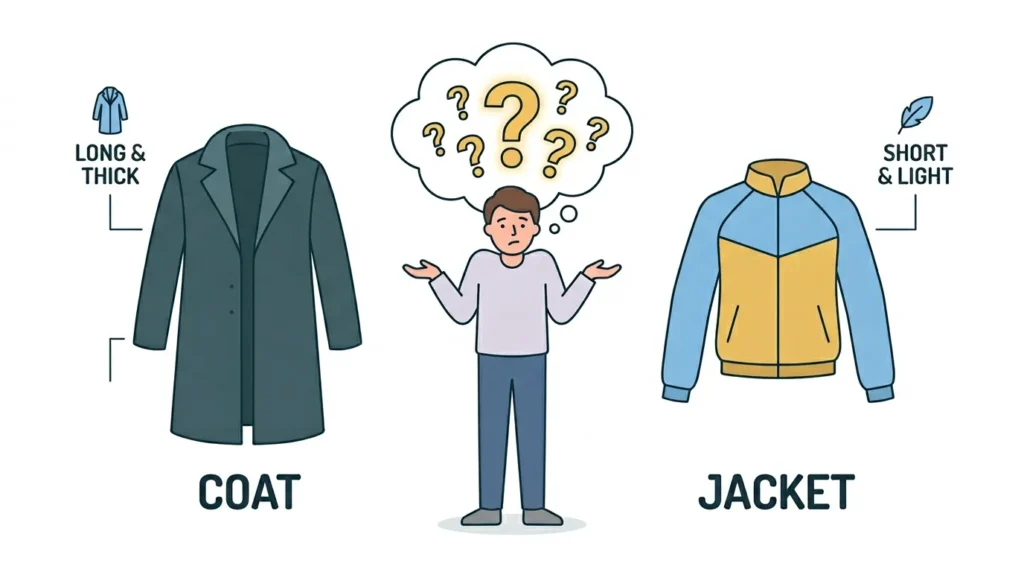
1. Fashion Industry Overlap
Some brands market long jackets as coats and vice versa.
2. Regional Language Differences
In some countries, people casually use “jacket” for nearly all outerwear.
3. Hybrid Fashion Designs
Modern fashion combines elements of both garments.
4. Online Shopping Descriptions
E-commerce platforms sometimes use inconsistent labels for visibility.
5. Social Media Influence
Fashion creators often prioritize trends over technical clothing categories.
How Search Engines Understand Coat vs Jacket User Intent
Search engines analyze:
- shopping intent
- fashion trends
- weather-related searches
- style preferences
Example
- “best winter coat” usually shows insulated outerwear
- “best casual jacket” triggers fashion-focused results
This happens because modern systems understand semantic meaning and user behavior patterns.
Difference Between Coat and Jacket in Business and Fashion Industry
Retailers classify coats and jackets differently because:
- coats sell more during winter seasons
- jackets remain popular year-round
Fashion brands track:
- climate trends
- seasonal demand
- influencer marketing
- consumer behavior
Platforms owned influence fashion buying trends through visual content and social engagement.
Expert Insight:
Modern fashion continuously blends categories. Oversized jackets now resemble short coats, while lightweight coats sometimes look like long jackets.
In practical use, professionals identify garments based on:
- length
- insulation
- structure
- intended weather use
Most beginners focus only on appearance, but fashion experts look at function first.
That’s the real distinction.
FAQs
What is the main difference between coat and jacket?
A coat is longer and warmer, while a jacket is shorter and lighter.
Is a blazer a jacket or coat?
A blazer is technically a type of jacket.
Can jackets be worn in winter?
Yes, insulated jackets can work in winter depending on thickness.
Are all coats formal?
No. Some coats are casual, like parkas or duffle coats.
Why are coats more expensive?
Coats often use heavier materials and more insulation.
Is a hoodie a jacket?
A hoodie is usually categorized separately as casual outerwear.
What is the best outerwear for snow?
Heavy insulated coats usually provide the best protection.
Why do fashion brands mix coat and jacket terms?
Marketing and trend-based styling often blur traditional definitions.
Conclusion
Understanding the difference between coat and jacket helps you choose better clothing for weather, comfort, and personal style. Although both garments belong to outerwear fashion, they serve different purposes in daily life.
A coat is generally longer, heavier, and designed for colder weather protection. A jacket is shorter, lighter, and more flexible for casual styling or moderate temperatures. In real-world fashion, the distinction often depends on length, insulation, mobility, and intended use.
Many people get confused because modern fashion trends blend categories, especially on platforms. However, professionals in clothing design and retail still separate coats and jackets based on functionality and structure.
In simple words, if you need maximum warmth and longer coverage, choose a coat. If you want lightweight comfort and flexible styling, a jacket is usually the better option.
Knowing this difference makes shopping smarter, styling easier, and seasonal dressing much more practical.
Read more about!
Difference Between HRA and HSA: Complete Guide
Difference Between Metaphor and Analogy: Simple Guide

I am Emily Johnson, a USA-based content writer who creates easy-to-read blogs on language and daily life topics. I explain complex ideas in simple English for students and beginners so they can understand easily.