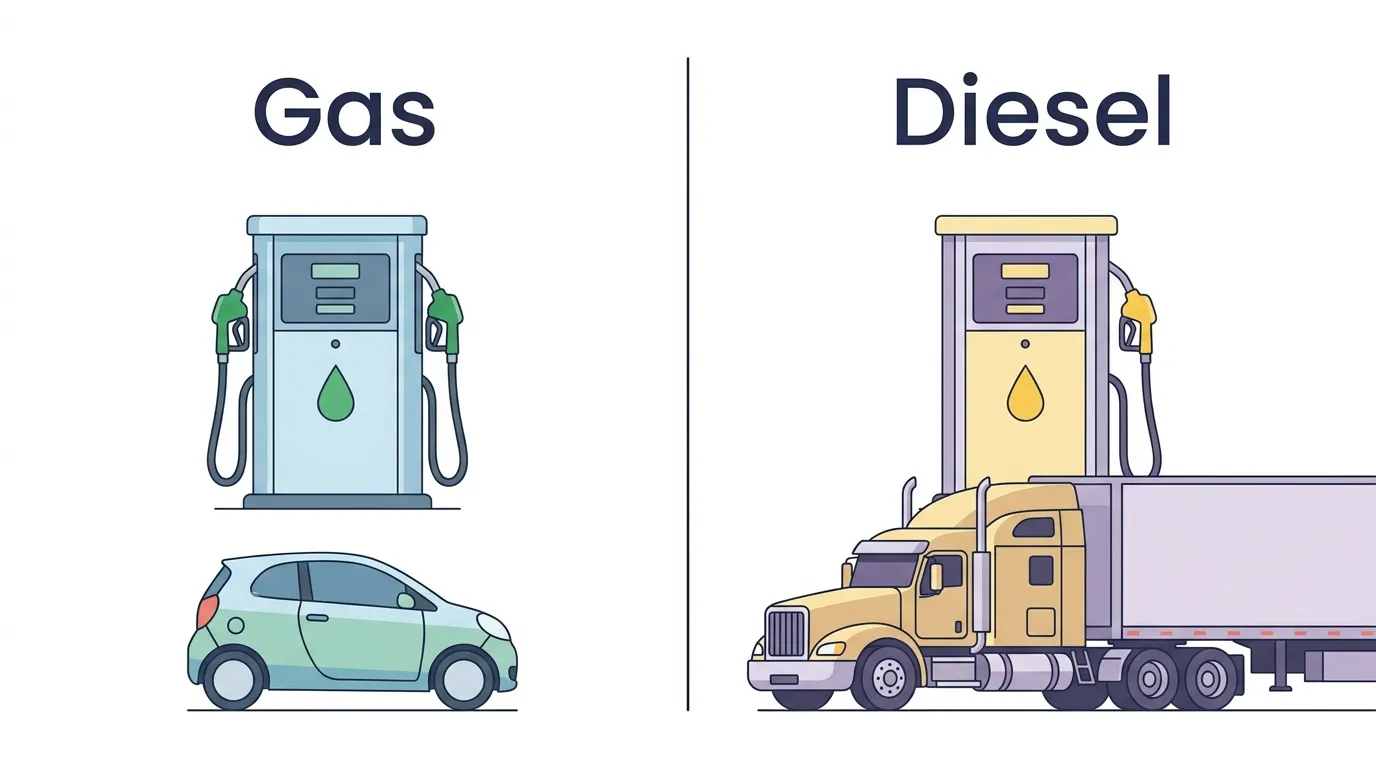
⛽ Gas engines deliver smoother and faster performance, while diesel engines provide better fuel efficiency and stronger towing power 🚗
Many drivers compare vehicles at dealerships and wonder about the difference between gas and diesel before buying a car, truck, SUV, or commercial vehicle. Both fuels power engines, both come from crude oil, and both dominate the transportation industry worldwide.
However, the difference between gas and diesel becomes clear when you look at engine performance, fuel efficiency, maintenance costs, towing power, and long-term ownership experience.
In simple words, Gasoline powers engines using spark ignition and usually offers smoother acceleration, while Diesel uses compression ignition and delivers stronger torque and better fuel economy.
People search for the difference between gas and diesel because they want to know:
- which fuel saves more money
- which engine lasts longer
- which vehicle is better for daily driving
- how diesel and gasoline engines work
- why trucks often use diesel engines
In this complete guide, you’ll learn real-world examples, expert insights, fuel comparisons, maintenance differences, environmental impacts, modern automotive trends, and practical buying advice in a simple beginner-friendly way.
Difference Between Gas and Diesel
Gasoline engines use spark plugs to ignite fuel and usually provide quicker acceleration and quieter driving. Diesel engines use compressed air for ignition and are known for stronger pulling power, higher fuel efficiency, and longer engine lifespan.
Simple Example
A small city sedan usually runs on gas.
A heavy-duty pickup truck often runs on diesel.
Definition of Gas and Diesel
- Gasoline (Gas): A refined petroleum fuel used in spark-ignition engines commonly found in cars, motorcycles, and small SUVs.
- Diesel: A heavier petroleum fuel used in compression-ignition engines designed for higher torque and fuel efficiency.
Quick Example
Most sports cars use gasoline engines.
Commercial trucks usually use diesel engines.
Pronunciation
- Gasoline / Gas
- US: GAS-uh-leen
- UK: PET-rul (commonly called petrol)
- Diesel
- US: DEE-zuhl
- UK: DEE-zuhl
Now that the basic meanings are clear, let’s understand why these two fuels perform so differently in real-world driving.
Difference Between Gas and Diesel
| Feature | Gasoline | Diesel | Similarity |
| Ignition System | Uses spark plugs | Uses compression ignition | Both power combustion engines |
| Fuel Efficiency | Lower mileage | Higher mileage | Both require fuel combustion |
| Torque | Moderate torque | High torque | Both generate engine power |
| Acceleration | Faster response | Slower but stronger pull | Both move vehicles |
| Engine Noise | Quieter | Louder | Modern insulation reduces noise |
| Maintenance Cost | Usually lower | Often higher | Both need regular servicing |
| Engine Lifespan | Shorter average lifespan | Longer engine durability | Both wear over time |
| Common Vehicles | Sedans, sports cars | Trucks, buses, heavy vehicles | Both serve transportation needs |
This table clearly shows the difference and similarity between gas and diesel for quick understanding.
Key Differences Explained Between Gas and Diesel
1. Ignition Method
The biggest difference is how the engine ignites fuel.
Gasoline engines use spark plugs. Diesel engines compress air until heat ignites the fuel automatically.
Real-Life Example
A family sedan typically uses spark ignition.
A commercial cargo truck relies on diesel compression ignition.
2. Fuel Efficiency
Diesel engines usually travel farther per liter or gallon.
Why?
Diesel fuel contains more energy density, which improves mileage.
Practical Insight
Long-distance drivers and logistics companies often prefer diesel for fuel savings.
3. Torque and Pulling Power
Diesel engines generate stronger torque, which helps with:
- towing
- hauling
- climbing hills
- carrying heavy loads
This is why most construction trucks use diesel engines.
4. Engine Noise
Gas engines are generally smoother and quieter.
Diesel engines create louder combustion sounds because of high-pressure ignition.
However, modern diesel technology has significantly reduced noise levels.
5. Maintenance Costs
Gas vehicles usually cost less to maintain.
Diesel vehicles often require:
- specialized filters
- stronger engine components
- expensive fuel systems
But diesel engines can last longer if maintained properly.
6. Cold Weather Performance
Gasoline engines start more easily in cold temperatures.
Diesel engines may struggle in freezing climates without glow plugs or heaters.
What Is a Gasoline Engine?
Gasoline Engine uses spark plugs to ignite an air-fuel mixture inside the combustion chamber.
Common Vehicles Using Gas Engines
- sedans
- sports cars
- hatchbacks
- compact SUVs
- motorcycles
Why Gasoline Engines Became Popular
Gasoline engines offer:
- smoother acceleration
- quieter operation
- lighter engine design
- lower upfront cost
In real-life driving, city commuters often prefer gasoline vehicles because they feel more responsive in traffic.
What Is a Diesel Engine?
Diesel Engine compresses air until it becomes hot enough to ignite diesel fuel naturally.
Common Vehicles Using Diesel Engines
- pickup trucks
- buses
- tractors
- ships
- generators
- heavy machinery
Why Diesel Engines Dominate Heavy Industry
Diesel engines are built for:
- endurance
- fuel economy
- towing strength
- commercial use
That’s why industries worldwide rely heavily on diesel-powered equipment.
Difference Between Gas and Diesel in Fuel Economy
Fuel economy is one of the biggest buying factors today.
Gasoline Fuel Economy
Gas vehicles usually consume fuel faster but offer lighter driving feel.
Diesel Fuel Economy
Diesel engines often achieve better mileage because:
- fuel burns slower
- energy density is higher
- engines operate efficiently at lower RPMs
Real Scenario
Long-haul truck companies save significant fuel costs using diesel fleets.
Difference Between Gas and Diesel for Daily Driving
Gas Vehicles for Daily Use
Best for:
- short commutes
- city driving
- smooth acceleration
- lighter maintenance budgets
Diesel Vehicles for Daily Use
Best for:
- long-distance driving
- towing
- highway travel
- commercial transportation
Important Insight
Modern diesel vehicles perform best when driven regularly over longer distances.
Difference Between Gas and Diesel in Trucks
Most heavy-duty trucks use diesel because torque matters more than speed.
Why Diesel Wins for Trucks
Diesel engines:
- pull heavy trailers
- handle steep terrain
- last longer under pressure
This is why brands heavily promote diesel towing power.
Environmental Difference Between Gas and Diesel
Environmental impact is a growing concern in 2026.
Gasoline Emissions
Gas engines often produce:
- more carbon dioxide
- lower particulate matter
Diesel Emissions
Diesel engines usually produce:
- fewer CO2 emissions per mile
- higher nitrogen oxides
- more particulates without filters
Modern diesel systems now use:
- DEF fluid
- particulate filters
- advanced catalytic systems
Why Diesel Engines Last Longer
Diesel engines are built stronger because they handle higher compression.
Stronger Components Include
- reinforced pistons
- durable crankshafts
- heavy-duty blocks
In practical use, many diesel engines exceed extremely high mileage with proper maintenance.
Real Life Examples With Gas and Diesel
1. Family Car Example
Most compact family cars use gasoline because they are affordable and smooth.
2. Construction Industry Example
Bulldozers and heavy equipment almost always use diesel engines.
3. Long-Distance Travel Example
Drivers traveling cross-country often prefer diesel trucks for mileage savings.
4. Sports Car Example
High-performance sports cars usually use gasoline engines for rapid acceleration.
5. Agriculture Industry Example
Farm tractors depend heavily on diesel power because of constant heavy workloads.
Common Mistakes With Gas and Diesel
| Mistake | Correction |
| Thinking diesel is always cheaper | Fuel prices vary by region |
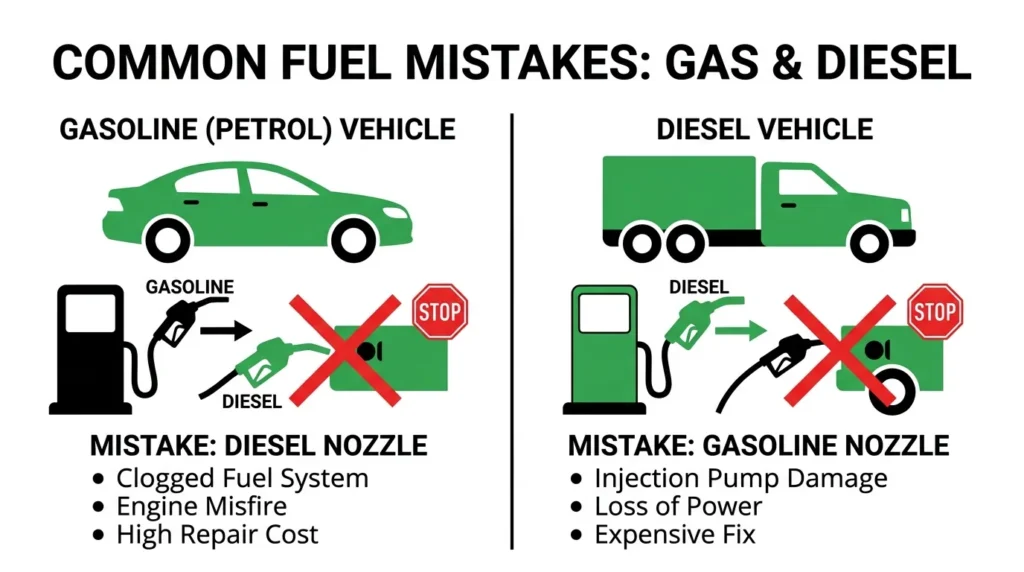
| Putting wrong fuel in vehicle | This can seriously damage engines |
| Assuming diesel is only for trucks | Many passenger cars use diesel |
| Ignoring maintenance schedules | Diesel engines need proper servicing |
| Believing gas engines are weak | Modern gas engines are very advanced |
Quick Advice
Always check the fuel type before filling your vehicle.
When to Use Gas vs Diesel
Choose Gasoline When:
- you mainly drive in cities
- you want quieter driving
- lower maintenance matters
- you prefer faster acceleration
Choose Diesel When:
- towing is important
- you drive long distances
- fuel economy matters
- heavy workloads are common
Real Example
A contractor towing equipment daily benefits more from diesel.
Why People Get Confused Between Gas and Diesel
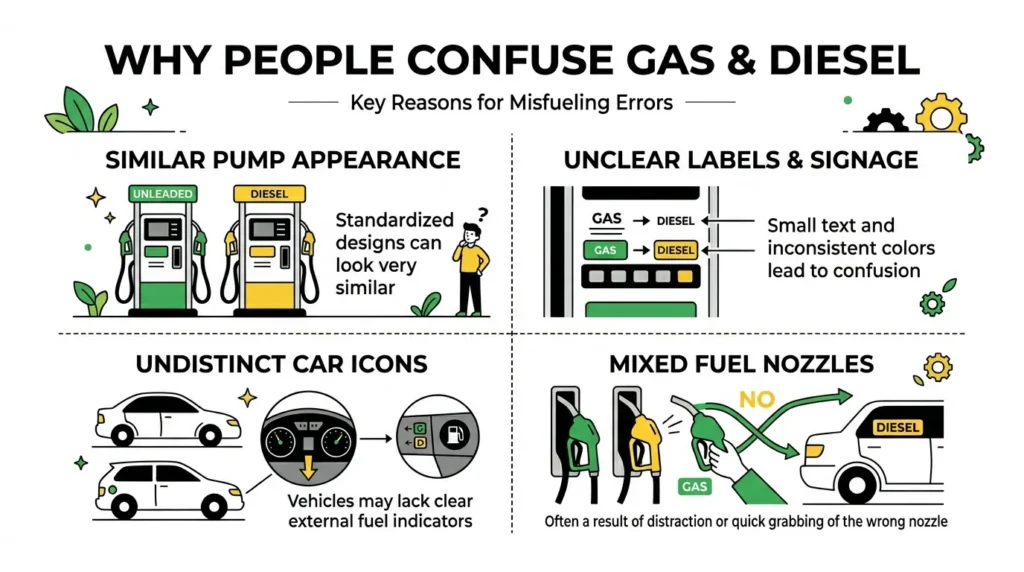
1. Similar Appearance at Fuel Stations
Fuel pumps often look similar.
2. Modern Engine Technology
New gas and diesel engines both offer strong performance.
3. Marketing and Advertising
Automotive videos sometimes oversimplify fuel differences.
4. Regional Naming Differences
In some countries:
- gasoline = petrol
- diesel names remain similar
5. Hybrid and Electric Trends
The rise of hybrid systems has blurred traditional fuel comparisons.
How Search Engines Understand Gas vs Diesel User Intent
Search engines analyze:
- purchase intent
- fuel economy searches
- towing needs
- maintenance concerns
- environmental questions
Example
- “best diesel truck” triggers towing-focused results
- “gas vs diesel mileage” prioritizes fuel economy comparisons
Modern systems now map user intent semantically instead of relying only on keywords.
Expert Insight
Even as electric vehicles grow, diesel remains essential for industries requiring:
- long-distance hauling
- construction
- agriculture
- marine transportation
In real scenarios, electric systems still face range and charging limitations for large industrial workloads.
Most beginners focus only on fuel price, but professionals evaluate:
- torque needs
- operating cost
- maintenance cycles
- long-term durability
That’s the smarter way to compare gas and diesel.
FAQs
What is the main difference between gas and diesel?
Gas engines use spark ignition, while diesel engines use compression ignition.
Which is better for fuel economy?
Diesel engines usually provide better mileage.
Are diesel engines louder?
Yes, diesel engines are generally noisier than gasoline engines.
Why do trucks use diesel?
Diesel engines generate higher torque for towing and hauling.
Is diesel maintenance expensive?
Diesel repairs and components can cost more, but engines often last longer.
Can putting diesel in a gas car damage it?
Yes. Using the wrong fuel can seriously damage the engine.
Which fuel is better for city driving?
Gasoline vehicles are usually better for short city commutes.
Is diesel environmentally friendly?
Modern diesel engines are cleaner than older models, but emissions remain a concern.
Conclusion
Understanding the difference between gas and diesel helps drivers make smarter choices based on budget, driving habits, fuel economy, and long-term vehicle goals. Although both fuels power internal combustion engines, they work differently and serve different purposes.
Gasoline engines offer smoother acceleration, quieter performance, and easier city driving. Diesel engines provide stronger torque, better fuel efficiency, and superior durability for heavy-duty work and long-distance travel.
Many people get confused because modern vehicles blur the gap between gasoline and diesel performance. However, professionals still evaluate them differently depending on towing needs, operating conditions, maintenance expectations, and fuel costs.
In simple words, gasoline works best for casual everyday driving, while diesel excels in heavy workloads and fuel-efficient long-distance use. Choosing the right one depends on how you actually use your vehicle in real life.
As automotive technology continues evolving in 2026 and beyond, understanding these fuel systems remains important for buyers, businesses, and transportation industries worldwide.
Read more about!
Difference Between Quartz and Granite: Complete Guide
Difference Between PNG and JPG: Complete Guide

I am James Carter, a professional content writer from the United States. I specialize in writing simple and clear comparison blogs that help students and readers understand difficult topics easily. My writing focuses on everyday language, education, science, and lifestyle topics. I believe that learning should be easy for everyone, so I use simple words and real-life examples in my articles.