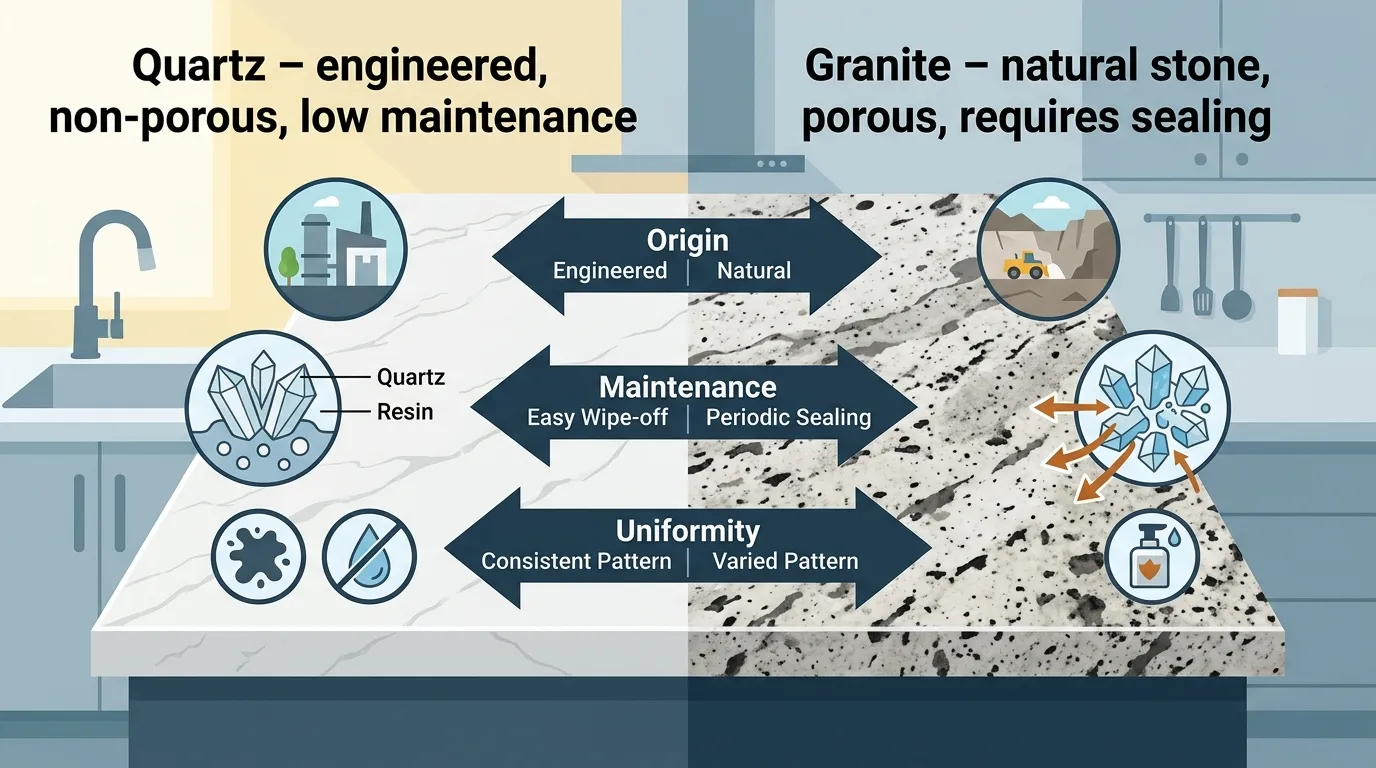
Quartz is an engineered stone with low maintenance and high stain resistance, while granite is a natural stone with unique patterns that needs sealing and more care 🌿
If you are planning to upgrade your kitchen or bathroom, you’ve probably searched for difference between quartz and granite more than once.
Many homeowners feel confused when choosing between these two popular countertop materials. The truth is, both look beautiful but they are very different in structure, durability, maintenance, and long-term value.
The difference between quartz and granite is not just about appearance. It affects how your kitchen performs daily, how much maintenance you need, and even how long your countertop will last.
In simple words, quartz is engineered stone while granite is natural stone formed deep inside the earth.
In this complete guide, we will clearly break down everything about difference between quartz and granite, including their composition, pros and cons, real-life usage, pricing, maintenance, and expert insights.
You will also learn why people often confuse them and how Google understands this topic from a search perspective.
By the end, you will confidently know which one is best for your home without needing any other article.
🟢 Difference Between Quartz and Granite
Quartz is an engineered stone made from crushed quartz crystals mixed with resin, while granite is a natural stone cut directly from mountains. Quartz is low-maintenance, while granite is more natural but requires sealing.
Example: Quartz is like a manufactured luxury surface, while granite is like a natural piece of earth brought into your kitchen.
🟢 Definition of Quartz and Granite
- Quartz: A man-made engineered stone composed of 90–95% crushed quartz and resin used for durable countertops.
- Granite: A natural igneous rock formed from cooled magma, cut and polished for kitchen and bathroom surfaces.
Both are widely used in homes, offices, and luxury interior designs due to their strength and aesthetic appeal.
🟢 Pronunciation
- Quartz (US/UK): /kwɔːrts/
- Granite (US/UK): /ˈɡrænɪt/
Now let’s move deeper into the difference between quartz and granite and understand how they behave in real-life usage.
🟢 Comparison: Quartz and Granite
| Feature | Quartz | Granite | Similarity |
| Material Type | Engineered stone | Natural stone | Both used for countertops |
| Appearance | Uniform design | Natural patterns | Both look premium |
| Durability | Highly durable | Very durable | Long-lasting surfaces |
| Maintenance | Low maintenance | Needs sealing | Easy cleaning required |
| Porosity | Non-porous | Porous | Resistant to heat |
| Cost | Slightly expensive | Varies by type | Premium category |
| Stain Resistance | High | Medium | Suitable for kitchens |
👉 This table clearly shows the difference between quartz and granite for quick understanding.
🟢 Key Differences Explained Between Quartz and Granite
1. Material Composition Difference
Quartz is engineered using crushed stone and resin, while granite is naturally formed underground over millions of years. This makes quartz more controlled in quality.
2. Appearance Variation
Granite offers unique natural patterns no two slabs are identical. Quartz provides uniform patterns, which is preferred in modern minimalist kitchens.
3. Maintenance Level
Quartz is non-porous, meaning no sealing is needed. Granite requires sealing to prevent stains and bacteria absorption.
4. Durability Strength
Both are strong, but quartz resists cracks and stains better in daily kitchen use.
5. Heat Resistance
Granite handles heat slightly better than quartz, but both should not be exposed to extreme heat directly.
6. Cost Factor
Quartz is often more expensive due to manufacturing technology, while granite prices depend on rarity.
7. Hygiene Level
Quartz is more hygienic due to its non-porous surface, making it ideal for modern kitchens.
🟢 What is Quartz and How Does It Work?
Manufacturers combine natural quartz crystals with resin and pigments to produce quartz countertops.This engineered process ensures uniformity, strength, and stain resistance.
Designers in modern interior design systems (influenced by platforms such as Pinterest, Instagram, and Google home decor trends) often prefer quartz for its clean and modern aesthetic.
🟢 What is Granite and How is it Formed?
Granite is a natural igneous rock that forms when magma cools slowly underground. People then mine it, cut it, and polish it into slabs.
Because it is natural, each granite piece is unique. This uniqueness is why architects often prefer granite in luxury homes and commercial buildings.
🟢 Real-Life Examples of Quartz vs Granite
🏡 Home Kitchen
People use quartz in modern apartments due to its low maintenance.
🍽 Restaurants
People prefer granite in high-heat cooking areas.
🏢 Offices
People use quartz in reception counters for a sleek look.
🏨 Hotels
Design style determines the use of both materials.
🏠 Luxury Homes
People choose granite for natural, premium aesthetics.
🟢 When to Use Quartz vs Granite
Use Quartz When:
- You want low maintenance
- You prefer modern design
- You need stain resistance
- You want uniform color
Use Granite When:
- You prefer natural stone look
- You want unique patterns
- You need heat resistance
- You like classic interiors
🟢 Why People Get Confused Between Quartz and Granite
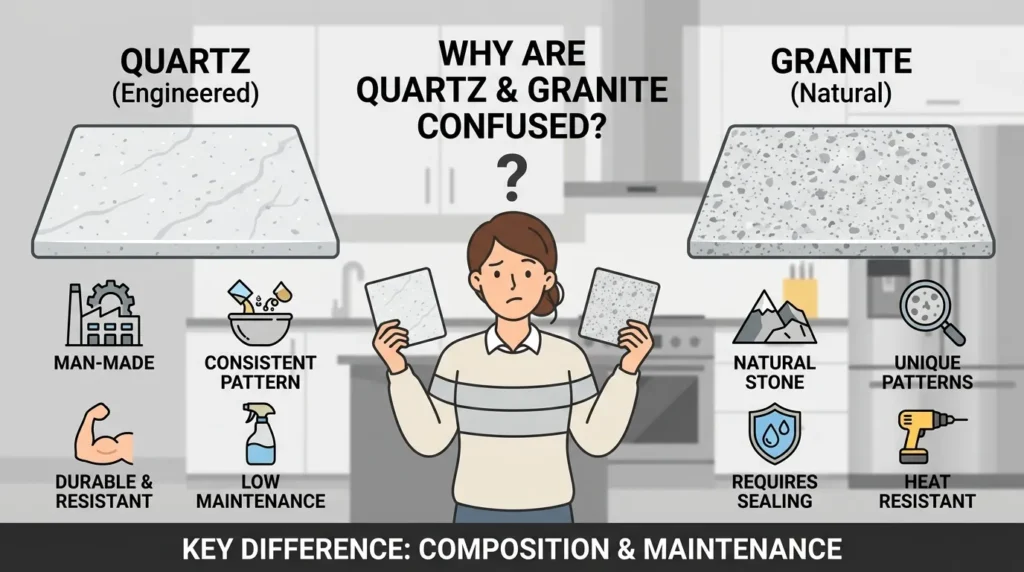
Many users confuse difference between quartz and granite because both:
- Look similar at first glance
- Are used in kitchens
- Are durable and premium materials
Additionally, social media platforms like Instagram often show both materials without explaining technical differences, increasing confusion.
🟢 How Search Engines Understand Quartz vs Granite
Google uses NLP (Natural Language Processing) to understand that users searching for difference between quartz and granite want:
- Material comparison
- Buying decision help
- Maintenance details
- Visual differences
That’s why top-ranking pages include tables, FAQs, and real-life examples exactly like this article.
🟢 Expert Insight
From an interior design perspective, quartz is dominating modern home trends due to its practicality and hygiene benefits.However, premium architectural projects still prioritize natural beauty, so they value granite highly.
Most professional designers recommend quartz for busy households and granite for aesthetic-focused luxury projects.
🟢 Common Mistakes with Quartz and Granite
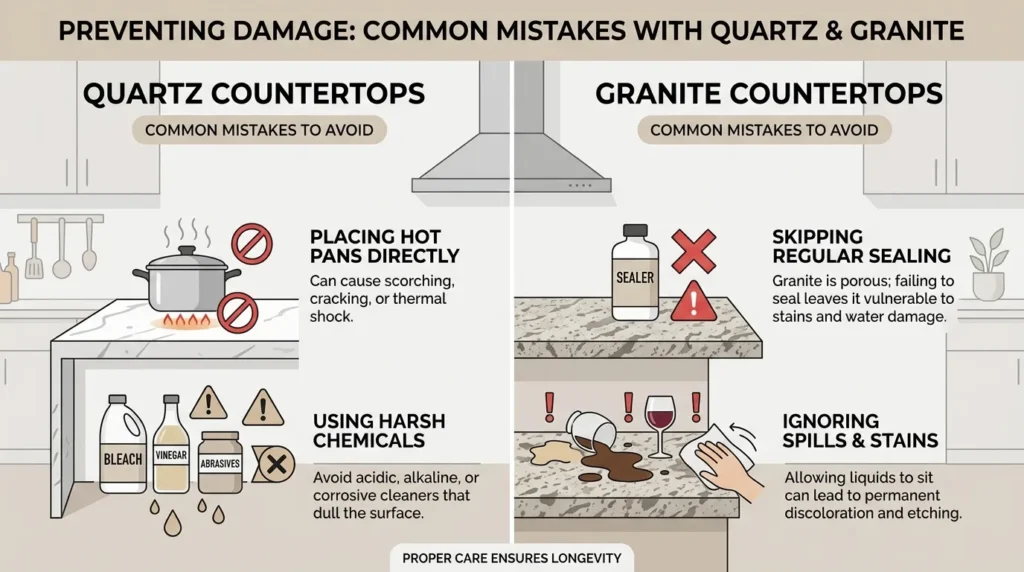
- Assuming quartz is 100% natural
- Not sealing granite regularly
- Using hot pans directly on quartz
- Choosing design over functionality
- Ignoring long-term maintenance cost
Fixing these mistakes ensures better durability and performance.
🟢 Why Quartz and Granite Are Used in Real Life
- Quartz is used in modern kitchens, hospitals, and labs
- Granite is used in monuments, luxury homes, and outdoor surfaces
Both materials solve different design problems depending on usage.
🟢 FAQs
1. Which is better quartz or granite?
Quartz is better for low maintenance, granite is better for natural beauty.
2. Does quartz scratch easily?
Quartz is highly scratch-resistant but not completely scratch-proof.
3. Is granite 100% natural?
Yes, granite is a natural stone.
4. Which is more expensive quartz or granite?
Quartz is generally more expensive.
5. Which lasts longer quartz or granite?
Both last decades if maintained properly.
6. Does quartz need sealing?
No, quartz does not need sealing.
🟢 Conclusion
Understanding the difference between quartz and granite is important before choosing a countertop for your home.Engineers design quartz as a low-maintenance and modern material, while nature forms granite with unique patterns and a timeless appearance. Both materials are strong, durable, and widely used in kitchens, bathrooms, and commercial spaces.
If you want a sleek, easy-to-clean surface, quartz is the best choice. If you prefer natural beauty and unique patterns, granite is ideal. In real-world usage, both perform excellently depending on your lifestyle and design needs.
So, the final decision depends on your priorities maintenance, design, or natural appearance. Either way, both are premium choices that add value to any space.
Read more about!
Difference Between HD and SD: Complete Guide
Difference Between Bourbon and Scotch: Complete Guide

I am James Carter, a professional content writer from the United States. I specialize in writing simple and clear comparison blogs that help students and readers understand difficult topics easily. My writing focuses on everyday language, education, science, and lifestyle topics. I believe that learning should be easy for everyone, so I use simple words and real-life examples in my articles.