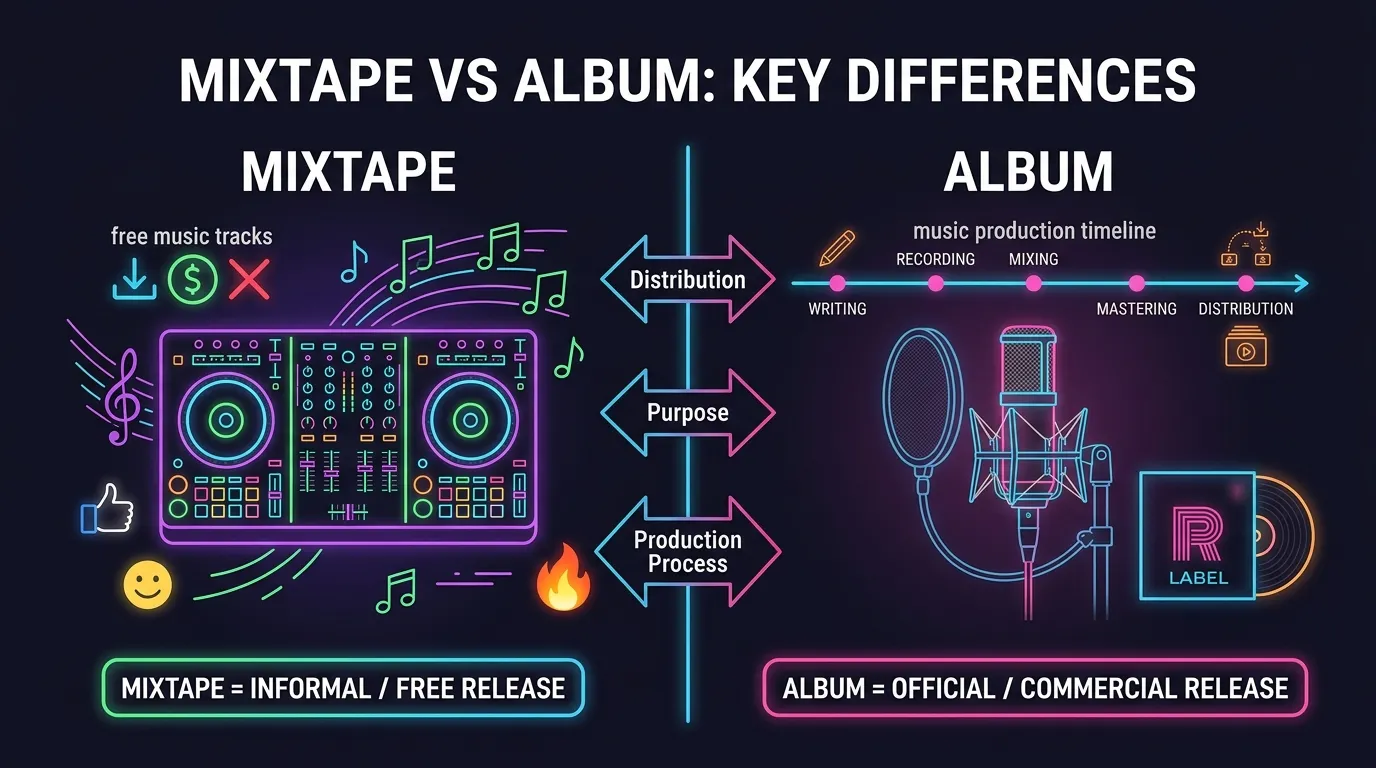
🎧 The difference between a mixtape and an album is that a mixtape is usually an informal, often free collection of songs, while an album is a professionally produced and officially released music project.
Many music fans and beginner artists get confused about the difference between mixtape and album because both contain collections of songs.
In simple words, a mixtape is usually more informal, experimental, and promotional, while an album is a professionally structured music project made for commercial release and long-term artistic impact.
The difference between mixtape and album became more important in the digital streaming era. Platforms like Spotify, YouTube, Apple Music, and SoundCloud changed how artists release music.
Today, many rappers, singers, and independent creators use mixtapes to build audiences before launching official albums.
If you have ever wondered:
- “What is a mixtape?”
- “Why do rappers release mixtapes?”
- “Is a mixtape less professional than an album?”
- “Can a mixtape make money?”
this guide will explain everything clearly. You will learn definitions, comparisons, music industry logic, streaming culture, artist strategy, real examples, and expert insights in one complete article.
Difference Between Mixtape and Album
The difference between mixtape and album is simple:
- A mixtape is usually a flexible, less formal music project often used for promotion, experimentation, or fan engagement.
- An album is a professionally planned music release designed for commercial success and artistic storytelling.
Real Example
An underground rapper may release a free mixtape on SoundCloud to gain attention, while a major label artist releases an album on Spotify for chart rankings and sales.
Definition of Difference Between Mixtape and Album
- Mixtape: A collection of songs released mainly for promotion, creative freedom, or audience growth. It is often less restricted by commercial rules.
- Album: An official music project with professional production, structured themes, marketing plans, and commercial distribution.
Simple Example
A mixtape is like an artist “testing ideas,” while an album is the finished official presentation.
Pronunciation
| Term | US Pronunciation | UK Pronunciation |
| Mixtape | MIX-tayp | MIX-tayp |
| Album | AL-bum | AL-bum |
Now let’s understand the deeper music industry logic behind mixtapes and albums.
Difference Between Mixtape and Album
| Feature | Mixtape | Album |
| Main Purpose | Promotion and experimentation | Commercial release |
| Production Quality | Often flexible or raw | Usually polished |
| Music Theme | Can be random | Usually organized |
| Commercial Focus | Less commercial | Highly commercial |
| Label Involvement | Sometimes independent | Usually label-supported |
| Song Licensing | May use unofficial beats | Fully licensed content |
| Marketing Strategy | Audience building | Revenue and branding |
| Streaming Goal | Fan engagement | Charts and sales |
| Release Style | Informal | Official |
| Artist Freedom | Very high | More controlled |
Key Differences Explained Between Mixtape and Album
1. Mixtapes Are Usually More Experimental
Artists often use mixtapes to test new sounds, flows, and creative ideas without pressure.
Real-Life Example
A rapper may experiment with drill beats, freestyle tracks, or remix songs in a mixtape before choosing a polished sound for an album.
2. Albums Are Professionally Structured
Albums normally follow a clear vision.
They often include:
- Storytelling
- Song sequencing
- Professional mastering
- Marketing campaigns
Example
Pop artists on Apple Music often release albums built around emotional themes or life experiences.
3. Mixtapes Build Fanbases Quickly
Mixtapes are commonly used for:
- Growing audiences
- Internet buzz
- Social media traction
- Viral moments
Practical Insight
Many artists become famous through mixtapes before signing major deals.
4. Albums Usually Generate More Revenue
Albums are typically monetized through:
- Streaming royalties
- Physical sales
- Tours
- Merchandising
- Licensing deals
Mixtapes historically were often distributed free.
5. Mixtapes Allow More Creative Freedom
Artists can release songs quickly without worrying about commercial expectations.
This freedom is one reason hip-hop culture embraced mixtapes so heavily.
6. Albums Have Higher Industry Expectations
Albums are often reviewed by:
- Critics
- Award organizations
- Music publications
- Streaming algorithms
A strong album can shape an artist’s career permanently.
7. Mixtapes Often Feel More Personal
Many fans say mixtapes sound “raw” and authentic because artists speak more freely.
Real Scenario
Underground artists frequently share personal struggles and unfinished creative ideas through mixtapes.
What Is a Mixtape in Music?
Originally, mixtapes were literally cassette tapes containing mixed songs recorded by DJs.
Over time, especially in hip-hop culture, the meaning evolved.
Today, a mixtape usually means:
- A less formal music release
- A promotional project
- A fan-focused collection
- A creative experiment
Why Mixtapes Became Popular
Mixtapes helped artists:
- Bypass record labels
- Reach street audiences
- Gain internet attention
- Build underground credibility
Platforms like YouTube and SoundCloud made mixtape culture explode globally.
What Makes an Album Different?
An album is usually treated as an artist’s official body of work.
It often includes:
- Licensed production
- Professional promotion
- Strategic release timing
- Official chart tracking
Albums also involve larger investments from labels and distributors.
Difference and Similarity Between Mixtape and Album
| Feature | Mixtape | Album | Similarity |
| Music Collection | Yes | Yes | Both contain songs |
| Artist Expression | High freedom | Structured creativity | Both reflect artist identity |
| Streaming Platforms | Available online | Available online | Both appear on streaming apps |
| Fan Engagement | Strong community focus | Broad audience focus | Both connect artists with listeners |
| Production Style | Flexible | Polished | Both involve music production |
| Commercial Intent | Lower | Higher | Both can support careers |
| Promotion | Internet-driven | Industry-driven | Both require marketing |
| Listening Experience | Casual or experimental | Organized storytelling | Both entertain audiences |
This table clearly shows the difference and similarity between mixtape and album for quick understanding.
Why Do Rappers Release Mixtapes?
Hip-hop culture made mixtapes globally famous.
Main Reasons
1. Building Street Credibility
Mixtapes allow rappers to prove lyrical skill without label pressure.
2. Releasing Music Faster
Albums may take years. Mixtapes can release quickly.
3. Growing Social Media Attention
Artists often go viral through mixtape tracks shared on:
- TikTok
- YouTube
4. Testing Fan Reactions
Artists watch which mixtape songs trend before planning official albums.
Can a Mixtape Become an Album?
Yes, sometimes.
In modern streaming culture, the line between mixtapes and albums has become blurry.
Some projects labeled “mixtapes” perform commercially like albums.
Example
Several famous hip-hop mixtapes later received official streaming releases and chart recognition.
How Streaming Changed Mixtape and Album Culture
Streaming platforms completely changed the music industry.
Before streaming:
- Mixtapes were often free downloads
- Albums were official store releases
Today:
- Both appear on streaming platforms
- Both generate streams
- Both influence algorithms
Platforms like Spotify and Apple Music now blur traditional distinctions.
Common Mistakes With Mixtape and Album
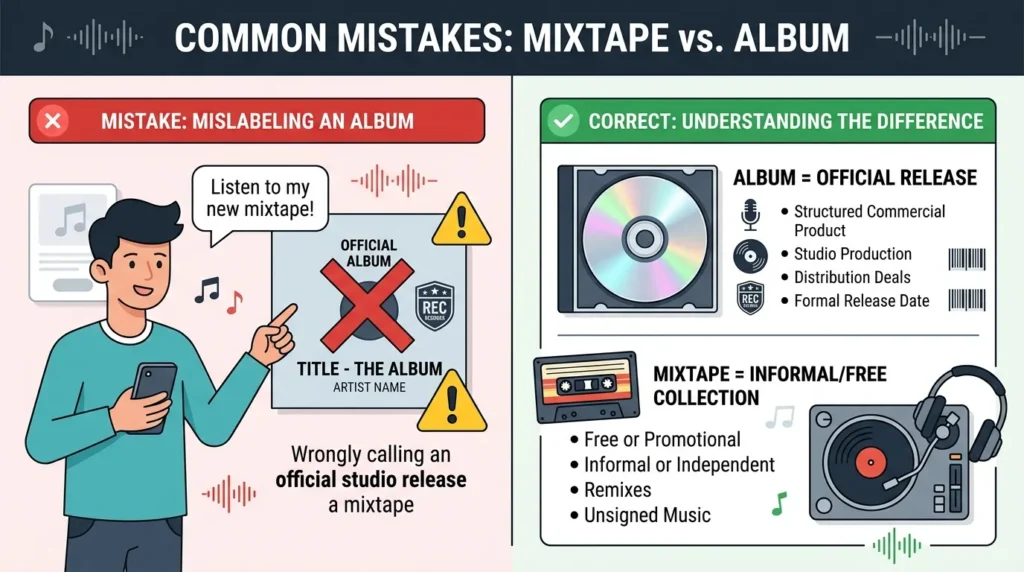
1. Thinking Mixtapes Are Low Quality
Some mixtapes contain extremely high production quality.
2. Assuming Albums Always Perform Better
Many mixtapes become culturally bigger than albums.
3. Believing Mixtapes Are Always Free
Modern mixtapes can generate revenue through streaming platforms.
4. Confusing EPs With Mixtapes
An EP is usually shorter and more officially structured.
5. Assuming Only Rappers Release Mixtapes
While hip-hop popularized them, many genres now use mixtape-style releases.
Real Life Examples With Mixtape and Album
Independent Artist Growth
A new artist uploads a mixtape to SoundCloud to build a fanbase.
Major Label Strategy
A label-supported singer releases a studio album with global marketing campaigns.
Viral Internet Success
A mixtape track trends on TikTok and gains millions of streams.
Touring and Branding
Artists often tour after album releases because albums create stronger commercial narratives.
Fan Engagement
Mixtapes often feel more direct and personal, helping artists connect deeply with listeners.
When To Use Each
| Situation | Better Choice |
| Testing new sounds | Mixtape |
| Official commercial release | Album |
| Building an audience | Mixtape |
| Long-term branding | Album |
| Fast music release | Mixtape |
| Award consideration | Album |
Simple Rule
Use a mixtape for freedom and fan growth.
Use an album for professional positioning and long-term impact.
Why People Get Confused Between Mixtape and Album
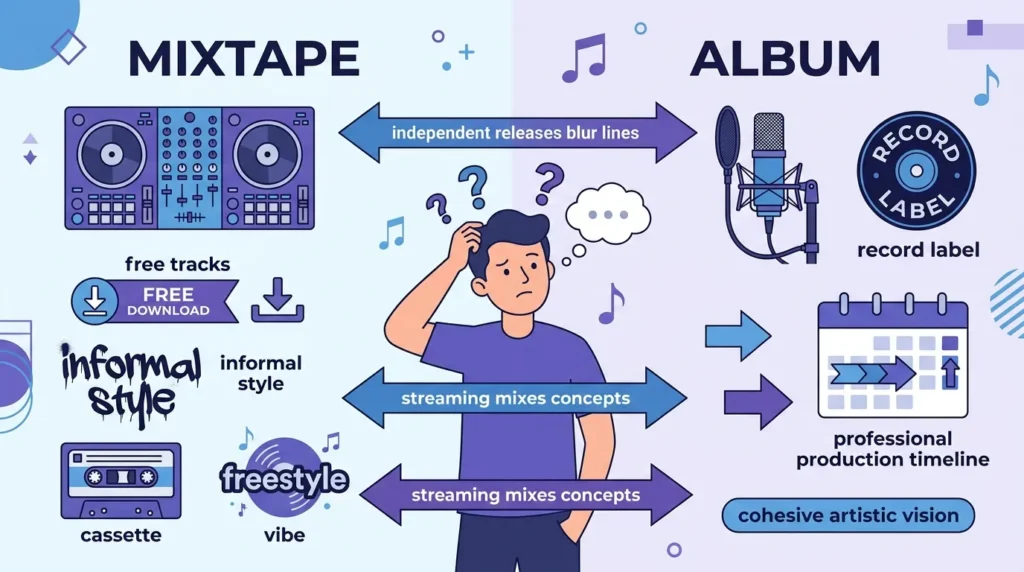
Many listeners use both terms interchangeably because streaming platforms display them similarly.
Main Reasons for Confusion
1. Streaming Changed Definitions
Modern digital releases blur industry categories.
2. Artists Use Terms Creatively
Some musicians intentionally call projects “mixtapes” even when they resemble albums.
3. Marketing Influence
Labels sometimes use the word “mixtape” to create a more authentic or underground image.
4. Social Media Culture
Platforms like Instagram and YouTube simplified music terminology for mass audiences.
How Search Engines Understand Difference Between Mixtape and Album
Search engines like Google analyze semantic relationships and user intent.
When users search:
- “mixtape vs album”
- “what is a mixtape”
- “album meaning in music”
- “why rappers release mixtapes”
Google understands users usually want:
- Music industry explanation
- Hip-hop culture context
- Streaming-era comparisons
- Artist strategy insights
Why This Matters
Content performs better when it:
- Explains terms naturally
- Uses real-world artist examples
- Covers modern streaming culture
- Answers beginner confusion directly
Expert Insight
In real music industry scenarios, mixtapes often act as creative laboratories. Artists use them to experiment, build loyal communities, and stay active between official album cycles. Albums, however, usually represent a bigger artistic statement with stronger commercial expectations.
Most beginners think mixtapes are simply “unfinished albums,” but that is not always true. Some legendary mixtapes influenced music culture more deeply than official albums because they felt raw, unrestricted, and emotionally honest.
Today’s streaming economy has blurred traditional definitions, but the core difference still exists:
- Mixtapes prioritize freedom and momentum.
- Albums prioritize structure, branding, and long-term artistic identity.
FAQs
What is the main difference between mixtape and album?
A mixtape is usually more informal and experimental, while an album is professionally structured and commercially released.
Are mixtapes free?
Historically many were free, but modern mixtapes can earn money through streaming platforms.
Why do rappers prefer mixtapes?
Mixtapes allow faster releases, creative freedom, and direct fan engagement.
Can a mixtape win awards?
Usually albums receive more award consideration, but mixtapes can still gain critical recognition.
Is a mixtape lower quality than an album?
Not necessarily. Some mixtapes have production quality equal to major albums.
What is an EP compared to a mixtape?
An EP is shorter and more officially organized, while mixtapes are usually more flexible.
Can a mixtape chart on Spotify?
Yes. Modern mixtapes can chart and stream like albums.
Which is better for new artists?
Many new artists benefit from mixtapes because they help build audiences quickly.
Conclusion
Understanding the difference between mixtape and album is much easier once you understand the goals behind each format. Mixtapes are usually built for experimentation, fan connection, fast releases, and creative freedom. Albums are more polished, professionally structured projects designed for long-term branding, commercial success, and artistic storytelling.
In practical use, mixtapes helped shape hip-hop culture and modern internet music communities. Albums, meanwhile, remain the industry standard for official artist identity and commercial recognition. Streaming platforms have blurred the lines between them, but the core differences still matter in music strategy and artist development.
For listeners, both formats offer value:
- Mixtapes often feel raw, personal, and energetic.
- Albums usually feel complete, organized, and cinematic.
As music continues evolving in the streaming era, understanding these differences helps fans, creators, and aspiring artists navigate the industry more confidently.
Read more about!
Difference Between Coat and Jacket: Complete Guide
Difference Between Octopus and Squid: Simple Guide

I am James Carter, a professional content writer from the United States. I specialize in writing simple and clear comparison blogs that help students and readers understand difficult topics easily. My writing focuses on everyday language, education, science, and lifestyle topics. I believe that learning should be easy for everyone, so I use simple words and real-life examples in my articles.