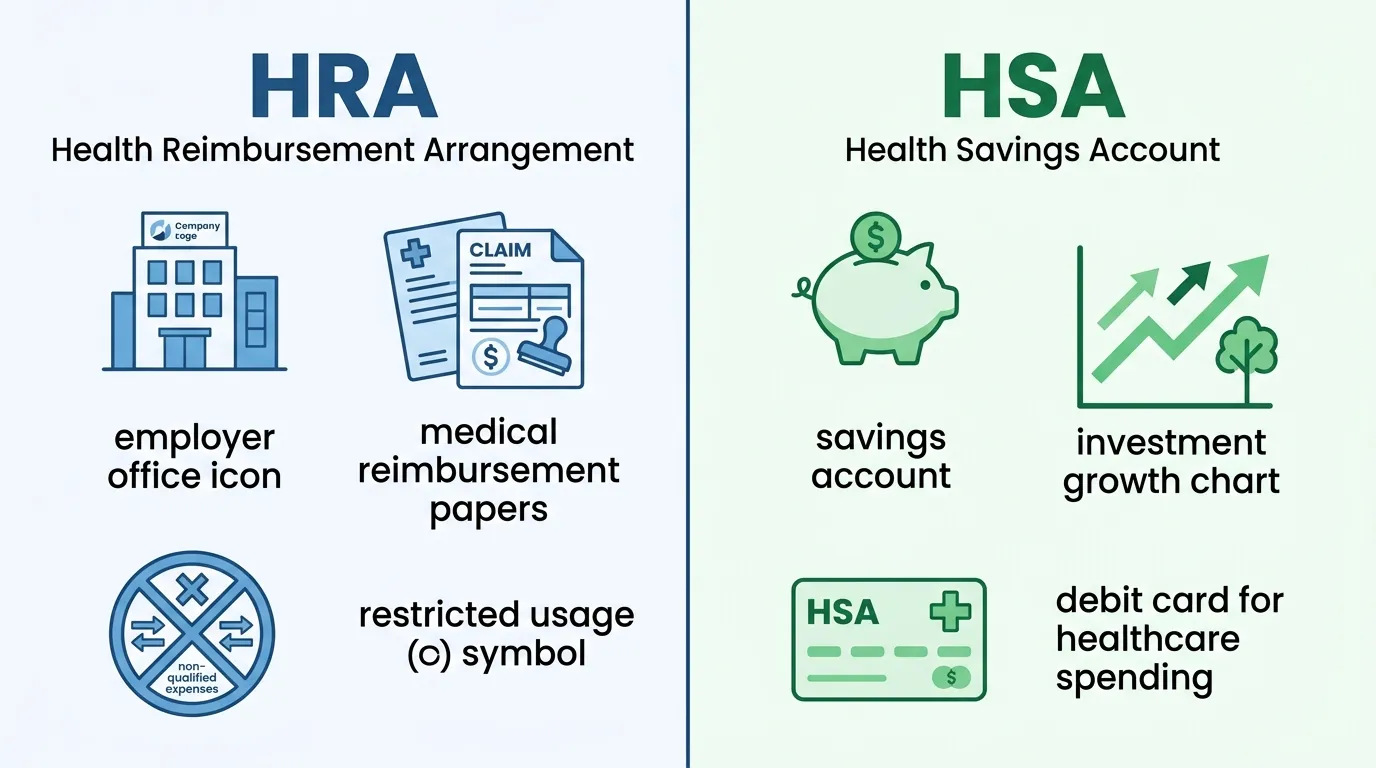
HRA is an employer-funded reimbursement account for medical expenses, while HSA is a tax-advantaged savings account owned by the employee for healthcare costs. 💼💊
Many employees and taxpayers often get confused when comparing difference between HRA and HSA because both are healthcare-related financial benefits. At first glance, they look similar, but in reality, they work in completely different ways.
Understanding the difference between HRA and HSA is important for better tax planning, healthcare savings, and smart financial decisions.
In simple terms, HRA is an employer-funded benefit that helps you pay rent-related housing costs (in some countries), while HSA is a personal health savings account used for medical expenses.
People search what is difference between HRA and HSA, how HSA works, and why these accounts matter for healthcare savings.
In this guide, you will clearly understand the difference between HRA and HSA, how they work, where they are used, and which one is better depending on your situation. Let’s break it down in a simple, expert way.
🟢 Difference Between HRA and HSA
The difference between HRA and HSA is that HRA is usually employer-funded for housing or reimbursement benefits, while HSA is a personal tax-advantaged account used to save and pay for medical expenses.
👉 Example: HRA may help pay rent expenses, while HSA helps pay doctor bills and prescriptions.
🟢 Definition of HRA and HSA
- HRA (Health Reimbursement Arrangement): A benefit provided by an employer to reimburse eligible expenses like housing-related allowances or healthcare costs (depends on system/country rules).
- HSA (Health Savings Account): A personal savings account that allows individuals to save money tax-free for qualified medical expenses.
🟢 Pronunciation
- HRA: “H-R-A”
- HSA: “H-S-A”
Now let’s understand the difference between HRA and HSA in more depth.
🟢 Comparison: HRA vs HSA
| Feature | HRA | HSA | Similarity |
| Funding | Employer-funded | Employee-funded | Both support financial health benefits |
| Ownership | Employer controls | Employee owns account | Both linked to workplace benefits |
| Purpose | Reimbursement system | Savings account | Both used for expenses |
| Tax Benefit | Tax-free reimbursements | Tax-free contributions & growth | Both offer tax advantages |
| Flexibility | Limited rules | High flexibility | Both reduce financial burden |
| Usage | Employer decides expenses | User controls spending | Both support healthcare costs |
| Investment | Not allowed | Allowed in many cases | Both improve financial planning |
🟢 Key Differences Explained Between HRA and HSA
1. Ownership Control
HRA is controlled by the employer, while HSA belongs to the employee.
👉 Example: Your company decides HRA rules, but you control your HSA savings.
2. Contribution System
HRA has no employee contribution; HSA allows personal contributions.
👉 Users often ask “how does HSA work?” it works like a personal savings account.
3. Usage Flexibility
HRA is restricted, while HSA can be used for many medical expenses.
👉 Example: HSA can pay for surgery, medicines, and checkups.
4. Tax Benefits
Both offer tax benefits but in different ways. HSA provides triple tax advantage.
👉 This is why HSA is popular in systems like the United States.
5. Investment Option
HSA can be invested in funds, but HRA cannot.
👉 This makes HSA more powerful for long-term savings.
🟢 Why HRA and HSA Exist
Both systems exist to reduce healthcare financial burden and improve employee welfare.
- HRA exists to help employers support workers financially
- HSA exists to encourage individuals to save for medical needs
Entities like Google, Meta, and corporate HR systems use such benefits globally to improve employee satisfaction and retention.
🟢 How HRA vs HSA Works in Real Life
- HRAs are common in corporate jobs where companies reimburse expenses
- HSAs are common in insurance-based healthcare systems
- Apps like Google Health platforms and insurance portals manage these accounts digitally
👉 This shows how digital systems now support healthcare finance.
🟢 Common Mistakes About HRA and HSA
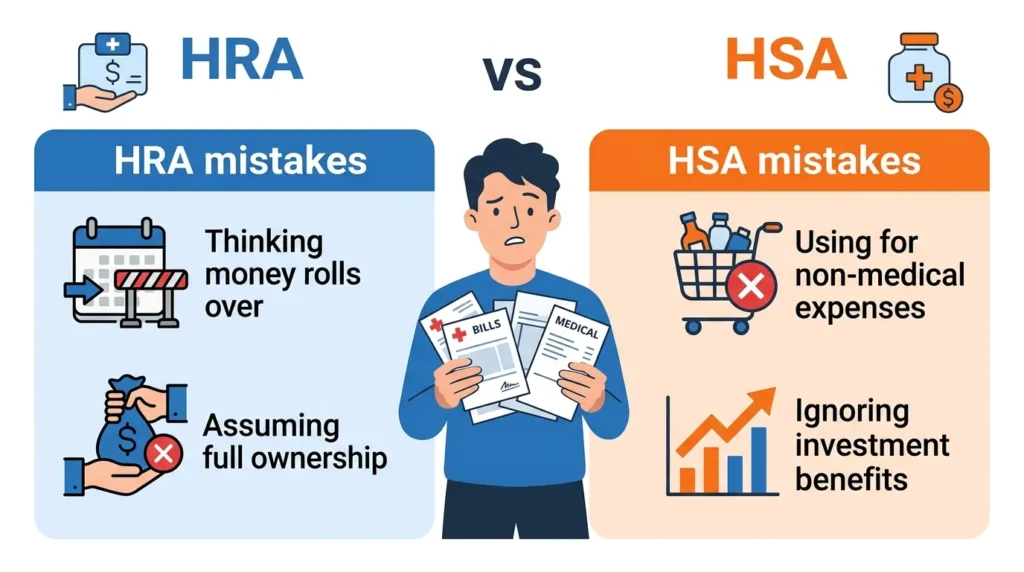
- Thinking both are the same account
- Assuming HSA is employer-funded
- Misunderstanding tax rules
- Not using HSA investment options
- Confusing eligibility rules
👉 Fix: Always check your employer plan or insurance policy.
🟢Real-Life Examples
- Employee using HRA to reimburse hospital bills
- Freelancer using HSA for medical savings
- Corporate worker investing HSA funds for long-term healthcare costs
- Family using HSA for prescription expenses
- Employer offering HRA as part of benefits package
🟢When to Use HRA vs HSA
- Use HRA when your employer provides reimbursement benefits
- Use HSA when you want personal control over medical savings
- Best strategy: Combine both if available for maximum benefit
🟢Why People Get Confused Between HRA and HSA
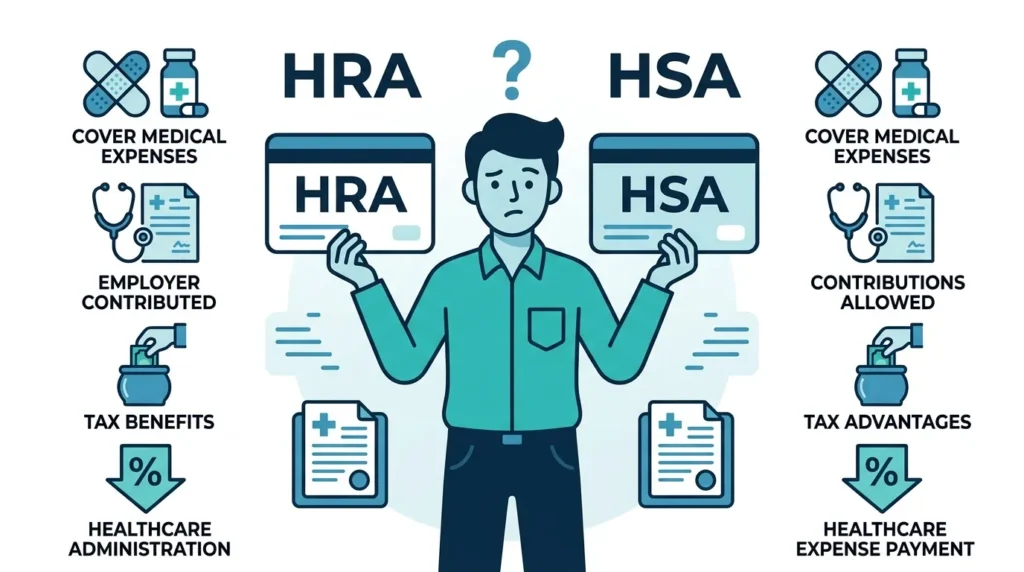
- Similar abbreviations
- Both related to healthcare money
- Overlapping financial benefits
- Lack of awareness in workplace education
- Misleading online explanations
🟢How Search Engines Understand HRA vs HSA
Search engines like Google analyze:
- User intent (comparison queries)
- Financial entity relationships
- Healthcare savings context
- NLP patterns like “what is difference between…”
👉 That’s why structured, clear content ranks better.
🟢 Expert Insight
In real financial planning scenarios, people often consider an HSA more powerful because of its investment potential and tax advantages. However, HRA still plays a strong role in employer-driven benefits systems.
From a practical HR and finance perspective, both systems aim to reduce employee financial stress and improve healthcare accessibility.
🟢 FAQs
1. What is the main difference between HRA and HSA?
The employer funds an HRA, and the employee owns an HSA as a savings account.
2. Can I have both HRA and HSA?
In some systems, yes, depending on eligibility rules.
3. Which is better, HRA or HSA?
HSA is more flexible, HRA depends on employer benefits.
4. Is HSA tax-free?
Yes, contributions and withdrawals for medical use are tax-free.
5. Who funds HRA?
The employer funds HRA.
6. Can you invest an HSA?
Yes, many HSAs allow investment options.
7. Is HRA portable?
No, it usually stays with the employer.
8.Which expenses does an HSA cover?
Medical bills, prescriptions, surgeries, and healthcare services.
🟢 Conclusion
The difference between HRA and HSA is clear when you understand their purpose and structure. HRA is an employer-controlled reimbursement system, while HSA is a personal, tax-advantaged savings account designed for medical expenses.
In simple words, HRA helps employees through company benefits, while HSA empowers individuals to save and invest for healthcare needs. Both systems reduce financial pressure but work in different ways.
Understanding the difference between HRA and HSA helps you make better financial decisions, especially when choosing healthcare plans or job benefits. If used correctly, both can significantly improve your financial stability and healthcare security.
Read more about!
Difference Between HD and SD: Complete Guide
Difference Between Latte and Mocha: Complete Guide

I am Emily Johnson, a USA-based content writer who creates easy-to-read blogs on language and daily life topics. I explain complex ideas in simple English for students and beginners so they can understand easily.