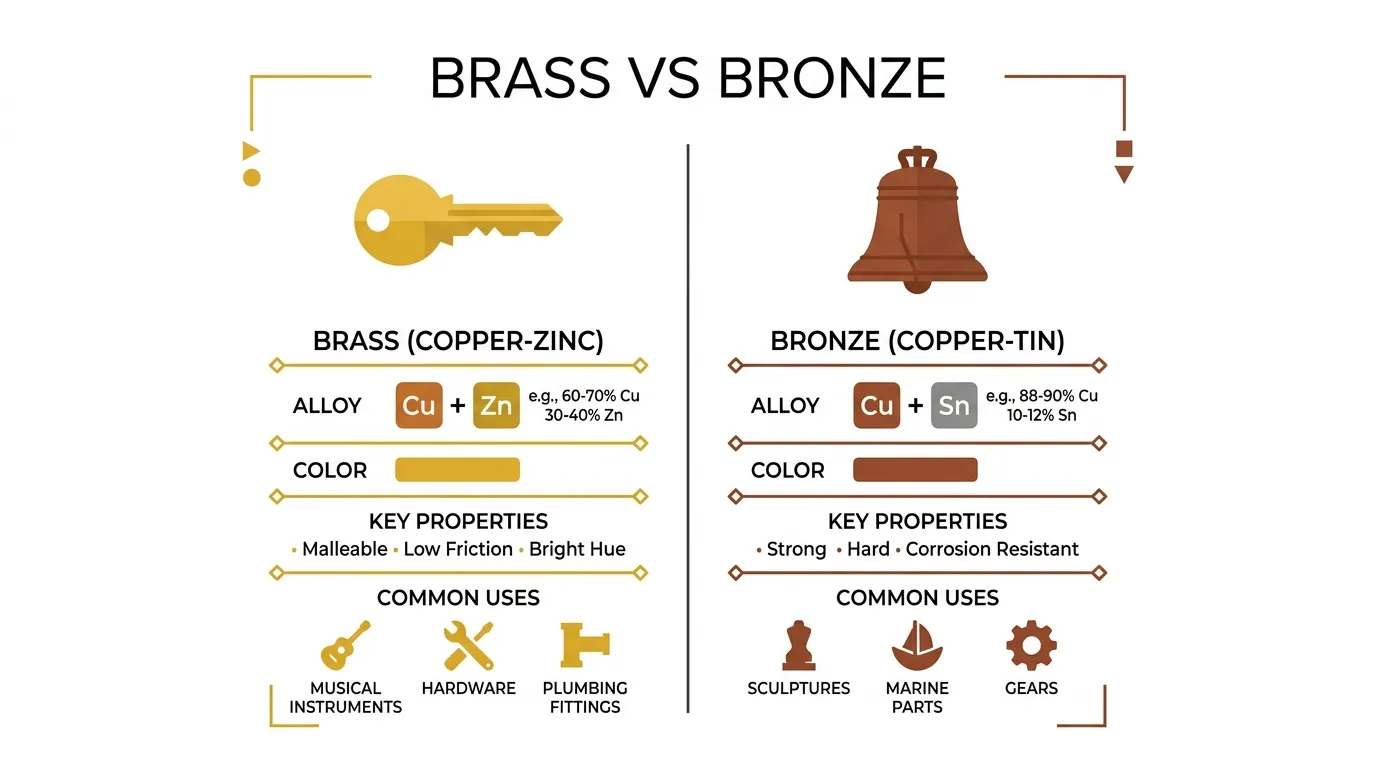
Brass is a copper-zinc alloy known for its bright golden appearance and easy shaping, while bronze is a copper-tin alloy that is stronger, more durable, and better for corrosion resistance.
Many people get confused about the difference between brass and bronze because both metals look similar at first glance. They are widely used in homes, industries, music instruments, decorations, plumbing systems, and even marine equipment.
In simple words, brass and bronze are both copper-based alloys, but they contain different secondary metals, which changes their strength, color, corrosion resistance, and practical uses.
The difference between brass and bronze matters more than most beginners think. Choosing the wrong alloy can affect durability, cost, appearance, and performance. That is why users often search terms like “brass vs bronze,” “which is stronger bronze or brass,” and “how to identify brass and bronze.”
In this complete guide, you will learn everything about the difference between brass and bronze, including definitions, pronunciation, uses, similarities, real-life examples, expert insights, common mistakes, and how search engines like Google understand this topic and user intent.
Difference Between Brass and Bronze
Brass is mainly made from copper and zinc, while bronze is mainly made from copper and tin. Brass is usually brighter and more gold-like, whereas bronze is darker and more reddish-brown.
For example, door handles are often made from brass because it looks attractive, while ship propellers use bronze because it resists seawater corrosion better.
Definition of Difference Between Brass and Bronze
- Brass: A metal alloy made mainly from copper and zinc. It is known for its bright gold-like appearance and easy machinability.
- Bronze: A metal alloy made mainly from copper and tin. It is valued for strength, durability, and corrosion resistance.
Simple Example
A trumpet usually contains brass, while many statues and marine parts are made from bronze.
Pronunciation
| Word | US Pronunciation | UK Pronunciation |
| Brass | /bræs/ | /brɑːs/ |
| Bronze | /brɑːnz/ | /brɒnz/ |
Now that the basic meaning is clear, let’s understand the deeper comparison between brass and bronze in practical and industrial use.
Difference Between Brass and Bronze: Comparison
| Feature | Brass | Bronze | Similarity |
| Main Composition | Copper + Zinc | Copper + Tin | Both are copper alloys |
| Color | Yellow-gold | Reddish-brown | Both have metallic shine |
| Corrosion Resistance | Moderate | Excellent | Both resist rust better than iron |
| Strength | Softer | Harder and stronger | Both are durable metals |
| Machinability | Easy to shape | More difficult to machine | Both can be manufactured into products |
| Common Uses | Musical instruments, fittings | Marine parts, statues | Both are used in industry |
| Cost | Usually cheaper | Often more expensive | Prices depend on alloy quality |
| Conductivity | Higher electrical conductivity | Lower conductivity | Both conduct heat and electricity |
This table clearly shows the difference and similarity between brass and bronze for quick understanding.
Key Differences Explained Between Brass and Bronze
1. Composition Difference
The biggest difference between brass and bronze is the secondary metal added to copper.
- Brass = Copper + Zinc
- Bronze = Copper + Tin
This small change creates major performance differences.
Real-Life Example
Brass faucets are easier to shape during manufacturing, while bronze ship components survive harsh seawater environments.
2. Color and Appearance
Brass looks bright yellow or gold-like. Bronze usually appears darker with reddish or brown tones.
Many users confuse them because polished bronze can sometimes resemble brass under indoor lighting.
Practical Insight
Interior designers often choose brass for luxury-looking decorations because it resembles gold at a lower price.
3. Strength and Hardness
Bronze is generally stronger and harder than brass. It also handles friction better.
Real Scenario
Industrial gears and bearings often use bronze because it lasts longer under pressure.
4. Corrosion Resistance
Bronze performs better in wet and salty environments.
That is why marine industries prefer bronze for underwater applications.
Example
Ship propellers and underwater bearings often contain bronze instead of brass.
5. Workability and Machining
Brass is easier to cut, shape, drill, and polish.
Manufacturers love brass because it reduces production time and tool wear.
Example
Musical instruments like trumpets and saxophones are commonly made from brass.
6. Sound Quality
Brass produces clearer acoustic resonance.
That is why many musical instruments use brass alloys instead of bronze.
Example
Trumpets, trombones, and tubas are classic brass instruments.
7. Cost Difference
Brass is often cheaper because zinc costs less than tin.
Bronze becomes more expensive due to higher durability and specialty uses.
Why Does the Difference Between Brass and Bronze Exist?
The difference exists because industries need metals for different purposes.
Brass was developed for:
- Easy shaping
- Attractive appearance
- Good conductivity
Bronze was developed for:
- Higher strength
- Better corrosion resistance
- Long-lasting industrial performance
In practical use, no single alloy is “better.” The best choice depends on the environment and purpose.
How Brass Works in Real-World Applications
Brass balances beauty and functionality.
Common Brass Uses
- Door handles
- Plumbing fittings
- Musical instruments
- Decorative hardware
- Electrical connectors
Why Industries Prefer Brass
Brass machines easily and looks attractive. It also resists corrosion better than steel in many indoor applications.
How Bronze Works in Real-World Applications
Bronze focuses more on durability than appearance.
Common Bronze Uses
- Marine hardware
- Bearings
- Industrial gears
- Sculptures
- Ship propellers
Why Bronze Matters
Bronze creates less friction and survives extreme conditions better than many softer alloys.
Difference Between Brass and Bronze in Industry
Construction Industry
Brass is common in:
- Decorative fittings
- Bathroom fixtures
- Door locks
Bronze is common in:
- Structural bearings
- Heavy-duty machinery parts
Marine Industry
Bronze dominates marine engineering because seawater damages many metals quickly.
Real Example
Most professional boat propellers contain bronze alloys for long-term durability.
Music Industry
The music industry strongly connects with brass.
Entities like professional orchestras, instrument brands, and even YouTube music creators often discuss “brass instruments” because of their bright sound quality.
Examples
- Trumpets
- Tubas
- French horns
Bronze, however, appears more in cymbals and percussion equipment.
Difference Between Brass and Bronze for Beginners
Many beginners ask:
- Is brass stronger than bronze?
- Does bronze rust?
- Why is brass shinier?
Here’s the easy answer:
- Brass = prettier and easier to shape
- Bronze = stronger and more durable
That simple comparison helps most users understand the topic quickly.
Similarities Between Brass and Bronze
Even though they are different, brass and bronze share several characteristics.
Similarities
- Both are copper alloys
- Both resist rust better than iron
- Both conduct heat and electricity
- Both are used in industry and decoration
- Both can be recycled
This is why many users accidentally mix them up.
Common Mistakes With Brass and Bronze
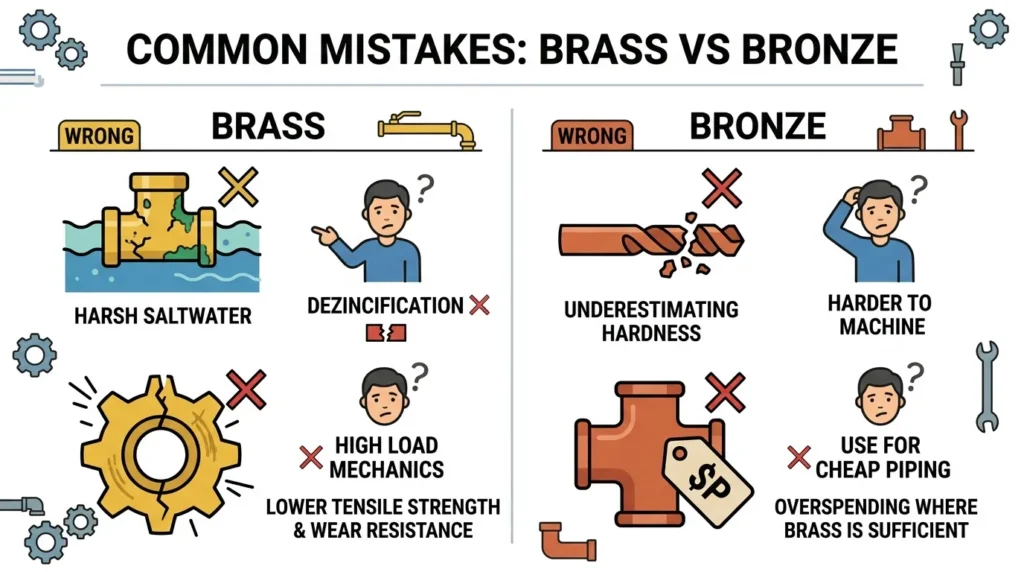
Mistake 1: Thinking They Are the Same Metal
Many beginners believe brass and bronze are identical because both contain copper.
Correction
Their secondary metals create major performance differences.
Mistake 2: Judging Only by Color
Lighting can make bronze appear golden.
Fix
Check composition and application instead of appearance alone.
Mistake 3: Using Brass in Marine Environments
Brass can corrode faster in salty water.
Better Choice
Use bronze for marine conditions.
Mistake 4: Assuming Bronze Is Always Better
Bronze is stronger, but brass may be better for appearance and machining.
Practical Advice
Always choose based on use case.
Mistake 5: Confusing Brass Instruments With Bronze Materials
Musical “brass instruments” are not always pure brass.
Some include multiple alloy combinations.
Real Life Examples With Brass and Bronze
Personal Use Example
A homeowner chooses brass door handles because they look elegant and match gold-colored interiors.
Business Use Example
A plumbing company uses brass valves because they are affordable and easy to manufacture.
Industrial Example
A shipping company installs bronze propellers for corrosion resistance in seawater.
Art and Sculpture Example
Many historical statues use bronze because it lasts for centuries outdoors.
Music Industry Example
Professional orchestras rely on brass instruments for powerful sound projection.
When to Use Brass vs Bronze
| Situation | Better Choice |
| Decorative items | Brass |
| Marine equipment | Bronze |
| Musical instruments | Brass |
| Heavy machinery | Bronze |
| Plumbing fittings | Brass |
| Industrial bearings | Bronze |
Simple Decision Rule
Choose brass for appearance and easy manufacturing. Choose bronze for strength and durability.
Why People Get Confused Between Brass and Bronze
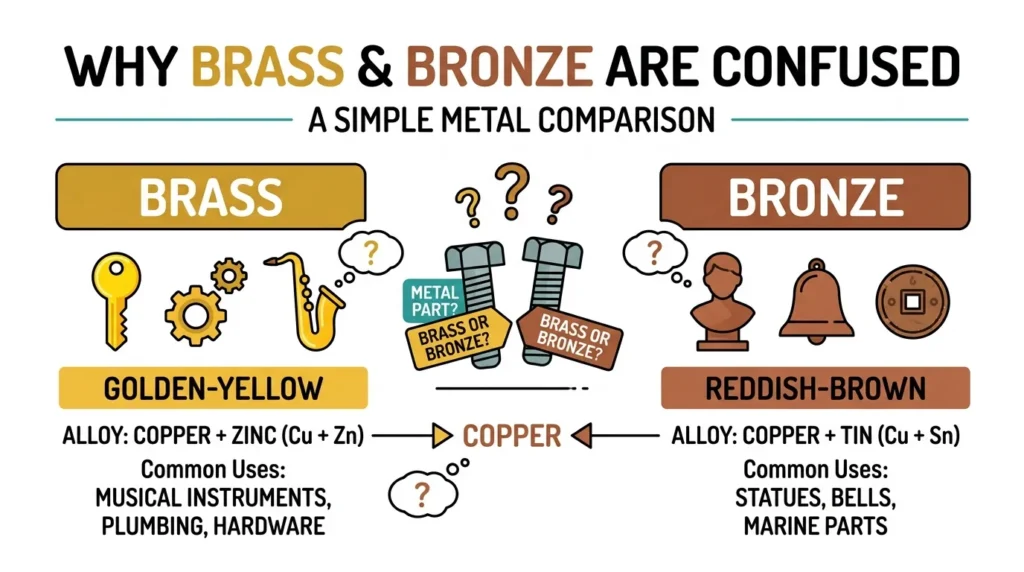
There are several reasons behind the confusion.
Similar Appearance
Both metals contain copper, so they can look alike.
Media and Online Images
Google Images, Instagram posts, and YouTube videos sometimes label these metals incorrectly.
This creates misinformation for beginners.
Mixed Industry Terminology
Some industries casually use “bronze-colored” or “brass-colored” descriptions without referring to actual composition.
Educational Gaps
Most schools briefly mention alloys without explaining practical differences.
How Search Engines Understand Difference Between Brass and Bronze and User Intent
Search engines like Google analyze user intent carefully.
When users search:
- “difference between brass and bronze”
- “brass vs bronze”
- “which is stronger bronze or brass”
Google understands that users want:
- Definitions
- Comparisons
- Real-life applications
- Buying guidance
Platforms like YouTube and Instagram also influence topic popularity through DIY videos, metalworking tutorials, and industrial education content.
Modern systems prioritize:
- Helpful explanations
- User satisfaction
- Clear comparisons
- Easy readability
- Semantic topic depth
That is why detailed comparison articles perform better in search rankings today.
Expert Insight
In real industrial scenarios, engineers rarely choose metals based only on price.
They evaluate:
- Environment
- Friction level
- Corrosion exposure
- Appearance
- Manufacturing cost
Most beginners focus only on color, but professionals focus on long-term performance.
A practical engineering insight is this:
Brass performs best where appearance and machinability matter. Bronze performs best where strength and durability matter.
That simple rule explains most professional decisions.
FAQs
Is brass stronger than bronze?
No. Bronze is generally stronger and harder than brass.
Which is more expensive, brass or bronze?
Bronze is usually more expensive because tin costs more than zinc.
Does bronze rust?
Bronze does not rust like iron because it contains copper instead of iron.
Why is brass used in musical instruments?
Brass provides excellent acoustic resonance and is easy to shape.
Can brass turn green?
Yes. Brass can develop a green patina over time due to oxidation.
Which metal is better for seawater?
Bronze performs better in marine environments.
How can I identify brass and bronze?
Brass looks more yellow-gold, while bronze appears darker and reddish-brown.
Is bronze heavier than brass?
Bronze is often slightly denser and heavier depending on composition.
Conclusion
Understanding the difference between brass and bronze becomes much easier once you focus on composition, strength, appearance, and real-world use. Brass mainly combines copper and zinc, making it attractive, easy to machine, and popular in decorative and musical applications. Bronze combines copper and tin, giving it greater strength, durability, and corrosion resistance.
Many users confuse these alloys because they look similar, but their industrial roles are very different. In practical use, brass works best for appearance and manufacturability, while bronze excels in harsh environments and heavy-duty applications.
If you are a student, homeowner, engineer, artist, or business owner, knowing the difference between brass and bronze helps you make smarter decisions. From plumbing systems to marine engineering, these alloys continue to play a major role in modern industries.
The simplest way to remember the comparison is:
- Brass = beauty and flexibility
- Bronze = strength and durability
Once you understand that principle, identifying and choosing between brass and bronze becomes much easier.
Read more about!
Difference Between Coat and Jacket: Complete Guide
Difference Between Parfum and Toilette: Complete Guide

I am Emily Johnson, a USA-based content writer who creates easy-to-read blogs on language and daily life topics. I explain complex ideas in simple English for students and beginners so they can understand easily.