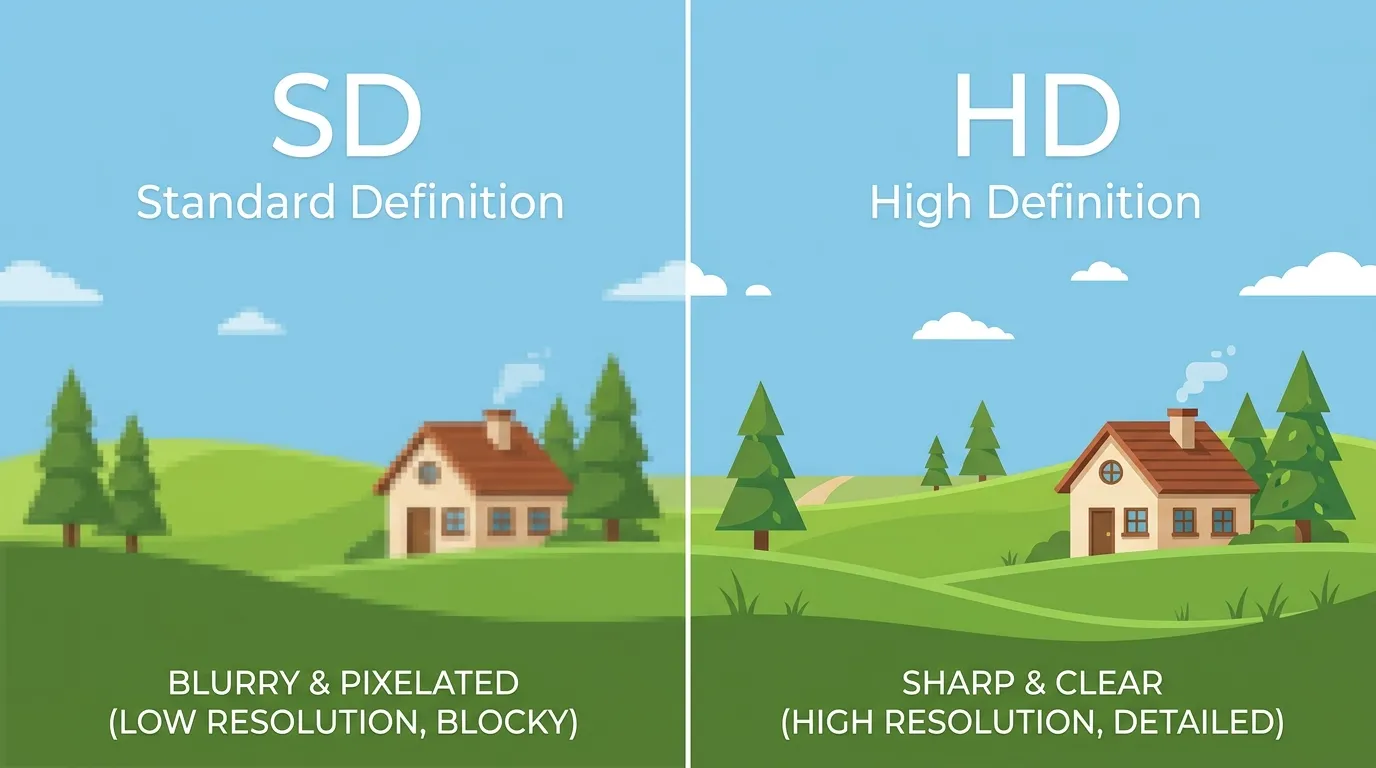
HD (High Definition) offers clearer, sharper, and more detailed visuals, while SD (Standard Definition) has lower resolution and less clarity 📺✨
Many users get confused about the difference between HD and SD, especially when choosing video quality on apps like YouTube or Netflix. In simple words, the difference between HD and SD is about resolution, clarity, and viewing experience.
The difference between HD and SD matters because it directly affects how sharp your videos look, how much data you use, and even how smooth your streaming experience is. That’s why people search queries like “what is HD vs SD” or “which is better HD or SD.”
In this complete guide, you’ll learn everything from definitions and technical differences to real-world usage and expert insights so you don’t need to read another article.
Difference Between HD and SD
The difference between HD and SD is simple:
👉 HD (High Definition) offers higher resolution and clearer images.
👉 SD (Standard Definition) has lower resolution and less detail.
📺 Example: Watching a movie in HD on YouTube looks sharp, while SD looks slightly blurry on large screens.
Definition of Difference Between HD and SD
- HD (High Definition): Video quality with higher resolution (usually 720p or 1080p), providing clear and detailed visuals.
- SD (Standard Definition): Lower-resolution video (typically 480p or below), offering basic image quality.
Pronunciation
- HD (High Definition): /ˌeɪtʃ ˈdiː/ (US & UK)
- SD (Standard Definition): /ˌes ˈdiː/ (US & UK)
Now that you know what they mean and how to say them, let’s explore their differences in depth.
HD vs SD: Comparison
| Feature | HD (High Definition) | SD (Standard Definition) |
| Resolution | 720p, 1080p | 480p or lower |
| Image Quality | Sharp and detailed | Blurry on large screens |
| Screen Size Suitability | Best for large screens | Suitable for small screens |
| Data Usage | High | Low |
| Streaming Quality | Smooth but needs fast internet | Works on slow internet |
| File Size | Large | Small |
| Viewing Experience | Cinematic | Basic |
| Modern Usage | Widely used | Becoming outdated |
Key Differences Explained Between HD and SD
1. Resolution (Clarity Level)
HD has more pixels, so images look sharper.
👉 Example: Text on screen is clearer in HD than SD.
2. Viewing Experience
HD feels immersive, especially on big TVs.
👉 SD may look pixelated on large displays.
3. Internet Requirement
HD needs faster internet.
👉 SD works better on slow connections.
4. Data Consumption
HD uses more data.
👉 SD saves mobile data useful for limited plans.
5. Device Compatibility
Modern devices support HD by default.
👉 Older devices may only support SD.
6. Content Availability
Most platforms like Netflix and YouTube prioritize HD content.
7. Future Relevance
HD (and even 4K) is the future.
👉 SD is slowly becoming obsolete.
What is HD and Why Is It Important Today?
HD (High Definition) is the standard for modern video.
Why HD Exists
- To improve video clarity
- To enhance user experience
- To support larger screens
Real-World Use
- Streaming movies
- Gaming
- Online education
👉 Platforms like Google prioritize HD content because users engage more with high-quality visuals.
What is SD and Where Is It Still Used?
SD (Standard Definition) is older video quality.
Where SD Is Still Useful
- Low-speed internet areas
- Basic mobile streaming
- Old devices
👉 In practical use, SD still matters where internet bandwidth is limited.
Why Does the Difference Between HD and SD Exist?
The difference exists due to technological evolution.
- Older systems supported SD
- New technology enables HD
👉 As screens became larger, SD was no longer enough.
Difference Between HD and SD in Streaming Platforms
Platforms like:
- YouTube
- Netflix
- Meta
use adaptive streaming.
👉 This means:
- Fast internet → HD
- Slow internet → SD
This improves user experience automatically.
Difference Between HD and SD in Data Usage
HD Data Usage
- Uses more MB/GB per hour
- Best for Wi-Fi users
SD Data Usage
- Saves data
- Ideal for mobile users
👉 Example: Watching in SD can reduce data usage by half or more.
Difference and Similarity Between HD and SD
| Feature | HD | SD | Similarity |
| Purpose | High-quality video | Basic video | Both display content |
| Resolution | High | Low | Both use pixels |
| Usage | Modern devices | Older systems | Both used for streaming |
| Internet Need | High speed | Low speed | Both require internet |
| File Size | Large | Small | Both store video data |
| Viewing | Clear | Basic | Both show same content |
This table clearly shows the difference and similarity between HD and SD for quick understanding.
Common Mistakes with HD and SD
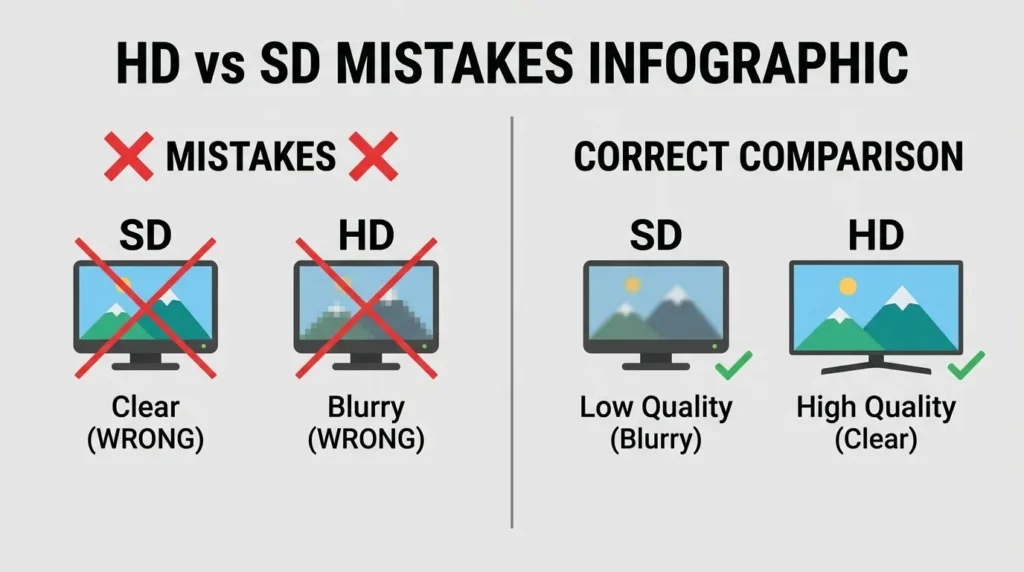
❌Thinking HD always works smoothly
✔ Needs good internet
❌Assuming SD is useless
✔ Still useful in low bandwidth
❌Ignoring screen size
✔ HD matters more on large screens
❌Choosing HD on limited data
✔ Can consume too much data
Real Life Examples with HD and SD
1. Mobile Streaming
User selects SD to save data.
2. Smart TV Viewing
HD is used for better experience.
3. Online Learning
HD helps read text clearly.
4. Social Media Content
Creators on Instagram upload HD videos for engagement.
When to Use Each
👉 Use HD when:
- You want clear visuals
- You have fast internet
👉 Use SD when:
- You want to save data
- Internet speed is low
Why People Get Confused in HD vs SD
- Technical terms are unclear
- Devices auto-adjust quality
- Marketing focuses on HD
- Lack of awareness about resolution
Many users don’t realize they are switching between HD and SD automatically.
How Search Engines Understand HD vs SD
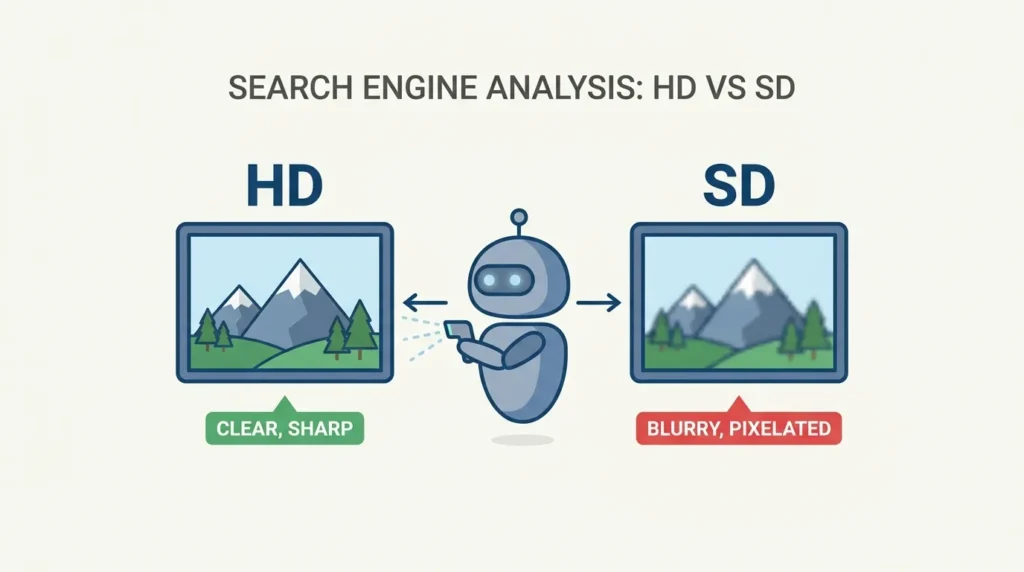
Search engines like Google analyze:
- User intent (learning vs streaming choice)
- Content clarity
- Engagement signals
Platforms like YouTube rank HD content higher due to better user retention.
Expert Insight
From a practical perspective, the difference between HD and SD is about quality vs efficiency.
In real scenarios:
- HD delivers better visuals and engagement
- SD provides flexibility and accessibility
Most users prefer HD, but SD still plays an important role in specific situations.
FAQs
What is the main difference between HD and SD?
HD has higher resolution and better clarity, while SD has lower resolution.
Is HD always better than SD?
Yes for quality, but SD is better for saving data.
Does HD use more internet?
Yes, HD consumes more data than SD.
Can I switch between HD and SD?
Yes, most platforms allow manual selection.
Why does my video switch to SD?
Because of slow internet connection.
Is SD outdated?
It is less common but still useful.
Conclusion
The difference between HD and SD becomes clear when you understand resolution, data usage, and viewing experience. HD offers sharp, detailed visuals and is ideal for modern devices and large screens. SD, on the other hand, provides basic quality but remains useful for saving data and working with slower internet connections.
In simple words, the difference between HD and SD is about visual quality vs efficiency. HD is best for immersive viewing, while SD is practical for limited resources.
If you’re streaming on YouTube, watching movies on Netflix, or browsing content online, choosing the right quality depends on your internet speed, device, and needs. Understanding this difference helps you make smarter decisions and enjoy a better viewing experience.
Read more about!
Difference Between Ethics and Morals: Simple Guide
Difference Between PNG and JPG: Complete Guide

I am Emily Johnson, a USA-based content writer who creates easy-to-read blogs on language and daily life topics. I explain complex ideas in simple English for students and beginners so they can understand easily.