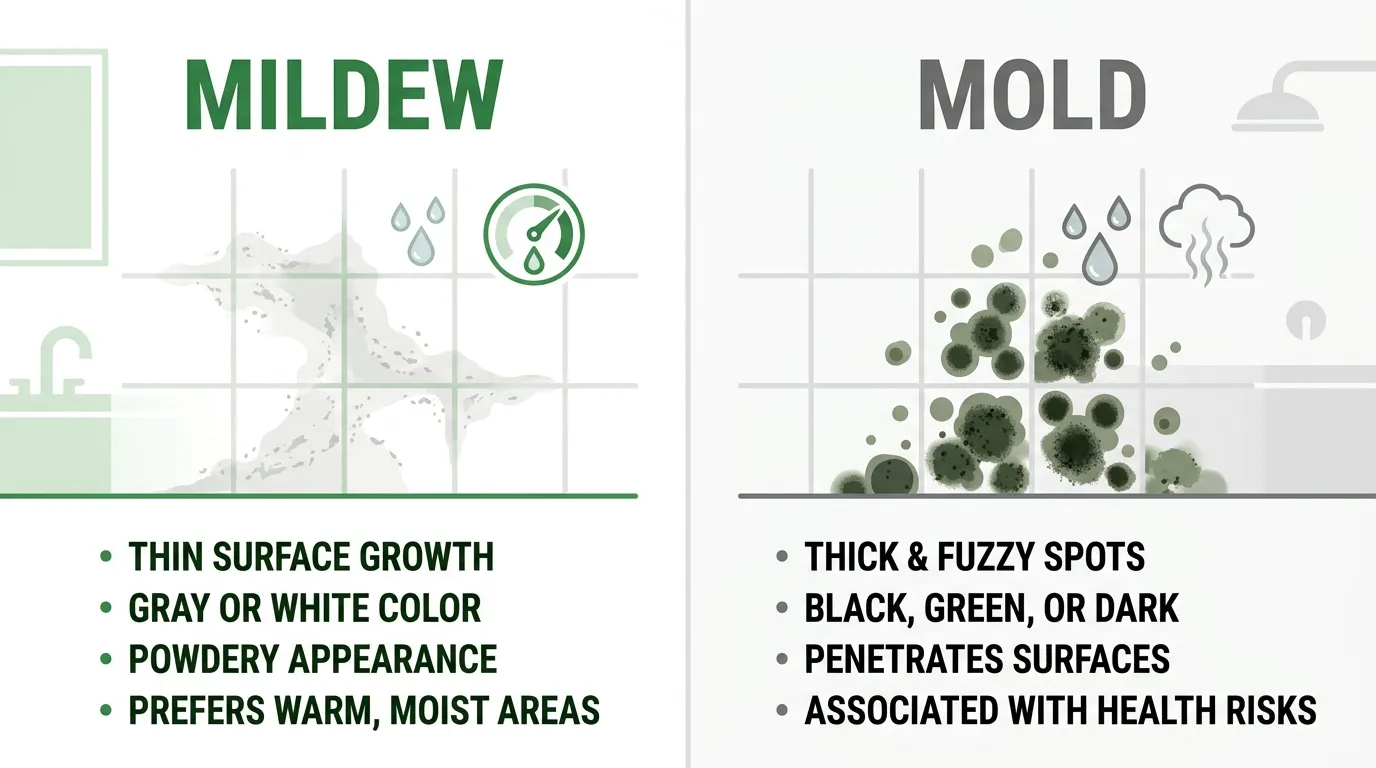
🍄 Mildew grows flat and powdery on damp surfaces, while mold grows deeper, fuzzier, and can cause more serious damage and health issues.
Many homeowners notice black or white patches on walls, bathrooms, ceilings, or old furniture and immediately wonder about the difference between mildew and mold.
At first glance, they look similar. Both grow in damp places, both smell unpleasant, and both can damage surfaces. But the truth is, mildew and mold are not exactly the same thing.
Understanding the difference between mildew and mold helps you clean the problem correctly, protect indoor air quality, and avoid expensive property damage.
In simple words, mildew is usually a surface-level fungus that is easier to clean, while mold is deeper, more aggressive, and often more harmful.
People search for the difference between mildew and mold because they want to know:
- what each one looks like
- how dangerous they are
- which cleaning method works best
- why they appear in homes and buildings
In this complete guide, you’ll learn definitions, real-world examples, expert insights, cleaning tips, health effects, rich explanations, and practical prevention methods in a simple human-friendly way.
Difference Between Mildew and Mold
Mildew is usually a thin white, gray, or yellow fungal growth that stays on moist surfaces and is easier to remove.
Mold is darker, fuzzier, and grows deeper into materials, often causing stronger odors and health problems.
Simple Example
A white powdery layer on bathroom tiles is often mildew.
Black patches spreading inside damp walls are usually mold.
Definition of Mildew and Mold
- Mildew: A light fungal growth that develops on damp surfaces like shower walls, fabrics, or window frames. It usually stays on the surface.
- Mold: A stronger type of fungus that grows deeper into organic materials such as wood, drywall, carpet, or insulation.
Quick Example
Mildew commonly appears in bathrooms.
Mold often spreads inside water-damaged buildings.
Pronunciation
- Mildew
- US: MIL-doo
- UK: MIL-dyoo
- Mold
- US: MOHLD
- UK: MOHLD
Now that the definitions are clear, let’s understand why these fungi behave differently and why many people confuse them.
Difference Between Mildew and Mold
| Feature | Mildew | Mold | Similarity |
| Appearance | Thin, flat, powdery | Fuzzy, thick, raised | Both grow in damp areas |
| Color | White, gray, yellow | Black, green, brown | Both may darken over time |
| Growth Depth | Surface-level | Deep-rooted | Both spread in moisture |
| Smell | Mild musty odor | Strong earthy odor | Both create unpleasant smells |
| Health Risk | Usually mild | Can trigger stronger reactions | Both affect sensitive people |
| Cleaning Difficulty | Easier to clean | Harder to remove | Moisture control is necessary |
| Common Areas | Bathrooms, fabrics | Walls, ceilings, wood | Both prefer humid conditions |
| Structural Damage | Usually minimal | Can damage building materials | Both worsen if ignored |
This table clearly shows the difference and similarity between mildew and mold for quick understanding.
Key Differences Explained Between Mildew and Mold
1. Surface Growth vs Deep Growth
The biggest difference is how deeply they grow.
Mildew usually stays on the top layer of surfaces. Mold spreads inside materials like drywall or wood.
Real-Life Example
Bathroom grout with white streaks is often mildew.
A leaking ceiling with black spreading stains usually contains mold.
2. Color and Texture
Mildew often looks powdery or flat. Mold appears fuzzy or slimy.
Why This Matters
Many beginners clean mold lightly because they mistake it for mildew.
3. Health Effects
Mold can trigger:
- allergies
- coughing
- asthma symptoms
- breathing problems
Mildew usually causes milder irritation.
In real scenarios, people with asthma react more strongly to mold exposure.
4. Damage Potential
Mildew mostly affects appearance and smell. Mold can damage:
- wood
- drywall
- carpets
- insulation
Professional restoration companies treat mold more seriously.
5. Cleaning Methods
Mildew can often be removed using vinegar or household cleaners.
Mold sometimes requires:
- professional removal
- material replacement
- industrial drying systems
6. Moisture Dependency
Both fungi need moisture, but mold survives longer in hidden damp environments.
That’s why mold frequently grows behind walls or under floors after leaks.
What Is Mildew?
Mildew is a mild fungal growth commonly found in humid areas with poor airflow.
Common Places Mildew Appears
- shower curtains
- bathroom tiles
- window sills
- fabrics
- damp clothing
Why Mildew Forms
Mildew grows when:
- humidity stays high
- ventilation is poor
- moisture remains trapped
In practical use, mildew is often the first warning sign of a moisture problem.
What Is Mold?
Mold is a fungus that spreads through microscopic spores and can grow inside porous materials.
Common Places Mold Appears
- basements
- ceilings
- carpets
- drywall
- HVAC systems
Why Mold Is More Dangerous
Mold spreads deeper and releases airborne spores that affect indoor air quality.
This is why property inspectors and restoration experts take mold seriously during home inspections.
Why Does Mold Grow Faster Than Mildew?
Mold thrives because spores travel through air and attach to damp organic materials.
Conditions That Accelerate Mold Growth
- water leaks
- floods
- poor ventilation
- high humidity
- condensation
Even modern smart homes promoted or home renovation channels can develop hidden mold if airflow systems fail.
Difference Between Mildew and Mold in Bathrooms
Bathrooms are one of the most searched topics regarding mildew and mold.
Bathroom Mildew
Usually appears:
- around tiles
- on shower curtains
- near sinks
Bathroom Mold
Often appears:
- behind walls
- under flooring
- near leaking pipes
Important Insight
If discoloration keeps returning after cleaning, it may be mold instead of mildew.
Can Mildew Turn Into Mold?
Many users ask this question.
Technically, mildew itself does not “transform” into mold, but the same damp conditions that allow mildew growth can later support mold growth.
Think of mildew as an early moisture warning signal.
How to Identify Mold vs Mildew
Signs of Mildew
- flat appearance
- lighter color
- easier to wipe away
- mild smell
Signs of Mold
- darker patches
- fuzzy texture
- spreading patterns
- strong odor
- recurring growth
Expert Tip
If growth returns quickly after cleaning, deeper mold may exist beneath the surface.
Health Effects of Mold and Mildew
Mildew Health Effects
- mild allergy symptoms
- skin irritation
- sneezing
Mold Health Effects
- asthma flare-ups
- breathing difficulty
- chronic coughing
- sinus problems
Organizations like the World Health Organization emphasize indoor air quality because fungal contamination affects respiratory health.
Real Life Examples With Mildew and Mold
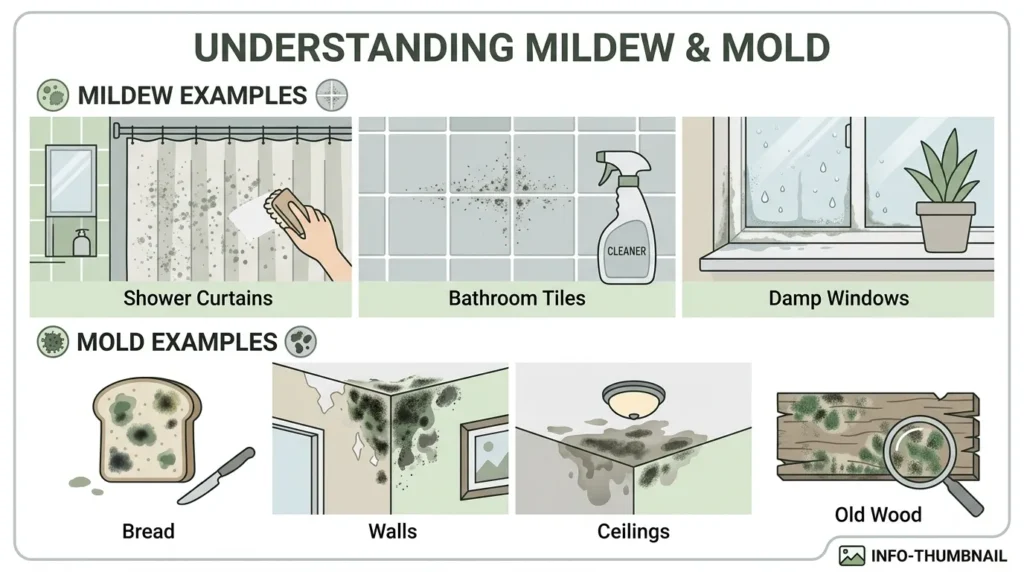
1. Home Bathroom Example
White buildup near shower corners is usually mildew.
2. Basement Flood Example
Black wall stains after flooding are often mold.
3. Clothing Storage Example
Damp clothes in storage boxes may develop mildew.
4. Office Building Example
Water-damaged ceilings in offices can hide dangerous mold growth.
5. Hotel Industry Example
Hotels monitor humidity carefully because mold damages customer experience and online reviews on platforms.
Common Mistakes With Mildew and Mold
| Mistake | Correction |
| Thinking mildew and mold are identical | Mold is usually more aggressive |
| Painting over mold | The fungus continues growing underneath |
| Ignoring small spots | Small moisture issues become larger problems |
| Using bleach incorrectly | Some surfaces need professional treatment |
| Assuming smell means only dirt | Musty odors often indicate fungal growth |
Quick Advice
Always solve the moisture source first. Cleaning alone rarely fixes recurring growth.
When to Use Each Term
Use “Mildew” When:
- discussing surface fungal growth
- describing bathroom stains
- referring to lighter fungal patches
Use “Mold” When:
- discussing structural damage
- talking about health concerns
- referring to deep fungal contamination
Why People Get Confused Between Mildew and Mold
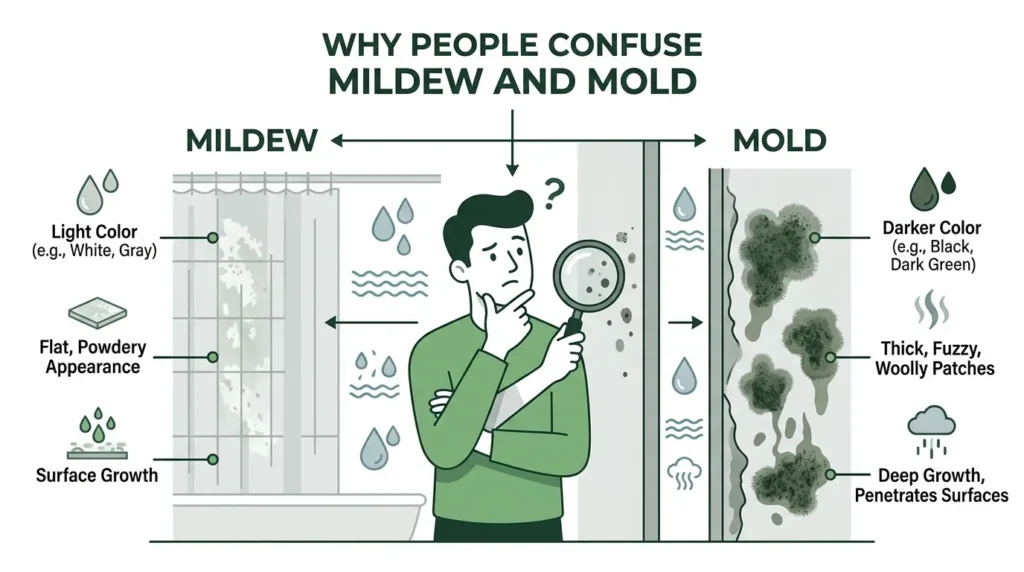
1. Similar Appearance
Both grow in damp areas and may look alike initially.
2. Media Simplification
Home cleaning videos often use the terms interchangeably.
3. Lack of Scientific Knowledge
Most people are never taught fungal classifications.
4. Shared Musty Smell
Both create unpleasant odors, making differentiation harder.
5. Online Cleaning Advice
Social media posts sometimes oversimplify fungal issues for quick engagement.
How Search Engines Understand Mildew and Mold User Intent
Modern search systems analyze:
- user intent
- semantic meaning
- health-related queries
- home repair concerns
For example:
- “how to clean mildew” shows surface cleaning tips
- “black mold symptoms” triggers health-focused content
This happens because Google’s NLP systems recognize different search intent layers.
Prevention Tips for Mold and Mildew
Reduce Indoor Humidity
Keep humidity below 50%.
Improve Ventilation
Use fans and open windows regularly.
Fix Leaks Quickly
Water damage creates ideal fungal conditions.
Clean Damp Areas Regularly
Bathrooms and basements require routine inspection.
Use Dehumidifiers
Especially useful in humid climates.
Expert Insight:
In modern construction, homes are built more airtight for energy efficiency. While this saves energy, it also traps moisture indoors.
In practical use, many restoration experts now see mold problems in newer buildings because ventilation systems are not always balanced properly.
Most beginners focus only on visible stains, but professionals inspect hidden moisture sources first. That is the real key to long-term prevention.
FAQs
What is the main difference between mildew and mold?
Mildew stays mostly on surfaces, while mold grows deeper and causes greater damage.
Is mildew dangerous?
Mildew is usually less harmful but may still irritate allergies.
Can mold make you sick?
Yes. Mold exposure may cause respiratory problems and allergic reactions.
Does bleach kill mold permanently?
Not always. Deep mold often requires professional treatment and moisture control.
Why does mold keep coming back?
Hidden moisture sources usually remain untreated.
Is black mold always toxic?
Not every black mold type is toxic, but some varieties can be harmful.
Can mildew grow on clothes?
Yes. Damp fabrics often develop mildew.
How do professionals remove mold?
They use containment systems, drying equipment, air filtration, and damaged material removal.
Conclusion
Understanding the difference between mildew and mold is important for health, home maintenance, and indoor air quality. While both fungi grow in damp conditions, mildew is generally a surface-level problem that is easier to clean. Mold is deeper, more aggressive, and potentially more harmful.
Many users confuse these terms because both appear in bathrooms, basements, ceilings, and humid spaces. However, the key differences involve texture, depth, smell, health impact, and structural damage potential.
In real-world situations, mildew often acts as an early warning sign, while mold indicates a more serious moisture issue. That’s why professionals focus not only on cleaning visible growth but also on fixing leaks, airflow problems, and humidity levels.
Search engines increasingly prioritize detailed, experience-based content because users want practical solutions, not generic definitions. If you’re a homeowner, renter, business owner, or property manager, knowing the correct difference helps you respond faster and more safely.
In simple words, mildew is usually a manageable surface issue, while mold often signals a deeper environmental problem that needs immediate attention.
Read more about!
Difference Between DMD and DDS: Complete Guide
Difference Between Flautas and Taquitos: Complete Guide

I am Emily Johnson, a USA-based content writer who creates easy-to-read blogs on language and daily life topics. I explain complex ideas in simple English for students and beginners so they can understand easily.