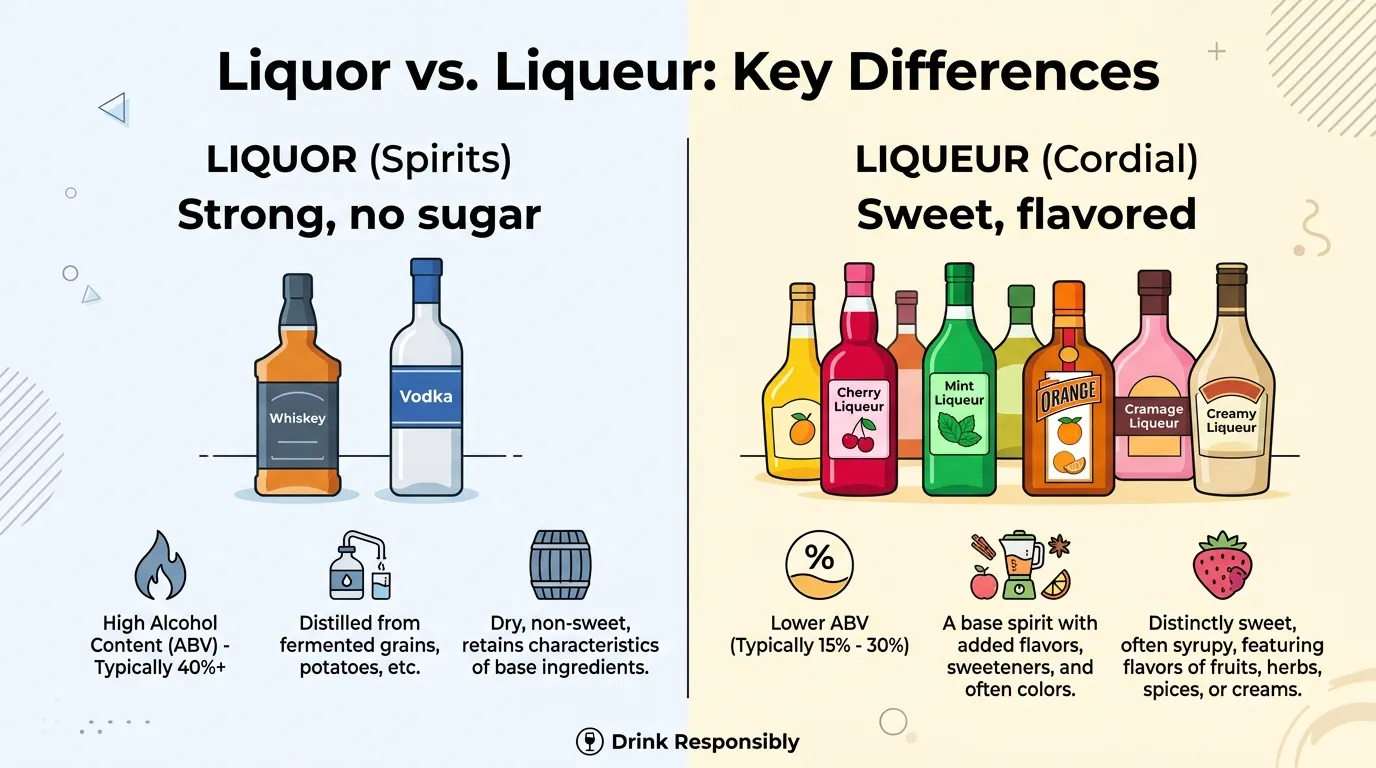
Liquor is a strong distilled alcoholic drink with no added sugar, while liqueur is a sweet, flavored alcoholic drink made with added sugar, fruits, or herbs.
The difference between liquor and liqueur is one of the most commonly searched topics in the beverage and spirits category, especially among beginners who explore bars, cocktails, or alcohol menus for the first time.
Many users get confused because both words sound almost the same, yet their taste, alcohol content, and usage are completely different.
In simple terms, the difference between liquor and liqueur comes down to alcohol strength, flavor, and how they are used in drinks. Liquor is strong and basic, while liqueur is sweet and flavored.
Understanding the difference between liquor and liqueur helps in choosing the right drink, especially in cocktails, parties, and restaurant menus.
People often search “what is liquor?”, “what is liqueur?”, and “how are they different?” because menus on platforms like Instagram, YouTube, and cocktail apps often mix these terms. This guide breaks everything down in a clear, expert way so you never get confused again.
You will learn definitions, comparisons, real-life examples, common mistakes, and expert insights. Let’s understand this clearly and deeply.
Difference Between Liquor and Liqueur
Liquor is a strong alcoholic drink without added sugar or flavoring (like vodka or whiskey).
Liqueur is a sweet, flavored alcoholic drink made by adding sugar, fruits, herbs, or cream.
Example:
Vodka = liquor (strong, neutral)
Baileys = liqueur (sweet, creamy, flavored)
Definition of Liquor and Liqueur
Liquor:
A distilled alcoholic beverage with high alcohol content, usually 35%–50% ABV, with no added sugar or flavoring.
Liqueur:
A sweetened alcoholic drink infused with flavors like fruits, herbs, spices, or cream, usually 15%–30% ABV.
Pronunciation
- Liquor: /ˈlɪk.ɚ/ (US), /ˈlɪk.ə/ (UK)
- Liqueur: /lɪˈkjʊr/ (US), /lɪˈkjʊə/ (UK)
Now that pronunciation is clear, let’s move deeper into real differences.
Difference Between Liquor and Liqueur: Comparison
| Feature | Liquor | Liqueur | Similarity |
| Alcohol Content | High (35–50%) | Lower (15–30%) | Both contain alcohol |
| Taste | Strong, bitter | Sweet, flavored | Both used in drinks |
| Sugar Content | None | High sugar | Both made from spirits |
| Usage | Shots, base drinks | Cocktails, desserts | Both used in bars |
| Ingredients | Grain, corn, potatoes | Fruits, herbs, cream | Both are distilled |
| Examples | Whiskey, vodka, rum | Baileys, Amaretto | Both globally consumed |
| Drinking Style | Straight or mixed | Mostly mixed | Both social drinks |
This table clearly shows the difference and similarity between liquor and liqueur for quick understanding.
Key Differences Explained Between Liquor and Liqueur
1. Alcohol Strength Difference
Liquor is much stronger than liqueur.
Example: Vodka shots hit faster than sweet liqueur drinks.
2. Taste Profile
Liquor has a harsh or neutral taste, while liqueur is smooth and sweet.
Example: Whiskey vs coffee liqueur in cocktails.
3. Sugar Content
Liqueur contains sugar; liquor does not.
This is why liqueurs taste like dessert drinks.
4. Usage in Cocktails
Liquor is a base ingredient, liqueur is a flavor enhancer.
Example: Margarita uses tequila (liquor) + orange liqueur.
5. Drinking Purpose
Liquor is for strong drinking experience; liqueur is for flavor enjoyment.
6. Production Process
Liquor is distilled only, while liqueur is infused after distillation.
7. Market Position
Liquor is sold as primary spirit brands; liqueurs are niche cocktail additives.
What Is Liquor and Liqueur in Simple Words?
Liquor = Strong alcohol used as base drink
Liqueur = Sweet flavored alcohol used for taste
Many beginners confuse them because both come in bottles and are used in bars.
Why the Difference Between Liquor and Liqueur Exists
This difference exists due to consumer needs:
- People wanted strong drinks → liquor
- People wanted flavored drinks → liqueur
Bars, restaurants, and brands like Diageo and Pernod Ricard developed both categories for different drinking experiences.
How Liquor and Liqueur Are Used in Real Life
- Bars use liquor for strong cocktails
- Dessert shops use liqueur for cakes and sweets
- Home users mix both for parties
- Social media cocktail trends on Instagram often combine both
Real Life Examples with Liquor and Liqueur
- Whiskey neat at a bar → liquor
- Baileys coffee → liqueur
- Mojito uses rum → liquor base
- Chocolate liqueur cake → dessert use
- Martini → vodka (liquor) base drink
- Aperol Spritz → flavored liqueur drink
When to Use Liquor vs Liqueur
Use liquor when:
- You want strong alcohol
- Making classic cocktails
- Drinking shots
Use liqueur when:
- You want sweet taste
- Making dessert drinks
- Adding flavor to cocktails
Why People Get Confused Between Liquor and Liqueur
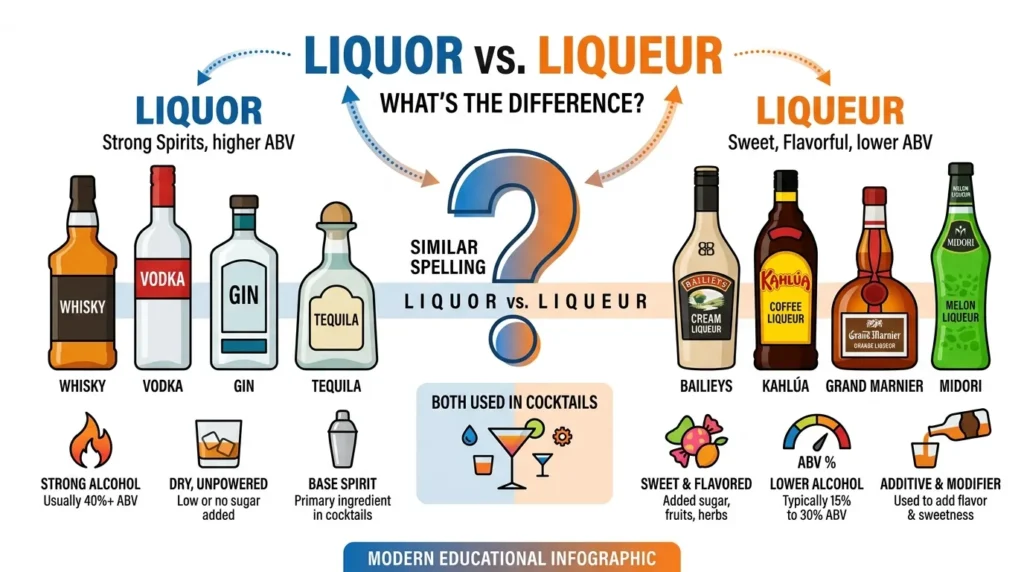
- Similar spelling and pronunciation
- Both used in cocktails
- Menus don’t explain clearly
- Social media mixing both terms
- Lack of beginner-level education
Common Mistakes with Liquor and Liqueur
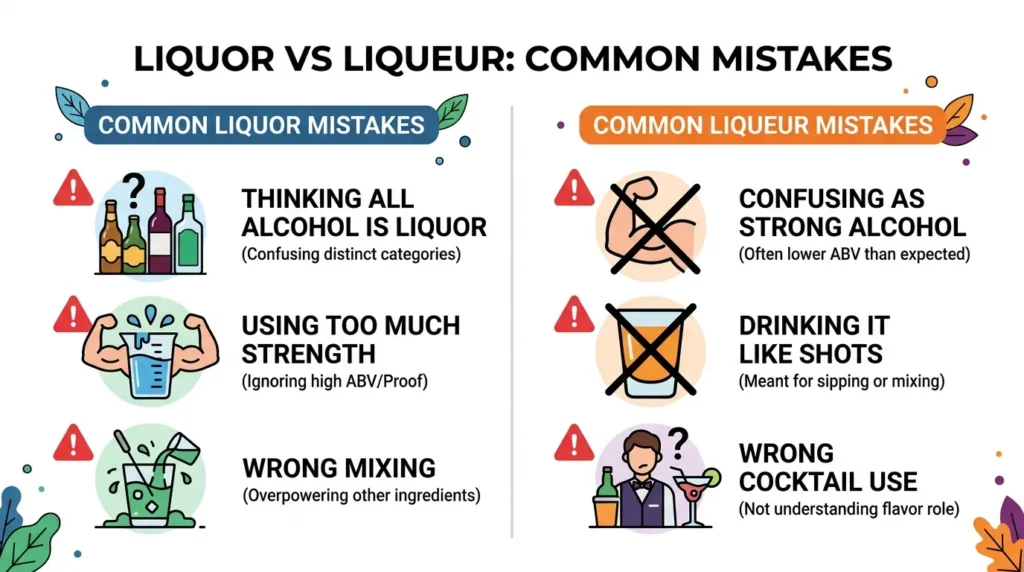
1. Thinking they are the same
They are not; one is strong, one is sweet.
2. Using liqueur as a base drink
Liqueur is not designed for shots.
3. Confusing alcohol strength
Liqueur is much weaker than liquor.
4. Mixing incorrectly in cocktails
Wrong mixing changes taste balance.
5. Assuming all alcohol is liquor
Wine and beer are neither liquor nor liqueur.
How Search Engines Understand Liquor and Liqueur
Google understands this topic as a comparison-based intent query. It groups:
- Alcohol education content
- Cocktail-related searches
- Beverage classification topics
Platforms like YouTube and Instagram boost this topic through cocktail videos, increasing search demand.
Expert Insight
From a beverage education perspective, the confusion between liquor and liqueur is very common among beginners entering bartending or hospitality. In real-world training environments, professionals always teach liquor first as a base spirit category, then introduce liqueurs as flavor modifiers. This structured learning helps avoid mixing errors in cocktails and improves drink quality consistency.
FAQs
1. Is liquor stronger than liqueur?
Yes, liquor has higher alcohol content.
2. Is liqueur alcoholic?
Yes, but it is sweeter and weaker.
3. Can liqueur be drunk straight?
Yes, but it is mostly used in cocktails.
4. Is whiskey a liquor or liqueur?
Whiskey is a liquor.
5. What is the main difference?
Alcohol strength and sweetness.
6. Is Baileys liquor or liqueur?
Baileys is a liqueur.
7. Can both be mixed?
Yes, in cocktails.
8. Which is better for beginners?
Liqueur is easier due to sweet taste.
Conclusion
The difference between liquor and liqueur is clear once you understand their alcohol strength, taste profile, and usage. Liquor is strong, pure, and used as a base in drinks, while liqueur is sweet, flavored, and used to enhance taste. Many beginners confuse the two, but after learning their definitions, examples, and real-life applications, the distinction becomes simple.
In real-world usage, bartenders and mixologists always treat liquor as the foundation of cocktails and liqueur as the flavoring element. If you’re ordering drinks at a bar, exploring cocktail recipes on YouTube, or reading menus on Instagram, knowing the difference between liquor and liqueur helps you make better choices and avoid confusion.
This guide gives you everything from definitions to expert insights so you don’t need to search again.
Read more about!
Difference Between Racism and Prejudice: Complete Guide
Difference Between Margarine and Butter: Complete Guide

I am Emily Johnson, a USA-based content writer who creates easy-to-read blogs on language and daily life topics. I explain complex ideas in simple English for students and beginners so they can understand easily.