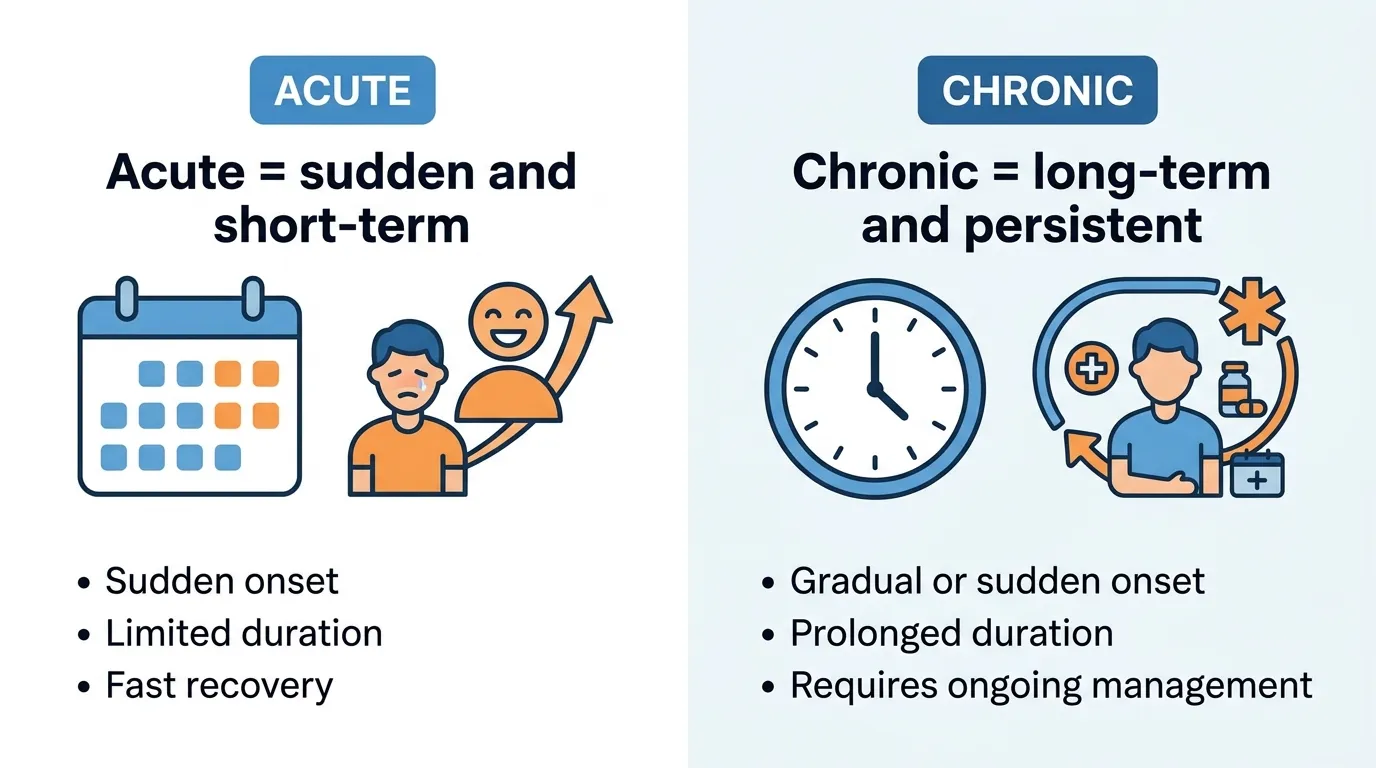
Acute refers to a condition that develops suddenly and lasts for a short time, while chronic refers to a condition that develops slowly and lasts for a long time.
Many people hear doctors use the words “acute” and “chronic” when talking about illnesses, pain, injuries, or medical conditions. But the difference between acute and chronic often confuses patients because both terms describe health problems in very different ways.
In simple words, acute conditions start suddenly and usually last for a short time, while chronic conditions develop slowly and continue for months or years. For example, the flu is usually acute, but diabetes is chronic.
The difference between acute and chronic matters in hospitals, emergency rooms, fitness recovery, mental health treatment, and long-term healthcare planning. That is why people search questions like:
- “What is acute vs chronic?”
- “Is acute more serious than chronic?”
- “How do doctors classify diseases?”
- “Can acute conditions become chronic?”
This complete guide explains everything clearly with real-life examples, medical insights, comparison tables, symptoms, treatment differences, FAQs, and expert explanations. By the end, you will fully understand how acute and chronic conditions affect the body and why doctors separate them medically.
Difference Between Acute and Chronic
The difference between acute and chronic is mainly about time and progression.
- Acute: Starts suddenly and lasts a short time.
- Chronic: Develops slowly and lasts a long time.
Example
- Acute illness: food poisoning
- Chronic illness: high blood pressure
Acute problems often need immediate care, while chronic conditions usually require long-term management.
Definition of Difference Between Acute and Chronic
- Acute: A condition that appears quickly and usually improves within days or weeks.
- Chronic: A long-lasting condition that continues for months, years, or even a lifetime.
Quick Example
An ankle sprain from sports may be acute pain, while arthritis is usually chronic pain.
Pronunciation
| Word | US Pronunciation | UK Pronunciation |
| Acute | uh-KYOOT | uh-KYOOT |
| Chronic | KRON-ik | KRON-ik |
Now that the basic meanings are clear, let’s understand why medicine separates acute and chronic conditions.
Difference Between Acute and Chronic Comparison
| Feature | Acute | Chronic |
| Start Time | Sudden | Slow or gradual |
| Duration | Short-term | Long-term |
| Severity | Can be intense immediately | Often develops over time |
| Treatment Goal | Quick recovery | Long-term management |
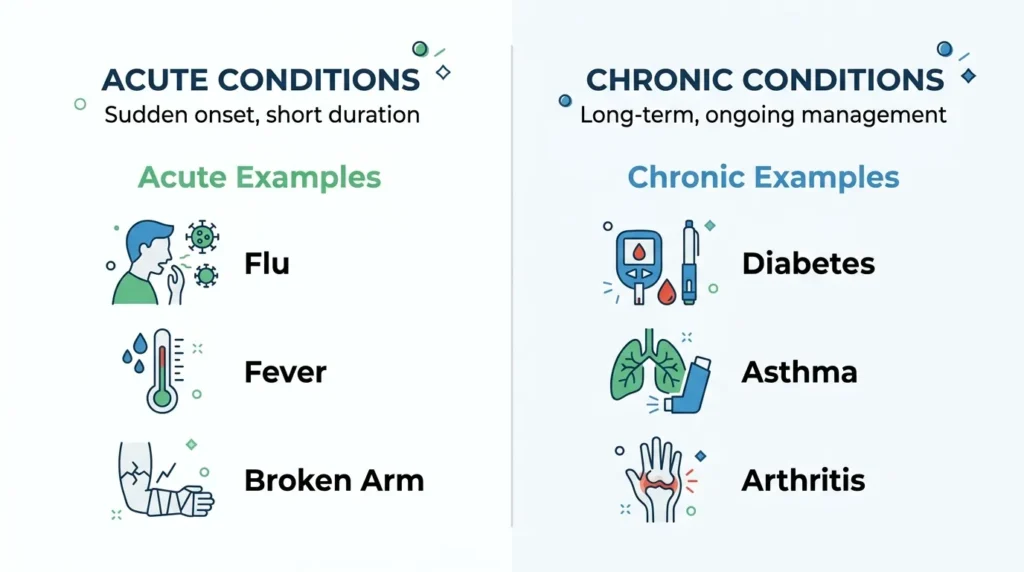
| Common Examples | Flu, injuries, infections | Diabetes, asthma, arthritis |
| Medical Attention | Often urgent | Usually ongoing |
| Symptoms | Rapid appearance | Persistent symptoms |
| Recovery | Often complete | May require lifelong care |
| Risk Level | Immediate complications possible | Long-term health damage possible |
| Healthcare Approach | Emergency or short-term treatment | Monitoring and lifestyle management |
This table clearly explains the main difference between acute and chronic conditions.
Key Differences Explained Between Acute and Chronic
1. Acute Conditions Start Suddenly
Acute illnesses or injuries often appear without much warning.
Example
A person may suddenly develop:
- fever
- food poisoning
- appendicitis
- a broken bone
These conditions require fast attention.
2. Chronic Conditions Last Much Longer
Chronic diseases stay in the body for months or years.
Example
Conditions like:
- diabetes
- asthma
- chronic kidney disease
- hypertension
usually need long-term treatment plans.
3. Acute Problems Often Need Emergency Care
Many acute conditions are treated in emergency rooms or urgent care centers.
Real-Life Example
A severe asthma attack may become an acute emergency.
4. Chronic Conditions Usually Require Lifestyle Management
Doctors often recommend:
- exercise
- diet changes
- stress management
- regular medication
for chronic illnesses.
5. Acute Pain and Chronic Pain Feel Different
Acute pain acts like a warning signal after injury or illness.
Chronic pain often continues even after the original injury improves.
Example
- Acute pain: surgical recovery pain
- Chronic pain: long-term back pain
6. Some Acute Conditions Can Become Chronic
This is an important medical insight many people miss.
Example
Repeated acute inflammation may eventually lead to chronic disease.
7. Chronic Does Not Always Mean Severe
Many users wrongly think chronic automatically means deadly.
Example
Some chronic conditions are manageable for decades with proper care.
What Is an Acute Condition and Why Does It Happen?
An acute condition develops rapidly and usually has a clear cause.
Common Causes
- infections
- injuries
- allergic reactions
- sudden inflammation
- viruses
Examples of Acute Conditions
| Acute Condition | Description |
| Flu | Sudden viral illness |
| Food poisoning | Rapid digestive infection |
| Broken bone | Immediate injury |
| Appendicitis | Sudden inflammation |
Acute conditions often trigger strong symptoms quickly, which is why patients usually seek fast medical help.
What Is a Chronic Condition and How Does It Work?
A chronic condition develops slowly or continues for a long period.
Common Causes
- genetics
- aging
- lifestyle habits
- long-term inflammation
- environmental factors
Examples of Chronic Conditions
| Chronic Condition | Description |
| Diabetes | Long-term blood sugar disorder |
| Arthritis | Persistent joint inflammation |
| Asthma | Ongoing breathing condition |
| Hypertension | Long-term high blood pressure |
Chronic diseases often require continuous monitoring instead of one-time treatment.
Difference Between Acute and Chronic Pain
Pain management specialists often separate pain into acute and chronic categories.
Acute Pain
- short-term
- sudden
- linked to injury or illness
Example
Pain after dental surgery.
Chronic Pain
- lasts over 3 months
- persistent or recurring
- affects daily life
Example
Chronic lower back pain.
Platforms and health communities frequently discuss chronic pain experiences because long-term pain deeply affects quality of life.
Difference Between Acute and Chronic Diseases
Acute Diseases
Usually temporary and treatable.
Examples
- cold
- flu
- pneumonia
- stomach infection
Chronic Diseases
Long-lasting and often manageable rather than curable.
Examples
- heart disease
- chronic obstructive pulmonary disease (COPD)
- diabetes
Organizations focus heavily on chronic disease prevention because these conditions are major global health challenges.
Why Doctors Use the Terms Acute and Chronic
Doctors use these terms because treatment strategies differ greatly.
Acute Care Focuses On
- stabilizing the patient
- treating immediate symptoms
- preventing emergencies
Chronic Care Focuses On
- long-term monitoring
- symptom control
- preventing complications
- improving quality of life
This distinction helps hospitals organize:
- emergency medicine
- rehabilitation
- long-term care
- specialist treatment
Difference + Similarity: Generation For Acute and Chronic
| Feature | Acute | Chronic | Similarity |
| Duration | Short-term | Long-term | Both affect health |
| Onset Speed | Sudden | Gradual | Both may need treatment |
| Treatment Style | Immediate care | Ongoing management | Doctors monitor both |
| Examples | Flu, injuries | Diabetes, arthritis | Both can affect daily life |
| Symptom Pattern | Rapid symptoms | Persistent symptoms | Symptoms vary by person |
| Recovery Time | Usually faster | Often slower | Recovery support matters |
| Healthcare Use | Emergency medicine | Long-term medicine | Both involve medical care |
| Impact on Lifestyle | Temporary disruption | Long-term lifestyle changes | Both may affect routines |
This table clearly shows the difference and similarity between acute and chronic for quick understanding.
Common Mistakes With Acute and Chronic
1. Thinking Acute Means Less Serious
Some acute conditions are medical emergencies.
Example
A heart attack is acute and extremely dangerous.
2. Assuming Chronic Means Untreatable
Many chronic illnesses are manageable with proper care.
Fix
Lifestyle changes and medication often help greatly.
3. Confusing Pain Duration
People sometimes think all long pain is chronic automatically.
Fix
Doctors usually classify chronic pain after several months.
4. Ignoring Early Acute Symptoms
Untreated acute conditions may worsen.
Example
Ignoring infections can create serious complications.
5. Believing Acute and Chronic Never Overlap
Some conditions include both acute flare-ups and chronic disease patterns.
Example
Asthma may involve chronic disease with acute attacks.
Real Life Examples With Acute and Chronic
1. Sports Injury
A football player twists an ankle suddenly.
Classification:
- acute injury
2. Diabetes Management
A person monitors blood sugar daily for years.
Classification:
- chronic condition
3. Asthma Attack
Asthma itself is chronic, but severe breathing attacks can be acute emergencies.
4. Food Poisoning
Symptoms appear suddenly and usually improve within days.
Classification:
- acute illness
5. Chronic Stress
Long-term workplace stress may contribute to chronic anxiety or hypertension.
Platforms increasingly discuss workplace burnout because chronic stress affects productivity and health.
When to Use Each
| Situation | Use Acute | Use Chronic |
| Sudden illness | Yes | No |
| Long-term disease | No | Yes |
| Emergency treatment | Yes | Rarely |
| Ongoing management | Rarely | Yes |
| Short injury recovery | Yes | No |
| Persistent symptoms | Sometimes | Yes |
Why People Get Confused in Acute and Chronic
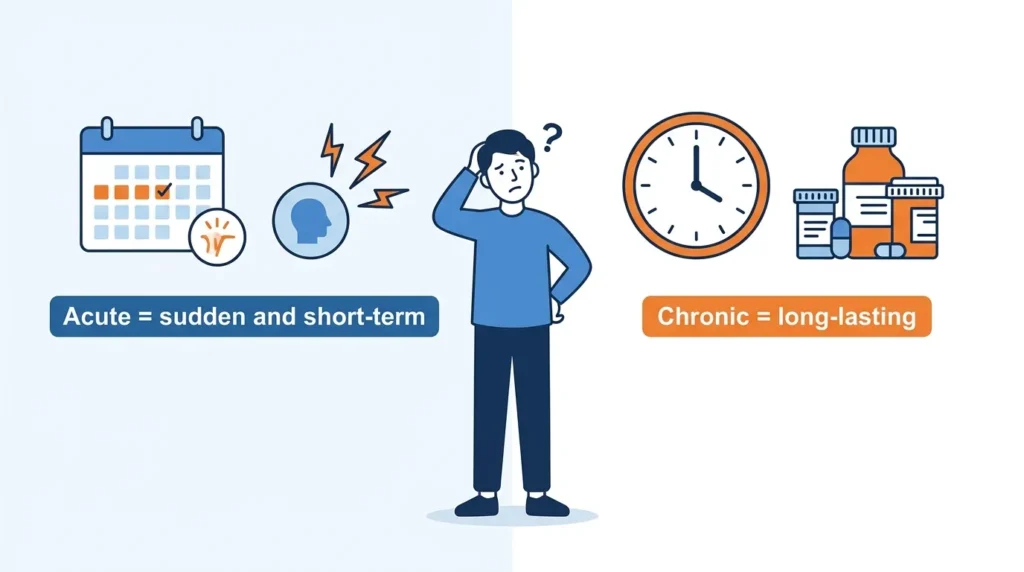
Many users get confused because:
- both terms describe illnesses
- severity varies in both
- symptoms may overlap
- media often oversimplifies medical language
Another reason is that some diseases include both acute and chronic stages.
Example
A chronic disease may suddenly worsen into an acute episode.
Health discussions sometimes oversimplify medical terminology, which increases confusion.
How Search Engines Understand Difference Between Acute and Chronic and User Intent
Search engines analyze user intent carefully.
When users search:
- “difference between acute and chronic”
- “acute vs chronic pain”
- “what is chronic disease”
- “acute illness meaning”
Google understands users usually want:
- Simple medical definitions
- Real-world examples
- Pain and disease comparisons
- Healthcare explanations
- Treatment differences
Modern search systems prioritize:
- medical accuracy
- EEAT trust signals
- readability
- helpful explanations
- semantic relevance
This is especially important in health topics because misinformation can affect patient decisions.
Expert Insight
In real medical practice, the difference between acute and chronic is not only about time it also affects how doctors approach treatment, monitoring, and patient education.
Acute conditions often focus on rapid stabilization and short-term recovery. Chronic conditions require a completely different mindset involving long-term lifestyle support, medication management, emotional health, and prevention strategies.
Most beginners focus only on symptoms, but healthcare professionals pay close attention to:
- duration
- progression
- recurrence
- inflammation patterns
- quality-of-life impact
Understanding this distinction helps patients communicate more effectively with doctors and make better healthcare decisions.
FAQs
What is the main difference between acute and chronic?
Acute conditions start suddenly and last a short time, while chronic conditions last much longer.
Is acute more serious than chronic?
Not always. Both can become serious depending on the condition.
Can acute conditions become chronic?
Yes. Some untreated acute problems may develop into chronic diseases.
What is an example of acute illness?
Flu, appendicitis, or food poisoning.
What is an example of chronic illness?
Diabetes, asthma, or arthritis.
How long does a condition need to last to become chronic?
Many doctors use 3 months or longer as a general guideline.
Is chronic pain permanent?
Not always, but it often lasts for months or years.
Why do doctors classify diseases this way?
Because treatment methods and care plans differ greatly.
Can a chronic disease have acute episodes?
Yes. Asthma and COPD are common examples.
Is stress acute or chronic?
Stress can be either short-term acute stress or long-term chronic stress.
Conclusion
Understanding the difference between acute and chronic is important because these terms shape how doctors diagnose illnesses, treat patients, and manage long-term health. While both describe medical conditions, they are very different in timing, progression, treatment style, and healthcare impact.
Acute conditions usually begin suddenly and improve within a short time. Chronic conditions develop slowly or continue for months or years. In simple words:
- acute = short-term and sudden
- chronic = long-lasting and ongoing
This distinction affects:
- emergency treatment
- pain management
- disease monitoring
- medication planning
- lifestyle changes
In real-world healthcare, some conditions may even include both acute and chronic stages. That is why understanding these terms helps patients communicate better with doctors and understand medical advice more clearly.
The key takeaway is simple:
Acute conditions happen fast and often improve quickly. Chronic conditions last longer and usually need ongoing management.
Read more about!
Difference Between Brass and Bronze: Complete Guide
Difference Between Parfum and Toilette: Complete Guide

I am James Carter, a professional content writer from the United States. I specialize in writing simple and clear comparison blogs that help students and readers understand difficult topics easily. My writing focuses on everyday language, education, science, and lifestyle topics. I believe that learning should be easy for everyone, so I use simple words and real-life examples in my articles.