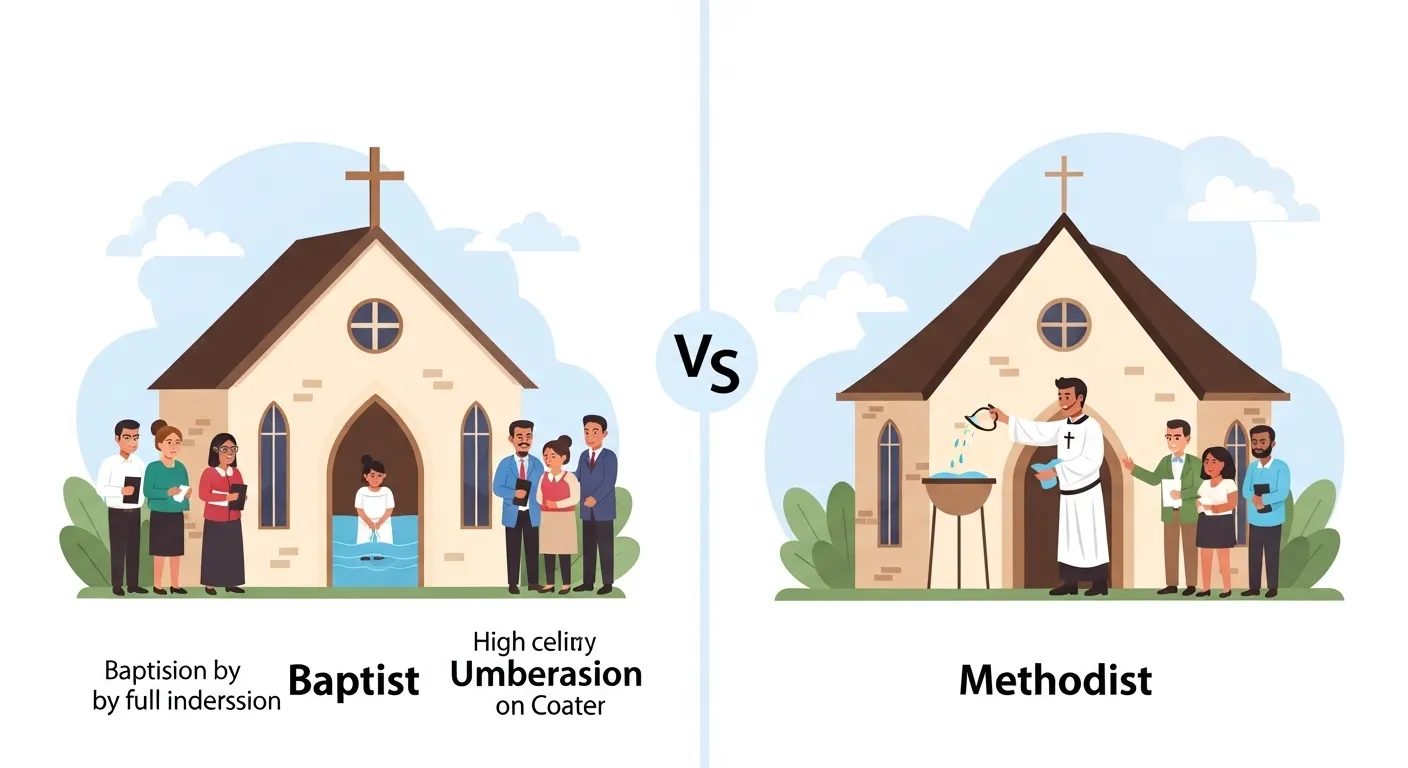
✝️ Baptists focus on adult baptism by choice, while Methodists practice infant baptism and follow structured church teachings.
A young student once visited two churches with his friend. In the first church, people called themselves Baptists. In the second church, people said they were Methodists.
The student wondered what the difference between Baptist and Methodist really was. Both groups were Christians, both prayed, and both read the Bible. Yet their traditions were not exactly the same.
This small experience shows why many people ask about the difference between Baptist and Methodist. These two Christian groups share many beliefs, but they differ in church practices, leadership, and baptism traditions.
Learning the difference between Baptist and Methodist helps students, historians, and church members understand Christian diversity. When people know the difference between Baptist and Methodist, they can better understand how different Christian communities practice their faith and worship.
🔑 Key Difference Between the Both
The main difference is their view of baptism and church leadership. Baptists usually baptize adults by full immersion and allow each church to be independent. Methodists often baptize infants and follow a more organized church structure.
🌍 Why Their Difference Is Important for Learners and Experts
Understanding the difference between Baptist and Methodist helps people study religion, history, and culture. Scholars and students often explore how Christian groups developed different traditions.
In society, these churches influence education, charity work, and community life. Knowing the difference between Baptist and Methodist helps people respect religious diversity and understand the beliefs of different Christian communities.
🔊 Pronunciation
Baptist
- US: /ˈbæp.tɪst/
- UK: /ˈbæp.tɪst/
Methodist
- US: /ˈmeθ.ə.dɪst/
- UK: /ˈmeθ.ə.dɪst/
Now let us explore the clear difference between Baptist and Methodist step by step.
Difference Between Baptist and Methodist
1. Baptism Practice
Baptists usually baptize believers who are old enough to choose faith. Methodists baptize both infants and adults.
Examples of Baptist practice:
- Adult believer baptism
- Full immersion in water
Examples of Methodist practice:
- Infant baptism
- Baptism by sprinkling or pouring
2. Church Structure
Baptist churches are independent. Methodist churches follow a structured system.
Examples of Baptist structure:
- Local church decisions
- Independent church leadership
Examples of Methodist structure:
- Regional church conferences
- Organized church hierarchy
3. Worship Style
Baptist worship may vary by church. Methodist worship often follows a common format.
Examples of Baptist worship:
- Local music style
- Flexible service structure
Examples of Methodist worship:
- Traditional liturgy
- Structured prayer service
4. Church Authority
Baptists give authority to each local church. Methodists share authority with regional leaders.
Examples of Baptist authority:
- Congregational voting
- Local church leadership
Examples of Methodist authority:
- Bishop leadership
- Conference decision system
5. Communion Practice
Baptist churches may limit communion to believers. Methodist churches usually allow all Christians to participate.
Examples of Baptist practice:
- Closed communion
- Members-only communion
Examples of Methodist practice:
- Open communion
- Visitors may participate
6. Historical Origin
Baptists began in the early 1600s. Methodists started in the 1700s.
Examples of Baptist history:
- Early English Baptist churches
- Baptist growth in America
Examples of Methodist history:
- Methodist revival movement
- Methodist church expansion
7. Leadership Titles
Baptists usually have pastors and deacons. Methodists often have bishops and ministers.
Examples of Baptist leadership:
- Church pastor
- Deacon board
Examples of Methodist leadership:
- Bishop leadership
- Methodist ministers
8. Church Governance
Baptists emphasize congregational rule. Methodists emphasize connectional governance.
Examples of Baptist governance:
- Local church meetings
- Congregational voting
Examples of Methodist governance:
- Church conferences
- Central organization
9. Global Presence
Both groups exist worldwide but have different mission structures.
Examples of Baptist presence:
- Baptist missionary societies
- Baptist local church networks
Examples of Methodist presence:
- Global Methodist conferences
- Methodist mission programs
10. Service and Ministry Style
Both churches focus on service but organize ministries differently.
Examples of Baptist ministry:
- Local charity programs
- Independent mission trips
Examples of Methodist ministry:
- Organized social service programs
- Church-wide mission projects
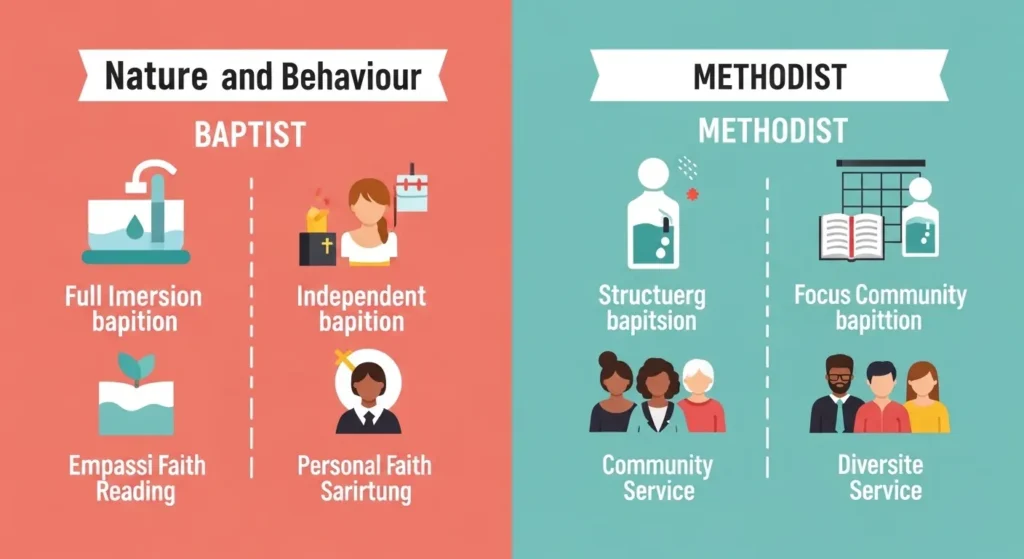
Nature and Behaviour of Baptist and Methodist
Baptist:
Baptist churches value independence and personal faith decisions. Each church usually manages its own activities and leadership.
Methodist:
Methodist churches value connection and organization. They often work together through conferences and shared leadership.
🤔 Why People Are Confused About Their Use
Many people feel confused because both Baptists and Methodists are Christian groups. They share similar beliefs about God, Jesus, and the Bible. Their church buildings and worship services may also look similar.
Difference and Similarity
| Feature | Baptist | Methodist | Similarity |
| Baptism | Usually adult | Infant and adult | Both practice baptism |
| Church structure | Independent churches | Organized system | Both Christian churches |
| Leadership | Pastors and deacons | Bishops and ministers | Both have church leaders |
| Governance | Congregational | Connectional | Both serve communities |
| Worship | Flexible | Structured | Both include prayer and Bible reading |
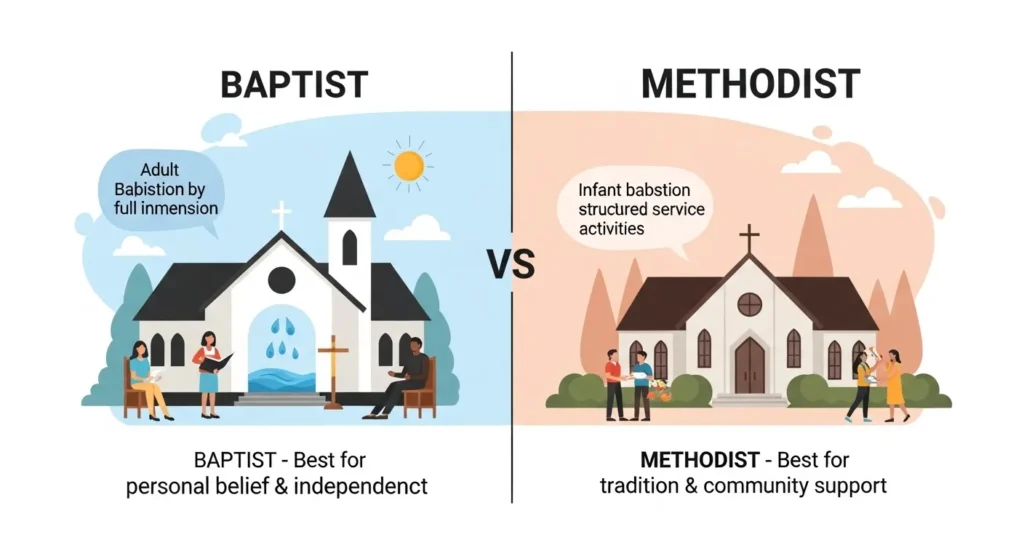
⛪ Which Is Better in What Situation?
Baptist:
Baptist churches may be better for people who prefer strong local church independence. Members often have direct influence on church decisions and leadership.
Methodist:
Methodist churches may be better for people who prefer an organized church system. Their connectional structure allows many churches to work together on missions and community programs.
🎭 How Baptist and Methodist Are Used in Metaphors and Similes
These words sometimes appear in cultural expressions.
Baptist examples
- “He sang with the passion of a Baptist choir.”
- “The crowd shouted like a Baptist revival.”
Methodist examples
- “The meeting was calm like a Methodist service.”
- “They organized the event with Methodist discipline.”
Connotative Meaning
Baptist
Often positive and linked with strong faith and community worship.
Example: “The Baptist choir filled the church with joyful music.”
Methodist
Often positive and associated with organization and service.
Example: “The Methodist volunteers helped the whole town.”
Idioms or Expressions
There are few formal idioms, but cultural expressions exist.
Baptist revival
Example: “The festival felt like a Baptist revival with music and excitement.”
Methodical like a Methodist
Example: “He planned the event carefully, almost like a Methodist organizer.”
📚 Works in Literature
- The Baptist Identity – Religious Study, Walter B. Shurden, 1993
- The History of the Methodist Church – History Book, Abel Stevens, 1864
🎬 Movies Related to the Words
- The Apostle (features Baptist preaching culture) – 1997, United States
- The Heart of Methodism – 2017, United States
❓ FAQs
1. Are Baptists and Methodists both Christians?
Yes. Both groups follow Christian teachings.
2. Do Baptists baptize babies?
Usually no. Baptists normally baptize believers who choose faith.
3. Do Methodists baptize infants?
Yes. Infant baptism is common in Methodist churches.
4. Are Baptist churches independent?
Yes. Most Baptist churches govern themselves.
5. Do Methodists have bishops?
Yes. Methodist churches often have bishops as leaders.
🌍 How Baptist and Methodist Churches Are Useful for Surroundings
Both churches support communities through charity, education, and social services. They help people during disasters, poverty, and illness.
Many Baptist and Methodist groups run schools, hospitals, and relief programs. Their work supports families and strengthens communities.
Final Words for Both
Baptist churches highlight independence and believer baptism. Methodist churches highlight organization and shared leadership. Both traditions play important roles in Christian history and community life.
Conclusion
The difference between Baptist and Methodist mainly relates to baptism practices, church leadership, and governance. Baptists emphasize believer baptism and independent churches, while Methodists accept infant baptism and follow a more organized church structure. Despite these differences, both groups share many core Christian beliefs and values. Understanding the difference between Baptist and Methodist helps students, researchers, and community members appreciate the diversity within Christianity. Both traditions continue to influence religious life, education, and community service around the world.
Read more about!
Difference Between IBS and IBD:Simple Guide
Difference Between Agitator and Impeller: Complete Guide

I am Emily Johnson, a USA-based content writer who creates easy-to-read blogs on language and daily life topics. I explain complex ideas in simple English for students and beginners so they can understand easily.