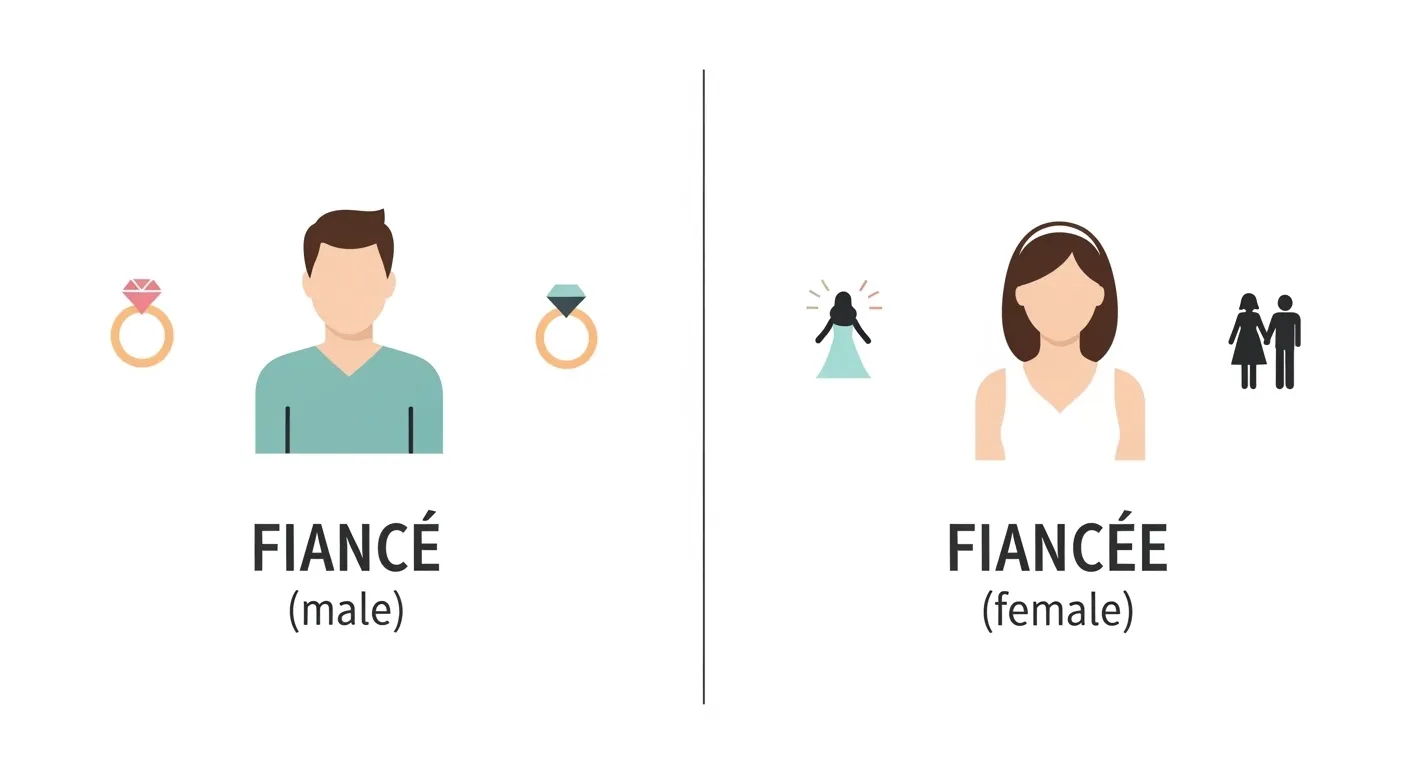
💍 Fiancé vs Fiancée: Fiancé is a man engaged to be married, while fiancée is a woman engaged to be married.
At an engagement party, a friend introduced a couple to the guests. He said, “This is my fiancé.” Later he said, “And she is my fiancée.” Some guests looked confused.
They wondered why two similar words were used for the same relationship. This moment made people curious about the difference between fiancé and fiancée.
Many people mix these two words because they look and sound almost the same. However, the difference between fiancé and fiancée is simple and important in English.
Both words describe a person who is engaged to be married, but the difference between fiancé and fiancée depends on gender. Understanding the difference between fiancé and fiancée helps learners, writers, and speakers use the correct word in conversations and writing.
🔑 Key Difference Between the Both
The main difference is gender. Fiancé refers to a man who is engaged to be married. Fiancée refers to a woman who is engaged to be married.
🌍 Why Their Difference Is Important for Learners and Experts
Knowing the difference between fiancé and fiancée helps language learners communicate clearly. Writers, journalists, and speakers must use the correct word when talking about engagement or marriage.
In society, engagement is an important stage before marriage. Correctly using these terms shows respect and accuracy in communication. Understanding the difference between fiancé and fiancée also improves English vocabulary and grammar skills.
🔊 Pronunciation
Fiancé
- US: /fiˈɑːn.seɪ/
- UK: /fiˈɒn.seɪ/
Fiancée
- US: /fiˈɑːn.seɪ/
- UK: /fiˈɒn.seɪ/
Both words sound almost the same when spoken.
Before moving further, let us explore the clear difference between fiancé and fiancée step by step.
💑Difference Between Fiancé and Fiancée
1. Gender Reference
Fiancé refers to a male partner. Fiancée refers to a female partner.
Examples of fiancé:
- “She introduced her fiancé at the party.”
- “Her fiancé works as an engineer.”
Examples of fiancée:
- “He introduced his fiancée to his parents.”
- “His fiancée is planning the wedding.”
2. Spelling
Fiancé has one “e” at the end. Fiancée has two “e” letters.
Examples of fiancé:
- My fiancé will arrive tomorrow.
- She called her fiancé during the trip.
Examples of fiancée:
- My fiancée loves flowers.
- He bought a ring for his fiancée.
3. Language Origin
Both words come from the French language, but French uses gender endings.
Examples of fiancé:
- French word for engaged man
- Used in English for male partner
Examples of fiancée:
- French word for engaged woman
- Used in English for female partner
4. Use in Sentences
The word choice depends on the gender of the person mentioned.
Examples of fiancé:
- Her fiancé prepared the engagement dinner.
- She traveled with her fiancé.
Examples of fiancée:
- His fiancée chose the wedding dress.
- He called his fiancée last night.
5. Common Context
Fiancé is used when talking about a groom-to-be. Fiancée is used when talking about a bride-to-be.
Examples of fiancé:
- The bride introduced her fiancé.
- Her fiancé bought the wedding ring.
Examples of fiancée:
- The groom introduced his fiancée.
- His fiancée planned the ceremony.
6. Writing Style
Fiancé and fiancée both use accent marks from French.
Examples of fiancé:
- Written with accent: fiancé
- Used in formal writing
Examples of fiancée:
- Written with accent: fiancée
- Used in formal writing
7. Informal Use
In casual writing, some people use fiancé for both genders.
Examples of fiancé:
- “My fiancé is coming tonight.”
- “Her fiancé is waiting outside.”
Examples of fiancée:
- “His fiancée will join us later.”
- “The fiancée planned the wedding.”
8. Role in Engagement
Both words describe someone before marriage.
Examples of fiancé:
- A man preparing for marriage
- A groom-to-be
Examples of fiancée:
- A woman preparing for marriage
- A bride-to-be
9. Cultural Usage
Both words are common in English-speaking cultures during engagement.
Examples of fiancé:
- Wedding invitations mentioning the fiancé
- Engagement announcements
Examples of fiancée:
- Wedding announcements mentioning the fiancée
- Bridal events
10. Relationship Meaning
Both words represent the same stage in a relationship.
Examples of fiancé:
- A man promised to marry
- A partner waiting for the wedding
Examples of fiancée:
- A woman promised to marry
- A partner preparing for marriage
Nature and Behaviour of Both
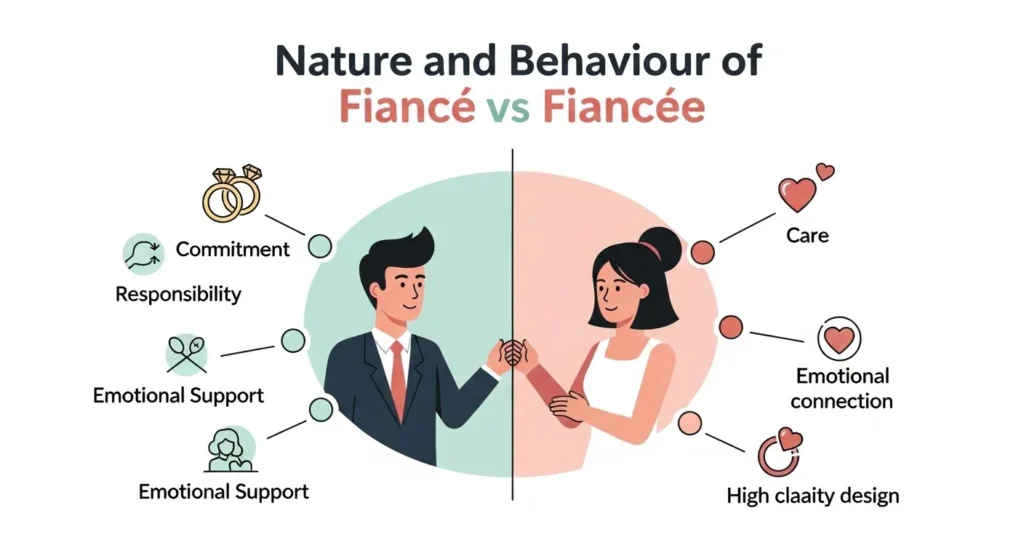
Fiancé:
A fiancé is a man who is engaged to marry someone. He is often involved in planning the wedding and preparing for married life.
Fiancée:
A fiancée is a woman who is engaged to marry someone. She may also help plan the wedding and future life together.
🤔 Why People Are Confused About Their Use
People often feel confused because the words look almost identical. They also sound the same in speech. The only clear difference is the extra “e” in fiancée, which indicates a female partner.
Difference and Similarity
| Feature | Fiancé | Fiancée | Similarity |
| Gender | Male | Female | Both engaged partners |
| Spelling | One “e” | Two “e” letters | Both French words |
| Meaning | Groom-to-be | Bride-to-be | Both before marriage |
| Pronunciation | Same sound | Same sound | Both used in English |
| Role | Male partner | Female partner | Both planning marriage |
💒 Which Is Better in What Situation?
Fiancé:
Use fiancé when you talk about a man who is engaged to marry someone. It is the correct term for a male partner before marriage.
Fiancée:
Use fiancée when referring to a woman who is engaged to marry someone. It is the correct term for a female partner before marriage.
🎭 How Fiancé and Fiancée Are Used in Metaphors and Similes
These words sometimes appear in figurative language.
Fiancé examples
- “He waited like a fiancé counting the days to the wedding.”
- “His excitement was like a fiancé before the ceremony.”
Fiancée examples
- “She smiled like a fiancée on her engagement day.”
- “Her joy was bright like a fiancée at the wedding.”
Connotative Meaning
Fiancé
Positive meaning linked with love and commitment.
Example: “Her fiancé surprised her with flowers.”
Fiancée
Positive meaning linked with romance and future marriage.
Example: “His fiancée planned a beautiful celebration.”
Idioms and Expressions
There are no common idioms directly using these words, but they appear in everyday expressions.
Example:
- “He proudly introduced his fiancée to his family.”
- “She traveled with her fiancé after the engagement.”
📚 Works in Literature
- The Fiancé – Novel, Susan Wiggs, 2003
- The Convenient Fiancée – Romance Novel, Catherine George, 1998
🎬 Movies Related to the Words
- The Perfect Fiancé – 2011, United States
- My Fake Fiancé – 2009, United States
❓ Frequently Asked Questions
1. What is the difference between fiancé and fiancée?
Fiancé refers to a man engaged to marry, while fiancée refers to a woman.
2. Do both words sound the same?
Yes. They are pronounced the same.
3. Why does fiancée have two “e” letters?
The extra “e” shows the feminine form from French.
4. Can fiancé be used for a woman?
Usually no. Fiancée is the correct word for a woman.
5. Are both words used before marriage only?
Yes. After marriage, the words husband or wife are used.
🌍 How Fiancé and Fiancée Are Useful for Surroundings
These words help people clearly describe relationships before marriage. They appear in invitations, announcements, and social conversations.
They also help express commitment and future plans between two people who intend to marry.
Final Words for Both
Fiancé refers to an engaged man. Fiancée refers to an engaged woman. Both words describe partners who plan to marry.
Conclusion
The difference between fiancé and fiancée is simple but important in English. Fiancé refers to a man who is engaged to be married, while fiancée refers to a woman in the same situation. Although the words sound the same, their spelling shows the gender difference. Learning the difference between fiancé and fiancée helps language learners communicate clearly and correctly. These words are commonly used during the engagement stage, which is a joyful period before marriage. By understanding the difference between fiancé and fiancée, people can use the right term in both speaking and writing.
Read more about!
Stew vs Soup:Quick Difference Guide

I am Emily Johnson, a USA-based content writer who creates easy-to-read blogs on language and daily life topics. I explain complex ideas in simple English for students and beginners so they can understand easily.