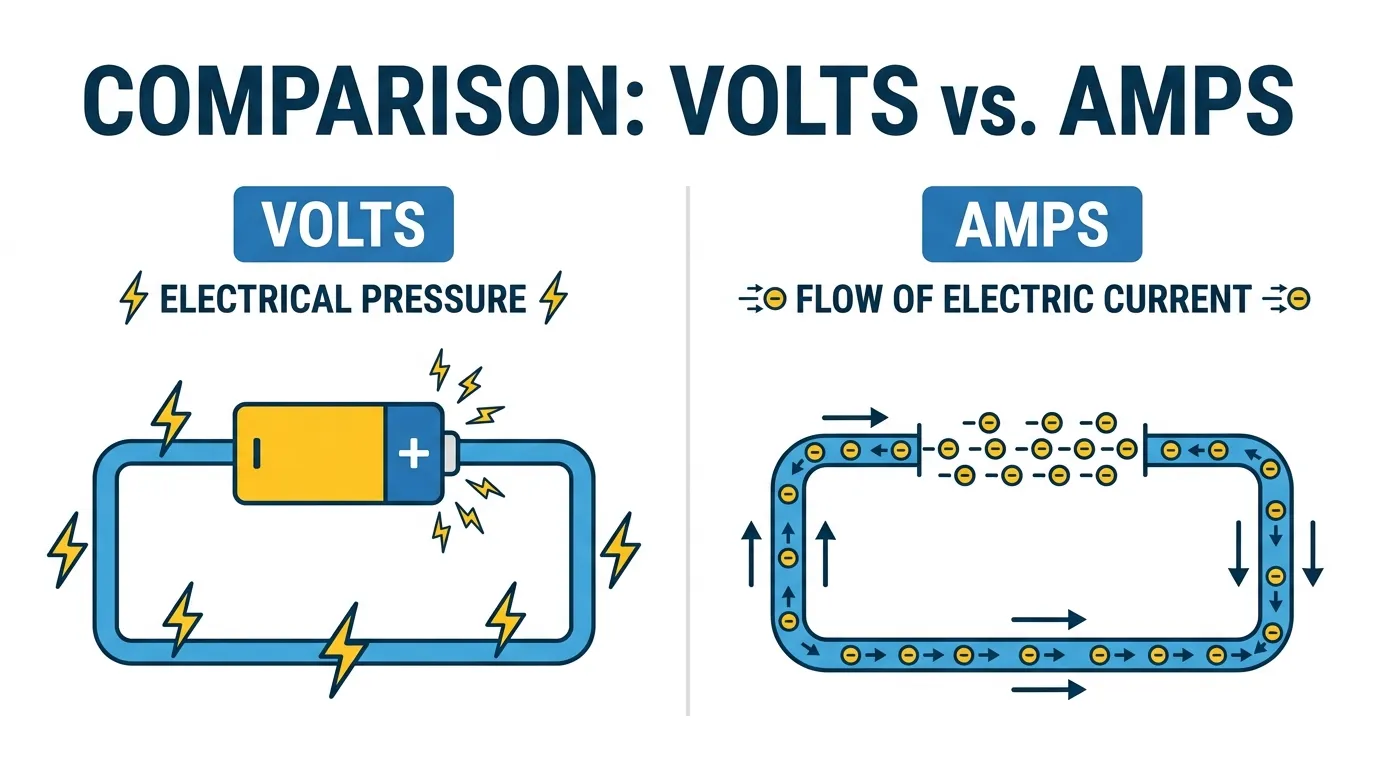
⚡ Volts measure electrical pressure, while amps measure the flow of electric current in a circuit.
Electricity powers almost everything today from smartphones and laptops to electric cars and smart homes. Yet many people still get confused about the difference between volts and amps.
Some think they mean the same thing because both are related to electricity. In reality, they measure completely different things.
The difference between volts and amps is simple once you understand the flow of electricity. Volts measure electrical pressure, while amps measure electrical current or flow. In practical terms, volts push electricity, and amps show how much electricity is moving through a circuit.
If you have ever wondered:
- “What is volts vs amps?”
- “How do volts and amps work together?”
- “Which is more dangerous: volts or amps?”
- “Why do chargers mention both volts and amps?”
Then this complete guide will answer everything clearly. You will learn real-world examples, common mistakes, practical uses, industry insights, and how systems like Google, YouTube, Tesla, Apple, and Samsung use electrical measurements in modern technology.
Difference Between Volts and Amps
The main difference between volts and amps is that:
- Volts (V) measure electrical pressure.
- Amps (A) measure the amount of electrical current flowing.
Think of a water pipe:
- Voltage = water pressure
- Amperage = amount of water flowing
For example, a phone charger may provide 5 volts and 2 amps. The volts push the electricity, while the amps determine how much electricity reaches the phone.
Definition of Difference Between Volts and Amps
- Volts: A unit that measures electrical potential or pressure pushing electricity through a circuit.
- Amps: A unit that measures the flow rate of electrical current in a circuit.
Simple Example
A garden hose helps explain it:
- High pressure in the hose = high voltage
- More water flowing = higher amperage
Pronunciation
| Term | US Pronunciation | UK Pronunciation |
| Volts | vohlts | vohlts |
| Amps | amps | amps |
Now that the pronunciation and meanings are clear, let’s understand how volts and amps actually work in real electrical systems.
Difference Between Volts and Amps Comparison
| Feature | Volts | Amps |
| Meaning | Electrical pressure | Electrical current flow |
| Symbol | V | A |
| Measures | Force pushing electricity | Quantity of electricity moving |
| Water Analogy | Water pressure | Water flow |
| Main Function | Pushes current | Carries energy |
| Used In | Batteries, outlets, chargers | Appliances, circuits, motors |
| Named After | Alessandro Volta | André-Marie Ampère |
| Higher Value Means | More electrical pressure | More electrical flow |
| Risk Factor | Can shock | Can overheat wires |
| Example | 220V wall outlet | 5A circuit flow |
This comparison helps beginners quickly understand the core difference between volts and amps.
KEY Differences Explained Between Volts and Amps
1. Volts Push Electricity, Amps Carry It
Voltage acts like force. Amperage acts like movement. Without voltage, electricity cannot move. Without amperage, there is no actual current flow.
Real-Life Example
A car battery has voltage that pushes electrical energy to start the engine.
2. Volts Create Potential Energy
Voltage creates the possibility for electricity to travel between two points.
Example
A 12V battery has more electrical pressure than a 1.5V battery.
3. Amps Determine Power Usage
Higher amperage means more electricity is being consumed.
Example
An air conditioner uses far more amps than a phone charger.
4. Devices Need Both
Most electronic devices require both correct voltage and correct amperage.
Example
Using the wrong charger may damage a laptop or charge it slowly.
5. High Voltage Does Not Always Mean High Power
Many beginners assume more volts automatically means more power. That is incorrect.
Power depends on both volts and amps together.
The electrical power formula is:
P=V×IP = V \times IP=V×I
Where:
- PPP = Power
- VVV = Voltage
- III = Current in amps
6. Amps Usually Generate Heat
Excessive amperage can overheat wires and electronics.
Example
Overloaded extension cords often fail because too many amps pass through them.
7. Voltage and Current Work Together
Electric systems cannot function properly with only voltage or only amperage.
Real Scenario
A smartphone charger may provide:
- 5V for electrical pressure
- 2A for current flow
Both are necessary for safe charging.
What Is Voltage and How Does It Work?
Voltage is the electrical force that pushes electrons through a wire. In simple words, it is the “pressure” behind electricity.
Electricity naturally moves from higher voltage to lower voltage. This movement powers devices like:
- TVs
- laptops
- refrigerators
- gaming consoles
- Tesla electric vehicles
Companies use high-voltage battery systems because they transfer power efficiently across electric motors.
Why Voltage Exists
Without voltage, electrons would remain still. Voltage creates movement potential inside a circuit.
Common Voltage Examples
| Device | Voltage |
| AA Battery | 1.5V |
| Phone Charger | 5V |
| Car Battery | 12V |
| Home Outlet (US) | 120V |
| Home Outlet (UK/Pakistan) | 220–240V |
What Are Amps and Why Are They Important?
Amps measure how many electrons move through a wire each second.
Higher amperage means more electrical flow.
For example:
- A smartwatch uses very low amps.
- An oven uses high amps.
Modern companies carefully design chargers with balanced voltage and amperage for safe fast charging.
How Volts and Amps Work Together
Many users search:
- “Do volts and amps need each other?”
- “Can you have voltage without current?”
The answer is yes voltage can exist without current. But useful electrical power needs both.
Imagine:
- Voltage = pressure
- Amps = flow
A water tank can hold pressure even when water is not flowing. Similarly, a battery may have voltage even when no current is being used.
Difference Between Volts and Amps in Chargers
Phone chargers are one of the easiest real-world examples.
A charger label may say:
- 5V
- 3A
This means:
- 5 volts of electrical pressure
- 3 amps of current capability
Fast charging systems from companies optimize both voltage and current to charge batteries safely and quickly.
Why This Matters
Too much voltage may damage devices.
Too little amperage may result in slow charging.
Which Is More Dangerous: Volts or Amps?
This is one of the most searched questions online.
The truth is:
- Voltage creates the shock potential.
- Amperage determines how severe the damage can become.
Even small currents can be dangerous under certain conditions.
Practical Insight
In real electrical safety training, professionals focus on:
- current exposure
- resistance
- moisture
- voltage level
- grounding
That is why electricians use insulated tools and circuit protection systems.
Difference Between Volts and Amps in Home Electricity
Homes use both voltage and amperage together.
Voltage in Homes
Most countries use:
- 110–120V
or - 220–240V
Pakistan commonly uses around 230V systems.
Amps in Homes
Circuit breakers control amperage limits.
Example
- Lighting circuits may use lower amps.
- Air conditioners require much higher amps.
This prevents overheating and electrical fires.
Difference Between Volts and Amps in Batteries
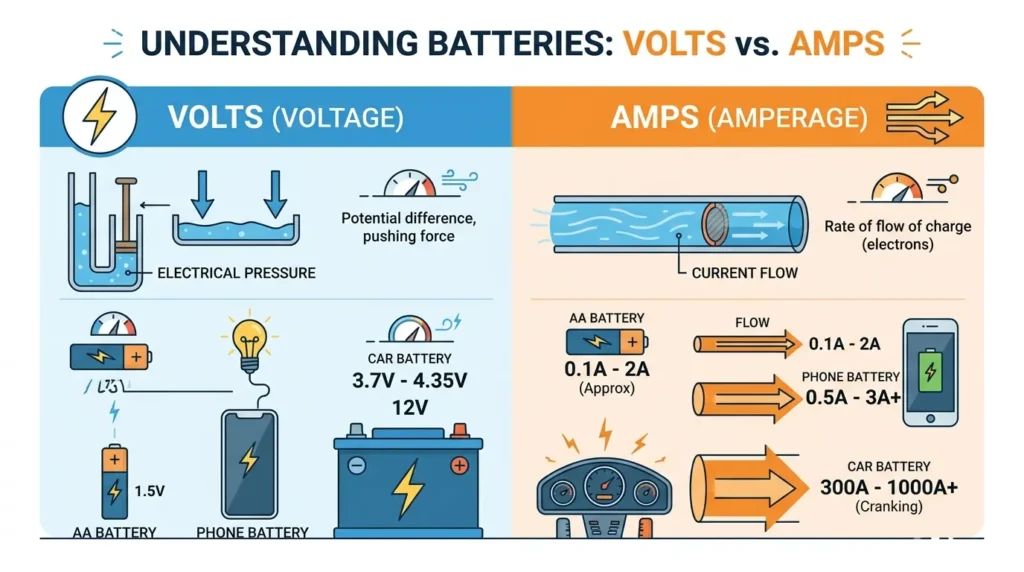
Batteries store electrical energy using voltage.
Amperage depends on how much current the battery can deliver.
Example
Two batteries may both be 12V:
- One powers a toy car.
- One powers a real vehicle.
The difference is current capacity.
Difference and Similarity: Generation For Volts and Amps
| Feature | Volts | Amps | Similarity |
| Meaning | Measures electrical pressure | Measures current flow | Both relate to electricity |
| Symbol | V | A | Both use scientific symbols |
| Main Role | Pushes electrons | Moves electrons | Work together in circuits |
| Water Analogy | Water pressure | Water volume flow | Both explain electrical movement |
| Device Impact | Controls force | Controls flow amount | Affect power delivery |
| Usage Area | Batteries and outlets | Wiring and appliances | Used in all electrical systems |
| Risk Type | Shock potential | Heat generation | Both can become dangerous |
| Measurement Tool | Voltmeter | Ammeter | Both require electrical testing tools |
This table clearly shows the difference and similarity between volts and amps for quick understanding.
Common Mistakes With Volts and Amps
1. Thinking They Mean the Same Thing
Many beginners confuse voltage and current because both appear on chargers and electronics.
Fix
Remember:
- volts = pressure
- amps = flow
2. Assuming More Volts Means Faster Charging
Higher voltage alone does not guarantee faster charging.
Fix
Charging speed depends on total power output.
3. Ignoring Amperage Ratings
Some people use low-amp chargers for high-power devices.
Fix
Always match device requirements.
4. Believing Household Voltage Never Changes
Voltage fluctuations happen frequently in many regions.
Fix
Use voltage stabilizers when needed.
5. Using Wrong Extension Cords
Thin cables may not handle high amps safely.
Fix
Check amp ratings before use.
Real Life Examples With Volts and Amps
1. Smartphone Charging
A USB charger uses low voltage and moderate amps for safe charging.
2. Electric Cars
Electric vehicles like those from use high-voltage battery systems for efficient power transfer.
3. Industrial Machines
Factories often use high-voltage systems to reduce energy loss.
4. Gaming PCs
High-performance computers require stable voltage and higher amperage power supplies.
5. Solar Energy Systems
Solar panels generate voltage while controllers regulate current flow.
When To Use Each
| Situation | Voltage Importance | Amperage Importance |
| Battery selection | Very important | Moderate |
| Wire safety | Moderate | Very important |
| Fast charging | Important | Important |
| Electric vehicles | Critical | Critical |
| Home wiring | Essential | Essential |
Why People Get Confused In Volts and Amps
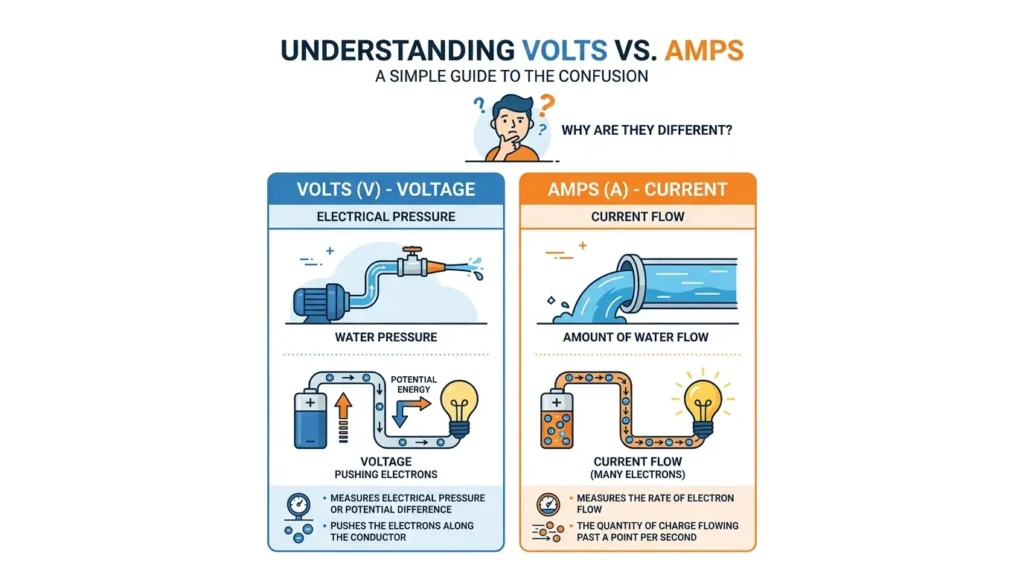
Many users get confused because electrical devices always display both values together.
Other reasons include:
- Technical labeling
- Similar electrical terminology
- Online misinformation
- Simplified marketing language
For example, some advertisements promote “high power” chargers without explaining voltage or current properly.
Social platforms contain many simplified tutorials that sometimes mix concepts incorrectly.
How Search Engines Understand Difference Between Volts and Amps and User Intent
Search engines analyze user intent carefully.
When someone searches:
- “difference between volts and amps”
- “volts vs amps”
- “what are amps and volts”
Google understands the user wants:
- A beginner-friendly comparison
- Real examples
- Easy explanations
- Safety understanding
- Practical application
Modern search algorithms prioritize:
- readability
- topical depth
- semantic relationships
- user satisfaction
- EEAT signals
That is why high-quality educational content ranks better today than keyword-stuffed articles.
EXPERT INSIGHT
In practical electrical work, professionals rarely discuss voltage or amperage separately. Both are always analyzed together because real systems depend on balance.
Most beginners focus only on voltage because it appears more often in marketing. However, experienced electricians understand that excessive current flow is often what damages wires, overheats systems, and creates safety risks.
In modern electronics, companies carefully optimize voltage and current for efficiency. Fast charging technology in 2026 relies heavily on intelligent current regulation rather than simply increasing voltage alone.
This is especially important in:
- EV charging systems
- AI servers
- gaming hardware
- renewable energy systems
- smart homes
FAQs
What is the main difference between volts and amps?
Volts measure electrical pressure, while amps measure electrical current flow.
Which is more dangerous, volts or amps?
Both can be dangerous, but current flow through the body is usually what causes severe injury.
Can you have volts without amps?
Yes. A battery may have voltage even when no current flows.
Do higher amps mean more power?
Usually yes, especially when voltage remains constant.
Why do chargers show both volts and amps?
Devices need correct pressure and correct current for safe operation.
Are volts stronger than amps?
They are different measurements, so one is not “stronger” than the other.
What happens if voltage is too high?
High voltage may damage electronic devices or create dangerous shocks.
What happens if amperage is too high?
High amperage may overheat wires and damage components.
Why are electric cars using higher voltage systems?
Higher voltage improves efficiency and reduces energy loss.
How do electricians measure volts and amps?
They use tools like multimeters, voltmeters, and ammeters.
Conclusion
Understanding the difference between volts and amps becomes much easier once you think of electricity like flowing water. Volts represent the pressure pushing electricity, while amps represent the amount of electrical flow moving through a circuit. Both are essential because electrical systems cannot operate properly without the right balance of pressure and current.
In real-world use, volts and amps affect everything from smartphone charging and gaming PCs to solar panels and electric vehicles. Most beginners focus only on voltage, but experienced professionals know that amperage plays an equally important role in safety, performance, and efficiency.
Modern technology companies like Apple, Tesla, Samsung, Google, and Xiaomi design products carefully around voltage and current management because even small imbalances can affect charging speed, battery life, and electrical safety.
If you remember one thing from this guide, remember this:
- Volts push electricity.
- Amps measure how much electricity flows.
That simple understanding explains nearly every electrical system around you.
Read more about!
Difference Between Atoms and Molecules: Complete Guide
Difference Between PNG and JPG: Complete Guide

I am Emily Johnson, a USA-based content writer who creates easy-to-read blogs on language and daily life topics. I explain complex ideas in simple English for students and beginners so they can understand easily.