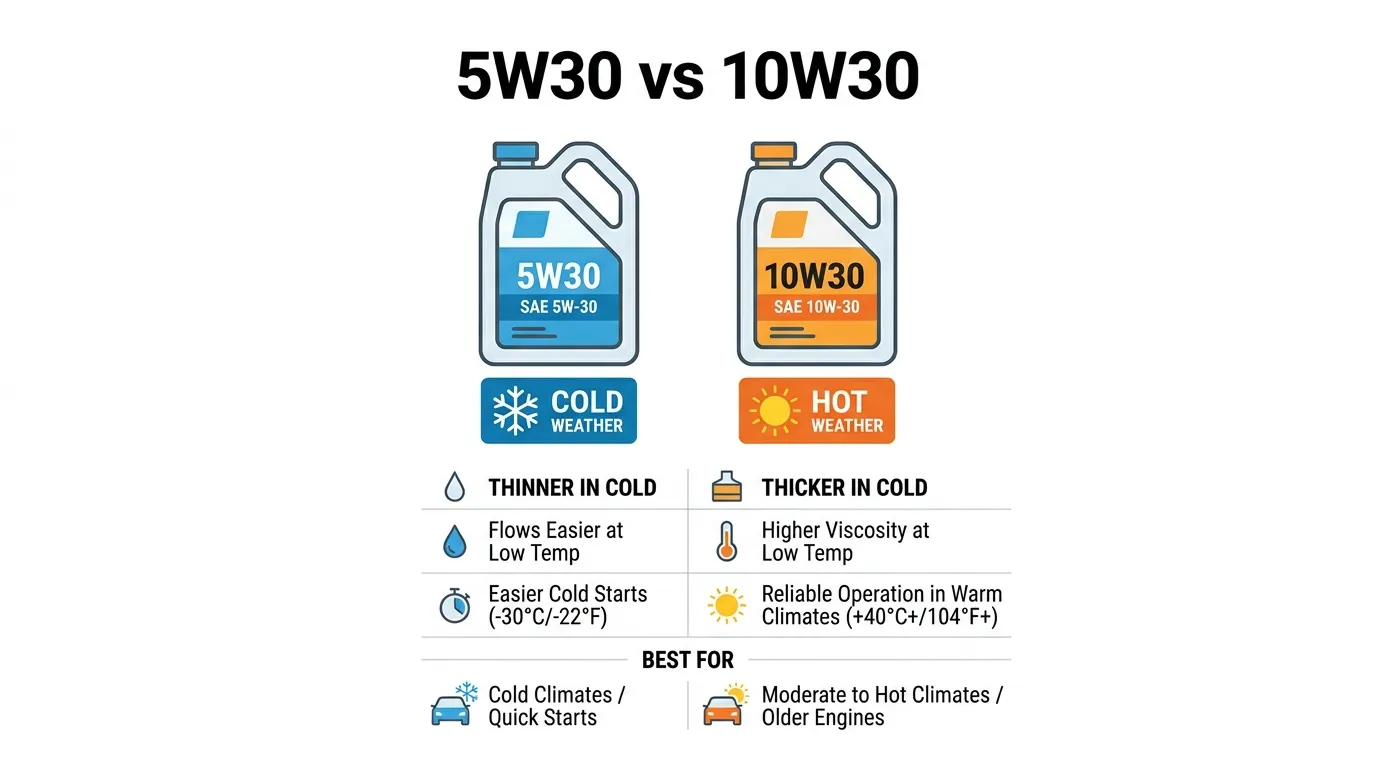
🛢️ 5W30 oil performs better in cold temperatures, while 10W30 oil works well in warmer climates and older engines.
If you are confused about the difference between 5W30 and 10W30, you are not alone. This is one of the most searched automotive questions on Google, especially by car owners who want better engine performance and fuel efficiency.
Many users see these numbers on engine oil bottles but don’t fully understand what they mean or how they affect their vehicle.
In simple words, the difference between 5W30 and 10W30 engine oil is related to viscosity—how easily the oil flows in cold and hot temperatures. This directly impacts engine start, fuel economy, and long-term engine protection.
That’s why mechanics, automotive experts, and even platforms like YouTube car channels and automotive blogs emphasize choosing the right oil grade.
In this complete guide, we will break down the difference between 5W30 and 10W30 in detail. You will learn definitions, working principles, comparison tables, real-life examples, mistakes to avoid, and expert recommendations. By the end, you will confidently know which oil is best for your car.
🟢 Difference Between 5W30 and 10W30
The difference between 5W30 and 10W30 is that 5W30 flows better in cold temperatures, while 10W30 is slightly thicker during cold starts but performs similarly in warm conditions.
Example: 5W30 is better for cold climates, while 10W30 works well in moderate or warm regions.
🟢 Definition of 5W30 and 10W30
- 5W30: A multi-grade engine oil that flows easily in cold weather (5W) and maintains viscosity at high temperatures (30).
- 10W30: A multi-grade engine oil that is slightly thicker in cold starts (10W) but also maintains stable viscosity at operating temperature (30).
🟢 Pronunciation
- 5W30 → “Five Double-U Thirty”
- 10W30 → “Ten Double-U Thirty”
Now let’s understand the difference between 5W30 and 10W30 in a structured and practical way.
🟢 5W30 vs 10W30 Comparison
| Feature | 5W30 | 10W30 | Similarity |
| Cold Start Flow | Faster | Slower | Both protect engine |
| Temperature Range | Wide | Moderate | Multi-grade oils |
| Fuel Efficiency | Higher | Slightly lower | Improves engine life |
| Engine Protection | Excellent in cold | Good in warm | Lubrication function |
| Usage Climate | Cold regions | Moderate climates | All-season oils |
| Viscosity | Thinner in cold | Slightly thicker | Same hot viscosity |
| Engine Wear | Reduced | Slightly higher in cold | Protects engine parts |
👉 This table clearly shows the difference between 5W30 and 10W30 for quick understanding.
🟢 Key Differences Explained Between 5W30 and 10W30
1. Cold Weather Performance
5W30 flows faster in low temperatures, making it ideal for winter starts.
Example: Cars in colder countries like Europe prefer 5W30.
2. Engine Start Efficiency
5W30 reduces engine friction during startup, improving performance instantly.
3. Oil Thickness Difference
10W30 is slightly thicker in cold conditions, which may delay lubrication.
4. Fuel Economy Impact
5W30 improves fuel efficiency because it reduces engine resistance.
5. Temperature Stability
Both oils perform equally at engine operating temperature (30 grade).
6. Engine Wear Protection
5W30 offers slightly better protection during cold starts.
7. Climate Suitability
5W30 = cold climates
10W30 = warm or moderate climates
🟢 What is 5W30 Engine Oil?
5W30 is a modern synthetic or semi-synthetic oil designed for all-season use. It performs extremely well in cold starts and is widely recommended by manufacturers like Toyota, Honda, and Ford.
In modern automotive systems, especially those tracked by Google automotive data trends, 5W30 is preferred for fuel efficiency and engine longevity.
🟢 What is 10W30 Engine Oil?
10W30 is a traditional multi-grade oil commonly used in older engines and warm climates. It provides stable lubrication but is slightly less efficient in cold weather.
It is widely used in motorcycles, generators, and older vehicles where extreme cold start performance is not required.
🟢 Real-Life Examples of 5W30 vs 10W30

🚗 Car in Cold Region
5W30 helps easy ignition in winter mornings.
🚙 Car in Hot Region
10W30 performs well in stable warm climates.
🏍 Motorcycle Use
10W30 is often preferred for durability.
⚙️ Generator Use
10W30 provides stable long-run lubrication.
🚕 Taxi Service
5W30 improves fuel economy and engine life.
🟢 When to Use 5W30 vs 10W30
Use 5W30 When:
- You live in cold climate
- You want better fuel efficiency
- You drive modern vehicles
Use 10W30 When:
- You live in warm regions
- You use older engines
- You need stable oil performance
🟢 Why People Get Confused Between 5W30 and 10W30
Many drivers confuse the difference between 5W30 and 10W30 because:
- Numbers look technical and similar
- Mechanics often use both interchangeably
- Packaging does not explain clearly
- YouTube and social media oversimplify it
Even platforms like Instagram auto pages and YouTube car reviewers sometimes mix recommendations.
🟢 How Search Engines Understand This Topic
Google interprets this query as:
- Engine oil comparison
- Vehicle maintenance guide
- Fuel efficiency optimization
That’s why top-ranking pages include:
✔ tables
✔ viscosity explanation
✔ real-life usage
✔ expert insights
🟢 Expert Insight
From an automotive lubrication perspective, the choice between 5W30 and 10W30 depends heavily on climate and engine design. Modern engines with tighter tolerances are optimized for 5W30 oils.
Professional mechanics and certified automotive technicians often recommend following manufacturer guidelines rather than guessing.
🟢Common Mistakes with 5W30 and 10W30
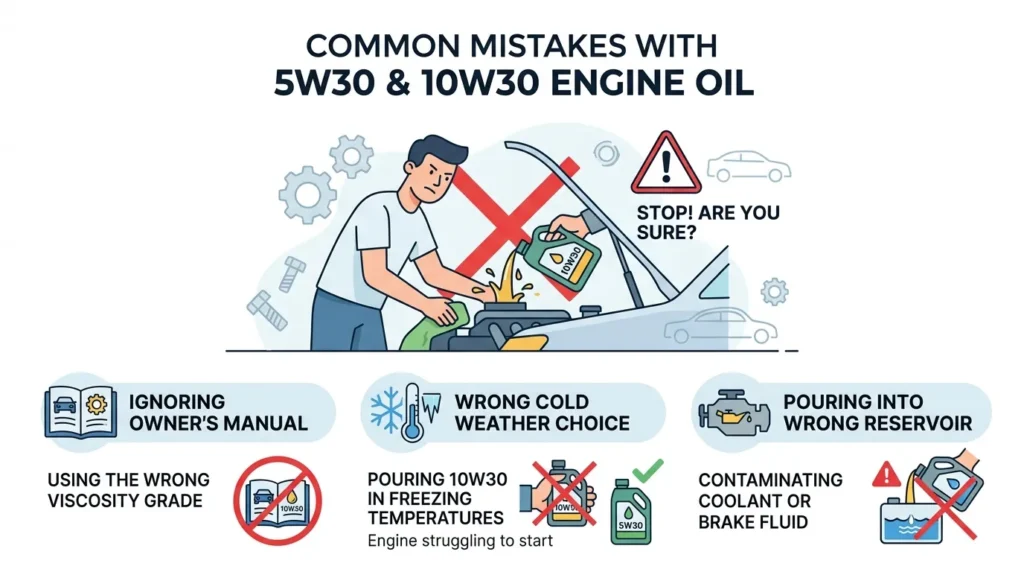
- Using wrong oil for climate
- Ignoring manufacturer recommendation
- Mixing oil grades randomly
- Thinking both are identical
- Not checking engine type compatibility
🟢Practical Examples of Using Engine Oil in Daily Driving
- Personal cars: 5W30 for daily driving
- Business fleets: 10W30 for stable regions
- Industry generators: 10W30 for durability
- Modern vehicles: 5W30 for efficiency
🟢Choosing the Right Oil for Different Conditions
- Use 5W30 for modern engines and cold starts
- Use 10W30 for older engines and warm climates
- Combine knowledge of manual + climate for best results
🟢 Why Search Engines Consider This Topic Important
Google prioritizes this topic because:
- High user intent (car maintenance)
- Clear comparison need
- Strong informational value
- Frequent seasonal searches
🟢 FAQs
1. What is the main difference between 5W30 and 10W30?
5W30 flows better in cold weather than 10W30.
2. Which is better 5W30 or 10W30?
Depends on climate and engine type.
3. Can I use 10W30 instead of 5W30?
Only if manufacturer allows it.
4. Is 5W30 good for all cars?
Yes, most modern cars recommend it.
5. Which oil is thicker?
10W30 is slightly thicker in cold start.
6. Does oil affect fuel consumption?
Yes, 5W30 improves fuel efficiency.
🟢 Conclusion
Understanding the difference between 5W30 and 10W30 is essential for proper engine care and long-term vehicle performance. Both oils are designed to protect engines, but they perform differently based on temperature and driving conditions.
The difference between 5W30 and 10W30 mainly comes down to cold-weather flow and engine efficiency. 5W30 is ideal for modern engines and cold climates because it flows faster and reduces friction. On the other hand, 10W30 is better suited for warmer regions and older engines where slightly thicker oil provides stable lubrication.
In real-world driving, choosing the right oil improves fuel economy, reduces engine wear, and extends engine life. That’s why manufacturers like Toyota, Honda, and Ford clearly recommend specific grades for each model.
So, the final takeaway is simple: always follow your car manual, understand your climate, and then choose between 5W30 and 10W30. That’s the smartest way to protect your engine.
Read more about!
Difference Between Saving and Investing: Complete Guide
Difference Between Parfum and Toilette: Complete Guide

I am Emily Johnson, a USA-based content writer who creates easy-to-read blogs on language and daily life topics. I explain complex ideas in simple English for students and beginners so they can understand easily.