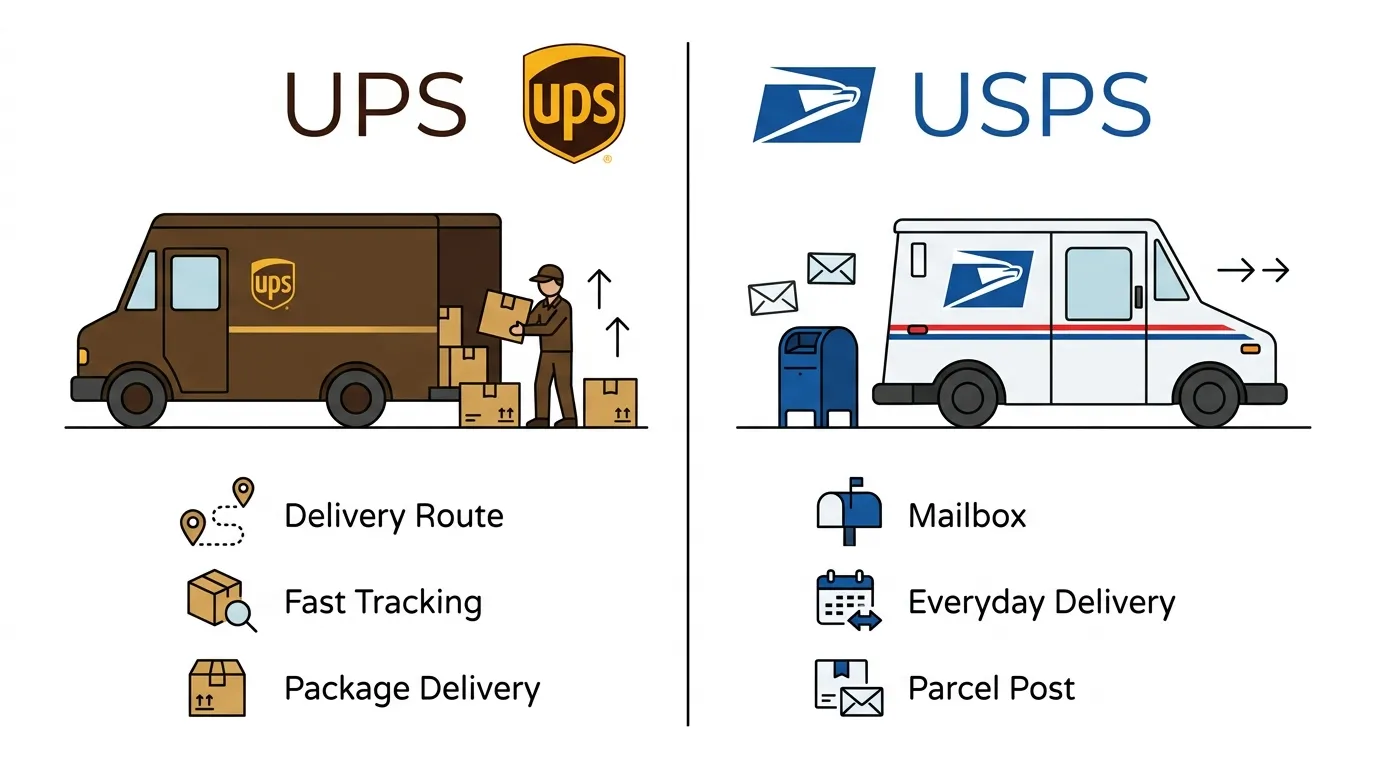
UPS is a private courier service for fast parcel delivery 📦, while USPS is a government postal service offering affordable mail and package delivery across the U.S. 🇺🇸📬
If you’ve ever shipped a package and wondered if to choose UPS or USPS, you’re not alone. The difference between UPS and USPS is one of the most searched logistics topics on Google because people want to understand which delivery service is faster, cheaper, and more reliable.
Many users type queries like “what is UPS vs USPS”, “how shipping works in UPS and USPS”, or “which is better UPS or USPS for delivery”.
The confusion is normal because both companies handle parcel delivery in the United States but work in completely different ways.
In simple words, UPS (United Parcel Service) is a private courier company focused on fast, premium shipping, while USPS (United States Postal Service) is a government-run postal service designed for affordable nationwide delivery.
You often see these services used on platforms like Amazon shipping systems, eBay sellers, Shopify stores, and even Google Shopping integrations, where delivery speed and cost matter a lot.
In this complete guide, you’ll learn:
✔ Clear meaning of UPS and USPS
✔ Key differences with real examples
✔ Pricing, speed, and reliability comparison
✔ When to use each service
✔ Common shipping mistakes people make
✔ Real-world delivery scenarios
Let’s break down the difference between UPS and USPS in the most simple and practical way.
Difference Between UPS and USPS
UPS is a private shipping company that offers faster, premium delivery services, while USPS is a government postal service that provides cheaper, nationwide delivery with slower speed.
👉 Example:
- UPS: Fast 1–2 day business delivery
- USPS: Affordable standard mail delivery in 2–5 days
Definition of UPS and USPS
UPS (United Parcel Service):
UPS is a private logistics company that provides domestic and international shipping with fast, trackable, and premium delivery services.
USPS (United States Postal Service):
USPS is a government-owned postal system in the United States that delivers mail and packages at affordable rates across the country.
Pronunciation
- UPS: /ˌjuː.piːˈes/ (same in US & UK)
- USPS: /ˌjuː.es.piːˈes/ (same in US & UK)
Now let’s understand how these services actually work in real-world logistics systems like Amazon, Shopify, and global eCommerce platforms.
Difference Between UPS and USPS: Comparison
| Feature | UPS | USPS | Similarity |
| Ownership | Private company | Government service | Both deliver parcels |
| Speed | Faster delivery | Slower but steady | Both offer tracking |
| Cost | Higher shipping cost | Lower cost | Both price based on weight |
| Coverage | Global & domestic | Mainly domestic USA | Both nationwide service |
| Reliability | High priority shipping | Standard reliability | Both trusted brands |
| Tracking | Advanced tracking system | Basic tracking system | Both offer tracking IDs |
| Delivery Type | Business-focused | Residential & mail-focused | Both handle packages |
👉 This table clearly shows the difference between UPS and USPS for quick understanding.
Key Differences Explained Between UPS and USPS
1. Ownership Structure
- UPS is a private logistics giant
- USPS is a government postal service
👉 Example: UPS operates like FedEx; USPS operates like public mail service.
2. Delivery Speed
UPS is faster for express delivery, while USPS is slower but consistent.
👉 Example: UPS delivers next-day packages, USPS takes 2–5 days.
3. Shipping Cost
- UPS = higher cost (premium service)
- USPS = cheaper for everyday shipping
4. Service Type
UPS focuses on business logistics.
USPS focuses on personal mail and small packages.
5. Tracking System
UPS provides detailed real-time tracking.
USPS tracking is simpler but functional.
6. Package Size Handling
UPS handles large and heavy shipments better.
USPS is better for lightweight parcels.
7. International Shipping
UPS is stronger in global logistics.
USPS is more limited internationally.
Deep Explanation: What is UPS in Logistics Systems?
UPS is one of the world’s largest logistics companies, widely used by businesses on platforms like Amazon, Shopify, and eBay.
It works through:
✔ Air transport network
✔ Ground delivery system
✔ Global warehouse logistics
UPS is preferred when speed and reliability matter most.
Deep Explanation: What is USPS and Why It Exists?
USPS was created to provide affordable communication and delivery services across the United States.
It works through:
✔ National mail system
✔ Local post offices
✔ Government-regulated pricing
USPS is essential for everyday mail, small businesses, and rural deliveries.
UPS vs USPS in Real Life Scenarios
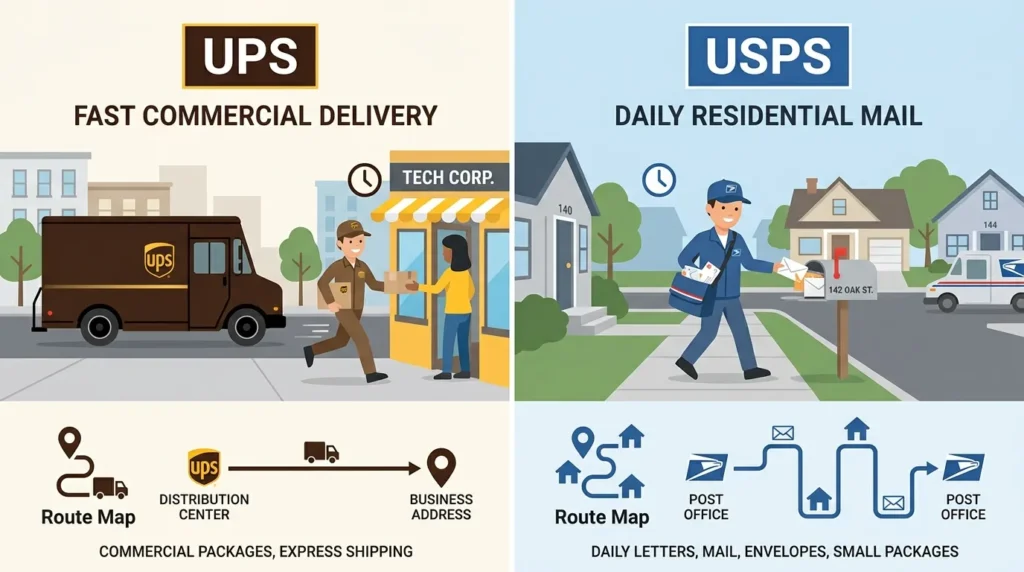
✔ E-commerce Stores
Amazon sellers use UPS for fast shipping and USPS for cheap orders.
✔ Personal Use
People use USPS for letters and UPS for urgent parcels.
✔ Business Logistics
Companies prefer UPS for high-value shipments.
✔ Online Platforms
Shopify, eBay, and Google Merchant Center integrate both services.
When to Use UPS vs USPS
Use UPS When:
✔ You need fast delivery
✔ Shipping valuable items
✔ International shipping required
Use USPS When:
✔ You want low-cost shipping
✔ Sending lightweight packages
✔ Mailing letters or documents
Why People Get Confused Between UPS and USPS
Many users confuse them because:
✔ Both deliver packages
✔ Both operate in the USA
✔ Names sound similar
✔ Both appear in eCommerce checkout pages
Even platforms like YouTube tutorials and Instagram business guides often mix both services in explanations.
Common Mistakes with UPS and USPS
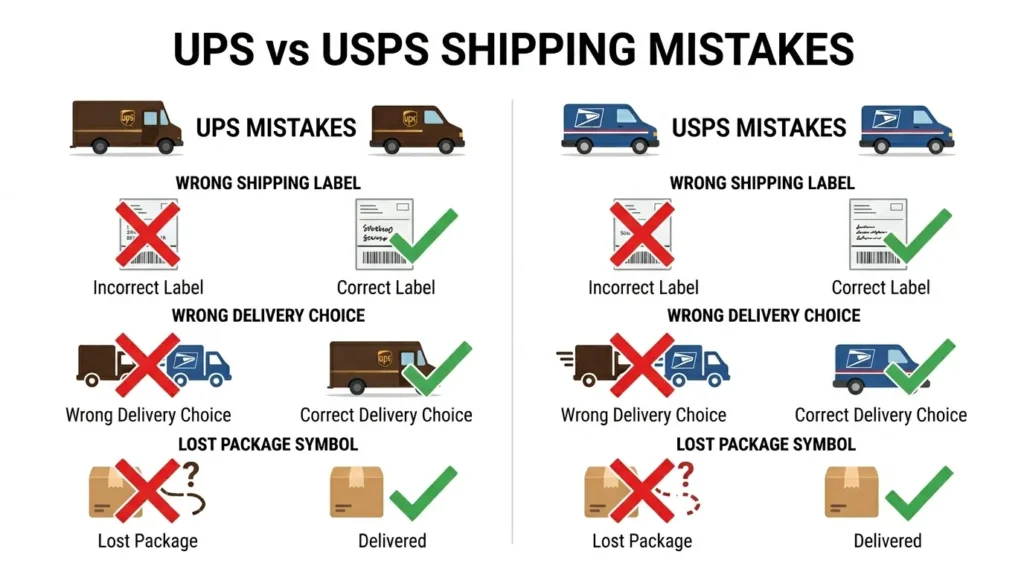
❌ Choosing wrong service for urgency
👉 Fix: Use UPS for urgent delivery
❌ Ignoring package weight rules
👉 Fix: Check shipping limits
❌ Assuming USPS is always slower
👉 Fix: Priority Mail is fast
❌ Not comparing prices
👉 Fix: Always compare rates before shipping
How Search Engines Understand UPS and USPS
Google uses NLP + intent recognition to understand shipping queries:
✔ “cheapest shipping option” → USPS intent
✔ “fast delivery service” → UPS intent
Platforms like Google Shopping and Amazon logistics systems optimize results based on these signals.
Expert Insight
From a logistics and shipping perspective:
✔ UPS is best for speed and business logistics
✔ USPS is best for affordability and daily use
Industry experts recommend combining both services depending on shipping goals. In real-world eCommerce operations, businesses often use UPS for premium customers and USPS for budget orders.
FAQs
1. What is the main difference between UPS and USPS?
UPS is private and faster, USPS is government-run and cheaper.
2. Which is cheaper UPS or USPS?
USPS is generally cheaper.
3. Which is faster UPS or USPS?
UPS is faster for most deliveries.
4. Is USPS reliable?
Yes, USPS is reliable for standard shipping.
5. Does UPS deliver internationally?
Yes, UPS offers strong global shipping.
6. Can I track USPS packages?
Yes, but tracking is less detailed than UPS.
Conclusion
The difference between UPS and USPS comes down to speed, cost, and service type. UPS is a private courier company focused on fast, premium, and global delivery services, while USPS is a government postal service focused on affordable, nationwide shipping.
Understanding the difference between UPS and USPS helps individuals and businesses choose the right shipping option based on urgency and budget. If you need fast delivery or international shipping, UPS is usually the better choice. If you want low-cost everyday shipping, USPS is more suitable.
In real-world logistics, both services play an important role in eCommerce, business operations, and personal shipping needs. Platforms like Amazon, Shopify, Google Shopping, and eBay rely on both systems to ensure smooth delivery networks.
By understanding the difference between UPS and USPS, you can make smarter shipping decisions, save money, and improve delivery efficiency in both personal and business use.
Read more about!
Difference Between Ethics and Morals: Simple Guide
Difference Between Bourbon and Scotch: Complete Guide

I am Emily Johnson, a USA-based content writer who creates easy-to-read blogs on language and daily life topics. I explain complex ideas in simple English for students and beginners so they can understand easily.