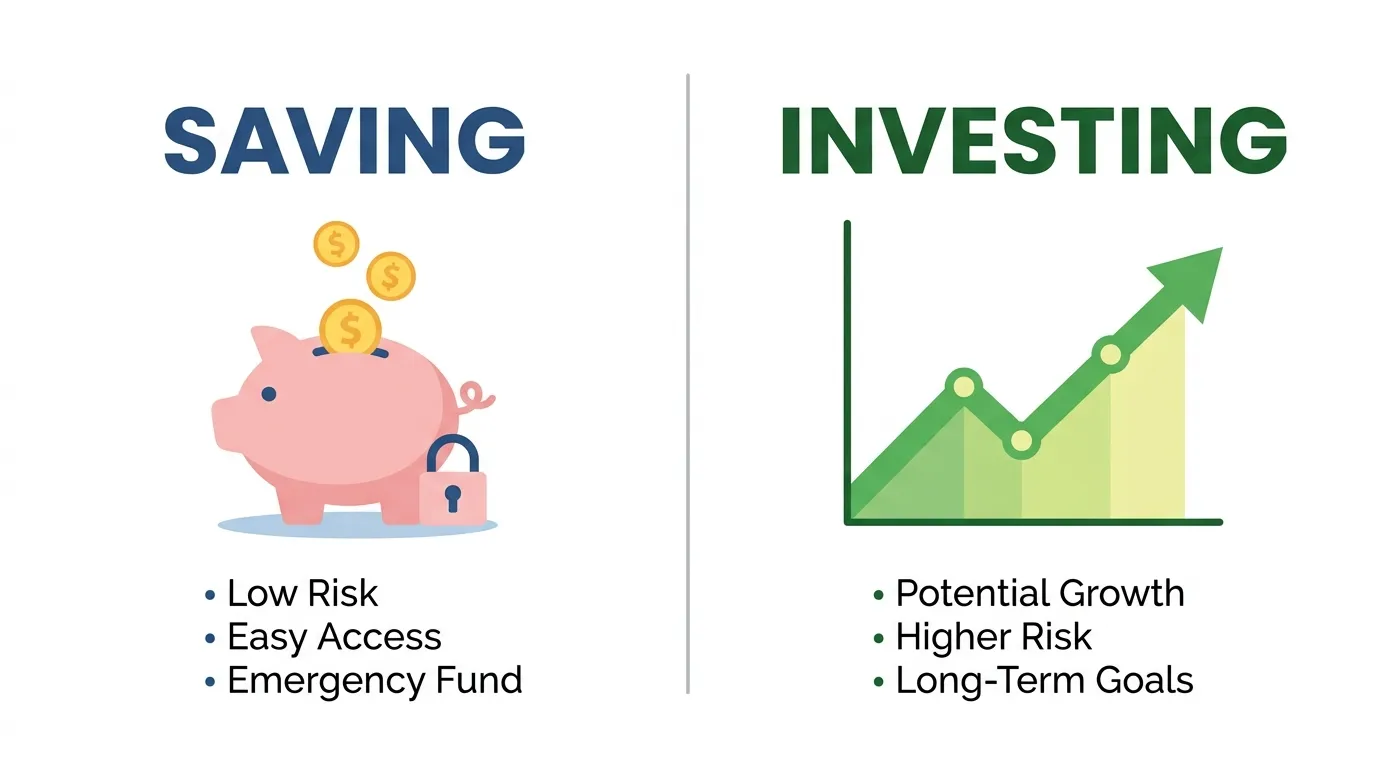
Saving means keeping money safe for short-term needs, while investing means using money to grow wealth over time with some risk.
Many people get confused when they hear the terms saving and investing, especially when planning their financial future.
The difference between saving and investing is one of the most searched financial topics on Google because users want to understand where to keep their money safe and how to grow it over time.
In simple words, saving is about keeping money safe for short-term needs, while investing is about growing money for long-term goals.
This confusion appears in everyday financial decisions like opening a bank account, using apps like PayPal, Google Pay, or investing through platforms like Robinhood or Meta financial tools.
In this guide, you will clearly learn:
✔ What saving and investing mean
✔ Key differences with real examples
✔ When to use saving vs investing
✔ Risks, returns, and benefits
✔ Real-life financial strategies
Let’s break the difference between saving and investing in the simplest and most practical way.
Difference Between Saving and Investing
Saving is keeping money in safe places like a bank for short-term needs, while investing is using money in stocks, funds, or businesses to grow wealth over time.
👉 Example:
- Saving: Keeping money in a bank account for emergencies
- Investing: Buying stocks on YouTube-recommended platforms like Google Finance tools or Meta-linked markets
Definition of Saving and Investing
Saving:
Saving means setting aside money in a safe account like a bank or digital wallet for short-term goals and emergencies.
Investing:
Investing means putting money into assets like stocks, mutual funds, or real estate to earn profit over time.
Pronunciation
- Saving
- US: /ˈseɪvɪŋ/
- UK: /ˈseɪvɪŋ/
- Investing
- US: /ɪnˈvɛstɪŋ/
- UK: /ɪnˈvɛstɪŋ/
Now let’s go deeper into how both work in real life financial systems.
Difference Between Saving and Investing: Comparison
| Feature | Saving | Investing | Similarity |
| Meaning | Keeping money safe | Growing money over time | Both involve money management |
| Risk | Very low risk | Medium to high risk | Both require planning |
| Returns | Low interest | Higher returns possible | Both grow financial value |
| Time | Short-term | Long-term | Both need discipline |
| Liquidity | Easily accessible | May take time to withdraw | Both can be converted to cash |
| Purpose | Emergency & safety | Wealth building | Both support financial goals |
| Tools | Bank, wallet apps | Stocks, mutual funds | Both use financial systems |
👉 This table clearly shows the difference between saving and investing for quick understanding.
Key Differences Explained Between Saving and Investing
1. Purpose of Money
Saving is for safety, investing is for growth.
👉 Example: Emergency fund vs stock market investment.
2. Risk Level
Saving has almost zero risk, investing carries market risk.
👉 Example: Bank deposit vs crypto investment.
3. Returns
Saving gives fixed low interest, investing gives variable returns.
👉 Example: 5% bank interest vs 15% stock returns.
4. Time Horizon
Saving = short-term goals
Investing = long-term wealth
👉 Example: Saving for a phone vs retirement fund.
5. Accessibility
Saving money is easy to withdraw anytime.
Investments may take time to liquidate.
6. Growth Potential
Investing grows faster due to compounding.
Saving grows slowly.
Deep Explanation: What is Saving in Financial Systems?
Saving is a foundation of personal finance. Banks like Chase, digital wallets like Google Pay, and apps connected to Meta financial ecosystems allow users to store money safely.
Saving is important because:
✔ It protects against emergencies
✔ It provides financial stability
✔ It reduces financial stress
Deep Explanation: What is Investing in Modern Economy?
Investing is the process of putting money into financial instruments like:
✔ Stocks (Apple, Google, Amazon)
✔ Mutual funds
✔ Real estate
Platforms like YouTube finance channels, Google Finance, and trading apps make investing more accessible.
Investing works on:
✔ Risk and reward principle
✔ Market demand
✔ Long-term growth strategy
Saving vs Investing in Real Life Scenarios
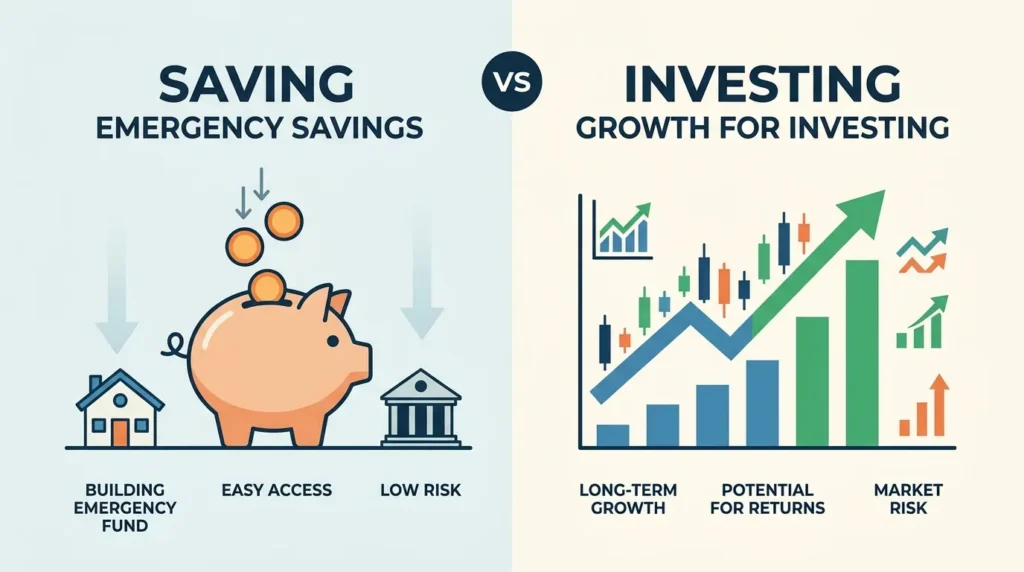
✔ Personal Use
Saving for emergencies vs investing for future goals.
✔ Business Use
Companies save cash reserves but invest in expansion.
✔ Digital Economy
Apps like PayPal, Google Pay, and Meta fintech tools use both strategies.
✔ Student Example
Students save pocket money but invest in skills or courses.
When to Use Saving vs Investing
Use Saving When:
✔ You need emergency funds
✔ Short-term goals exist
✔ You want zero risk
Use Investing When:
✔ You want long-term growth
✔ You can handle risk
✔ You want wealth building
Why People Get Confused Between Saving and Investing
Many users confuse both because:
✔ Both involve money management
✔ Banks sometimes call investments “savings plans”
✔ Social media influencers mix terms
✔ Lack of financial education
Even platforms like Instagram finance reels often oversimplify concepts.
Common Mistakes with Saving and Investing
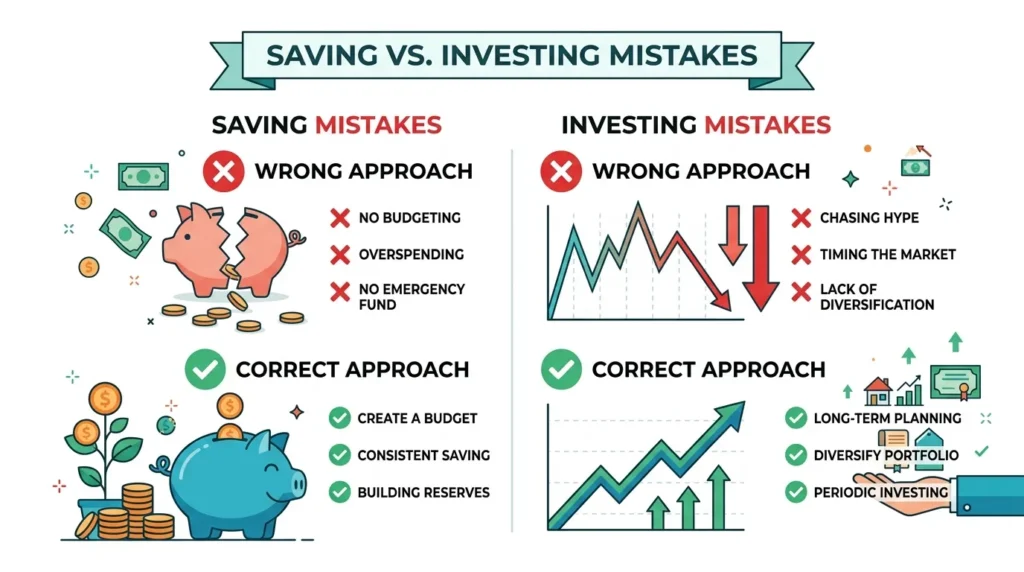
❌ Keeping all money in savings
👉 Fix: Use part for investing
❌ Investing without knowledge
👉 Fix: Learn basics first
❌ Ignoring inflation
👉 Fix: Balance saving + investing
❌ Emotional investing
👉 Fix: Use long-term strategy
How Search Engines Understand Saving and Investing
Google uses NLP and semantic analysis to understand:
✔ Financial intent
✔ Risk vs safety context
✔ User goal (learn, compare, invest)
Example:
- “best way to save money” → saving intent
- “how to invest in stocks” → investing intent
Expert Insight
From financial planning experience, the best strategy is not choosing saving OR investing, but balancing both.
Experts recommend:
✔ 50% savings for safety
✔ 50% investments for growth
In real financial advisory practice, this balance helps users avoid risk while still growing wealth.
FAQs
1. What is the main difference between saving and investing?
Saving is safety-focused, investing is growth-focused.
2. Which is better saving or investing?
Both are important depending on financial goals.
3. Is saving risk-free?
Yes, saving has very low risk.
4. Does investing guarantee profit?
No, investing has risks.
5. Can I do both saving and investing?
Yes, it is recommended.
6. What is safest option?
Saving in a bank account.
Conclusion:
The difference between saving and investing is simple but very important in financial life. Saving is about protecting money for short-term needs, while investing is about growing money for long-term wealth creation. Many beginners confuse both because they sound like similar financial activities, but in reality, they serve completely different purposes.
In real-world financial planning, both saving and investing are necessary. Saving ensures safety and emergency protection, while investing builds wealth and financial freedom over time. If you only save, your money may lose value due to inflation. If you only invest, you may face financial risk during emergencies.
That’s why experts recommend balancing both strategies. Understanding the difference between saving and investing helps you make smarter financial decisions, avoid mistakes, and build a stable future. If you are a student, professional, or business owner, mastering this concept is essential for financial success in 2026 and beyond.
Read more about!
Difference Between Frogs and Toads: Complete Guide
Difference Between Bourbon and Scotch: Complete Guide

I am Emily Johnson, a USA-based content writer who creates easy-to-read blogs on language and daily life topics. I explain complex ideas in simple English for students and beginners so they can understand easily.