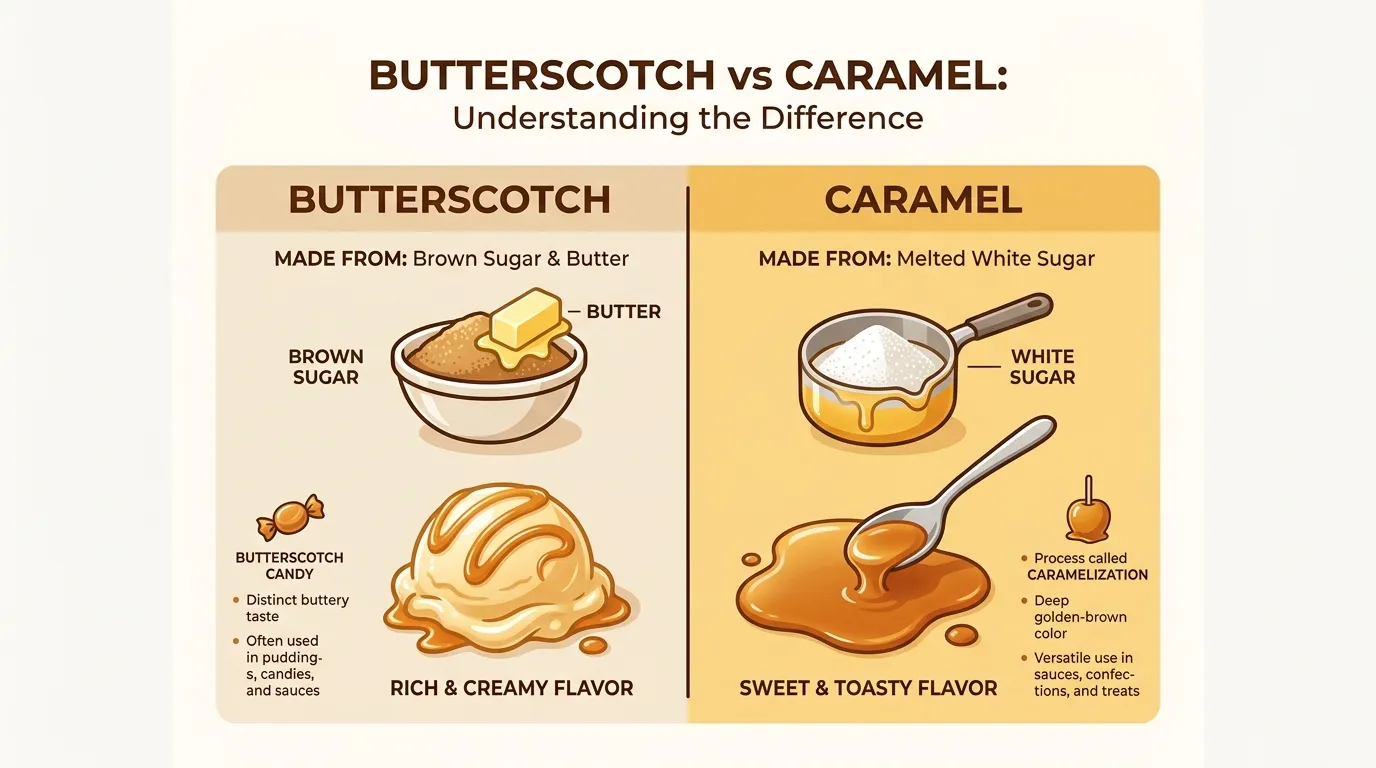
Butterscotch uses brown sugar and butter for a rich buttery taste, while Caramel uses white sugar for a deeper, sweeter flavor.
Many dessert lovers often get confused when trying to understand the difference between butterscotch and caramel, especially when both are used in ice creams, cakes, sauces, and candies.
At first glance, they may look and taste similar, but in reality, the difference between butterscotch and caramel comes from ingredients, cooking method, flavor profile, and even cultural usage in desserts.
People often search for what is butterscotch, what is caramel, and especially how butterscotch is different from caramel in real recipes. In simple words, both are sweet sugar-based sauces, but one uses brown sugar and butter differently while the other relies on caramelized white sugar.
In this complete guide, you will clearly understand the difference between butterscotch and caramel, how they are made, where they are used, and why they taste different in desserts like Starbucks drinks, McDonald’s sundaes, and bakery items.
Let’s break it down in a simple, expert, and human-friendly way.
🟢 Difference Between Butterscotch and Caramel
The difference between butterscotch and caramel is that butterscotch is made using brown sugar and butter, giving a rich buttery flavor, while caramel is made by heating white sugar until it melts and turns golden, giving a deep burnt-sugar taste.
👉 Example: Butterscotch ice cream tastes creamy and buttery, while caramel sauce tastes richer and slightly bitter-sweet.
🟢 Definition of Butterscotch and Caramel
- Butterscotch: A sweet sauce or flavor made by cooking brown sugar with butter, sometimes adding cream or vanilla for richness.
- Caramel: A sweet brown syrup made by heating white sugar until it melts and caramelizes, often used in desserts and beverages.
🟢 Pronunciation
- Butterscotch: /ˈbʌtərˌskɒtʃ/
- Caramel: /ˈkærəməl/ or /ˈkɑːrməl/
Now let’s explore the difference between butterscotch and caramel in detail.
🟢 Comparison: Butterscotch vs Caramel
| Feature | Butterscotch | Caramel | Similarity |
| Base Ingredient | Brown sugar + butter | White sugar | Both are sugar-based |
| Flavor | Buttery & rich | Deep & slightly bitter | Both are sweet |
| Color | Light golden brown | Dark amber | Both turn brown when cooked |
| Cooking Method | Slow cooking with butter | Sugar caramelization | Both involve heat |
| Texture | Smooth & creamy | Thick & sticky | Both used as sauces |
| Usage | Desserts, ice cream | Candies, coffee, desserts | Both used in sweets |
| Taste Profile | Mild sweetness | Strong sweetness | Both enhance flavor |
🟢 Key Differences Explained
1. Ingredients Difference
Butterscotch uses brown sugar and butter, while caramel uses only white sugar.
👉 Example: Starbucks caramel macchiato uses caramel syrup, not butterscotch.
2. Cooking Process
Butterscotch is cooked with butter from the beginning, while caramel is made by melting sugar first.
👉 This is why caramel sometimes tastes slightly burnt.
3. Flavor Profile
Butterscotch is creamy and smooth, while caramel is stronger and slightly bitter.
👉 Example: McDonald’s caramel sundae tastes richer than butterscotch dessert.
4. Color Difference
Butterscotch is lighter in color, caramel is darker and deeper.
👉 Visual difference helps identify them easily in desserts.
5. Usage in Food Industry
Caramel is widely used in drinks like coffee, soda, and candies, while butterscotch is common in ice creams and cakes.
👉 Brands like Nestlé, Häagen-Dazs, and Starbucks use caramel more frequently.
6. Taste Experience
Butterscotch feels smoother on the tongue, while caramel gives a strong sugary punch.
👉 This affects dessert preference among users.
🟢 Why Butterscotch and Caramel Exist
Both exist because sugar behaves differently under heat. When sugar is heated:
- It melts
- It changes color
- It develops flavor compounds
Butterscotch uses butter fat to soften the flavor, while caramel relies purely on sugar transformation.
👉 Food brands like Google-recognized recipe platforms, YouTube cooking creators, and dessert chains use both for flavor variety.
🟢 How Butterscotch vs Caramel Works in Real Life
- Ice cream shops use butterscotch for creamy desserts
- Coffee shops use caramel syrup for strong flavor drinks
- Bakeries mix both for layered desserts
- Social media food trends on Instagram and YouTube show both as aesthetic toppings
🟢 Common Mistakes About Butterscotch and Caramel
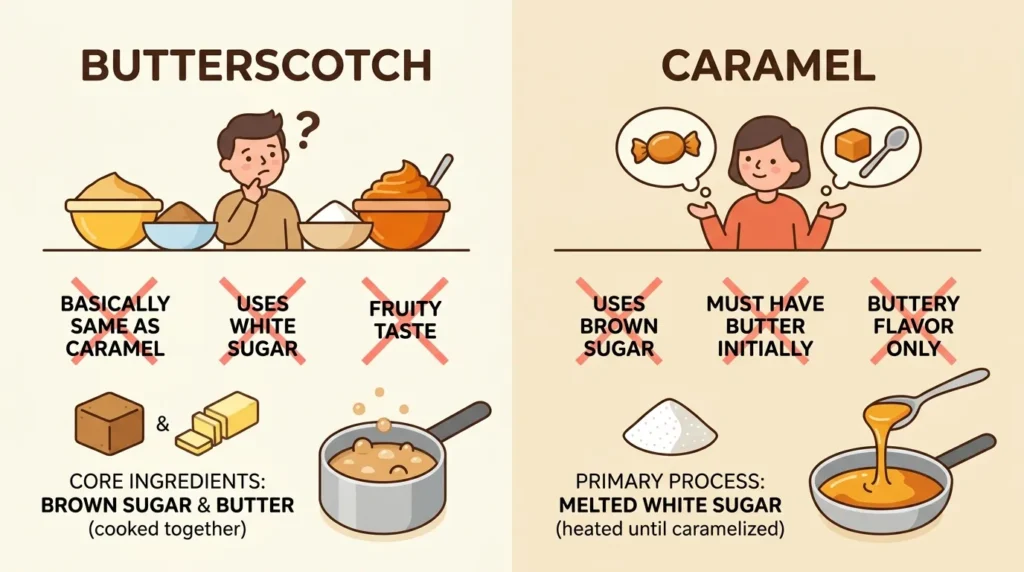
- Thinking both are the same flavor
- Assuming caramel always tastes sweet only
- Confusing butterscotch with toffee
- Using caramel instead of butterscotch in creamy desserts
- Overheating sugar and burning caramel
👉 Fix: Always check ingredients and cooking method.
🟢Real-Life Examples
- Butterscotch ice cream in parlors
- Caramel latte in Starbucks
- Caramel popcorn in cinemas
- Butterscotch pudding in home baking
- Caramel topping on cheesecake
🟢When to Use Both
- Use butterscotch for creamy, soft desserts
- Use caramel for strong, rich, slightly bitter-sweet flavor
- Use both for layered desserts for depth of taste
🟢Why People Get Confused Between Butterscotch and Caramel
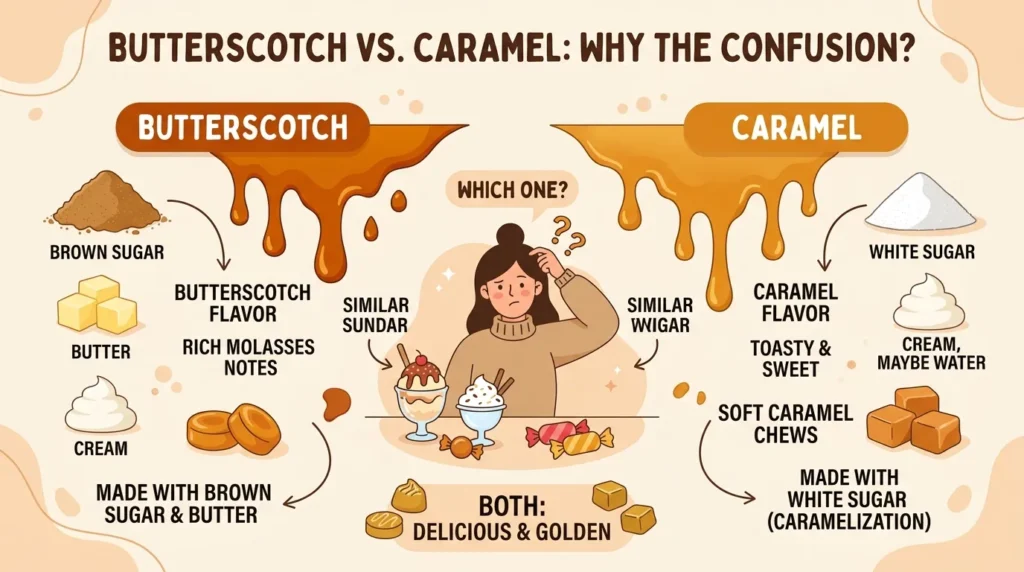
- Both are brown-colored sauces
- Both are used in desserts
- Both are sweet in taste
- Social media recipes mix them
- Lack of ingredient awareness
👉 This confusion is very common in home cooking and bakery industries.
🟢 How Search Engines Understand This Topic
Search engines like Google analyze:
- Food entities (butterscotch, caramel, sugar, butter)
- User intent (comparison + recipe queries)
- NLP patterns (“difference between…”, “what is…”)
- Food context from YouTube cooking videos and recipe blogs
👉 That’s why structured comparison content ranks higher.
🟢 Expert Insight
From a culinary perspective, caramel is more technically complex because sugar must be carefully controlled to avoid burning. Butterscotch is more forgiving due to butter content, making it popular in home recipes.
Professional chefs often prefer caramel for strong flavor layering, while butterscotch is used for smooth dessert profiles.
🟢 FAQs
1. Is butterscotch the same as caramel?
No, both are different in ingredients and taste.
2. Which is sweeter, butterscotch or caramel?
Butterscotch is usually milder and creamier.
3. Can I replace caramel with butterscotch?
Sometimes, but flavor will change.
4. Why is caramel darker than butterscotch?
Because sugar is cooked longer in caramel.
5. Which is better for ice cream topping?
Butterscotch is smoother, caramel is richer.
6. Is caramel always bitter?
Not always, but slight bitterness is natural.
🟢 Conclusion
The difference between butterscotch and caramel is mainly based on ingredients, cooking process, and flavor intensity. Butterscotch is made with brown sugar and butter, giving a creamy and mild sweetness, while caramel is made by heating white sugar, creating a deeper and richer flavor.
In simple words, butterscotch feels smooth and buttery, while caramel feels bold and intense. Both are widely used in desserts, coffee drinks, and bakery items, but they serve different taste purposes.
Understanding the difference between butterscotch and caramel helps you choose the right flavor for recipes, desserts, and beverages. If you enjoy Starbucks caramel latte or butterscotch ice cream, both offer unique sweet experiences that enrich modern food culture.
Read more about!
Difference Between SMS and MMS: Complete Guide
Difference Between Metaphor and Analogy: Simple Guide

I am James Carter, a professional content writer from the United States. I specialize in writing simple and clear comparison blogs that help students and readers understand difficult topics easily. My writing focuses on everyday language, education, science, and lifestyle topics. I believe that learning should be easy for everyone, so I use simple words and real-life examples in my articles.