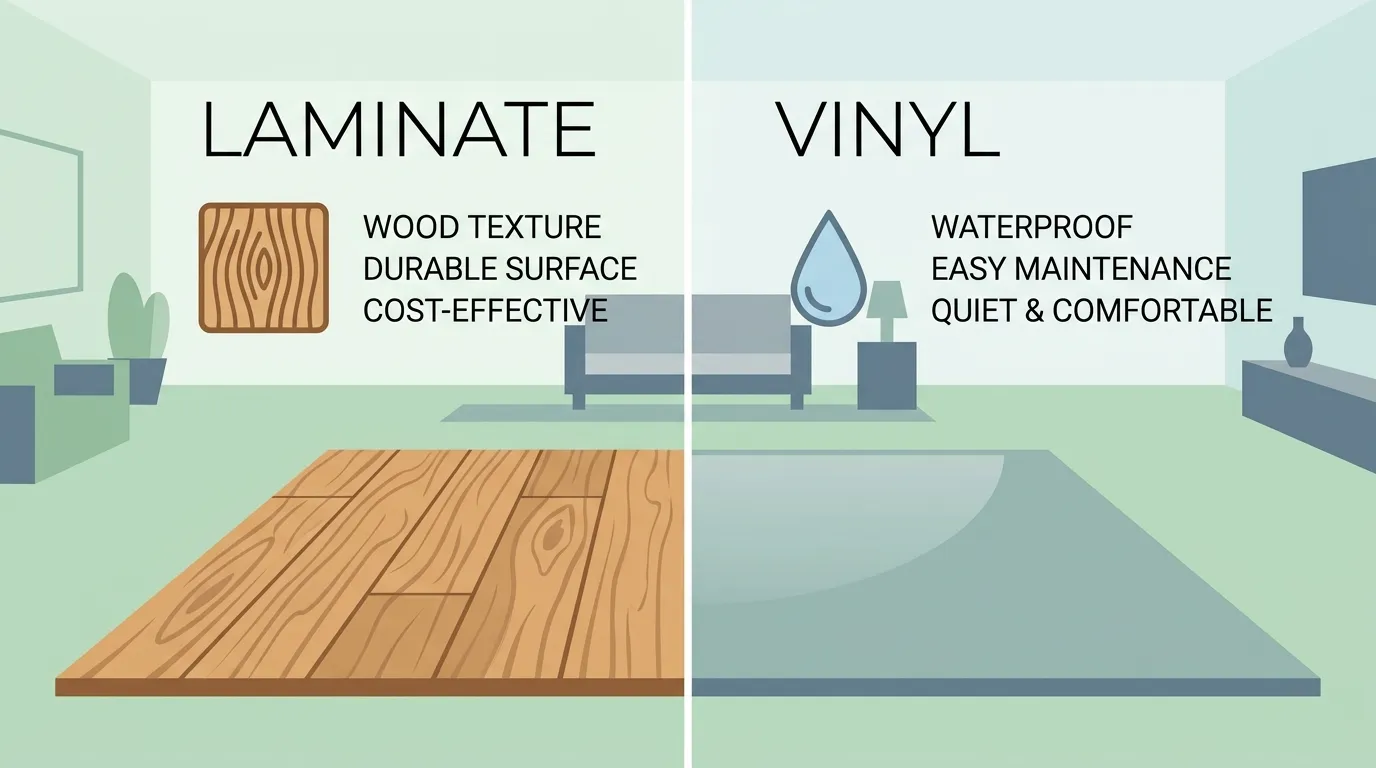
Laminate flooring is a wood-look surface made from compressed layers 🌳, while vinyl flooring is fully water-resistant and made from synthetic materials 💧.
Choosing the right flooring can feel confusing especially when you’re comparing laminate vs vinyl. Many users search on Google for the difference between laminate and vinyl because both look similar but perform very differently in real life.
In simple words, laminate flooring is made from wood-based materials with a photographic layer, while vinyl flooring is fully synthetic and water-resistant.
Understanding the difference between laminate and vinyl helps you avoid costly mistakes like installing the wrong floor in kitchens or bathrooms.
Many homeowners get confused after watching comparisons on YouTube or scrolling ideas on Instagram, where both floors look almost identical. But in real scenarios, their durability, water resistance, and comfort vary a lot.
In this complete guide, you’ll learn:
✔ What laminate and vinyl flooring really are
✔ Key differences with practical examples
✔ Which one is better for your home
✔ Cost, durability, and maintenance insights
Let’s clearly break down the difference between laminate and vinyl so you can make the right decision.
Difference Between Laminate and Vinyl
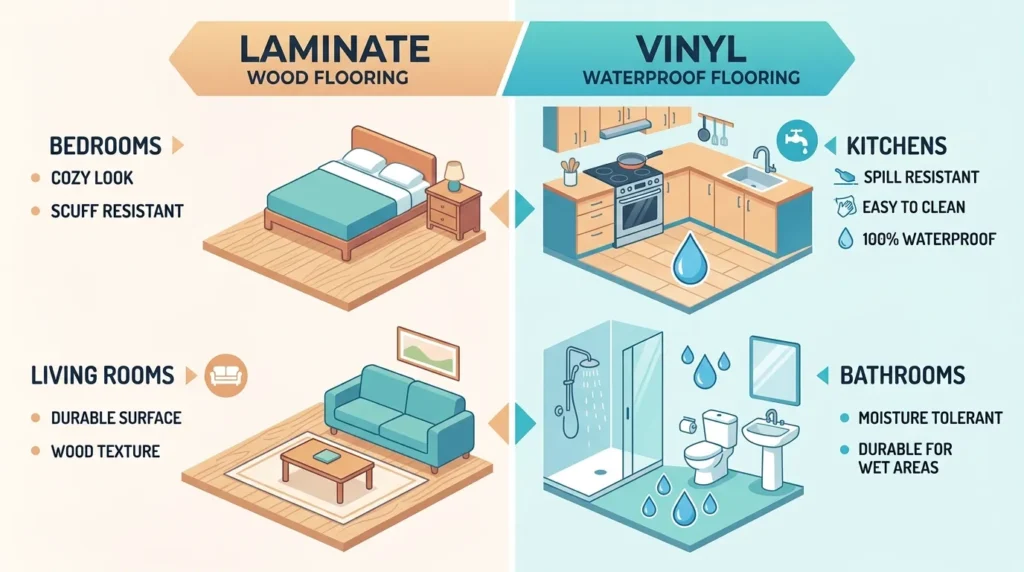
Laminate flooring is wood-based and best for dry areas, while vinyl flooring is waterproof and ideal for wet spaces.
👉 Example:
- Laminate = better for bedrooms and living rooms
- Vinyl = better for kitchens and bathrooms
Definition of Laminate and Vinyl
- Laminate: A multi-layer flooring made from compressed wood fibers with a printed surface that mimics wood or stone.
- Vinyl: A synthetic plastic flooring made from PVC that is waterproof and highly durable.
Pronunciation
- Laminate
- US: /ˈlæm.ə.neɪt/
- UK: /ˈlæm.ɪ.nət/
- Vinyl
- US: /ˈvaɪ.nəl/
- UK: /ˈvaɪ.nəl/
Now let’s move into the real comparison where things become clear.
Difference Between Laminate and Vinyl: Comparison
| Feature | Laminate Flooring | Vinyl Flooring | Similarity |
| Material | Wood-based core | Synthetic PVC | Both mimic wood look |
| Water Resistance | Low | High (waterproof) | Both resist minor spills |
| Durability | Strong but water-sensitive | Highly durable | Both long-lasting |
| Comfort | Warmer feel | Softer underfoot | Both comfortable |
| Installation | Click-lock system | Click or glue-down | Both DIY-friendly |
| Cost | Medium | Low to medium | Both affordable |
| Best Use | Dry areas | Wet areas | Both used in homes |
👉 This table clearly shows the difference between laminate and vinyl for quick understanding.
Key Differences Explained Between Laminate and Vinyl
1. Water Resistance
Laminate can swell with water. Vinyl is waterproof.
👉 Example: Spill water in kitchen → vinyl survives, laminate may damage.
2. Material Composition
Laminate = wood fiber core
Vinyl = plastic-based material
👉 This is why vinyl handles moisture better.
3. Durability
Vinyl handles scratches, dents, and moisture better than laminate.
4. Comfort Underfoot
Laminate feels like real wood. Vinyl feels softer and slightly cushioned.
5. Installation
Both are easy, but vinyl is more flexible and forgiving.
6. Cost Factor
Vinyl is usually cheaper, especially for large spaces.
What is Laminate Flooring and How Does It Work?
Laminate flooring is designed to look like real wood but at a lower cost.
It has layers:
✔ Wear layer (protection)
✔ Design layer (printed wood look)
✔ Core layer (wood fiber)
👉 In real scenarios, laminate works best in:
- Living rooms
- Bedrooms
- Offices
But avoid water-heavy areas.
What is Vinyl Flooring and Why is It Popular?
Vinyl flooring is made from plastic materials like PVC.
Types include:
✔ Luxury Vinyl Plank (LVP)
✔ Luxury Vinyl Tile (LVT)
👉 In practical use:
- 100% waterproof
- Perfect for kitchens and bathrooms
- Easy to clean
Difference Between Laminate and Vinyl
| Feature | Laminate | Vinyl | Similarity |
| Core | Wood fiber | Plastic PVC | Both layered flooring |
| Water Handling | Weak | Strong | Both resist light moisture |
| Flexibility | Rigid | Flexible | Both install easily |
| Maintenance | Moderate | Easy | Both low maintenance |
| Lifespan | 10–20 years | 10–25 years | Both durable |
👉 This table clearly shows the difference and similarity between laminate and vinyl for quick understanding.
Common Mistakes with Laminate and Vinyl
❌ Using laminate in bathrooms
👉 Fix: Use vinyl instead
❌ Thinking both are waterproof
👉 Fix: Only vinyl is waterproof
❌ Choosing based on look only
👉 Fix: Consider function first
❌ Ignoring subfloor conditions
👉 Fix: Prepare base properly
Real Life Examples with Laminate and Vinyl
✔ Home Use
Laminate in bedroom, vinyl in kitchen
✔ Rental Properties
Vinyl is preferred for durability
✔ Offices
Laminate used for aesthetic appeal
✔ Commercial Spaces
Vinyl used for heavy traffic
When to Use Each
Use Laminate When:
✔ You want a wood-like feel
✔ Area is dry
✔ Budget is moderate
Use Vinyl When:
✔ Area has moisture
✔ You want durability
✔ Easy cleaning is needed
Why People Get Confused Between Laminate and Vinyl
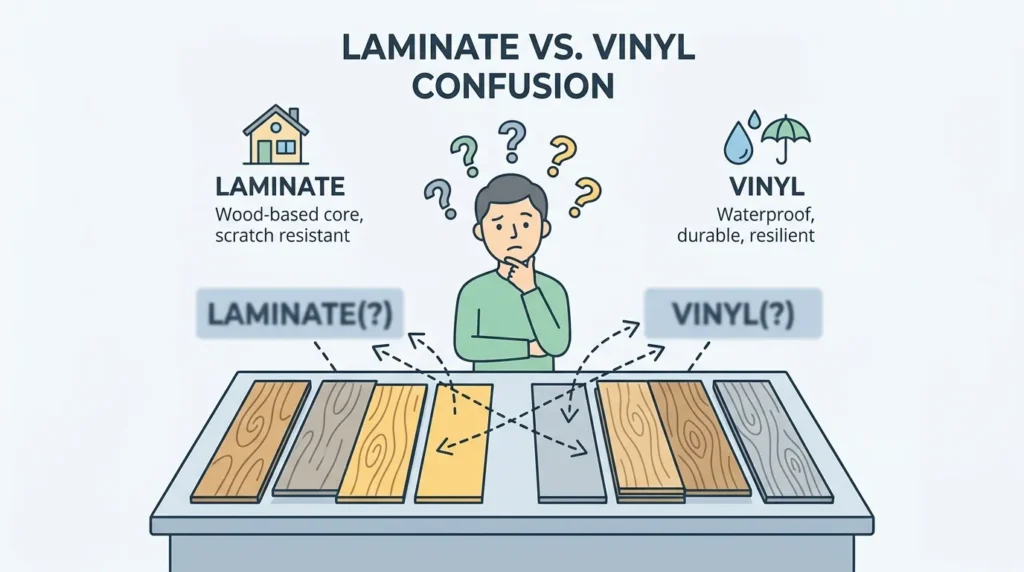
Many users get confused because:
✔ Both look like wood
✔ Marketing makes them seem similar
✔ Social media comparisons are visual only
Even platforms like Meta showcase design more than performance.
How Search Engines Understand Laminate vs Vinyl
Search engines like Google analyze:
✔ User intent (buying vs learning)
✔ Keywords like “best flooring”
✔ Engagement signals
Example:
- “laminate vs vinyl durability” → comparison intent
- “best flooring for kitchen” → decision intent
Expert Insight
From a professional viewpoint:
👉 Laminate = aesthetics + affordability
👉 Vinyl = durability + practicality
In real scenarios:
- Families with kids prefer vinyl
- Style-focused homeowners choose laminate
Experts recommend:
✔ Use vinyl for wet zones
✔ Use laminate for comfort zones
FAQs
1. Which is better, laminate or vinyl?
Vinyl is better for durability; laminate for appearance.
2. Is laminate waterproof?
No, it is water-resistant only.
3. Can vinyl look like wood?
Yes, very realistically.
4. Which lasts longer?
Vinyl usually lasts longer.
5. Is vinyl cheaper than laminate?
Often yes, especially basic types.
6. Can I install both myself?
Yes, both are DIY-friendly.
Conclusion
The difference between laminate and vinyl comes down to material, durability, and water resistance. Laminate flooring offers a realistic wood look and feels warm underfoot, making it ideal for dry areas like bedrooms and living spaces. On the other hand, vinyl flooring is fully waterproof, highly durable, and easy to maintain, making it perfect for kitchens, bathrooms, and high-traffic areas.
Many homeowners choose based on appearance alone, but in real-world use, performance matters more than looks. Understanding the difference between laminate and vinyl ensures you pick flooring that not only looks great but also lasts longer in your specific environment.
If you want a balance of style and practicality, consider your room conditions first. In the end, the right choice depends on your lifestyle, budget, and usage needs but now you have all the knowledge to decide confidently.
Read more about!
Difference Between Whey and Isolate: Complete Guide
Difference Between Octopus and Squid: Simple Guide

I am Emily Johnson, a USA-based content writer who creates easy-to-read blogs on language and daily life topics. I explain complex ideas in simple English for students and beginners so they can understand easily.