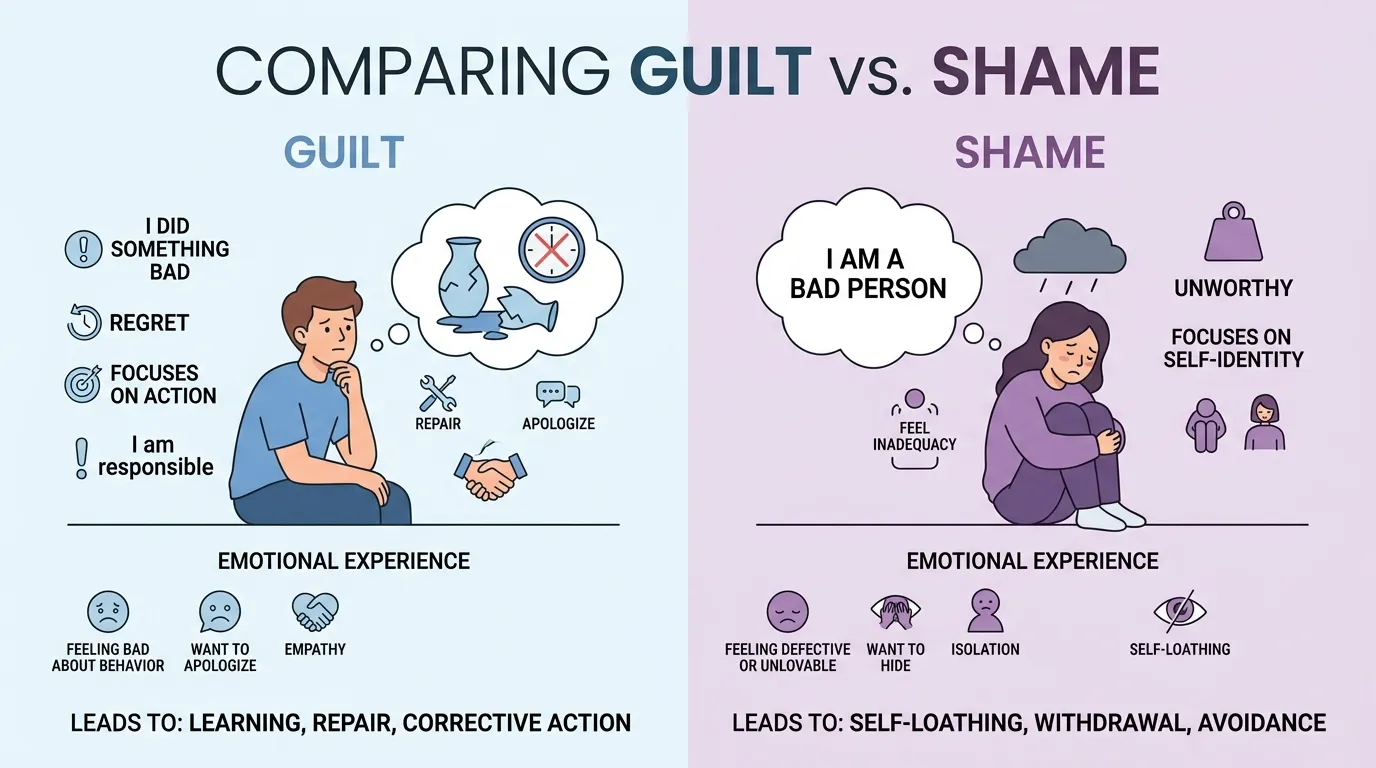
Difference Between Guilt and Shame: Guilt is the feeling that you did something wrong, while shame is the feeling that there is something wrong with you as a person.
Have you ever replayed a mistake in your mind and thought, “I did something bad,” while another time you felt, “I am a bad person”? That small difference reveals the core distinction between guilt and shame.
The difference between guilt and shame is one of the most misunderstood topics in psychology and emotional health. In simple words, guilt focuses on what you did, while shame focuses on who you believe you are.
Many users search for the difference between guilt and shame because both emotions can feel similar. Yet they affect behavior, self-esteem, relationships, and mental well-being in very different ways.
Understanding the difference between guilt and shame can help you develop emotional intelligence, improve communication, and build healthier coping strategies. In this guide, you’ll learn definitions, psychological insights, real-world examples, similarities, differences, and expert perspectives that make this topic crystal clear.
Difference Between Guilt and Shame
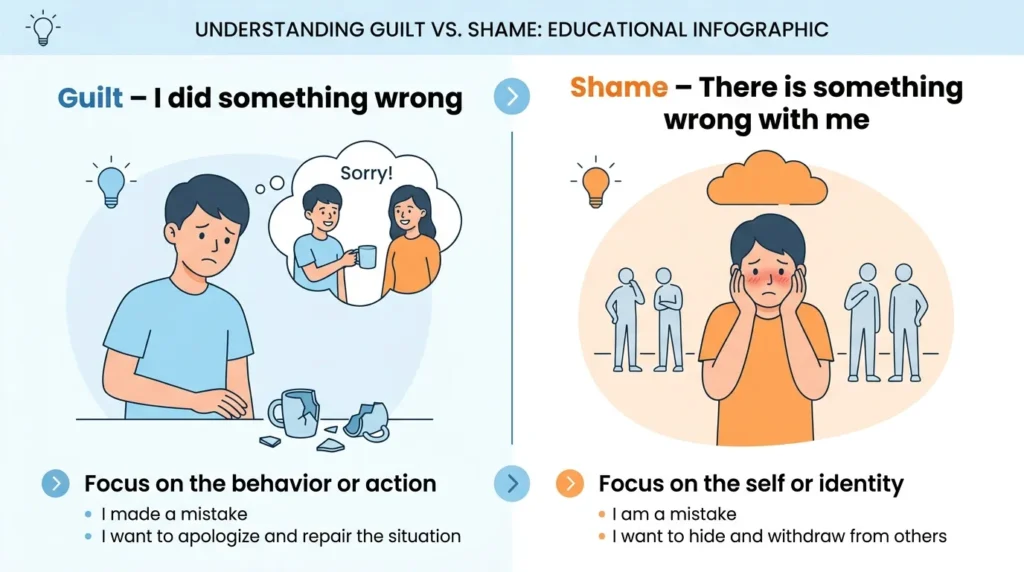
The difference between guilt and shame is that guilt says, “I made a mistake,” while shame says, “I am the mistake.”
For example, if you forget a friend’s birthday, guilt may motivate you to apologize. Shame may make you believe you are a terrible friend altogether.
Definition of Guilt and Shame
What Is Guilt?
Guilt: An emotional response that occurs when a person believes they have done something wrong or violated their own values.
What Is Shame?
Shame: A painful emotion that makes a person feel flawed, inadequate, or unworthy as a human being.
Quick Example:
“I lied to someone” = guilt.
“I am a dishonest person and don’t deserve respect” = shame.
Pronunciation
| Word | US Pronunciation | UK Pronunciation |
| Guilt | gilt | gilt |
| Shame | shaym | shaym |
Now that the meanings are clear, let’s explore why psychologists treat these emotions differently and why understanding them matters in everyday life.
Difference Between Guilt and Shame Comparison
| Feature | Guilt | Shame |
| Focus | Behavior | Identity |
| Internal Message | “I did something bad” | “I am bad” |
| Emotional Impact | Motivates repair | Creates withdrawal |
| Self-Esteem Effect | Usually limited | Often damages self-worth |
| Duration | Often temporary | Can be long-lasting |
| Growth Potential | Encourages learning | May block growth |
| Relationship Impact | Promotes apology | Promotes avoidance |
| Psychological Outcome | Responsibility | Self-condemnation |
Key Differences Explained Between Guilt and Shame
Guilt Focuses on Actions
Guilt targets behavior rather than identity.
Example: Missing an important deadline may make you feel guilty because of the mistake.
Shame Focuses on Identity
Shame attacks the self.
Example: Instead of thinking you missed a deadline, you think you are incompetent.
Guilt Encourages Repair
People experiencing guilt often want to correct the situation.
Example: Apologizing after hurting someone’s feelings.
Shame Encourages Withdrawal
Shame often causes avoidance.
Example: Avoiding a colleague after making an error.
Guilt Supports Personal Growth
Healthy guilt can become a learning tool.
Example: Improving communication after a misunderstanding.
Shame Can Harm Self-Worth
Long-term shame may contribute to anxiety, depression, and social isolation.
Guilt Is Usually Specific
It relates to a particular action or event.
Shame Can Become Global
It spreads across a person’s identity and self-image.
What Is Guilt and Why Do Humans Experience It?
How Guilt Works in the Brain
Guilt functions as a social and moral signal. It helps individuals recognize behavior that conflicts with personal values or social expectations.
Why Guilt Can Be Healthy
Healthy guilt serves an important purpose. It promotes accountability, empathy, and positive behavioral changes.
When Guilt Becomes Excessive
Not all guilt is helpful. Excessive guilt can occur when individuals blame themselves for situations beyond their control.
Mini Summary: Healthy guilt teaches. Excessive guilt traps.
What Is Shame and How Does It Affect Self-Identity?
How Shame Develops
Shame often develops through criticism, rejection, humiliation, or repeated negative experiences.
The Connection Between Shame and Self-Esteem
Unlike guilt, shame directly affects self-worth. People may begin to believe negative judgments about themselves.
Can Shame Become Toxic?
Yes. Toxic shame occurs when negative beliefs become deeply rooted and persistent.
In practical use, therapists frequently address toxic shame because it can influence relationships, confidence, and emotional health.
Difference Between Guilt and Shame in Psychology
What Modern Psychology Says
Psychologists generally view guilt as behavior-focused and shame as self-focused.
How Therapists Distinguish Guilt and Shame
Therapists often ask clients if they feel bad about an action or about themselves as a person.
Why Mental Health Experts Separate the Two
The distinction matters because treatment approaches differ. Shame often requires deeper work on self-compassion and self-worth.
How Do Guilt and Shame Affect Relationships?
Impact on Family Relationships
Guilt may encourage family members to repair conflicts.
Shame may cause emotional distance.
Impact on Friendships
People experiencing guilt often seek reconciliation. Those experiencing shame may withdraw entirely.
Impact on Workplace Communication
Employees who feel guilt may correct mistakes. Employees overwhelmed by shame may avoid feedback.
Impact on Romantic Relationships
Healthy accountability strengthens relationships. Persistent shame can damage intimacy and trust.
Difference Between Guilt and Shame in Personal Growth
Which Emotion Promotes Positive Change?
Guilt generally promotes constructive change because it focuses on behavior.
Which Emotion Creates Emotional Barriers?
Shame often creates barriers because it attacks identity.
How Self-Compassion Changes the Outcome
Self-compassion allows individuals to learn from mistakes without defining themselves by them.
Can Guilt Be Healthy While Shame Be Harmful?
Healthy Guilt Examples
- Apologizing after an argument.
- Returning something borrowed late.
- Correcting a professional mistake.
Harmful Shame Examples
- Feeling worthless after a small failure.
- Believing mistakes define your entire identity.
- Avoiding opportunities due to fear of judgment.
When Professional Support May Help
If shame becomes chronic or overwhelming, speaking with a mental health professional may be beneficial.
Difference and Similarity
| Feature | Guilt | Shame | Similarity |
| Meaning | Concern about actions | Concern about self | Both are self-conscious emotions |
| Trigger | Mistakes or wrongdoing | Perceived personal flaws | Often arise after negative events |
| Focus | Behavior | Identity | Both involve self-evaluation |
| Outcome | Repair and growth | Withdrawal and avoidance | Both influence behavior |
| Emotional Intensity | Moderate to strong | Often deeper | Both can be distressing |
| Social Function | Encourages accountability | Signals social threat | Both affect relationships |
| Mental Health Impact | Sometimes positive | Often negative if prolonged | Both influence well-being |
| Learning Potential | High | Lower without support | Both can teach valuable lessons |
This table clearly shows the difference and similarity between guilt and shame for quick understanding.
Common Mistakes with Guilt and Shame
Mistake #1: Treating Them as the Same Emotion
Correction: Guilt relates to actions; shame relates to identity.
Mistake #2: Thinking Shame Motivates Improvement
Correction: Shame often reduces motivation and confidence.
Mistake #3: Believing Guilt Is Always Negative
Correction: Healthy guilt can encourage positive change.
Mistake #4: Confusing Embarrassment with Shame
Correction: Embarrassment is usually temporary and less intense.
Mistake #5: Ignoring Long-Term Shame
Correction: Persistent shame deserves attention and support.
Real Life Examples with Guilt and Shame
Personal Life Example
You forget a family event and feel guilty for missing it.
Workplace Example
A manager makes a reporting error and corrects it after feeling guilty.
Parenting Example
A parent loses patience and later apologizes to their child.
Social Media Example
Someone compares themselves to idealized content on Instagram and develops feelings of shame about their appearance.
Business Leadership Example
A leader accepts responsibility for a failed project and works to improve future processes.
Mental Health Example
A person recovering from addiction may experience guilt about past actions but struggle with shame regarding self-identity.
When to Use Each Understanding in Real Life
Understanding guilt is useful when evaluating behavior and making improvements.
Understanding shame is important when addressing self-esteem, identity, and emotional healing.
In real scenarios, recognizing if you are feeling guilt or shame can dramatically change how you respond to mistakes.
Why People Get Confused Between Guilt and Shame
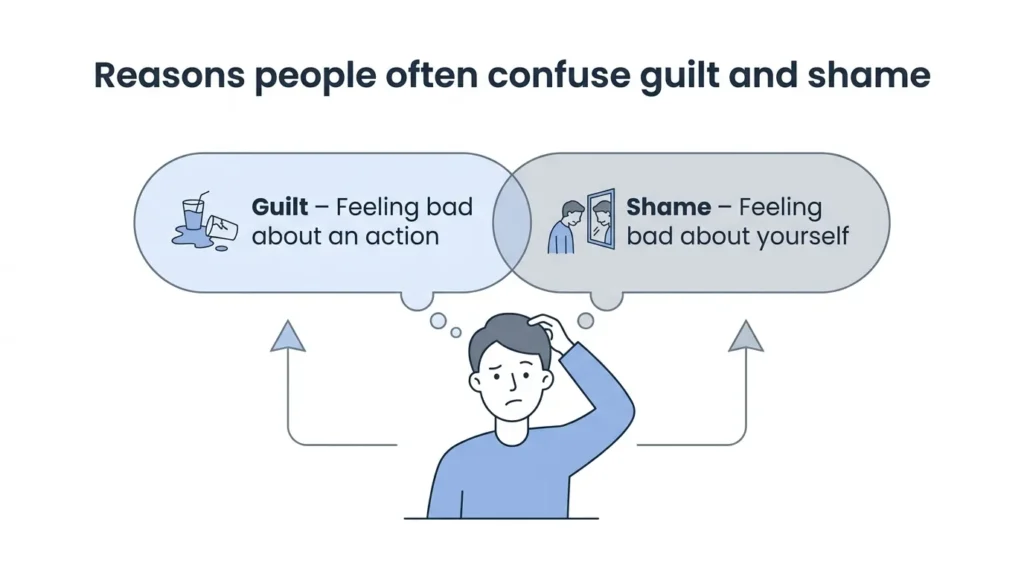
Similar Emotional Feelings
Both emotions feel uncomfortable and often occur together.
Everyday Language
People frequently use the words interchangeably.
Media Influence
Movies, books, and online discussions often blur the distinction.
Social Expectations
Cultural norms sometimes encourage shame-based thinking.
Psychological Overlap
The emotions can appear simultaneously after the same event.
How Search Engines Understand Difference Between Guilt and Shame and User Intent
Why Google Associates Guilt and Shame Together
Google recognizes that users often search these terms together because they are closely related emotional concepts.
How User Intent Shapes Search Results
Search engines prioritize content that clearly explains definitions, psychology, comparisons, and practical examples.
The Role of Instagram, Meta, and YouTube
Platforms like Meta and YouTube frequently feature mental health discussions, increasing public interest in emotional awareness topics.
Why Search Engines Prioritize Expert Content
Mental health content falls under trust-sensitive information. High-quality explanations tend to perform better because users seek accurate guidance.
Expert Insight
From a psychological perspective, guilt and shame serve different purposes. In practical use, guilt can be constructive because it encourages responsibility and repair. Shame, however, becomes problematic when it convinces people that their mistakes define their worth.
One insight many articles miss is that the healthiest emotional response is not the absence of guilt. Instead, it is learning from guilt without allowing it to become shame. That distinction often determines if an experience leads to growth or emotional suffering.
FAQs
What is the main difference between guilt and shame?
Guilt focuses on behavior, while shame focuses on identity.
Is guilt healthier than shame?
In many cases, healthy guilt is more constructive because it encourages positive action.
Can shame cause anxiety?
Yes. Chronic shame is associated with anxiety and low self-esteem.
Why do therapists separate guilt and shame?
Because they affect behavior and self-worth differently.
Is guilt always bad?
No. Healthy guilt can promote accountability and personal growth.
What is toxic shame?
Toxic shame is a deep belief that a person is fundamentally flawed or unworthy.
Can guilt and shame happen together?
Yes. Many people experience both emotions after a significant mistake.
How can someone reduce shame?
Self-compassion, supportive relationships, and professional guidance can help.
Conclusion
Understanding the difference between guilt and shame is essential for emotional well-being, personal growth, and healthy relationships. Although these emotions often appear together, they are not the same. Guilt focuses on actions and encourages accountability, while shame focuses on identity and can damage self-worth.
Many people spend years believing they are experiencing guilt when they are actually carrying shame. That misunderstanding can affect confidence, decision-making, and mental health. The key insight is simple: mistakes are things we do, not who we are.
In practical use, healthy guilt can guide positive change, stronger relationships, and better choices. Shame, when left unchecked, can create unnecessary emotional suffering. By recognizing the difference between guilt and shame, you can respond to mistakes more effectively, develop greater self-awareness, and build a healthier relationship with yourself and others.
Read more about!
Difference Between Zyrtec and Claritin: Complete Guide
Difference Between XXL and 2X: Size Guide

I am James Carter, a professional content writer from the United States. I specialize in writing simple and clear comparison blogs that help students and readers understand difficult topics easily. My writing focuses on everyday language, education, science, and lifestyle topics. I believe that learning should be easy for everyone, so I use simple words and real-life examples in my articles.