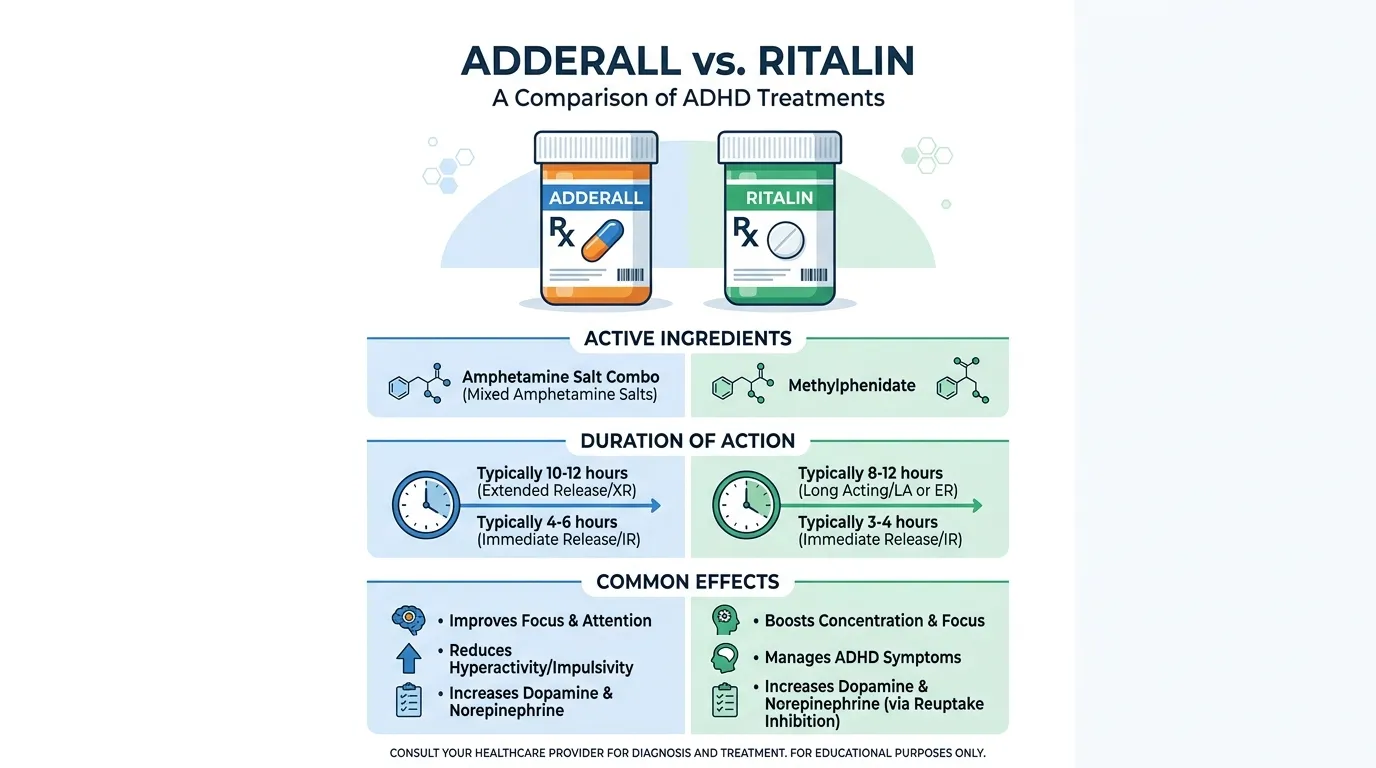
Adderall contains amphetamine salts and typically lasts longer, while Ritalin contains methylphenidate and often works faster but for a shorter duration.
Many people searching for the difference between Adderall and Ritalin are trying to understand which medication works better for ADHD, how they differ, and why doctors prescribe one over the other. Although both medicines are stimulants used to treat Attention-Deficit/Hyperactivity Disorder (ADHD), they are not the same.
The difference between Adderall and Ritalin mainly comes down to their active ingredients, how quickly they work, how long their effects last, and how individuals respond to them. Some patients find Adderall more effective, while others experience better results with Ritalin.
In this guide, you’ll learn the key differences, similarities, uses, side effects, pronunciation, real-life examples, and expert insights about Adderall and Ritalin.
If you’re a student, parent, healthcare professional, or simply researching ADHD treatment options, this article provides a complete and easy-to-understand explanation.
Difference Between Adderall and Ritalin
The main difference between Adderall and Ritalin is their active ingredients. Adderall contains amphetamine salts, while Ritalin contains methylphenidate.
For example, one ADHD patient may focus better with Adderall, while another experiences fewer side effects with Ritalin. Both medications improve attention and reduce impulsive behavior, but they affect the brain differently.
Definition of Difference Between Adderall and Ritalin
- Adderall: A prescription stimulant medication containing amphetamine and dextroamphetamine that helps improve focus, attention, and impulse control in people with ADHD.
- Ritalin: A prescription stimulant medication containing methylphenidate that increases attention span and reduces hyperactivity in individuals with ADHD.
Example
A doctor may prescribe Adderall to one patient and Ritalin to another based on how their body responds to each medication.
Pronunciation
| Medication | US Pronunciation | UK Pronunciation |
| Adderall | uh-DAIR-all | uh-DAIR-all |
| Ritalin | RIT-uh-lin | RIT-uh-lin |
Now that you know how to pronounce both medications correctly, let’s explore the major differences that often cause confusion among patients and caregivers.
Difference Between Adderall and Ritalin Comparison
| Feature | Adderall | Ritalin |
| Active Ingredient | Amphetamine salts | Methylphenidate |
| Drug Class | Central nervous system stimulant | Central nervous system stimulant |
| Speed of Action | Usually 30–60 minutes | Often 20–60 minutes |
| Duration | Typically longer-lasting | Often shorter-lasting |
| ADHD Treatment | Commonly prescribed | Commonly prescribed |
| Availability | Immediate and extended-release versions | Immediate and extended-release versions |
| Side Effects | May cause appetite loss, insomnia | Similar stimulant-related effects |
| Patient Response | Varies by individual | Varies by individual |
Key Differences Explained Between Adderall and Ritalin
1. Different Active Ingredients
The biggest difference is their chemical composition.
- Adderall contains amphetamine salts.
- Ritalin contains methylphenidate.
Although both stimulate the brain, they do so through different mechanisms.
Real-life example: Two students with ADHD may receive different prescriptions because one responds better to amphetamines while the other responds better to methylphenidate.
2. Duration of Effect
Many users report that Adderall lasts longer than Ritalin.
Example: A college student attending classes all day may prefer a medication with longer coverage.
3. Brain Chemistry Interaction
Both increase dopamine and norepinephrine levels, but they affect neurotransmitter systems differently.
This difference explains why one medication may work well for one person but not another.
4. Prescribing Preferences
Healthcare providers often choose medications based on medical history, symptom severity, age, and previous treatment responses.
5. Potential Side Effects
Both medicines share common stimulant-related side effects:
- Reduced appetite
- Dry mouth
- Increased heart rate
- Trouble sleeping
- Anxiety
However, side effect intensity varies between individuals.
6. Abuse and Misuse Potential
Because both are stimulant medications, they have potential for misuse if not taken as prescribed.
Doctors closely monitor dosage and treatment progress.
7. Individual Effectiveness
One of the most important insights is that there is no universally “better” medication.
In practical use, effectiveness depends heavily on individual brain chemistry.
What Is Adderall and How Does It Work?
Adderall is a stimulant medication commonly prescribed for ADHD and sometimes narcolepsy.
It works by increasing dopamine and norepinephrine activity in the brain. These chemicals help regulate:
- Attention
- Focus
- Motivation
- Executive function
Many people experience improved concentration and reduced impulsive behavior when taking Adderall under medical supervision.
What Is Ritalin and How Does It Work?
Ritalin also treats ADHD by increasing dopamine activity in brain regions involved in attention and self-control.
The medication helps users:
- Stay focused
- Complete tasks
- Reduce hyperactivity
- Improve classroom or workplace performance
Most beginners researching ADHD medications discover Ritalin as one of the oldest and most widely prescribed treatment options.
Why Does the Difference Between Adderall and Ritalin Matter?
The difference matters because treatment success often depends on finding the medication that matches a person’s unique neurological profile.
In real scenarios:
- Some patients experience better focus with Adderall.
- Others experience fewer side effects with Ritalin.
- Some may switch medications before finding the best fit.
This is why doctors often adjust treatment plans over time.
Which Medication Works Faster?
Ritalin is often reported to begin working slightly faster in some patients.
However, onset time varies based on:
- Formulation
- Dosage
- Metabolism
- Food intake
The practical difference is usually less important than overall effectiveness and tolerability.
Difference Between Adderall and Ritalin for Adults
Adults with ADHD often compare these medications based on:
- Work productivity
- Concentration
- Side effects
- Daily schedule
Professionals working long hours may prefer longer symptom control, while others prioritize flexibility and side effect management.
Difference Between Adderall and Ritalin for Children
Pediatric ADHD treatment requires careful monitoring.
Doctors consider:
- Growth patterns
- School performance
- Sleep quality
- Appetite changes
Parents should never switch medications without professional medical guidance.
Difference and Similarity
| Feature | Adderall | Ritalin | Similarity |
| Meaning | Amphetamine-based stimulant | Methylphenidate-based stimulant | Both treat ADHD |
| Main Use | ADHD and narcolepsy | ADHD and narcolepsy | Similar therapeutic goals |
| Drug Type | Prescription stimulant | Prescription stimulant | Same drug category |
| Brain Effect | Increases dopamine and norepinephrine | Increases dopamine and norepinephrine | Similar neurotransmitter targets |
| Duration | Often longer | Often shorter | Depends on formulation |
| Side Effects | Appetite loss, insomnia | Appetite loss, insomnia | Many shared effects |
| Prescription Status | Controlled medication | Controlled medication | Medical supervision required |
| Effectiveness | Varies by person | Varies by person | Individual response matters |
This table clearly shows the difference and similarity between Adderall and Ritalin for quick understanding.
Common Mistakes with Adderall and Ritalin
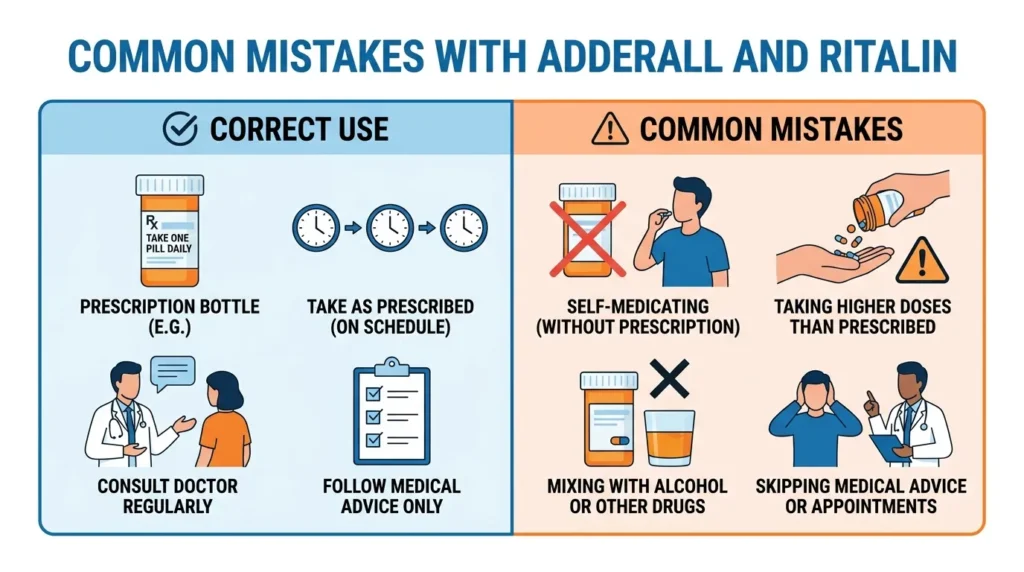
Mistake 1: Assuming They Are Identical
Although both treat ADHD, they contain different active ingredients.
Fix:
Understand their unique chemical compositions.
Mistake 2: Believing One Is Always Better
There is no universal winner.
Fix:
Treatment should be individualized.
Mistake 3: Ignoring Side Effects
Some users focus only on effectiveness.
Fix:
Monitor both benefits and side effects.
Mistake 4: Comparing Experiences Online
Advice found on platforms like Google, Meta, or social media discussions may not reflect individual medical needs.
Fix:
Follow professional medical guidance.
Mistake 5: Self-Medicating
Using prescription stimulants without supervision is unsafe.
Fix:
Only use medications prescribed by qualified healthcare providers.
Real Life Examples with Adderall and Ritalin
Example 1: University Student
A student struggling with focus may find improved concentration after starting an ADHD treatment plan.
Example 2: Office Professional
An adult employee may use prescribed medication to improve productivity and task completion.
Example 3: Elementary School Child
A child with ADHD may demonstrate improved classroom behavior and attention.
Example 4: Remote Worker
Better focus during virtual meetings and project management tasks.
Example 5: Healthcare Evaluation
A physician may switch medications if side effects outweigh benefits.
When to Use Each
Situations Where Adderall May Be Considered
- Longer symptom coverage is needed.
- Previous response has been positive.
- Physician recommends amphetamine-based treatment.
Cases in Which Ritalin May Be Considered
- Methylphenidate is preferred.
- Side effect profile is better tolerated.
- Physician determines it is the better option.
Medical decisions should always be made with professional guidance.
Why People Get Confused Between Adderall and Ritalin
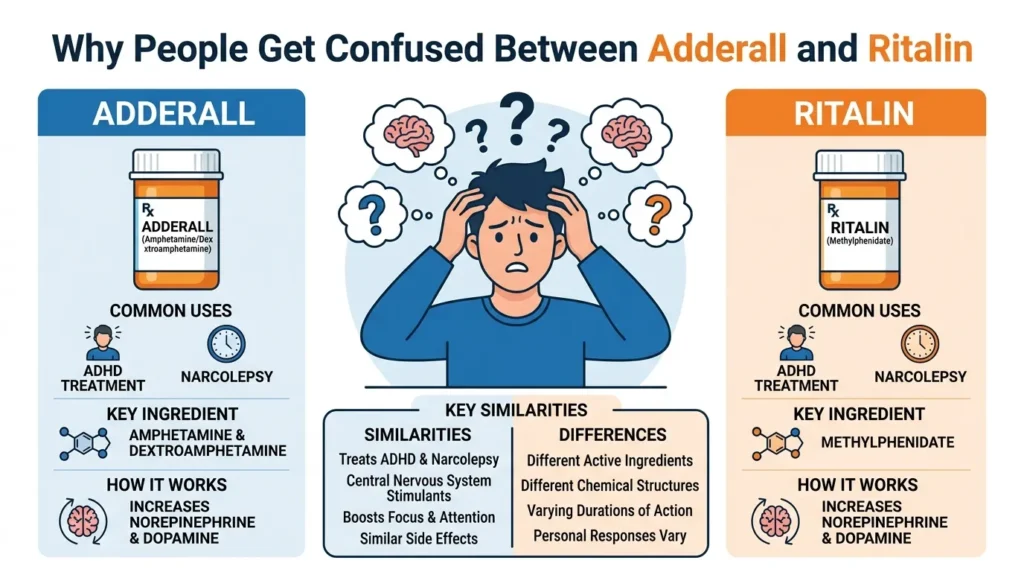
Many users get confused because:
- Both treat ADHD.
- Both are stimulant medications.
- Both improve focus and attention.
- Both have similar side effects.
- Media discussions often group them together.
In simple words, they achieve similar goals but use different active ingredients.
How Search Engines Understand Difference Between Adderall and Ritalin and User Intent
Search engines such as Google analyze if users want:
- A medication comparison
- ADHD treatment information
- Side effect explanations
- Dosage guidance
- Patient experiences
Platforms like YouTube and Instagram also influence public understanding through educational content, healthcare creators, and patient discussions.
Google prioritizes content that demonstrates expertise, accuracy, trustworthiness, and comprehensive topic coverage especially for health-related topics.
Expert Insight
From a healthcare perspective, the most important takeaway is that ADHD treatment is highly individualized.
In practical use, clinicians rarely choose Adderall or Ritalin based solely on popularity. Instead, they evaluate symptom patterns, side effects, lifestyle needs, and treatment response over time.
Most beginners focus on which medication is “stronger.” Experienced healthcare professionals focus on which medication provides the best balance of effectiveness, safety, and quality of life for the individual patient.
FAQs
Is Adderall stronger than Ritalin?
Not necessarily. Effectiveness varies from person to person.
Which lasts longer, Adderall or Ritalin?
Adderall is often considered longer-lasting, though formulations differ.
Are both used for ADHD?
Yes. Both are commonly prescribed ADHD medications.
Can a person switch from Ritalin to Adderall?
A doctor may recommend switching if treatment goals are not being met.
Do Adderall and Ritalin have the same side effects?
Many side effects overlap, but individual experiences vary.
Which medication works faster?
Ritalin may start working slightly faster for some users.
Are these medications addictive?
They have misuse potential and should only be taken as prescribed.
Can children take Adderall or Ritalin?
Yes, when prescribed and monitored by healthcare professionals.
Why do doctors prescribe one over the other?
The choice depends on medical history, symptom profile, and patient response.
What is the main difference between Adderall and Ritalin?
The primary difference is their active ingredients: amphetamine salts versus methylphenidate.
Conclusion
Understanding the difference between Adderall and Ritalin is important for anyone researching ADHD treatment options. While both medications are effective stimulants used to improve focus, attention, and impulse control, they are not identical. Adderall contains amphetamine salts, whereas Ritalin contains methylphenidate. They differ in how they interact with brain chemistry, how long their effects may last, and how individual patients respond to treatment.
Many users search for the difference between Adderall and Ritalin because they want a clear answer about which medication is better. The reality is that there is no universal winner. What works exceptionally well for one person may not be the best choice for another.
The key takeaway is simple: both medications can be highly effective when prescribed appropriately, but treatment decisions should always be made with qualified medical guidance. By understanding their similarities and differences, patients and caregivers can have more informed discussions with healthcare professionals and make better treatment decisions.
Read more about!
Difference Between Their and There: Easy Guide
Difference Between BS and BA: Complete Guide

I am Emily Johnson, a USA-based content writer who creates easy-to-read blogs on language and daily life topics. I explain complex ideas in simple English for students and beginners so they can understand easily.