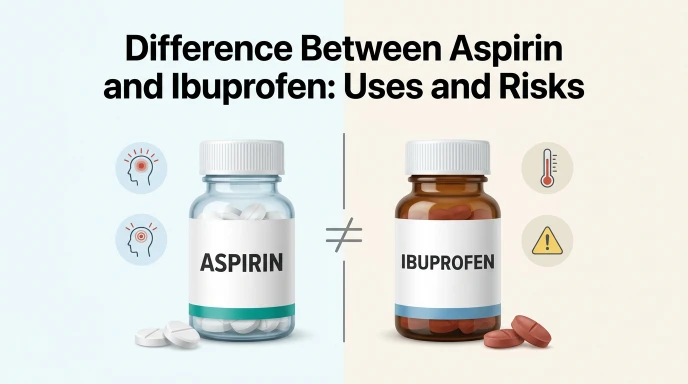
The main difference between aspirin and ibuprofen is that both relieve pain, fever, and inflammation, but aspirin also has an antiplatelet effect used for certain heart and stroke prevention.
When you have a headache, fever, muscle ache, or inflammation, you may wonder about the difference between aspirin and ibuprofen. Both are nonsteroidal anti-inflammatory drugs (NSAIDs), and both can relieve pain and reduce fever, but they are not interchangeable in every situation.
The main difference between aspirin and ibuprofen is how they affect the body, how long their platelet effects last, and when each medicine may be used. Aspirin also has an important role in preventing certain heart attacks and strokes under medical guidance, while ibuprofen is commonly used for short-term pain, fever, and inflammation.
If you are comparing aspirin vs. ibuprofen for everyday pain, this guide explains what each medicine is, how they work, their similarities, key differences, safety concerns, and when professional advice is important.
Quick Answer: Difference Between Aspirin and Ibuprofen
The difference between aspirin and ibuprofen is that both reduce pain, fever, and inflammation, but aspirin has a lasting antiplatelet effect that makes it useful for certain cardiovascular conditions under medical supervision. Ibuprofen is commonly used for short-term pain and inflammation.
For example, someone with a muscle ache may use an OTC NSAID such as ibuprofen if it is appropriate for them, while a person taking low-dose aspirin after certain cardiovascular problems may be using it for a completely different medical purpose.
Definition of Aspirin and Ibuprofen
- Aspirin: An NSAID used to relieve pain, reduce fever and inflammation, and, in specific patients, reduce the risk of certain cardiovascular events because it affects platelet clotting.
- Ibuprofen: An NSAID used to relieve pain, fever, and inflammation, including headaches, muscle aches, menstrual pain, toothaches, and some arthritis symptoms.
In simple words, both medicines can work as pain relievers, but aspirin has an additional medically important role involving blood platelets.
How Do You Pronounce Aspirin and Ibuprofen?
Aspirin
- US: AS-puh-rin
- UK: AS-puh-rin
Ibuprofen
- US: eye-BYOO-pro-fen
- UK: eye-BYOO-pro-fen
Knowing the names is useful, but the more important question is what each medicine actually does. That is where the aspirin vs. ibuprofen comparison becomes clearer.
What Is the Difference Between Aspirin and Ibuprofen?
Both medicines belong to the NSAID family. They work by reducing the production of substances involved in pain, fever, and inflammation. However, their effects on platelets are different.
| Feature | Aspirin | Ibuprofen | Similarity |
| Drug class | NSAID; salicylate | NSAID | Both are NSAIDs |
| Pain relief | Helps mild to moderate pain | Helps mild to moderate pain | Both can relieve pain |
| Fever | Can reduce fever | Can reduce fever | Both can lower fever |
| Inflammation | Reduces inflammation | Reduces inflammation | Both have anti-inflammatory effects |
| Platelets | Produces a lasting antiplatelet effect | Platelet effect is temporary | Both can affect platelet function |
| Cardiovascular use | Used in certain patients under medical guidance | Not used as a substitute for aspirin’s cardiovascular role | Both affect the body beyond simple pain relief |
| Common everyday use | Pain, fever, inflammation | Pain, fever, inflammation | Both are available in OTC forms |
| Children | Generally avoided unless specifically prescribed | Some pediatric use is possible depending on age and circumstances | Child dosing requires special care |
| Pregnancy | Low-dose aspirin may be prescribed for specific reasons | NSAID restrictions apply during pregnancy | Professional advice may be needed |
This table clearly shows the difference and similarity between aspirin and ibuprofen for quick understanding.
Key Differences Explained Between Aspirin and Ibuprofen
1. They Have Different Effects on Platelets
One of the most important differences is their effect on platelets.
Aspirin irreversibly inhibits platelet COX-1, producing an antiplatelet effect that lasts much longer than the drug itself remains in the bloodstream. Ibuprofen’s platelet inhibition is reversible and temporary.
Real-life example: A person taking low-dose aspirin after a cardiovascular event may be taking it to reduce clot-related risk, not simply to treat a headache.
2. Aspirin Has a Specific Cardiovascular Role
Aspirin may be prescribed or recommended for certain people who have cardiovascular disease or have already experienced a heart attack or certain types of stroke. It should not be started for heart protection simply because it is available without a prescription.
This is an important point in the aspirin vs. ibuprofen comparison: ibuprofen should not be treated as a replacement for medically indicated low-dose aspirin.
3. Ibuprofen Is Commonly Used for Everyday Pain and Inflammation
Ibuprofen is commonly used for headaches, muscle aches, menstrual pain, toothaches, backaches, fever, and inflammatory conditions. Prescription ibuprofen is also used for conditions such as osteoarthritis and rheumatoid arthritis.
Example: Someone with temporary muscle soreness may consider an OTC pain reliever such as ibuprofen if it is safe for them.
4. Aspirin Can Increase Bleeding Risk
Aspirin affects platelet clotting, so bleeding is an important safety consideration. Long-term aspirin use can cause serious bleeding, including gastrointestinal bleeding and, rarely, bleeding in the brain.
That is one reason daily aspirin should not be treated like an ordinary daily painkiller.
5. Both Can Irritate the Stomach
Aspirin and ibuprofen can cause stomach-related side effects. NSAIDs may cause stomach pain, nausea, ulcers, or gastrointestinal bleeding, particularly with higher doses or longer use.
People with a history of ulcers, bleeding, kidney disease, or certain other medical conditions should ask a healthcare professional before using these medicines.
6. Their Use in Children Is Different
Aspirin generally should not be given to children or teenagers without specific medical advice because of the association between aspirin and Reye’s syndrome. The NHS advises against giving aspirin to children under 16 unless prescribed.
Ibuprofen, in contrast, has pediatric uses for certain children, with age, weight, illness, and formulation all affecting if it is appropriate.
7. Taking Them Together Is Not Automatically Safe
A common mistake is assuming that because both medicines are available over the counter, taking both together must be harmless.
The NHS advises against taking ibuprofen at the same time as other NSAIDs such as aspirin because this can increase the risk of serious side effects.
There is an additional concern for people taking low-dose aspirin for cardiovascular protection: ibuprofen may interfere with aspirin’s antiplatelet benefit, depending on timing and use. The FDA recommends speaking with a healthcare professional about how these medicines should be timed when both are needed.
How Do Aspirin and Ibuprofen Work?
Aspirin and ibuprofen both interfere with cyclooxygenase enzymes involved in producing prostaglandins and other substances associated with pain, fever, and inflammation.
The key difference is that aspirin produces an irreversible effect on platelet COX-1, while ibuprofen’s inhibition is reversible. This helps explain why aspirin can have a prolonged effect on platelet function.
In practical terms, you should not judge these medicines only by how quickly they relieve a headache. Their effects on blood clotting, the stomach, kidneys, cardiovascular system, and other parts of the body also matter.
When Is Aspirin Used?
Aspirin can be used for several purposes, including:
- Mild to moderate pain
- Fever
- Inflammation
- Certain cardiovascular conditions
- Reducing the risk of another heart attack or certain clot-related events in appropriate patients
The cardiovascular use is different from ordinary pain relief. FDA guidance emphasizes that daily aspirin is not appropriate for everyone and should be used for prevention only when the expected benefit outweighs the risks.
When Is Ibuprofen Used?
Ibuprofen is commonly used for:
- Headaches
- Muscle aches
- Menstrual pain
- Toothaches
- Backaches
- Fever
- Minor arthritis pain
- Inflammation and swelling
Prescription ibuprofen may also be used for inflammatory arthritis and other conditions.
The best choice depends on the person’s medical history, other medicines, age, pregnancy status, and reason for taking the medicine.
Common Mistakes With the Difference Between Aspirin and Ibuprofen
Mistake 1: Thinking They Are Exactly the Same
Both are NSAIDs, but they have important differences. Aspirin has a specific antiplatelet role that ibuprofen does not simply replace.
Fix: Look at the reason the medicine is being used, not just the fact that both can relieve pain.
Mistake 2: Using Aspirin Daily Without Medical Advice
Aspirin may sound like a simple heart-protection medicine, but daily use can cause serious bleeding and is not appropriate for everyone.
Fix: Do not start regular aspirin for heart attack or stroke prevention without discussing it with a healthcare professional.
Mistake 3: Taking Ibuprofen With Daily Aspirin Without Checking
Ibuprofen can interfere with aspirin’s antiplatelet effect in some circumstances.
Fix: If you take aspirin regularly for cardiovascular protection, ask your doctor or pharmacist before using ibuprofen.
Mistake 4: Giving Aspirin to a Child for a Fever
Aspirin is associated with Reye’s syndrome in children and teenagers.
Fix: Use a child-appropriate medicine only according to medical or label guidance.
Mistake 5: Assuming OTC Means Risk-Free
Both aspirin and ibuprofen can cause significant side effects, especially at higher doses or with prolonged use.
Fix: Follow the package directions and ask a pharmacist or doctor when you are unsure.
Real-Life Examples of Aspirin vs. Ibuprofen
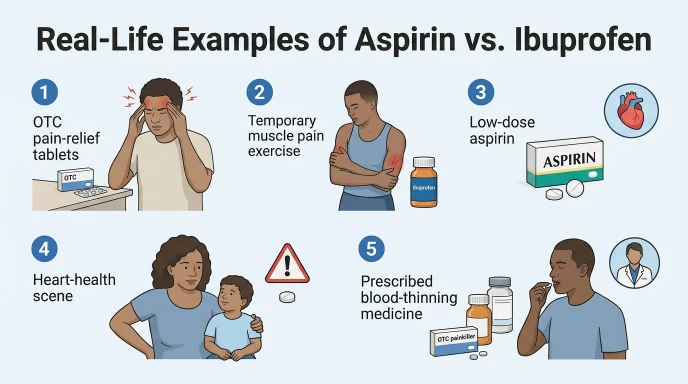
Example 1: Occasional Headache
An adult develops an occasional headache and wants an OTC pain reliever.
Both aspirin and ibuprofen can be used for pain in appropriate adults, but the safest choice depends on factors such as other medicines, stomach problems, allergies, kidney problems, and personal medical history.
Example 2: Muscle Pain After Activity
Someone has temporary muscle pain with inflammation.
Ibuprofen is commonly used for pain and inflammation, but it is still an NSAID with important safety considerations.
Example 3: Cardiovascular Prevention
A patient who previously had a heart attack is told by a healthcare professional to take low-dose aspirin.
In this situation, aspirin is being used for its antiplatelet and cardiovascular role, not simply as a painkiller.
Example 4: Child With Fever
A parent considers giving aspirin to a child with a fever.
Aspirin should not be given to children unless specifically prescribed because of the risk of Reye’s syndrome.
Example 5: Person Taking Blood-Thinning Medicine
Someone already takes an anticoagulant and wants an OTC painkiller.
This is a situation where self-selection becomes less straightforward because NSAIDs can increase bleeding risk and may interact with other medicines. A pharmacist or doctor should help determine an appropriate option.
When Should You Use Aspirin vs. Ibuprofen?
There is no universal answer to which medicine is “better.” The appropriate option depends on why you need it and what health factors apply to you.
Aspirin may be specifically indicated for certain cardiovascular patients, while ibuprofen is commonly used for short-term pain, fever, and inflammation.
Before using either, consider:
- What symptom are you treating?
- Do you have a history of stomach ulcers or bleeding?
- Do you have kidney, heart, or liver problems?
- Are you taking blood thinners or other medicines?
- Are you pregnant?
- Is the medicine for a child or teenager?
- Are you already taking another NSAID?
These questions can change which medicine is appropriate.
Why Do People Get Confused About Aspirin and Ibuprofen?
The confusion usually starts because both medicines appear in the same general category: NSAID pain relievers.
They can both reduce pain, fever, and inflammation, so it is easy to assume that they are interchangeable. But their effects are not identical.
Aspirin’s lasting effect on platelets is especially important. Ibuprofen, meanwhile, is widely used for short-term pain and inflammation but has its own cardiovascular, kidney, stomach, and interaction considerations.
Brand names can make the issue even harder because products sold under different brand names may contain these active ingredients or combine them with other medicines. Checking the active ingredient on the label is therefore more useful than relying only on the brand name.
What About Aspirin and Ibuprofen During Pregnancy?
Pregnancy changes the safety discussion.
FDA guidance warns against using NSAIDs, including ibuprofen and aspirin, at around 20 weeks of pregnancy or later unless specifically advised by a healthcare professional because of potential risks to the unborn baby. Low-dose aspirin is an important exception when it has been specifically recommended for certain pregnancy-related conditions.
If you are pregnant or trying to become pregnant, do not choose between aspirin and ibuprofen based only on general online advice. Ask a healthcare professional which medicine, if any, is appropriate.
How Search Engines Understand the Difference Between Aspirin and Ibuprofen
Search engines such as Google can connect this query with several related questions:
- What is the difference between aspirin and ibuprofen?
- Is aspirin stronger than ibuprofen?
- Can you take aspirin and ibuprofen together?
- Which is better for inflammation?
- Can children take aspirin?
- Can ibuprofen replace aspirin?
- What are the side effects of aspirin and ibuprofen?
These questions reflect different levels of search intent. A beginner may simply want a definition, while someone already taking aspirin may need information about drug interactions.
For a useful health article, answering those related questions clearly is more valuable than repeating the exact keyword throughout the page.
Expert Insight: The Important Difference Is the Reason for Use
A useful way to remember the comparison is this:
Do not compare aspirin and ibuprofen only as painkillers. Compare why the medicine is being used.
For ordinary pain or inflammation, both belong to the NSAID family and may be options for appropriate people. But aspirin’s antiplatelet effect gives it a role that goes beyond pain relief. At the same time, that same effect can increase bleeding concerns.
In real scenarios, the patient’s age, medical conditions, pregnancy status, other medicines, dose, and duration of use can matter more than a simple “aspirin vs. ibuprofen” ranking.
Frequently Asked Questions
Is aspirin stronger than ibuprofen?
Not in a simple, universal sense. They are different NSAIDs, and which one is appropriate depends on the type of pain, inflammation, medical history, and reason for use.
Can you take aspirin and ibuprofen together?
They should not be combined casually because both are NSAIDs and taking them together can increase the risk of side effects. Ibuprofen can also interfere with the cardiovascular benefit of low-dose aspirin in some circumstances. Ask a healthcare professional about timing and safety if both have been recommended.
Which is better for inflammation, aspirin or ibuprofen?
Both can reduce inflammation. The appropriate choice depends on the person’s health, other medicines, and the condition being treated rather than one medicine being universally better.
Can ibuprofen replace aspirin?
Ibuprofen should not be considered a replacement for aspirin when aspirin has been specifically prescribed or recommended for cardiovascular protection. The two medicines have different effects on platelets.
Is aspirin or ibuprofen better for headaches?
Both can relieve certain headaches in appropriate people. The safer choice depends on individual factors such as stomach problems, kidney disease, allergies, other medicines, and cardiovascular history.
Why is aspirin used for heart attack prevention?
Aspirin reduces platelet aggregation, which can help reduce the formation of certain blood clots. It may therefore be used for secondary cardiovascular prevention in appropriate patients under medical guidance.
Can children take aspirin?
Children should not be given aspirin unless it has been specifically prescribed or recommended by a healthcare professional. Aspirin use in young people has been linked with Reye’s syndrome.
Are aspirin and ibuprofen both NSAIDs?
Yes. Aspirin and ibuprofen are both nonsteroidal anti-inflammatory drugs. They can reduce pain, fever, and inflammation, although their effects and uses are not identical.
Can aspirin cause stomach bleeding?
Yes. Aspirin can increase the risk of gastrointestinal bleeding, particularly with ongoing use and in people with certain risk factors.
Conclusion
The difference between aspirin and ibuprofen is more than the name printed on the bottle. Both are NSAIDs that can relieve pain, reduce fever, and decrease inflammation, but they have different effects and different medical roles.
Aspirin has a lasting antiplatelet effect and can be used for cardiovascular prevention in certain patients under professional guidance. Ibuprofen is commonly used for short-term pain, fever, and inflammation. Neither medicine is automatically the right choice for everyone.
The most important practical point is to consider why you are taking the medicine, your health history, your other medications, and how long you plan to use it. People taking daily aspirin should be especially careful about adding ibuprofen because of possible interference with aspirin’s antiplatelet benefit.
If you have a history of ulcers, bleeding, kidney or heart problems, are pregnant, take blood-thinning medication, or need medicine for a child, check with a doctor or pharmacist before choosing between aspirin and ibuprofen.
In short: aspirin and ibuprofen are similar NSAID pain relievers, but they are not interchangeable medicines.
READ MORE ABOUT!
- Difference Between Historic and Historical: Meaning and Examples
- Difference Between Insure and Ensure: Which Word Is Correct?

I am Emily Johnson, a USA-based content writer who creates easy-to-read blogs on language and daily life topics. I explain complex ideas in simple English for students and beginners so they can understand easily.