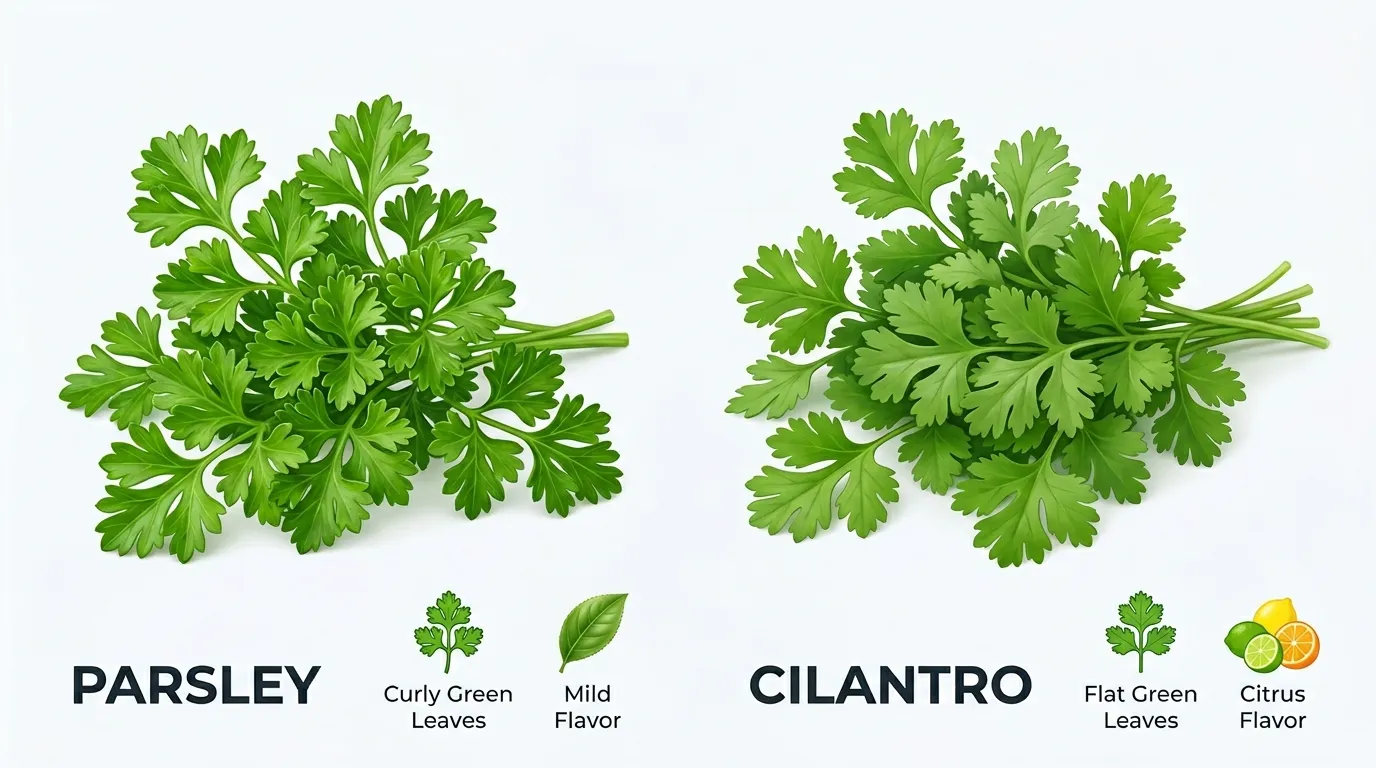
Parsley and cilantro are different herbs; parsley has a mild, fresh taste, while cilantro has a stronger, citrus-like flavor and aroma.
Many people get confused when comparing the difference between parsley and cilantro because both are leafy green herbs that often look similar at first glance.
You may have seen them in grocery stores, recipes, or restaurant dishes and wondered if they are actually the same plant.
The difference between parsley and cilantro goes far beyond appearance. These herbs have different flavors, aromas, culinary uses, and cultural significance.
Understanding the difference between parsley and cilantro can help you choose the right herb for salads, soups, sauces, and international recipes.
In this guide, you’ll learn what parsley and cilantro are, how they taste, where they are used, their nutritional value, and why many people mistakenly confuse them.
If you’re a beginner cook or an experienced food enthusiast, this article will give you complete clarity.
Difference Between Parsley and Cilantro
Parsley has a mild, fresh, slightly peppery taste, while cilantro has a stronger citrusy and earthy flavor. Parsley is common in Mediterranean and European dishes, whereas cilantro is widely used in Mexican, Indian, Thai, and Latin American cuisines.
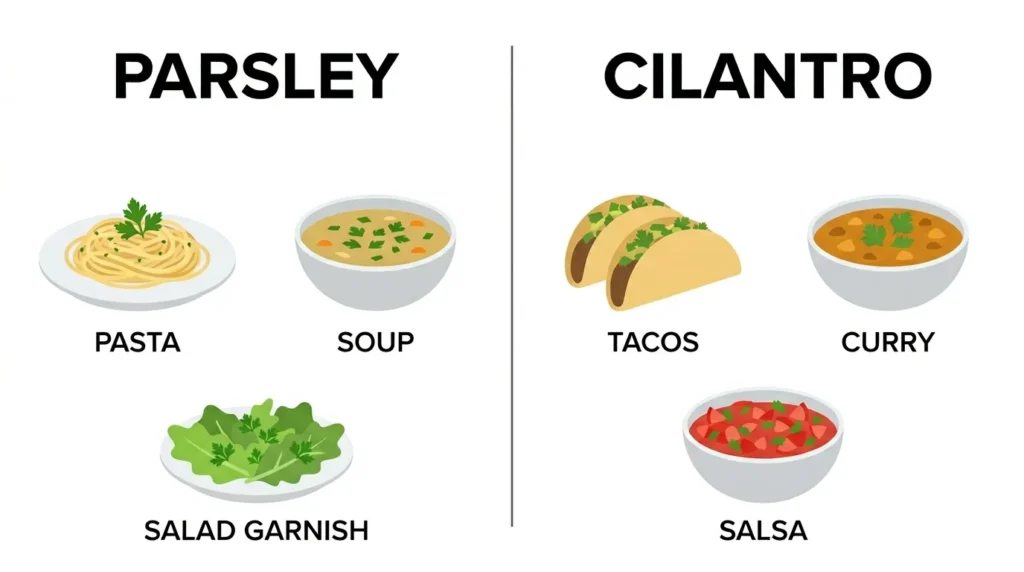
Example: A tabbouleh salad typically uses parsley, while fresh salsa often contains cilantro.
Definition of Parsley and Cilantro
- Parsley: A leafy herb from the Apiaceae family known for its mild, clean flavor and bright green leaves. It is commonly used as a garnish and ingredient in European cuisine.
- Cilantro: The leafy part of the coriander plant, valued for its bold citrus-like flavor. It is widely used in Mexican, Indian, Middle Eastern, and Asian cooking.
Example: Parsley often tops pasta dishes, while cilantro frequently appears in tacos and curries.
Pronunciation
| Herb | US Pronunciation | UK Pronunciation |
| Parsley | PARS-lee | PAHRS-lee |
| Cilantro | sih-LAHN-troh | sih-LAHN-troh |
Now that you know how to identify and pronounce them, let’s understand what truly separates these two popular herbs.
Difference Between Parsley and Cilantro Comparison
| Feature | Parsley | Cilantro |
| Flavor | Mild and fresh | Strong and citrusy |
| Aroma | Light and grassy | Distinct and pungent |
| Leaf Shape | Pointed leaves | Rounded, delicate leaves |
| Cuisine | Mediterranean and European | Mexican, Asian, Indian |
| Popular Use | Garnish and salads | Salsas, curries, tacos |
| Taste Sensitivity | Generally liked by most people | Some people perceive a soap-like taste |
| Plant Source | Petroselinum crispum | Coriandrum sativum |
| Culinary Role | Supporting flavor | Often a key flavor ingredient |
Key Differences Explained Between Parsley and Cilantro
1. Flavor Profile
The biggest difference lies in flavor.
Parsley delivers a subtle freshness that enhances food without overpowering it. Cilantro provides a bold, citrus-forward taste that can dramatically change a dish.
Example: A pasta salad may benefit from parsley, while guacamole often relies on cilantro.
2. Aroma
Parsley has a clean herbal scent.
Cilantro releases a stronger fragrance that many people instantly recognize.
3. Appearance
Although similar in color, cilantro leaves are rounder and softer, while parsley leaves are sharper and more pointed.
4. Cultural Usage
Different cuisines prefer different herbs.
Mediterranean recipes frequently use parsley, while Mexican and Indian cooking often depend on cilantro.
5. Public Preference
Most people enjoy parsley.
Cilantro creates stronger opinions because some individuals carry genetic traits that make it taste like soap.
6. Garnish Function
Parsley is commonly used as a finishing garnish.
Cilantro often serves both as a garnish and a primary flavor component.
7. Cooking Behavior
Parsley retains a mild taste during cooking.
Cilantro is often added near the end of preparation to preserve its flavor.
What Does Parsley Taste Like?
Parsley offers a fresh, slightly peppery, and mildly earthy flavor.
Many cooks use it because it brightens dishes without dominating other ingredients. In practical use, parsley works well in soups, roasted vegetables, seafood recipes, and grain salads.
A useful way to think about parsley is as a flavor enhancer rather than the star ingredient.
What Does Cilantro Taste Like?
Cilantro has a bold flavor that combines citrus, pepper, and herbal notes.
Many people enjoy its freshness in tacos, curries, chutneys, and noodle dishes. However, some people report a soap-like taste due to genetic factors affecting how they perceive certain flavor compounds.
This unique characteristic makes cilantro one of the most discussed herbs in the culinary world.
Why Does the Difference Between Parsley and Cilantro Matter in Recipes?
Choosing the wrong herb can significantly alter a recipe.
Imagine replacing cilantro in fresh salsa with parsley. The dish would lose much of its bright, citrusy character.
Likewise, substituting cilantro in traditional tabbouleh may produce a flavor profile that feels unfamiliar or unbalanced.
Understanding the difference between parsley and cilantro helps preserve the intended taste of a recipe.
Which Cuisines Commonly Use Parsley and Cilantro?
Parsley Is Popular In:
- Mediterranean cuisine
- French cooking
- Italian dishes
- Greek recipes
- European salads
Cilantro Is Popular In:
- Mexican cuisine
- Indian curries
- Thai dishes
- Vietnamese recipes
- Latin American foods
Food creators on platforms such as Instagram, YouTube, and Meta-owned social networks often showcase these herbs because they add vibrant color and flavor to recipes.
Nutritional Comparison of Parsley and Cilantro
Both herbs are nutrient-dense despite being used in small quantities.
| Nutrient Area | Parsley | Cilantro |
| Vitamin K | Very High | High |
| Vitamin C | High | Moderate |
| Antioxidants | High | High |
| Calories | Very Low | Very Low |
| Fiber | Small Amount | Small Amount |
Both herbs can support a balanced diet when included regularly.
Difference and Similarity Between Parsley and Cilantro
| Feature | Parsley | Cilantro | Similarity |
| Plant Type | Herb | Herb | Both are culinary herbs |
| Color | Bright Green | Bright Green | Similar appearance |
| Flavor | Mild | Strong | Add freshness |
| Usage | European dishes | Latin and Asian dishes | Used in cooking worldwide |
| Nutrition | Rich in vitamins | Rich in vitamins | Nutrient-dense foods |
| Garnish Use | Common | Common | Decorative and flavorful |
| Fresh Consumption | Frequent | Frequent | Often used raw |
| Kitchen Availability | Widely available | Widely available | Found in most grocery stores |
This table clearly shows the difference and similarity between parsley and cilantro for quick understanding.
Common Mistakes with Parsley and Cilantro
Mistake 1: Assuming They Taste the Same
Correction: Always taste before substituting.
Mistake 2: Buying the Wrong Herb
Correction: Check leaf shape and aroma.
Mistake 3: Using Equal Substitutions
Correction: Their flavors are not interchangeable in many recipes.
Mistake 4: Ignoring Regional Recipe Traditions
Correction: Follow traditional herb choices when possible.
Mistake 5: Storing Them Incorrectly
Correction: Keep herbs refrigerated and properly wrapped.
Real-Life Examples with Parsley and Cilantro
Personal Cooking
A home cook preparing tabbouleh uses parsley for authentic flavor.
Mexican Restaurant
Fresh cilantro enhances tacos and salsa.
Indian Cuisine
Many curries receive cilantro as a finishing herb.
Food Industry
Recipe developers carefully select one herb over the other to achieve specific flavor goals.
Culinary Education
Cooking schools teach students to identify both herbs visually and by aroma.
When to Use Each
Use Parsley When:
- You want mild freshness
- Making Mediterranean dishes
- Creating light salads
- Garnishing soups and pasta
Use Cilantro When:
- Preparing Mexican recipes
- Cooking Indian curries
- Making salsa or guacamole
- Seeking bold herbal flavor
Why People Get Confused About Parsley and Cilantro
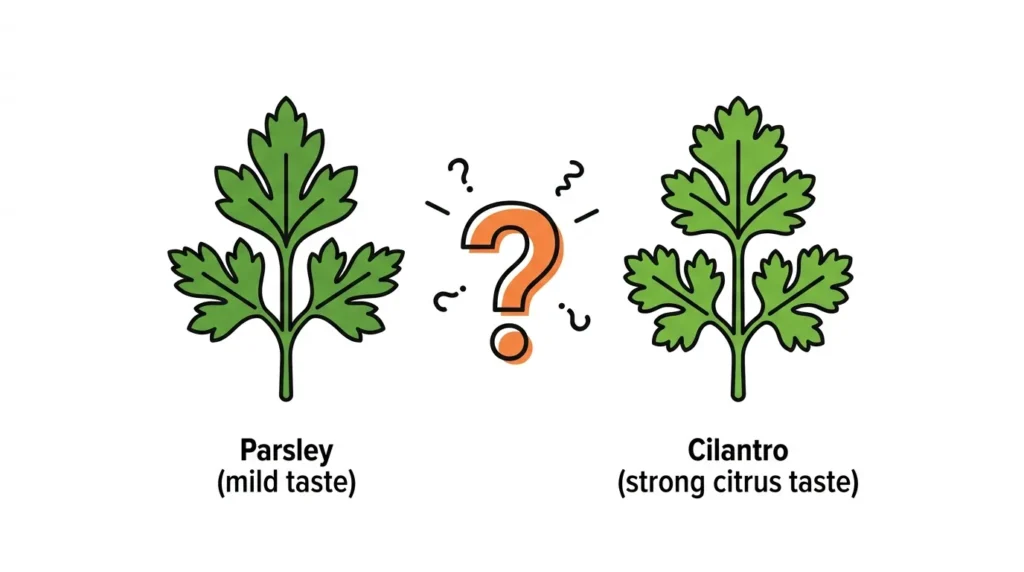
Several factors contribute to confusion:
- Similar green appearance
- Placement near each other in stores
- Shared use as garnishes
- Lack of familiarity among beginner cooks
- Recipe translations across different regions
Most beginners identify herbs visually, which often leads to mistakes.
How Search Engines Understand Parsley and Cilantro User Intent
When someone searches “difference between parsley and cilantro,” search engines such as Google aim to identify comparison intent.
Google recognizes that users usually want:
- Definitions
- Visual differences
- Flavor comparison
- Recipe guidance
- Substitution advice
Content that clearly answers these questions tends to perform better because it satisfies user intent completely.
Food creators on YouTube, Instagram, and Meta platforms often compare these herbs because audiences frequently search for quick identification tips.
Expert Insight
As a food-content and recipe-analysis best practice, parsley and cilantro should be viewed as separate flavor tools rather than substitutes.
In real-world culinary scenarios, parsley functions as a versatile enhancer, while cilantro often acts as a defining flavor. Professional chefs typically select one based on the desired flavor profile rather than appearance.
Understanding flavor purpose not just plant identification is what separates beginner cooks from more experienced ones.
FAQs
Is parsley the same as cilantro?
No. They are different herbs with distinct flavors and culinary uses.
Can I substitute parsley for cilantro?
Sometimes, but the flavor will change significantly.
Why does cilantro taste like soap to some people?
Genetic variations affect how certain flavor compounds are perceived.
Which herb is healthier?
Both are highly nutritious and provide valuable vitamins and antioxidants.
Which herb is used in salsa?
Cilantro is commonly used in traditional salsa recipes.
Which herb is used in tabbouleh?
Parsley is the traditional choice.
How can I identify parsley and cilantro quickly?
Check the leaves and smell them. Cilantro has a stronger aroma.
Do parsley and cilantro belong to the same family?
Yes. Both belong to the Apiaceae family.
Can I grow parsley and cilantro at home?
Yes. Both herbs grow well in containers and home gardens.
Which herb is more commonly used worldwide?
Usage varies by region, but both herbs are globally popular.
Conclusion
Understanding the difference between parsley and cilantro is essential for anyone who cooks regularly or follows recipes from different cultures. While these herbs may look similar, their flavors, aromas, culinary roles, and cultural uses are very different.
Parsley offers a mild, clean, and versatile flavor that complements Mediterranean and European dishes. Cilantro provides a bold, citrusy character that defines many Mexican, Indian, Thai, and Latin American recipes. Choosing the right herb can dramatically improve the authenticity and flavor of a meal.
In practical use, parsley works best when you want gentle freshness, while cilantro shines when you need a stronger herbal impact. Many beginners confuse the two because of their similar appearance, but a quick look at the leaves and a simple smell test usually reveal the difference.
Ultimately, the difference between parsley and cilantro comes down to flavor, purpose, and culinary tradition. Once you understand these distinctions, selecting the right herb becomes easy, helping you create better-tasting and more authentic dishes every time.
Read more about!
Difference Between Imperfect and Preterite: Easy Guide
Difference Between Contingent and Pending: Explained Clearly

I am James Carter, a professional content writer from the United States. I specialize in writing simple and clear comparison blogs that help students and readers understand difficult topics easily. My writing focuses on everyday language, education, science, and lifestyle topics. I believe that learning should be easy for everyone, so I use simple words and real-life examples in my articles.