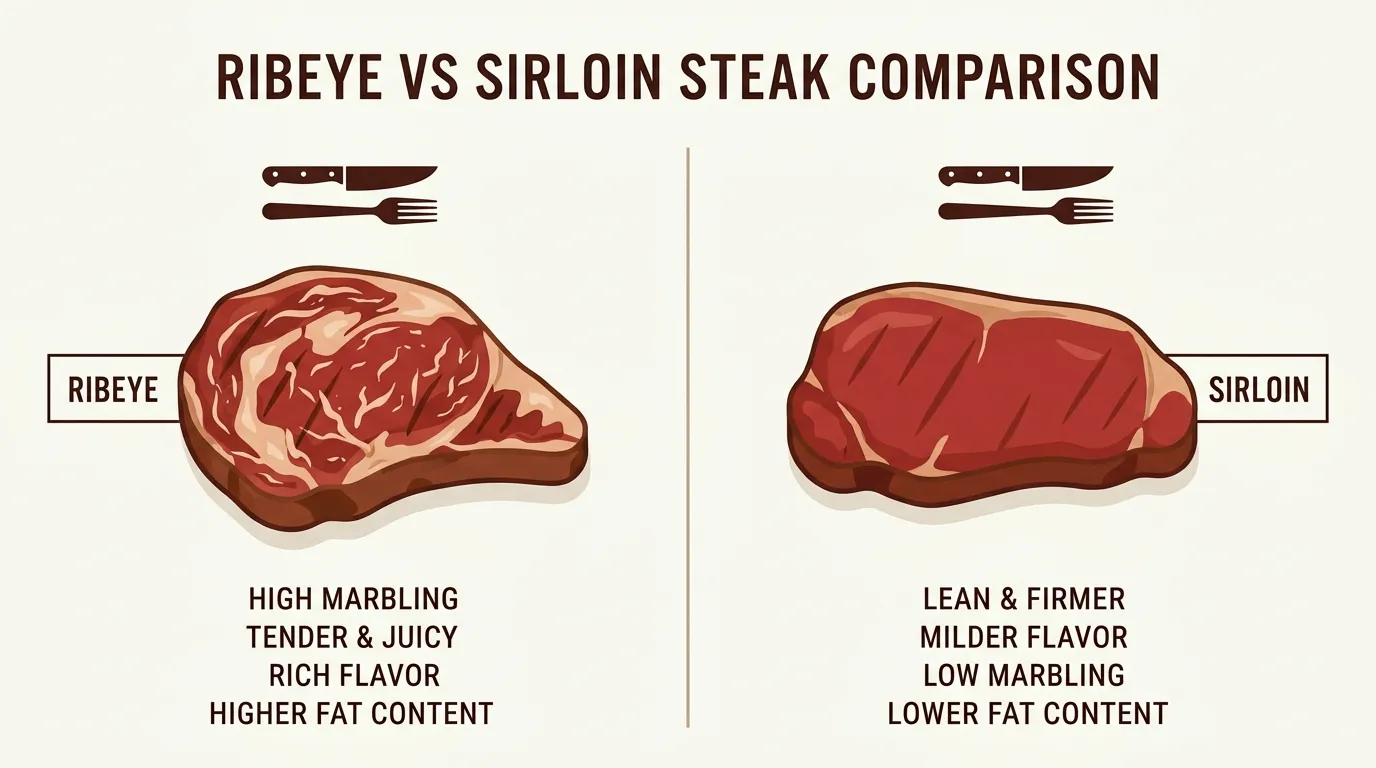
Ribeye is a fattier, more tender and flavorful cut, while sirloin is leaner, firmer, and slightly less juicy 🥩🔥
Many users get confused about the difference between ribeye and sirloin when ordering steak at a restaurant or buying meat from a butcher.
In simple words, the difference between ribeye and sirloin comes down to fat content, tenderness, flavor, and price.
If you’ve ever watched steak reviews on YouTube or seen food creators on Instagram comparing cuts, you’ve probably noticed people debating which one is better.
That’s because the difference between ribeye and sirloin directly affects taste and cooking results.
In this complete guide, you’ll learn what ribeye and sirloin are, how they differ, why they exist, and which one you should choose based on your needs if you’re a beginner or a steak lover.
Difference Between Ribeye and Sirloin
The difference between ribeye and sirloin is simple:
👉 Ribeye is a fatty, tender cut with rich flavor.
👉 Sirloin is leaner, firmer, and more affordable.
🥩 Example: Ribeye is perfect for juicy steaks, while sirloin is better for budget-friendly meals or grilling.
Definition of Difference Between Ribeye and Sirloin
- Ribeye: A tender, high-fat cut from the rib section of the cow, known for its rich flavor.
- Sirloin: A leaner cut from the rear back of the cow, known for firmness and lower fat content.
Pronunciation
- Ribeye: /ˈrɪb.aɪ/ (US & UK)
- Sirloin: /ˈsɜːr.lɔɪn/ (UK), /ˈsɝː.lɔɪn/ (US)
Now that you know how to say them, let’s break down the real differences in detail.
Ribeye vs Sirloin: Comparison
| Feature | Ribeye | Sirloin |
| Location | Rib section | Rear back (loin area) |
| Fat Content | High marbling | Low fat |
| Texture | Very tender | Firm |
| Flavor | Rich, juicy | Mild, beefy |
| Price | Expensive | Affordable |
| Cooking Style | Best for grilling/pan-searing | Good for grilling, slicing |
| Juiciness | Very juicy | Less juicy |
| Popular Use | Premium steaks | Everyday meals |
Key Differences Explained Between Ribeye and Sirloin
1. Fat Content (Marbling)
Ribeye has more fat, which melts during cooking.
👉 Example: This makes ribeye juicy and flavorful. Sirloin is leaner and less oily.
2. Tenderness Level
Ribeye is softer and easier to chew.
👉 Sirloin is slightly tougher but still enjoyable when cooked properly.
3. Flavor Intensity
Ribeye has a rich, buttery taste.
👉 Sirloin has a lighter, more natural beef flavor.
4. Price Difference
Ribeye costs more because of quality and demand.
👉 Sirloin is more budget-friendly for daily meals.
5. Cooking Performance
Ribeye is forgiving and stays juicy even if slightly overcooked.
👉 Sirloin needs careful cooking to avoid dryness.
6. Usage in Meals
Ribeye is used for premium steaks.
👉 Sirloin is used in stir-fries, sandwiches, and grilled dishes.
7. Health Perspective
Sirloin is lower in fat and calories.
👉 Ribeye is higher in fat but richer in taste.
What is Ribeye and Why is it So Popular?
Ribeye comes from the rib section, where muscles are less active.
Why It’s Special
- High marbling (fat lines inside meat)
- Extremely juicy
- Rich flavor
👉 In real scenarios, ribeye is the top choice for steak lovers.
Real Example
Many steakhouse chains and chefs on YouTube prefer ribeye for its consistent results.
What is Sirloin and Why Do People Choose It?
Sirloin comes from the back of the cow.
Why It’s Popular
- Affordable
- Leaner
- Versatile
👉 It’s perfect for everyday cooking.
Real Example
Home cooks often choose sirloin for grilling or slicing into dishes.
Why Does the Difference Between Ribeye and Sirloin Exist?
The difference exists because of muscle usage in the cow.
- Rib muscles do less work → softer meat
- Back muscles work more → firmer meat
👉 This natural difference affects texture, fat, and taste.
Difference Between Ribeye and Sirloin in Cooking
Ribeye Cooking Tips
- High heat grilling
- Minimal seasoning
- Best medium-rare
Sirloin Cooking Tips
- Marinate before cooking
- Avoid overcooking
- Slice against the grain
👉 In practical use, beginners find ribeye easier to cook.
Difference Between Ribeye and Sirloin in Taste and Texture
Ribeye Taste
- Rich
- Juicy
- Buttery
Sirloin Taste
- Clean
- Lean
- Slightly firm
👉 Most beginners prefer ribeye for flavor, while fitness-focused users prefer sirloin.
Difference and Similarity Between Ribeye and Sirloin
| Feature | Ribeye | Sirloin | Similarity |
| Cut Type | Rib section | Loin section | Both are beef cuts |
| Fat Level | High | Low | Both contain protein |
| Flavor | Rich | Mild | Both taste like beef |
| Usage | Premium steaks | Everyday meals | Both used in cooking |
| Texture | Soft | Firm | Both can be grilled |
| Price | High | Moderate | Both available globally |
This table clearly shows the difference and similarity between ribeye and sirloin for quick understanding.
Common Mistakes with Ribeye and Sirloin
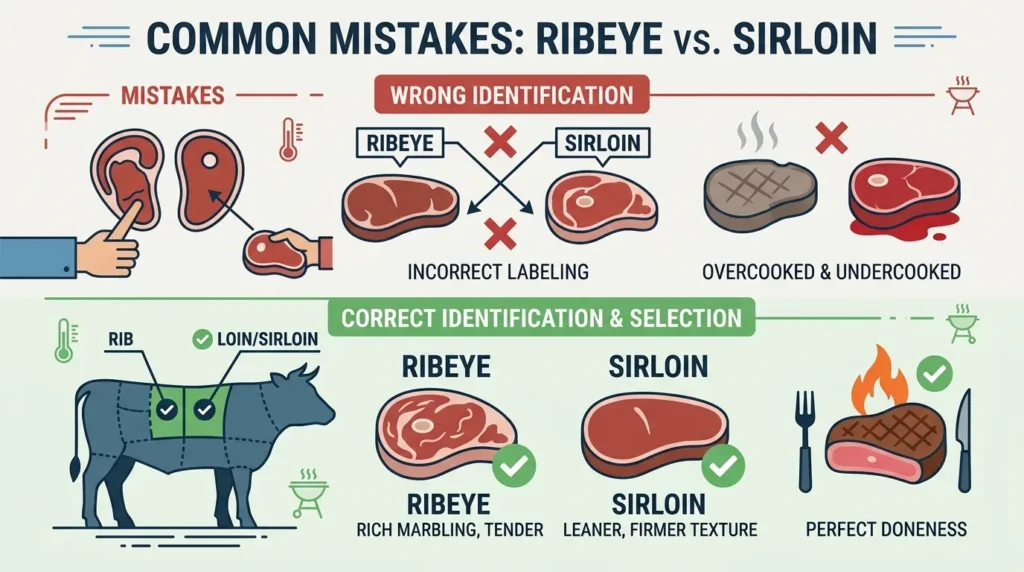
❌Thinking both cuts taste the same
✔ Fat content changes flavor significantly
❌Overcooking sirloin
✔ Makes it dry and tough
❌Avoiding ribeye due to fat
✔ Fat adds flavor and juiciness
❌Choosing based only on price
✔ Taste preference matters more
Real Life Examples with Ribeye and Sirloin
1. Personal Cooking
A beginner cooks ribeye for a juicy steak dinner.
2. Fitness Diet
A gym user chooses sirloin for lower fat intake.
3. Restaurant Industry
Steakhouses offer ribeye as premium and sirloin as budget-friendly.
4. Content Creators
Food influencers on Instagram compare both cuts.
When to Use Each
👉 Use ribeye when:
- You want rich flavor
- You’re cooking a special meal
👉 Use sirloin when:
- You want lean meat
- You’re cooking daily meals
Why People Get Confused in Ribeye vs Sirloin
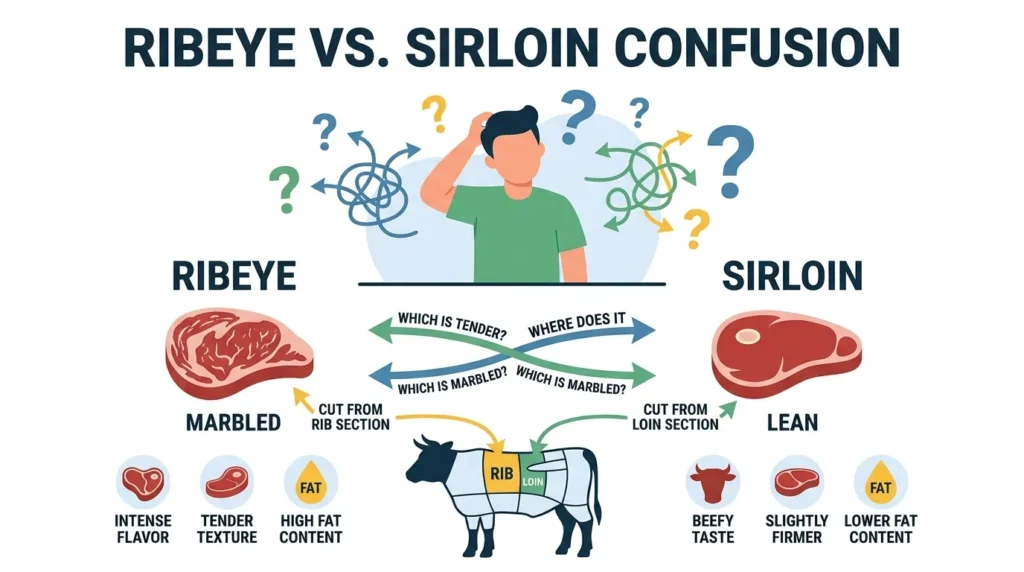
- Both are beef cuts
- Names sound similar
- Lack of knowledge about cow anatomy
- Marketing terms create confusion
Many beginners assume they are similar but they are quite different.
How Search Engines Understand Ribeye vs Sirloin
Search engines like Google analyze:
- User intent (buying vs learning)
- Content depth
- Engagement signals
Platforms like Meta and Instagram amplify food comparisons based on visuals and engagement.
Expert Insight
From a practical perspective, the difference between ribeye and sirloin is about flavor vs health balance.
In real scenarios:
- Ribeye delivers taste and satisfaction
- Sirloin delivers balance and versatility
Most beginners start with ribeye, while regular users prefer sirloin for daily cooking.
FAQs
What is the main difference between ribeye and sirloin?
Ribeye is fattier and more tender, while sirloin is leaner and firmer.
Which is better, ribeye or sirloin?
It depends ribeye for flavor, sirloin for health and budget.
Is ribeye more expensive than sirloin?
Yes, due to higher quality and demand.
Which steak is healthier?
Sirloin is generally healthier because it has less fat.
Can sirloin be as tender as ribeye?
Not usually, but proper cooking can improve tenderness.
Which is best for grilling?
Both work well, but ribeye is easier for beginners.
Conclusion
The difference between ribeye and sirloin becomes very clear once you understand their origin, fat content, and cooking behavior. Ribeye is rich, juicy, and tender perfect for premium steak experiences. Sirloin, on the other hand, is leaner, firmer, and more budget-friendly, making it ideal for everyday meals.
In simple words, the difference between ribeye and sirloin is about flavor vs balance. Ribeye delivers maximum taste, while sirloin offers versatility and health benefits.
If you are cooking at home, ordering at a restaurant, or planning your diet, knowing this difference helps you make smarter choices. In real-world use, both cuts have their place it just depends on your preference, budget, and cooking style.
Read more about!
Difference Between Director and Producer: Clear Guide
Difference Between Parfum and Toilette: Complete Guide

I am Emily Johnson, a USA-based content writer who creates easy-to-read blogs on language and daily life topics. I explain complex ideas in simple English for students and beginners so they can understand easily.