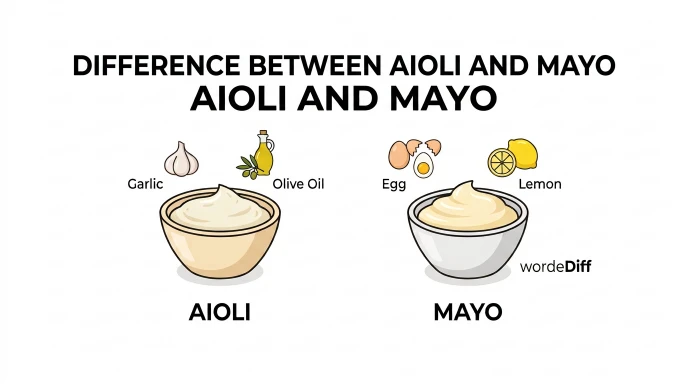
The difference between aioli and mayo can be confusing because both are creamy, rich sauces often served with fries, sandwiches, seafood, and vegetables.
The biggest difference is their traditional base. Aioli traditionally combines garlic and olive oil into an emulsion, while mayonnaise is made mainly from egg yolk, oil, and an acid such as lemon juice or vinegar.
Today, however, restaurant menus often use “aioli” for flavored mayonnaise. That is why the difference between aioli and mayo is not always obvious from appearance alone.
In this guide, you will learn what each sauce is, how they are made, how their flavors differ, where they are used, and when to choose one over the other.
Quick Answer:
Aioli is traditionally a garlic-and-olive-oil emulsion, while mayonnaise is an egg-based emulsion made with oil and an acidic ingredient. Modern aioli is often prepared like mayonnaise with garlic added.
Example: Garlic aioli works well with roasted potatoes, while classic mayonnaise is common in sandwiches and salads.
What Is Aioli?
Aioli is a creamy sauce traditionally made by emulsifying garlic with olive oil. The name is linked to garlic and oil in Mediterranean culinary traditions.
Traditional aioli does not need egg yolk. The garlic helps create and stabilize the emulsion when it is carefully blended with oil.
Modern recipes can be different. Many restaurants and home cooks make aioli by starting with mayonnaise and adding garlic, lemon juice, herbs, or other flavors.
What Is Mayo?
Mayonnaise, often called mayo, is a creamy emulsion made primarily from oil, egg yolk, and an acidic ingredient such as vinegar or lemon juice.
Egg yolk contains lecithin, which helps oil and water-based ingredients stay mixed. Mayo has a mild, rich flavor, making it useful as a base for many sauces and dressings.
Common mayo ingredients include:
- Oil
- Egg yolk
- Vinegar or lemon juice
- Salt
- Sometimes mustard or other seasonings
Aioli vs Mayo: What Is the Main Difference?
The main difference is traditional ingredients and flavor.
Traditional aioli gets its character from garlic and olive oil. Mayo relies on egg yolk, oil, and acid for its basic structure.
However, modern food culture has blurred the line. A menu item called “garlic aioli” may simply be mayonnaise mixed with garlic.
So, if you want to know the real difference between aioli and mayo, check the ingredients rather than relying only on the name.
Difference Between Aioli and Mayo: Comparison
| Feature | Aioli | Mayo | Similarity |
| Traditional base | Garlic and olive oil | Egg yolk and oil | Both are emulsified sauces |
| Main flavor | Strong garlic and olive oil | Mild, rich, and tangy | Both are creamy |
| Egg required traditionally? | No | Yes | Both can vary by recipe |
| Texture | Thick and creamy | Thick and creamy | Similar consistency |
| Common use | Seafood, vegetables, potatoes | Sandwiches, salads, burgers | Both work as condiments |
| Flavor strength | Usually stronger | Usually milder | Both can be flavored |
| Modern versions | Often mayo-based | Often used as a sauce base | Recipes can overlap |
| Culinary tradition | Mediterranean | European/French culinary tradition | Both are widely used |
This table clearly shows the difference and similarity between aioli and mayo for quick understanding.
How Are Aioli and Mayo Made?
The preparation method explains a lot about why these sauces are similar.
Traditional Aioli
Traditional aioli starts with crushed garlic. Olive oil is added slowly while the mixture is worked into a thick emulsion.
The process takes patience because adding oil too quickly can make the mixture separate.
Mayonnaise
Mayo usually begins with egg yolk and an acidic ingredient. Oil is slowly incorporated while whisking or blending.
The egg yolk helps create a stable emulsion, giving mayonnaise its familiar thick texture.
Modern Aioli
Modern restaurant-style aioli is often much simpler. A cook may combine mayonnaise with:
- Fresh garlic
- Lemon juice
- Olive oil
- Salt
- Herbs
- Spices
This version is convenient and flavorful, but it is technically closer to garlic mayonnaise than traditional egg-free aioli.
How Does Aioli Taste Compared With Mayo?
Taste is one of the easiest ways to tell them apart.
Mayo usually has a mild, creamy, slightly tangy flavor. Its neutral taste makes it useful in many dishes.
Aioli traditionally has a much stronger garlic and olive-oil flavor. It can taste sharper, more aromatic, and more savory.
Modern aioli can have almost any flavor depending on the recipe. A chef might make lemon aioli, herb aioli, chili aioli, or roasted garlic aioli.
In simple words: Mayo is usually mild; aioli is often more flavorful and garlic-forward.
Why Do People Confuse Aioli and Mayo?
Many people get confused because modern aioli often looks and tastes almost identical to mayonnaise.
Restaurants may label a sauce “aioli” even when it starts with commercial mayonnaise. This is especially common with flavored sauces.
For example, a menu might list:
Garlic aioli
The sauce could be traditional garlic-and-oil aioli, or it could be mayonnaise blended with roasted garlic.
This is why the word aioli does not always tell you exactly how the sauce was prepared.
Where Are Aioli and Mayo Commonly Used?
Both sauces are flexible, but they are often used in slightly different ways.
Aioli Uses
Aioli pairs especially well with foods that benefit from a strong savory flavor:
- French fries
- Roasted potatoes
- Grilled vegetables
- Seafood
- Crab cakes
- Grilled meats
- Sandwiches
- Burgers
Mayo Uses
Mayonnaise is a common ingredient in:
- Sandwiches
- Burgers
- Coleslaw
- Potato salad
- Tuna salad
- Chicken salad
- Wraps
- Dips
Mayo can also serve as a starting point for sauces such as ranch-style dips, spicy mayo, and flavored sandwich spreads.
When Should You Choose Aioli or Mayo?
Choose aioli when you want a stronger garlic flavor or a more distinctive sauce.
Choose mayo when you want a mild, creamy base that will not overpower other ingredients.
For example, if you are making a simple turkey sandwich, regular mayo may work better. If you are serving crispy potatoes with grilled seafood, garlic aioli can provide more contrast.
There is no universal “better” choice. The right option depends on the food and the flavor you want.
Common Mistakes About Aioli and Mayo
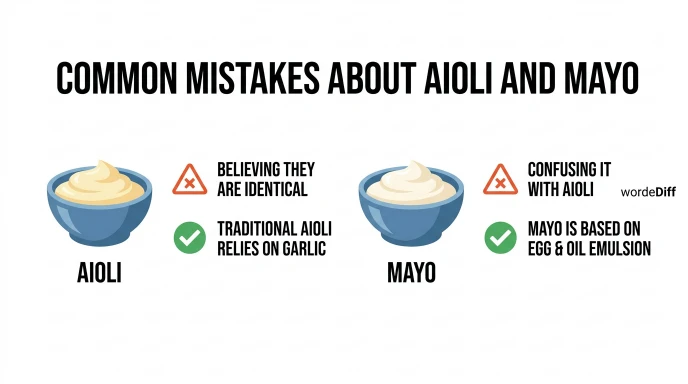
Mistake 1: Thinking They Are Always Completely Different
Traditional aioli and mayonnaise are different, but modern recipes can overlap heavily.
Fix: Check the actual ingredients and preparation method.
Mistake 2: Assuming Every Aioli Is Egg-Free
Traditional aioli can be made without egg, but many modern versions contain mayonnaise and therefore egg.
Fix: Check the recipe or ask the restaurant if you have dietary restrictions.
Mistake 3: Thinking Aioli Always Means Garlic Mayo
Garlic is central to traditional aioli, but modern chefs use the word for many flavored sauces.
Fix: Look at the sauce description before assuming its ingredients.
Mistake 4: Believing Mayo Is Only for Sandwiches
Mayo is useful in salads, dressings, dips, sauces, and many cooked recipes.
Fix: Treat mayonnaise as a versatile ingredient rather than just a sandwich spread.
Real-Life Examples of Aioli and Mayo
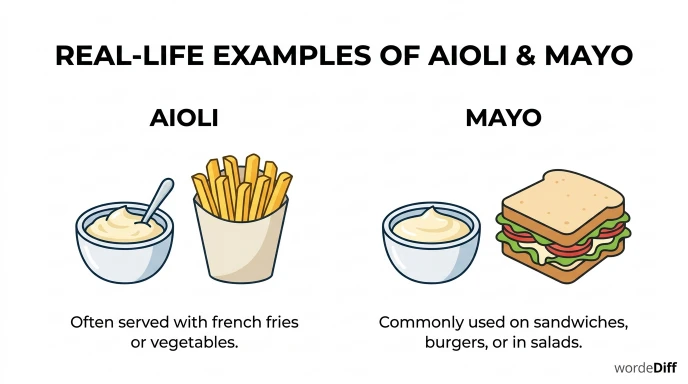
Example 1: Burger
A classic mayo spread gives a burger a creamy, mild finish. Garlic aioli adds a stronger savory taste.
Example 2: Fries
Both sauces work with fries, but garlic aioli gives them a more intense flavor.
Example 3: Seafood
Aioli is often a good match for grilled or fried seafood because garlic and acidity can complement the dish.
Example 4: Potato Salad
Mayo is commonly used as the creamy base because its mild flavor works well with potatoes and vegetables.
Example 5: Sandwich
Regular mayo is useful when you want moisture without changing the main flavor of the sandwich.
Is Aioli Healthier Than Mayo?
Neither one should automatically be considered healthier.
The nutritional value depends on the recipe, portion size, oil used, and other ingredients. Both can be calorie-dense because oil is a major component.
Some homemade versions may contain fewer additives than certain commercial sauces, but that does not automatically make them low-calorie.
If nutrition matters to you, compare the ingredient list and nutrition label rather than choosing based only on the word “aioli.”
Can You Substitute Aioli for Mayo?
Yes, in many recipes.
Aioli can replace mayo in:
- Sandwiches
- Burgers
- Wraps
- Dips
- Potato dishes
- Seafood recipes
The main issue is flavor. Garlic aioli is stronger, so it may change the overall taste of a recipe.
Likewise, mayo can replace modern aioli in many dishes, especially when garlic or other flavorings are added separately.
Why Is Aioli More Expensive at Some Restaurants?
The price usually depends more on the restaurant’s recipe and ingredients than on the name itself.
A restaurant may use premium olive oil, fresh garlic, herbs, or other ingredients. Another restaurant may simply mix mayonnaise with garlic.
Therefore, “aioli” does not automatically mean a more expensive or higher-quality sauce.
FAQs
Is aioli just mayonnaise?
Not always. Traditional aioli is a garlic-and-oil emulsion, while many modern aioli recipes are mayonnaise-based.
Does aioli contain mayo?
Traditional aioli does not have to contain mayonnaise. However, many modern restaurant-style aioli sauces start with mayonnaise.
Which tastes better, aioli or mayo?
It depends on your preference. Mayo is mild and creamy, while aioli is usually stronger and more savory.
Is aioli healthier than mayonnaise?
Not necessarily. Both can be high in calories because they contain substantial amounts of oil.
Can I use mayo instead of aioli?
Yes. Mayo can replace aioli in many dishes, although you may need garlic, lemon, or herbs to match the flavor.
Is traditional aioli made with eggs?
Traditional aioli can be made without eggs. Mayonnaise traditionally uses egg yolk as an emulsifier.
What is the biggest difference between aioli and mayo?
The traditional ingredient base is the biggest difference: aioli centers on garlic and olive oil, while mayonnaise centers on egg yolk, oil, and acid.
Expert Insight: Why the Names Matter Less Than the Recipe
In practical cooking, the label can sometimes be misleading. If you are buying or ordering aioli, the most useful question is not simply, “Is this aioli?” Instead, ask what is in the aioli?
That matters because culinary terminology has evolved. Traditional preparations remain important, but restaurants and food brands often adapt classic names for modern sauces.
This also explains why two dishes labeled “aioli” can taste completely different. One may have a powerful garlic flavor, while another may taste like lightly seasoned mayonnaise.
For home cooks, this distinction is useful: understand the ingredients first, then choose the sauce based on the flavor you want.
Conclusion
The difference between aioli and mayo mainly comes down to their traditional ingredients and preparation. Traditional aioli is a garlic-and-olive-oil emulsion, while mayonnaise is generally made with egg yolk, oil, and an acidic ingredient such as vinegar or lemon juice.
Both sauces are creamy and versatile, but their flavors can be quite different. Mayo is usually mild, rich, and tangy, while traditional aioli has a stronger garlic and olive-oil character. Modern cooking has blurred the distinction, and many restaurant-style aioli sauces are actually mayonnaise flavored with garlic and other ingredients.
So, when deciding between aioli and mayo, think about the flavor and recipe rather than the name alone. For a mild creamy spread, mayo is a simple choice. For a stronger garlic-forward sauce, aioli is often the better match.
Read more about!
- Difference Between Liberal and Leftist: A Simple Guide
- Difference Between Catholic and Lutheran: Easy Guide

I am James Carter, a professional content writer from the United States. I specialize in writing simple and clear comparison blogs that help students and readers understand difficult topics easily. My writing focuses on everyday language, education, science, and lifestyle topics. I believe that learning should be easy for everyone, so I use simple words and real-life examples in my articles.