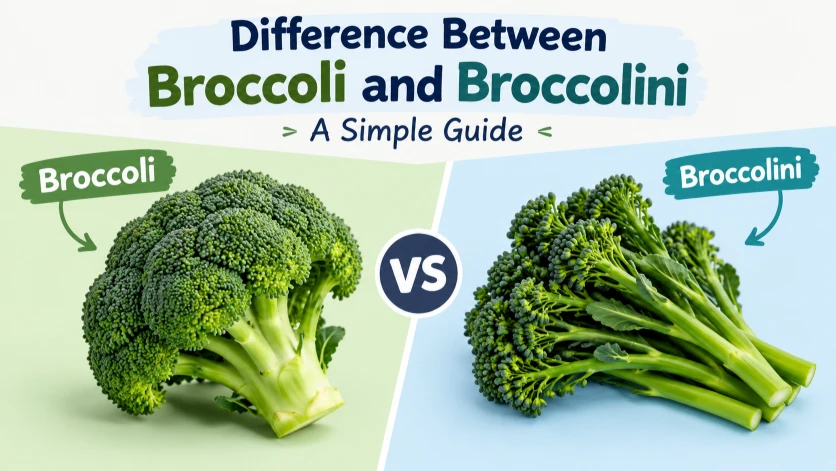
Broccoli has larger florets and thicker stems, while broccolini has smaller florets, long tender stems, and a milder, slightly sweeter flavor.
Many people get confused by the difference between broccoli and broccolini because they look similar and are often sold in the same produce section.
In simple words, broccoli has a large, dense head, while broccolini has thin, tender stems and small florets. This guide explains the difference between broccoli and broccolini, including taste, texture, nutrition, cooking, and when to use each.
Quick Answer
The main difference is shape, texture, and flavor. Broccoli has a large central head with thick stems, while broccolini has long, thin stems with small florets. Broccolini is generally more tender and slightly sweeter.
For example, roasted broccoli works well as a hearty side dish, while broccolini is excellent when quickly sautéed or grilled.
Definition of Broccoli and Broccolini
- Broccoli: A green cruciferous vegetable with a thick stalk and a large cluster of tightly packed florets.
- Broccolini: A hybrid vegetable related to broccoli and Chinese broccoli, known for its long, thin stems and small florets.
Both are members of the Brassicaceae family, so they share many characteristics.
How Do You Pronounce Broccoli and Broccolini?
In American English:
- Broccoli: BRAH-kuh-lee
- Broccolini: broh-kuh-LEE-nee
In British English, pronunciation can vary slightly, but the basic sounds remain similar.
Now that the names are clear, let’s look at what actually separates these two vegetables.
Difference Between Broccoli and Broccolini at a Glance
| Feature | Broccoli | Broccolini |
|---|---|---|
| Shape | Large head with thick stalk | Long, thin stems with small florets |
| Flavor | Mild, earthy, slightly bitter | Mild, sweet, and more delicate |
| Texture | Firm and dense | Tender and crisp |
| Stems | Thick and substantial | Thin and edible |
| Florets | Large and tightly packed | Small and loosely spaced |
| Cooking time | Usually takes longer | Usually cooks quickly |
| Best methods | Roasting, steaming, boiling | Grilling, sautéing, roasting |
| Appearance | Compact green crown | Long green stalks with small flowers |
| Common use | Soups, salads, sides, stir-fries | Pasta, stir-fries, grilled dishes |
The biggest practical difference is simple: broccoli feels like a dense vegetable head, while broccolini feels more like a tender stem vegetable with broccoli-like florets.
Key Differences Explained Between Broccoli and Broccolini
1. Broccoli Has a Larger Head
Broccoli is usually recognized by its large central crown. The florets grow closely together and form a compact head.
Broccolini looks different. Instead of one large crown, it has several slender stems topped with small florets.
Real-life example: If you are choosing vegetables for a roasted dinner, a large broccoli head gives you substantial florets, while a bunch of broccolini gives you long pieces that can be roasted whole.
2. Broccolini Has More Tender Stems
One of the biggest advantages of broccolini is its stem. The stems are thin and generally tender enough to eat without the extensive trimming sometimes needed with mature broccoli stems.
Broccoli stems are also edible, but thick stems may need peeling or longer cooking.
This makes broccolini convenient for quick meals.
3. Broccolini Usually Has a Sweeter Taste
Broccoli has a mild earthy flavor with a slight bitterness, particularly when raw or overcooked.
Broccolini tends to have a milder, slightly sweeter flavor. It can also have a subtle peppery or mustard-like note because of its relationship to Chinese broccoli.
Taste can vary depending on freshness and cooking method, so the difference is not absolute.
4. The Texture Is Different
Broccoli has a firm, dense texture. When steamed or roasted correctly, the florets can become tender while keeping some bite.
Broccolini has thinner stems and smaller florets, so it can become tender more quickly. Properly cooked broccolini often has a pleasant combination of crisp stems and soft florets.
Mini takeaway: If you prefer a more substantial bite, broccoli may be the better choice. If you like tender vegetables with edible stems, try broccolini.
5. Broccoli Takes Longer to Cook
Because broccoli florets and stems are generally thicker, cooking can take longer.
Broccolini’s thin stalks make it especially useful for fast cooking methods such as sautéing, grilling, and stir-frying.
This is one reason busy cooks often like broccolini.
6. Their Appearance Is Easy to Tell Apart
Broccoli usually looks like a miniature green tree: one thick stalk supports a large crown of florets.
Broccolini has a more elongated appearance. Think of several thin green stalks with small broccoli-like heads at the top.
If you see long stems and tiny florets, you are probably looking at broccolini rather than conventional broccoli.
7. They Work Better in Different Dishes
Both vegetables are flexible, but their shapes can influence how they work in recipes.
Broccoli is excellent in:
- Creamy soups
- Casseroles
- Pasta
- Salads
- Roasted vegetable trays
- Stir-fries
Broccolini works particularly well in:
- Grilled vegetable plates
- Pasta dishes
- Stir-fries
- Grain bowls
- Quick side dishes
- Garlic and lemon preparations
The difference is not that one is “better.” Their shapes simply make them useful in different situations.
Is Broccolini the Same as Broccoli?
No. Broccolini and broccoli are related, but they are not the same vegetable.
Broccolini is a hybrid vegetable developed from broccoli and Chinese broccoli, also known as gai lan. It combines characteristics of both plants, especially the long edible stems associated with Chinese broccoli and the small florets associated with broccoli.
That explains why broccolini looks familiar but not quite like traditional broccoli.
Is Broccolini Healthier Than Broccoli?
Neither vegetable should automatically be considered healthier.
Both broccoli and broccolini are nutrient-rich vegetables and provide fiber, vitamins, minerals, and plant compounds. Their exact nutritional values can vary based on variety, growing conditions, portion size, and preparation.
The cooking method matters too. Steaming or lightly roasting vegetables can preserve their texture and flavor without adding large amounts of oil.
So if you are choosing between broccoli and broccolini for a healthy meal, either can be a good option.
Can You Substitute Broccolini for Broccoli?
Yes, in many recipes you can substitute broccolini for broccoli.
However, the result may not be identical because broccolini has thinner stems, smaller florets, and a different texture.
If a recipe calls for broccoli and you use broccolini, watch the cooking time carefully. Broccolini may become tender sooner.
Example: A pasta recipe calling for roasted broccoli can usually use broccolini, but you may need to adjust the roasting time.
Which Is Better for Roasting?
Both work well when roasted.
Broccoli produces crispy edges and tender florets, especially when the pieces are spread out on a hot baking sheet.
Broccolini can also develop browned, crispy edges, while its long stems become tender.
For a simple roasted vegetable dish, toss either one with a little oil, season it, and roast until the edges begin to brown.
Which Is Better for Stir-Frying?
Broccolini is especially convenient for stir-frying because its thin stems cook quickly.
Broccoli can also be stir-fried, but larger pieces may need more cooking time. Cutting broccoli into smaller florets helps it cook evenly.
For a quick weeknight stir-fry, broccolini has a practical advantage.
What About Broccoli Rabe?
Broccoli rabe is another source of confusion.
Despite its name, broccoli rabe is not simply another type of broccolini. It is a different vegetable with leafy greens, thin stems, and small broccoli-like buds. Its flavor is also notably more bitter.
A simple way to remember the difference:
- Broccoli: large head and thick stalk
- Broccolini: long tender stalks and small florets
- Broccoli rabe: leafy vegetable with a distinctly bitter taste
These vegetables can all appear in similar recipes, but they do not taste the same.
Difference and Similarity Between Broccoli and Broccolini
| Feature | Broccoli | Broccolini | Similarity |
|---|---|---|---|
| Plant family | Brassicaceae | Brassicaceae | Both are cruciferous vegetables |
| Main appearance | Large compact head | Long stems with small florets | Both have green florets |
| Flavor | Mild and earthy | Mild and slightly sweet | Both have a fresh vegetable flavor |
| Stems | Thick | Thin and tender | Both have edible stems |
| Cooking | Roasting, steaming, boiling | Grilling, sautéing, roasting | Both can be cooked in many ways |
| Nutrition | Nutrient-rich | Nutrient-rich | Both can fit a balanced diet |
| Common dishes | Soups, salads, pasta | Pasta, stir-fries, sides | Both work in everyday meals |
| Texture | Dense and firm | Tender and crisp | Both can retain a pleasant bite when cooked properly |
This table clearly shows the difference and similarity between broccoli and broccolini for quick understanding.
Common Mistakes With Broccoli and Broccolini
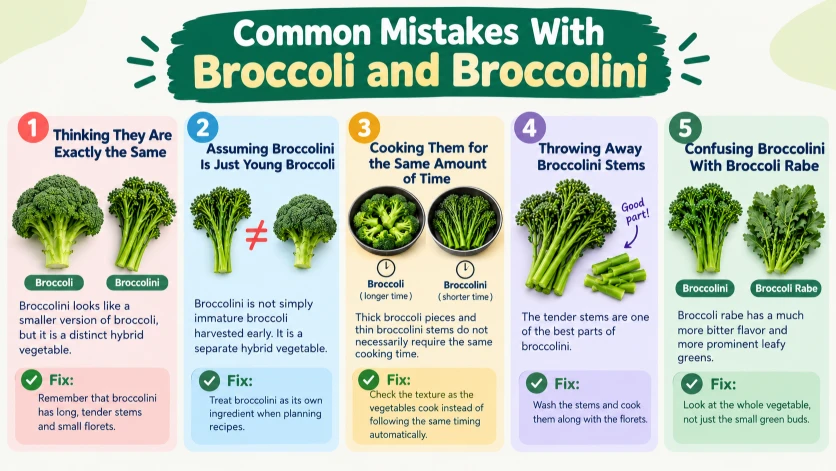
Mistake 1: Thinking They Are Exactly the Same
Broccolini looks like a smaller version of broccoli, but it is a distinct hybrid vegetable.
Fix: Remember that broccolini has long, tender stems and small florets.
Mistake 2: Assuming Broccolini Is Just Young Broccoli
Broccolini is not simply immature broccoli harvested early. It is a separate hybrid vegetable.
Fix: Treat broccolini as its own ingredient when planning recipes.
Mistake 3: Cooking Them for the Same Amount of Time
Thick broccoli pieces and thin broccolini stems do not necessarily require the same cooking time.
Fix: Check the texture as the vegetables cook instead of following the same timing automatically.
Mistake 4: Throwing Away Broccolini Stems
The tender stems are one of the best parts of broccolini.
Fix: Wash the stems and cook them along with the florets.
Mistake 5: Confusing Broccolini With Broccoli Rabe
Broccoli rabe has a much more bitter flavor and more prominent leafy greens.
Fix: Look at the whole vegetable, not just the small green buds.
Real-Life Examples of Broccoli and Broccolini
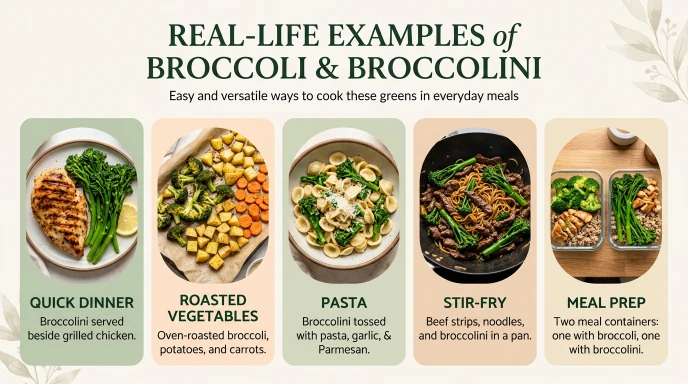
Example 1: Quick Weeknight Dinner
You need a vegetable that can cook quickly alongside chicken or fish. Broccolini is a convenient option because its thin stems become tender relatively fast.
Example 2: Family Roasted Vegetable Tray
You are roasting potatoes, carrots, and vegetables for dinner. Broccoli works well because its larger florets can become browned and crisp around the edges.
Example 3: Pasta
Broccolini can be tossed with pasta, garlic, olive oil, and Parmesan for a simple meal. Its long stems make the finished dish look different from one made with traditional broccoli.
Example 4: Stir-Fry
Thinly sliced beef, noodles, and broccolini make a fast stir-fry. The stems provide a crisp texture without requiring extensive preparation.
Example 5: Meal Preparation
For meal prep, either vegetable can work. Broccoli is useful when you want substantial florets, while broccolini is convenient when you want long, portion-friendly pieces.
When Should You Use Broccoli or Broccolini?
Choose broccoli when:
- You want large florets.
- You are making soup or casserole.
- You need a hearty roasted vegetable.
- You want an inexpensive everyday vegetable.
- You are preparing a large batch for a family meal.
Choose broccolini when:
- You want tender edible stems.
- You are making a quick meal.
- You plan to grill or sauté the vegetable.
- You want a more delicate appearance.
- You prefer a slightly sweeter vegetable flavor.
In practical use, the best choice often comes down to texture and cooking time, not nutrition alone.
Why Do People Get Confused About Broccoli and Broccolini?
The confusion is understandable because both vegetables have green florets and similar names.
Food marketing also makes the distinction less obvious. Broccolini is often presented as a premium-looking alternative to standard broccoli, while recipes may casually refer to either vegetable as “broccoli.”
Social media can add to the confusion too. A recipe video on Instagram, YouTube, or another platform may use one vegetable while describing it with a broad term such as broccoli.
The visual difference becomes much easier to recognize once you focus on the stems.
How Search Engines Understand the Difference Between Broccoli and Broccolini
When someone searches “difference between broccoli and broccolini,” the likely intent is informational and comparative. They usually want to know if the vegetables are the same, how they taste, if one is healthier, and how they should be cooked.
Google can interpret related searches such as:
- Is broccolini the same as broccoli?
- Is broccolini healthier than broccoli?
- Can I substitute broccolini for broccoli?
- What does broccolini taste like?
- What is the difference between broccoli rabe and broccolini?
These questions belong to the same topic because they help users understand the identity, characteristics, and practical uses of the vegetables.
Instagram and YouTube recipe content can also influence which cooking methods people encounter, but a recipe trend does not change the botanical identity of the vegetable.
Expert Insight: Which One Should You Buy?
In real scenarios, I would choose based on the dish rather than trying to decide which vegetable is universally better.
If the recipe needs substantial florets, traditional broccoli is the safer choice. If you want something fast, tender, and easy to grill or sauté, broccolini has a clear advantage.
One useful cooking tip is to avoid overcooking either vegetable. Both taste better when they retain some texture. A little browning can also bring out their natural sweetness.
The practical lesson is simple: broccoli is the more substantial option, while broccolini is the more delicate and quick-cooking option.
Frequently Asked Questions
Why is broccolini so expensive?
Broccolini can cost more than broccoli because it is often grown and harvested more carefully, has lower yields, and may require more labor. It is also marketed as a premium vegetable.
Is broccolini easier to digest than broccoli?
Broccolini may feel easier to digest for some people because its stems and florets are tender and it can cook quickly. However, both contain fiber and can cause gas or bloating in sensitive people.
Why do restaurants serve broccolini instead of broccoli?
Restaurants often use broccolini because its long, tender stems and small florets look attractive on the plate. It also cooks quickly and works well with grilling, roasting, sautéing, and simple seasonings.
Can I replace broccolini with broccoli?
Yes. Broccoli is a good substitute for broccolini in most recipes. The main difference is that broccoli has larger florets and thicker stems, so it may need slightly different cooking time.
Which one is better, broccoli or broccolini?
Neither is universally better. Broccoli has larger florets and is widely available, while broccolini has tender stems and a milder, slightly sweeter flavor. Your choice depends on the recipe and your preference.
Why are people avoiding broccoli?
Some people avoid broccoli because it can cause gas, bloating, or digestive discomfort due to its fiber and naturally occurring carbohydrates. Others may dislike its taste or texture. For most people, broccoli can be part of a balanced diet.
Conclusion
The difference between broccoli and broccolini mainly comes down to their shape, stems, texture, flavor, and cooking behavior. Broccoli has a large, dense head with thicker stems, while broccolini has long, tender stems and smaller florets. Broccolini is usually milder and slightly sweeter, while broccoli has a more substantial, earthy vegetable flavor.
Neither is automatically the better choice. Broccoli is excellent for soups, casseroles, roasting, salads, and meals where you want hearty florets. Broccolini shines in quick stir-fries, grilled dishes, pasta, and recipes where tender stems add texture.
Both can be nutritious additions to a balanced diet. If you remember just one thing, remember this: broccoli is the compact, hearty vegetable, while broccolini is the long, tender, quick-cooking relative.
READ MORE ABOUT!
- Difference Between Sociology and Psychology: A Clear Guide
- Difference Between Awhile and A While: Meaning and Usage

I am James Carter, a professional content writer from the United States. I specialize in writing simple and clear comparison blogs that help students and readers understand difficult topics easily. My writing focuses on everyday language, education, science, and lifestyle topics. I believe that learning should be easy for everyone, so I use simple words and real-life examples in my articles.