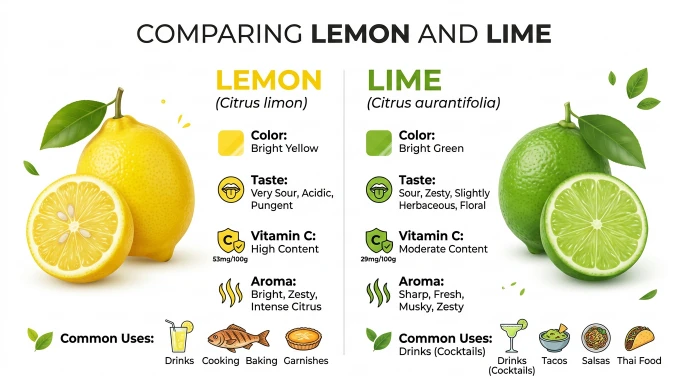
Lemons are yellow and slightly sweeter, while limes are green and more sour.
Have you ever looked at a citrus fruit in the grocery store and wondered if it was a lemon or a lime? You’re not alone.
Many people get confused because both fruits belong to the citrus family, have a similar shape, and are often used in cooking and drinks.
Understanding the difference between lemon and lime helps you choose the right one for cooking and nutrition.
In simple words, lemon and lime differ in color, taste, nutrition, and uses. Lemons are usually yellow and slightly sweet, while limes are green and more sour. Both are similar, but each is better for different foods and drinks.
This guide explains the difference between lemon and lime, their uses, nutrition, key differences, and how to choose the right one.
Difference Between Lemon and Lime
Lemons are yellow and slightly sweeter, while limes are green and more sour. For example, lemons are used in lemonade, while limes are common in tacos and mojitos.
Definition of Lemon and Lime
Lemon:
A lemon is a yellow citrus fruit known for its tangy yet slightly sweet flavor. It is widely used in cooking, baking, beverages, cleaning products, and natural remedies.
Lime:
A lime is a green citrus fruit with a sharper, more acidic, and slightly bitter taste. It is commonly used in savory dishes, cocktails, marinades, and tropical cuisines.
Example: If you make classic lemonade, you’ll typically use lemons. If you’re preparing guacamole or a mojito, limes are usually the better choice.
Pronunciation
| Word | US Pronunciation | UK Pronunciation |
| Lemon | LEM-ən /ˈlɛmən/ | LEM-ən /ˈlemən/ |
| Lime | LYME /laɪm/ | LYME /laɪm/ |
Now let’s compare lemon and lime to see their main differences.
Difference Between Lemon and Lime : Comparison
| Feature | Lemon | Lime |
| Color | Bright yellow | Green (sometimes yellow when ripe) |
| Taste | Tart with slight sweetness | Sharper, more bitter, and acidic |
| Aroma | Mild citrus fragrance | Strong citrus aroma |
| Shape | Slightly oval with pointed ends | Smaller and more rounded |
| Size | Usually larger | Usually smaller |
| Vitamin C | Generally higher | Slightly lower |
| Juice Flavor | Smooth and refreshing | Bold and intense |
| Common Uses | Lemonade, baking, tea | Cocktails, tacos, curries, marinades |
| Popular Varieties | Eureka, Lisbon, Meyer | Persian, Key, Kaffir |
| Shelf Life | Slightly longer | Usually shorter after ripening |
Key Differences Explained Between Lemon and Lime
1. Color Is the Most Noticeable Difference
The easiest way to identify the difference between lemon and lime is by their color. Lemons are bright yellow when fully ripe, while limes are typically green. Some ripe limes may turn yellow, but they still differ in taste and aroma from lemons.
Real-life example: At the supermarket, yellow citrus fruits are almost always lemons, while green ones are usually limes.
2. Taste Is Completely Different
Although both fruits are sour, their flavor profiles are not the same.
- Lemon: Tangy with a slight natural sweetness.
- Lime: Sharper, more acidic, and slightly bitter.
Lemons are often used in drinks, while limes are better for spicy and savory foods.
Example: Lemon works well in lemonade, while lime is ideal for salsa and guacamole.
3. Size and Shape
Lemons are generally larger and have an oval shape with pointed ends.
Limes are usually smaller, rounder, and have thinner skin.
This physical difference makes it easier to recognize each fruit even before tasting it.
Example: A Meyer lemon is noticeably larger than a typical Key lime.
4. Nutritional Value
Both lemons and limes are nutritious fruits packed with antioxidants and vitamin C.
However, lemons usually contain slightly more vitamin C per serving than limes.
Both fruits provide:
- Vitamin C
- Dietary fiber
- Flavonoids
- Antioxidants
- Small amounts of potassium
In practical use, both support a healthy immune system and add flavor without many calories.
5. Culinary Uses
The difference between lemon and lime also becomes clear in cooking.
Lemons are commonly used for:
- Lemonade
- Cakes and desserts
- Tea
- Fish dishes
- Salad dressings
Limes are commonly used for:
- Tacos
- Thai cuisine
- Mexican dishes
- Cocktails like mojitos and margaritas
- Guacamole
- Marinades
Professional chefs often choose one over the other depending on the flavor profile they want to create.
6. Aroma and Essential Oils
One often-overlooked difference between lemon and lime is their aroma.
Lemons have a lighter, fresher scent that works well in desserts and cleaning products.
Limes have a stronger citrus smell and are often used in drinks and savory dishes.
Real-life example: Lemon oil is used in cleaning products, while lime zest adds extra flavor and aroma to spicy dishes.
7. Acidity and pH Level
Many people assume limes are always more acidic than lemons. In reality, both fruits are highly acidic, with a pH generally ranging from 2.0 to 3.0 depending on the variety and ripeness.
Limes often taste more sour than lemons, even though both have similar acidity.
Real-life example: A squeeze of lime in spicy tacos creates a sharper citrus kick than the same amount of lemon juice.
8. Skin Thickness
Another noticeable difference between lemon and lime is their peel.
- Lemons: Usually have thicker, textured skin.
- Limes: Generally have thinner, smoother skin.
A thicker peel makes lemons easier to zest for baking, while thin-skinned limes are ideal for squeezing fresh juice.
Difference Between Lemon and Lime: Health Benefits
Although lemons and limes are different in flavor and appearance, they offer many of the same health benefits.
Lemons
- Rich in vitamin C
- Supports immune health
- Helps the body absorb iron
- Contains antioxidants
- Commonly used in detox drinks
Limes
- Rich in antioxidants
- Supports healthy digestion
- Contains vitamin C
- Adds flavor without extra calories
- Popular in fresh fruit-based recipes
Mini Summary: Both fruits are nutritious choices. Lemons may provide slightly more vitamin C, but either fruit can be part of a healthy diet.
Which Is More Acidic: Lemon or Lime?
This is one of the most searched questions online.
Scientifically, both lemons and limes are highly acidic fruits. Their exact acidity varies by variety, growing conditions, and ripeness.
In everyday cooking, however:
- Lime tastes more intensely sour.
- Lemon tastes smoother and slightly sweeter.
That difference in flavor not just pH is why chefs choose one over the other for specific recipes.
Which Is Healthier: Lemon or Lime?
There isn’t a single winner.
Choose lemons if you want:
- Slightly more vitamin C
- A milder citrus flavor
- Better pairing with tea and desserts
Choose limes if you want:
- A stronger citrus taste
- Tropical flavors
- A classic ingredient for Mexican, Thai, and Caribbean dishes
Expert Tip: Instead of asking which is healthier, ask which fruit best fits your recipe or nutritional goal.
Difference Between Lemon and Lime in Cooking
Cooking is where the difference between lemon and lime matters most.
Lemons Are Best For
- Lemonade
- Tea
- Cakes
- Cookies
- Seafood
- Salad dressings
- Roasted vegetables
Their balanced tartness enhances flavors without overpowering the dish.
Limes Are Best For
- Guacamole
- Tacos
- Thai curries
- Salsa
- Ceviche
- Mojitos
- Margaritas
Their bold citrus flavor complements spicy foods exceptionally well.
Can You Substitute Lemon for Lime?
Yes but not always.
If your recipe only needs a small amount of citrus juice, substituting one for the other usually works.
However, the final flavor will change.
Substitute Lemon When:
- Making marinades
- Preparing salad dressings
- Adding acidity to soups
Substitute Lime When:
- Making cocktails
- Preparing tropical recipes
- Cooking Mexican or Thai dishes
Real-world advice: Chefs usually do not replace lemon with lime when citrus is the main flavor.
Difference and Similarity
| Feature | Lemon | Lime | Similarity |
| Color | Yellow | Green | Both may change color when fully ripe. |
| Taste | Tart with mild sweetness | Sharper and slightly bitter | Both provide a refreshing citrus flavor. |
| Size | Larger | Smaller | Both are small citrus fruits. |
| Shape | Oval | Round | Both have juicy segmented interiors. |
| Vitamin C | Slightly higher | Slightly lower | Both are good sources of vitamin C. |
| Culinary Use | Desserts, tea, lemonade | Cocktails, tacos, curries | Both enhance food and drinks. |
| Aroma | Mild citrus scent | Strong citrus aroma | Both contain fragrant essential oils. |
| Family | Citrus | Citrus | Both belong to the Citrus genus. |
This table clearly shows the difference and similarity between lemon and lime for quick understanding.
Common Mistakes with Lemon and Lime
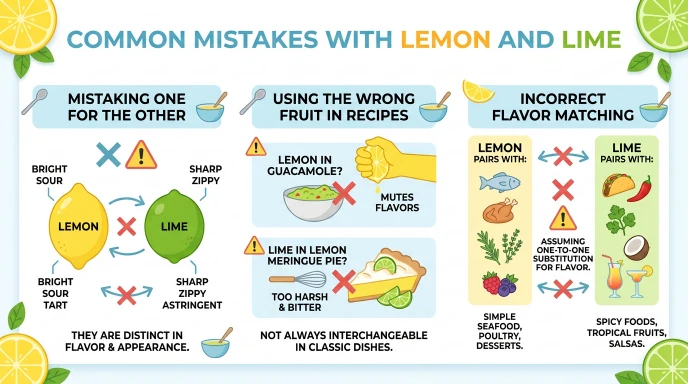
Many beginners mix up these citrus fruits. Here are some of the most common mistakes.
1. Thinking They’re the Same Fruit
Although closely related, lemons and limes are different fruits with unique flavors and uses.
Correction: Learn to identify them by color, taste, and size.
2. Using Lime Instead of Lemon in Baking
Lime’s stronger flavor can noticeably change the taste of cakes and desserts.
Correction: Use lemons unless the recipe specifically calls for lime.
3. Believing Lime Always Has More Vitamin C
This is a common myth.
Correction: Lemons generally contain slightly more vitamin C.
4. Judging Only by Color
Some ripe limes become yellow.
Correction: Consider the fruit’s size, aroma, and flavor not just its color.
5. Assuming One Is Always Healthier
Both fruits are healthy.
Correction: Choose the one that best suits your meal and personal taste.
Real-Life Examples with Lemon and Lime
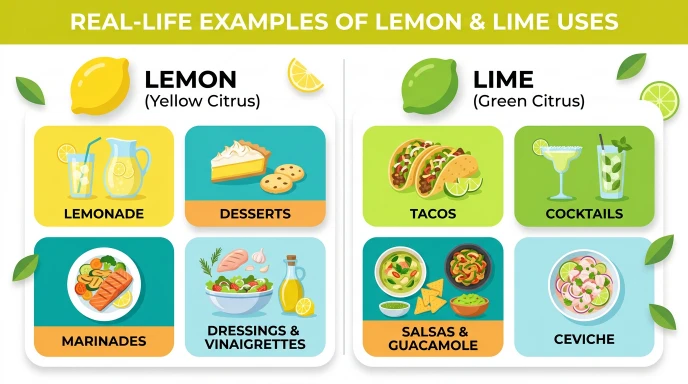
Example 1: Home Cooking
You’re making grilled fish.
- Lemon adds a light, fresh finish.
- Lime creates a bolder citrus flavor.
Example 2: Making Drinks
For classic lemonade, lemons are the obvious choice.
For mojitos or margaritas, fresh lime juice delivers the authentic taste.
Example 3: Mexican Cuisine
Fresh lime juice is commonly squeezed over tacos, nachos, burritos, and guacamole to enhance flavor.
Example 4: Baking
Most lemon cakes, lemon bars, and cheesecakes rely on lemons because of their balanced sweetness.
Example 5: Everyday Nutrition
Adding lemon or lime to water gives it more flavor without adding many calories.
When to Use Each: Lemon vs. Lime
Choosing between a lemon and a lime depends on the flavor, recipe, and purpose. While both fruits add freshness and acidity, one may work better than the other in certain situations.
Use a Lemon When:
- You’re making lemonade or flavored water.
- Baking cakes, cookies, or pies.
- Adding brightness to seafood or chicken.
- Preparing tea or warm drinks.
- Making creamy salad dressings or light sauces.
Example: A classic lemon drizzle cake gets its signature flavor from fresh lemon juice and zest.
Use a Lime When:
- Cooking Mexican, Thai, or Vietnamese dishes.
- Making guacamole or salsa.
- Preparing tropical drinks and cocktails.
- Marinating meat or seafood.
- Adding a bold citrus finish to spicy foods.
Example: Fresh lime juice enhances tacos, grilled shrimp, and Thai curry with a vibrant citrus flavor.
Quick Tip: If citrus is the main flavor in your recipe, use the fruit the recipe recommends instead of substituting the other.
Why People Get Confused Between Lemon and Lime
It’s easy to understand why people mix them up.
1. They Belong to the Same Citrus Family
Both lemons and limes are citrus fruits with similar shapes, juicy interiors, and acidic juice.
2. Similar Culinary Uses
Both are used in cooking, baking, beverages, desserts, and marinades.
3. They Look Similar
At first glance, many people only notice that they’re round citrus fruits. Size, aroma, and color differences are often overlooked.
4. Regional Availability
Some countries primarily sell one variety, making people less familiar with the other.
5. Online Recipes
Some recipes use lemon or lime instead of each other, so beginners often think they are always the same.
Mini Summary: Lemons and limes are similar, but they have different flavors, nutrition, and uses. Choosing the right one gives better results.
How Search Engines Understand “Difference Between Lemon and Lime” and User Intent
Search engines such as Google aim to understand not just the words in a search query but the user’s intent.
When someone searches “difference between lemon and lime,” they usually want:
- A quick comparison.
- Easy-to-understand definitions.
- A comparison table.
- Practical cooking advice.
- Health and nutrition information.
- Answers to common questions.
Google often highlights content that:
- Clearly answers the question early.
- Uses helpful comparison tables.
- Covers related topics naturally.
- Includes practical examples.
- Demonstrates expertise and trustworthiness.
That’s why comprehensive, user-focused articles generally perform better than short, incomplete answers.
Expert Insight
From a culinary and nutrition perspective, neither fruit is universally better.
In real-world cooking, chefs select lemons or limes based on the flavor profile they want to achieve rather than assuming one is superior.
Both lemons and limes provide vitamin C, antioxidants, and other healthy nutrients. Instead of focusing on which fruit is “healthier,” it’s more useful to choose the one that best complements your meal.
For everyday use:
- Keep lemons on hand for beverages, baking, and lighter dishes.
- Keep limes for spicy recipes, marinades, and tropical flavors.
Using each fruit where it naturally fits produces the best taste and overall cooking results.
FAQs
1. What is the main difference between lemon and lime?
Lemons are yellow and slightly sweeter, while limes are green and more sour.
2. Which has more vitamin C, lemon or lime?
Lemons generally contain slightly more vitamin C than limes, although both are excellent sources.
3. Can I replace lemon with lime?
Yes, in many recipes you can. However, the flavor will change because lime has a stronger and more intense citrus taste.
4. Which is better for cooking?
Neither is universally better. Lemons are excellent for desserts, tea, and seafood, while limes work best in Mexican, Thai, and tropical recipes.
5. Are lemons and limes the same fruit?
No. They are different citrus fruits, although they belong to the same plant family.
6. Why do limes taste more sour?
Limes taste more sour than lemons because of their natural acids and flavor compounds.
7. Which is better for lemonade?
Lemons are the best choice for lemonade because they have a balanced sweet and sour taste.
8. Can I eat lemons and limes every day?
Yes, most people can enjoy both as part of a balanced diet. However, excessive citrus consumption may affect tooth enamel because of their acidity.
9. Do ripe limes turn yellow?
Yes. Some limes turn yellow when fully ripe, but they are still limes.
10. Which fruit lasts longer?
Lemons usually stay fresh longer than limes when kept in the refrigerator.
Conclusion
Knowing the difference between lemon and lime helps you choose the right one for cooking, baking, drinks, and healthy eating. While both belong to the citrus family and share many similarities, they differ in color, flavor, aroma, size, and common culinary uses.
Lemons are typically yellow, slightly sweeter, and ideal for lemonade, desserts, seafood, and tea. Limes are usually green, more sour, and often used in tacos, curries, marinades, and drinks. Both fruits are rich in vitamin C and antioxidants, making them nutritious additions to a healthy diet.
The best choice depends on your recipe and taste preferences rather than one fruit being objectively better than the other. Knowing these differences helps you choose the right citrus fruit for the best flavor and results.
Read more about!
Difference Between Capitalism and Communism: Key Differences
Difference Between PVC and CPVC: Which Pipe to Choose?

I am Emily Johnson, a USA-based content writer who creates easy-to-read blogs on language and daily life topics. I explain complex ideas in simple English for students and beginners so they can understand easily.