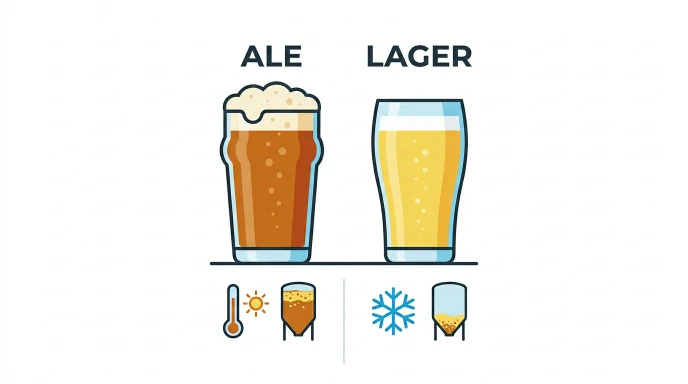
Ale and lager are two types of beer that differ mainly in their yeast, fermentation process, and flavor, with ale being fruitier and lager being cleaner and crisper.
Have you ever looked at a beer menu and wondered about the difference between ale and lager? Many people assume all beers taste the same, but the brewing process makes a big difference.
Understanding the difference between ale and lager helps you choose a beer that matches your taste, if you prefer fruity flavors or a crisp, refreshing finish.
In simple words, the difference between ale and lager comes down to the type of yeast, fermentation temperature, brewing time, and flavor.
These two beer styles are the foundation of most beers enjoyed around the world. In this guide, you’ll learn simple definitions, key differences, pronunciation, comparison tables, real-world examples, and expert insights to help you understand ale and lager with confidence.
Difference Between Ale and Lager
Ale is brewed with top-fermenting yeast at warmer temperatures, giving it a fruity and rich flavor.
Lager is brewed with bottom-fermenting yeast at cooler temperatures, creating a clean, crisp, and smooth taste.
Example: A pint of pale ale often tastes fruity and slightly bitter, while a traditional lager is light, refreshing, and easy to drink.
What Is Ale and Lager?
Ale
Ale is a type of beer made with top-fermenting yeast at warm temperatures. It usually has a fuller body and fruity or spicy flavors.
Example: Pale Ale and India Pale Ale (IPA).
Lager
Lager is a type of beer made with bottom-fermenting yeast at cool temperatures. It is known for its clean, crisp, and refreshing taste.
Example: Pilsner and Helles Lager.
Pronunciation
| Term | US Pronunciation | UK Pronunciation |
| Ale | /eɪl/ | /eɪl/ |
| Lager | /ˈlɑːɡər/ | /ˈlɑːɡə/ |
Now that you know what each beer style means, let’s explore the difference between ale and lager in detail.
Difference Between Ale and Lager Comparison
| Feature | Ale | Lager |
| Yeast | Top-fermenting yeast | Bottom-fermenting yeast |
| Fermentation | Warm (15–24°C) | Cool (7–13°C) |
| Brewing Time | Usually shorter | Usually longer |
| Flavor | Fruity, bold, complex | Crisp, clean, smooth |
| Aroma | Rich and aromatic | Mild and fresh |
| Body | Fuller | Lighter |
| Popular Styles | IPA, Pale Ale, Stout | Pilsner, Helles, Bock |
| Best For | Rich flavor lovers | Refreshing everyday drinking |
Key Differences Explained Between Ale and Lager
1. Fermentation Method
The biggest difference between ale and lager is how they ferment.
Ale ferments at warmer temperatures, while lager ferments in cooler conditions.
Example: A craft brewery often ferments pale ale in a warmer room, while lager requires refrigerated fermentation tanks.
2. Type of Yeast
Ale uses top-fermenting yeast (Saccharomyces cerevisiae).
Lager uses bottom-fermenting yeast (Saccharomyces pastorianus).
This difference affects the beer’s taste, aroma, and brewing process.
3. Flavor Profile
Ale usually has fruity, spicy, or malty notes.
Lager has a cleaner, smoother, and lighter flavor.
Example: Someone who enjoys bold flavors may choose an IPA, while someone wanting a refreshing drink may prefer a pilsner.
4. Brewing Time
Ale is generally ready in a few weeks.
Lager needs several weeks or even months of cold storage, known as “lagering.”
This longer process creates its signature smooth finish.
5. Aroma
Ale produces stronger aromas because warm fermentation creates more fruity esters.
Lager has a cleaner aroma with fewer fruity notes.
6. Appearance
Many ales are darker or cloudy, although some are pale.
Most lagers are bright, clear, and golden.
This difference comes from ingredients, filtration, and brewing methods.
7. Popular Beer Styles
Common ale styles include:
- Pale Ale
- India Pale Ale (IPA)
- Porter
- Stout
- Belgian Ale
Common lager styles include:
- Pilsner
- Helles
- Bock
- Vienna Lager
- Märzen
8. Drinking Experience
Ale offers a richer and more complex tasting experience.
Lager is generally lighter, crisp, and highly refreshing, making it popular in warm weather and casual gatherings.
Why Does the Difference Between Ale and Lager Exist?
The difference began because brewers in different parts of Europe used different yeast strains and brewing conditions.
Warmer regions naturally produced ales because fermentation worked well at higher temperatures. Cooler regions, especially parts of Central Europe, developed lagers by fermenting beer at lower temperatures and storing it in cool cellars. Over time, these methods created two distinct beer families that remain popular today.
How Does the Brewing Process Affect Ale and Lager?
Although both are made from water, malted grains, hops, and yeast, the brewing process changes the final beer.
Ale Brewing
- Ferments at warmer temperatures
- Uses top-fermenting yeast
- Produces fruity esters
- Ready to drink sooner
- Often has bold flavors
Lager Brewing
- Ferments slowly at cooler temperatures
- Uses bottom-fermenting yeast
- Requires cold conditioning
- Produces a cleaner finish
- Usually tastes smoother and lighter
Mini Summary: The brewing method is the main reason ales taste richer while lagers taste cleaner.
Which Is More Popular Around the World?
Lager is the most widely consumed beer style worldwide because its clean taste appeals to many drinkers. Many well-known international beer brands primarily produce lagers.
Ale, however, has grown rapidly in popularity thanks to the craft beer movement. Many independent breweries create unique ales with bold flavors, seasonal ingredients, and creative brewing techniques.
For many beginners, lager is an easy starting point. Beer enthusiasts often explore different ale styles as they develop their taste preferences.
Difference + Similarity Between Ale and Lager
| Feature | Ale | Lager | Similarity |
| Definition | Beer made with top-fermenting yeast | Beer made with bottom-fermenting yeast | Both are types of beer. |
| Fermentation | Warm fermentation | Cool fermentation | Both use yeast to produce alcohol. |
| Flavor | Fruity, rich, and complex | Crisp, clean, and refreshing | Both can have bitter or malty notes depending on the recipe. |
| Brewing Time | Usually shorter | Usually longer | Both require careful brewing and quality ingredients. |
| Appearance | Often cloudy or darker | Usually clear and golden | Both come in different colors and styles. |
| Popular Styles | IPA, Stout, Porter, Pale Ale | Pilsner, Helles, Bock | Both include many beer varieties. |
| Best For | People who enjoy bold flavors | People who prefer light, smooth beers | Both can be enjoyed with food or on their own. |
This table clearly shows the difference and similarity between ale and lager for quick understanding.
Common Mistakes with Ale and Lager
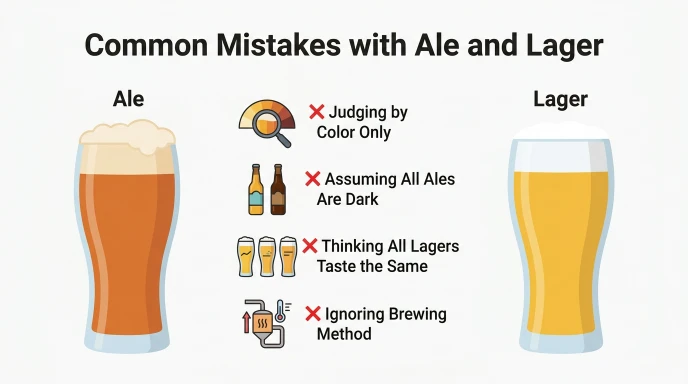
Many beginners confuse these two beer styles. Here are some common mistakes and how to avoid them.
1. Thinking All Beer Is the Same
Not every beer is identical. Ale and lager have different brewing methods, flavors, and aromas.
Correction: Learn the yeast and fermentation process before comparing beers.
2. Believing Color Determines the Type
Many people think dark beers are always ales and light beers are always lagers.
Correction: Beer type depends on fermentation, not color.
3. Assuming Lager Has More Alcohol
Alcohol content varies by recipe, not by if the beer is an ale or a lager.
Correction: Always check the ABV (Alcohol by Volume).
4. Confusing IPA with Lager
India Pale Ale (IPA) is an ale, not a lager.
Correction: IPA belongs to the ale family because it uses top-fermenting yeast.
5. Choosing Beer Only by Brand
Some people choose beer based only on the label.
Correction: Understanding beer style helps you find flavors you actually enjoy.
Real-Life Examples with Ale and Lager
Example 1: Casual Dinner
You order a grilled burger.
A crisp lager pairs well because it refreshes the palate.
Example 2: Craft Beer Festival
Most craft breweries offer several pale ales, IPAs, stouts, and porters.
These are examples of ale styles with unique flavors.
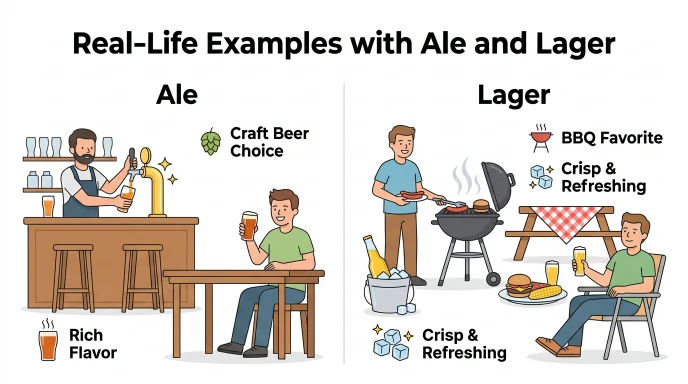
Example 3: Summer Barbecue
A light pilsner lager is popular during hot weather because it is refreshing.
Example 4: Winter Evening
Many people prefer a rich stout or porter ale during colder months because of its fuller body.
Example 5: Restaurant Pairing
Seafood often pairs well with a clean lager, while grilled meats can complement a flavorful ale.
When to Choose Ale or Lager
Choose ale if you:
- Enjoy bold and complex flavors.
- Like fruity or spicy notes.
- Want to explore craft beer styles.
- Prefer richer aromas.
Choose lager if you:
- Prefer a crisp and refreshing drink.
- Are new to beer.
- Want a lighter, smoother taste.
- Need an easy-drinking option for warm weather.
Why People Get Confused About Ale and Lager
Many people use the word “beer” to describe every style, so they don’t realize that ale and lager are two separate categories.
Other reasons include:
- Similar-looking bottles and cans.
- Restaurants often list only the brand name.
- Marketing focuses on the brand rather than the brewing method.
- Beer color can be misleading.
- Many people never learn about yeast or fermentation.
In simple words, every ale and every lager is beer, but not every beer is the same.
How Search Engines Understand “Difference Between Ale and Lager” and User Intent
When someone searches “difference between ale and lager,” search engines like Google aim to understand if the user wants a quick comparison or a detailed explanation.
Google analyzes the search intent behind the query. Most users are looking for:
- A simple definition.
- A comparison table.
- Brewing differences.
- Flavor differences.
- Which one to choose.
- Real-world examples.
Helpful content that answers these questions clearly, uses natural language, and provides practical examples is more likely to satisfy users. Search engines also recognize related terms such as beer styles, fermentation, top-fermenting yeast, bottom-fermenting yeast, craft beer, and pilsner, helping them understand the topic more completely.
Expert Insight
From a brewing perspective, neither ale nor lager is better they simply serve different preferences.
In real-world brewing, the fermentation process has a greater impact on the final beer than many beginners realize. Warm fermentation encourages fruity flavors, while cool fermentation produces a cleaner finish.
If you’re new to beer, start with a quality lager to understand its crisp profile. As your taste develops, try different ale styles such as pale ales, stouts, and IPAs to experience a wider range of flavors.
The best choice is the one that matches your personal taste, the occasion, and the food you’re enjoying.
FAQs
1. What is the main difference between ale and lager?
Ale uses top-fermenting yeast and warmer fermentation, while lager uses bottom-fermenting yeast and cooler fermentation.
2. Is ale stronger than lager?
Not always. Alcohol content depends on the recipe, not the beer type.
3. Which tastes smoother?
Lager usually has a smoother and cleaner taste.
4. Why is ale more flavorful?
Warm fermentation creates fruity esters and complex aromas that give ale a richer flavor.
5. Is IPA an ale or a lager?
IPA is an ale.
6. Which is better for beginners?
Many beginners start with lager because of its light and refreshing taste.
7. Can dark beer be a lager?
Yes. Some dark beers, such as Dunkel and Schwarzbier, are lagers.
8. Which pairs better with food?
Both pair well with food. Lagers often complement lighter meals, while ales match richer dishes.
Conclusion
Understanding the difference between ale and lager becomes much easier once you know how each is brewed. Ale is fermented with top-fermenting yeast at warmer temperatures, creating fruity, bold, and complex flavors. Lager uses bottom-fermenting yeast at cooler temperatures, producing a crisp, clean, and refreshing taste.
Neither style is better than the other. The right choice depends on your personal preference, the occasion, and the type of food you’re enjoying.For those who enjoy rich flavors and variety, ale may be the favorite choice, while lager is an excellent option for anyone who prefers a light and smooth taste.
If you’re ordering your first beer or exploring new styles, knowing the difference between ale and lager helps you make more confident choices and appreciate the craftsmanship behind every glass.
Read more about!
Difference Between Capitalism and Communism: Key Differences
Difference Between PVC and CPVC: Which Pipe to Choose?

I am James Carter, a professional content writer from the United States. I specialize in writing simple and clear comparison blogs that help students and readers understand difficult topics easily. My writing focuses on everyday language, education, science, and lifestyle topics. I believe that learning should be easy for everyone, so I use simple words and real-life examples in my articles.