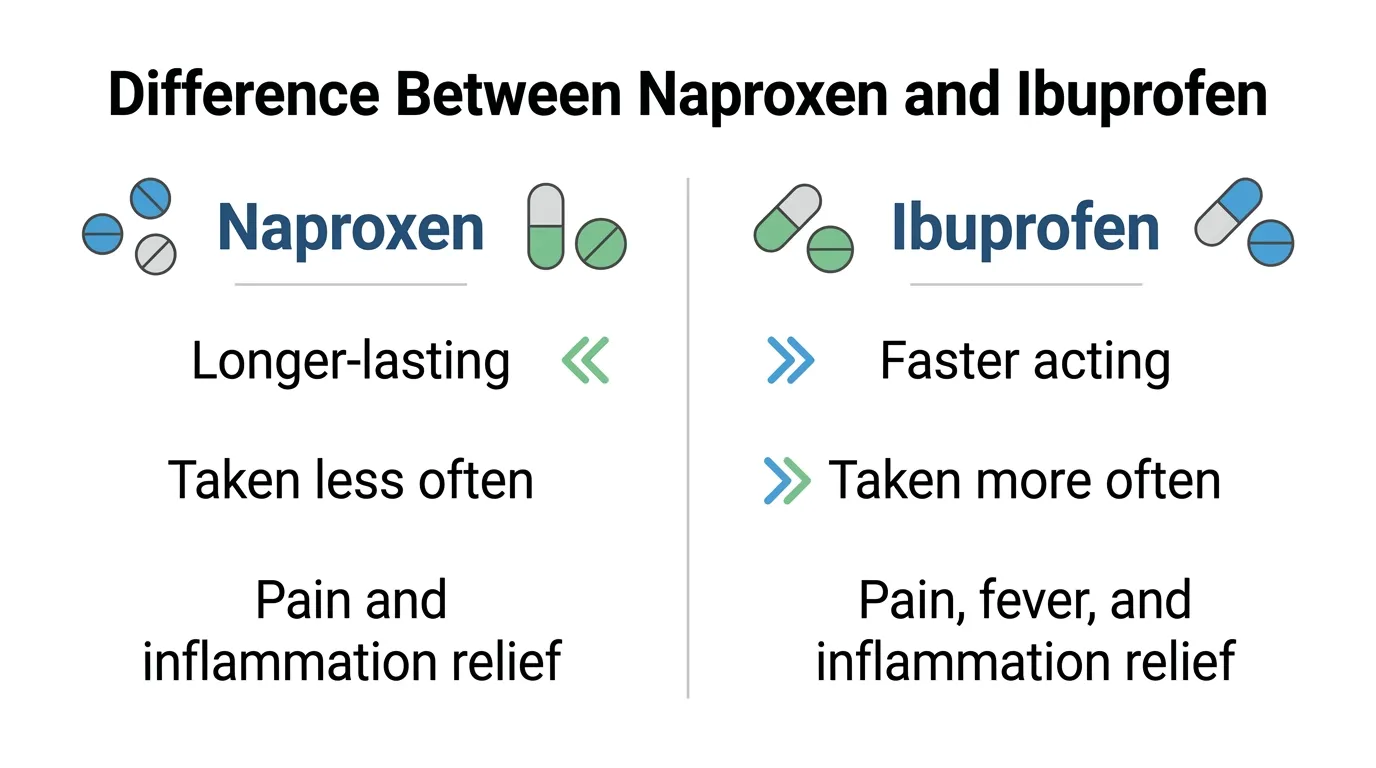
Naproxen provides longer-lasting pain relief, while ibuprofen works for a shorter duration and may need to be taken more often.
Many people standing in a pharmacy aisle or searching online often wonder about the difference between naproxen and ibuprofen.
Both medications belong to the same family of drugs called nonsteroidal anti-inflammatory drugs (NSAIDs), and both help reduce pain, inflammation, and fever.
However, the difference between naproxen and ibuprofen becomes important when considering how long they last, how often they need to be taken, and which conditions they may be better suited for.
Understanding the difference between naproxen and ibuprofen can help you make informed decisions about pain management.
In this guide, you’ll learn how each medication works, their similarities, differences, side effects, real-world uses, and when one may be preferred over the other.
Difference Between Naproxen and Ibuprofen
The main difference between naproxen and ibuprofen is duration of action. Naproxen generally lasts longer and requires fewer doses throughout the day, while ibuprofen works for a shorter period but may act slightly faster.
For example, someone with all-day arthritis pain may benefit from naproxen, while someone treating a headache may choose ibuprofen for quicker relief.
Definition of Naproxen and Ibuprofen
Naproxen
Naproxen: An NSAID used to reduce pain, inflammation, and fever. It provides longer-lasting relief and is commonly used for arthritis, muscle pain, and chronic inflammatory conditions.
Ibuprofen
Ibuprofen: An NSAID used to relieve pain, inflammation, and fever. It is commonly used for headaches, toothaches, menstrual cramps, and minor injuries.
Example: Naproxen may help control arthritis pain throughout the day, while ibuprofen is often taken for temporary pain relief.
Pronunciation
| Medication | US Pronunciation | UK Pronunciation |
| Naproxen | nuh-PROX-en | nuh-PROX-en |
| Ibuprofen | eye-byoo-PRO-fen | eye-byoo-PRO-fen |
Now that we understand what each medication is, let’s examine how they compare in effectiveness, duration, and everyday use.
Difference Between Naproxen and Ibuprofen: Comparison
| Feature | Naproxen | Ibuprofen |
| Drug Class | NSAID | NSAID |
| Duration | Longer lasting | Shorter lasting |
| Dosing Frequency | Usually every 8–12 hours | Usually every 4–6 hours |
| Onset of Action | Moderate | Often slightly faster |
| Common Uses | Arthritis, chronic pain | Headaches, minor pain |
| Anti-Inflammatory Effect | Strong and prolonged | Effective but shorter |
| Availability | OTC and prescription | OTC and prescription |
| Brand Example | Aleve | Advil, Motrin |
Key Differences Explained Between Naproxen and Ibuprofen
Duration of Relief
The biggest difference is how long they work.
Naproxen often provides relief for up to 12 hours, while ibuprofen usually lasts 4–6 hours.
Real-life example: Someone with ongoing joint pain may prefer fewer doses throughout the day.
Dosing Schedule
Because naproxen lasts longer, it usually requires fewer daily doses.
Ibuprofen may need repeated dosing for continued relief.
Best Uses
Naproxen is commonly chosen for longer-lasting inflammatory pain.
Ibuprofen is often selected for short-term pain and fever relief.
Speed of Action
Ibuprofen may begin working slightly faster for some people.
Chronic vs Acute Pain
Naproxen is often favored for chronic inflammatory conditions.
Ibuprofen is frequently used for temporary discomfort.
Risk Considerations
Both medications carry risks such as stomach irritation, kidney issues, and cardiovascular concerns, especially with long-term use.
Availability
Both are widely available over the counter and by prescription in higher strengths.
What Is Naproxen and How Does It Work?
How Naproxen Reduces Pain
Naproxen blocks enzymes called COX-1 and COX-2 that contribute to inflammation and pain.
Why It Lasts Longer
Naproxen remains active in the body longer than ibuprofen, which is why fewer doses are usually needed.
Common Conditions Treated with Naproxen
- Arthritis
- Tendonitis
- Back pain
- Muscle injuries
- Gout attacks
Common Naproxen Brands
- Aleve
- Naprosyn
What Is Ibuprofen and Why Is It So Popular?
How Ibuprofen Works
Like naproxen, ibuprofen blocks inflammatory chemicals called prostaglandins.
Why Many People Choose It
It is widely available, affordable, and effective for common aches and pains.
Common Conditions Treated with Ibuprofen
- Headaches
- Fever
- Toothaches
- Menstrual cramps
- Sports injuries
Common Ibuprofen Brands
- Advil
- Motrin
Difference Between Naproxen and Ibuprofen for Inflammation
Which Is Better for Arthritis?
Because of its longer duration, naproxen is frequently used for arthritis-related pain.
Which Is Better for Short-Term Swelling?
Ibuprofen can effectively reduce swelling but may require more frequent doses.
Why Inflammation Control Matters
Inflammation contributes to pain, stiffness, and reduced mobility in many conditions.
Difference Between Naproxen and Ibuprofen for Headaches
Ibuprofen for Headaches
Ibuprofen is often chosen because it may provide relatively quick relief.
Naproxen for Recurring Headaches
Longer-lasting action may help people who experience prolonged headache symptoms.
Migraine Considerations
Individuals use both medications depending on their circumstances and medical advice.
Difference Between Naproxen and Ibuprofen Side Effects
Common Side Effects
Both medications may cause:
- Upset stomach
- Heartburn
- Nausea
- Dizziness
Serious Risks
Long-term or excessive use may increase risks involving:
- Stomach bleeding
- Kidney problems
- Cardiovascular events
Why Following Dosage Instructions Matters
Proper use helps reduce the risk of complications.
Difference Between Naproxen and Ibuprofen in Real-World Situations
Sports Injury Example
An athlete with a sprained ankle may use ibuprofen for short-term symptom relief.
Arthritis Example
A person with chronic joint discomfort may prefer longer-lasting naproxen.
Workplace Example
Someone working long shifts may appreciate fewer daily doses.
Travel Example
Naproxen’s extended duration can be convenient during long travel days.
Difference and Similarity
| Feature | Naproxen | Ibuprofen | Similarity |
| Drug Type | NSAID | NSAID | Both reduce pain and inflammation |
| Pain Relief | Long-lasting | Shorter-lasting | Both relieve discomfort |
| Fever Reduction | Yes | Yes | Both lower fever |
| Inflammation Control | Extended effect | Effective effect | Both reduce inflammation |
| Availability | OTC and prescription | OTC and prescription | Easily accessible |
| Common Uses | Arthritis, chronic pain | Headaches, minor pain | Used for many pain conditions |
| Dosing | Less frequent | More frequent | Both require correct dosing |
| Mechanism | COX inhibition | COX inhibition | Same general action pathway |
This table clearly shows the difference and similarity between naproxen and ibuprofen for quick understanding.
Common Mistakes with Naproxen and Ibuprofen
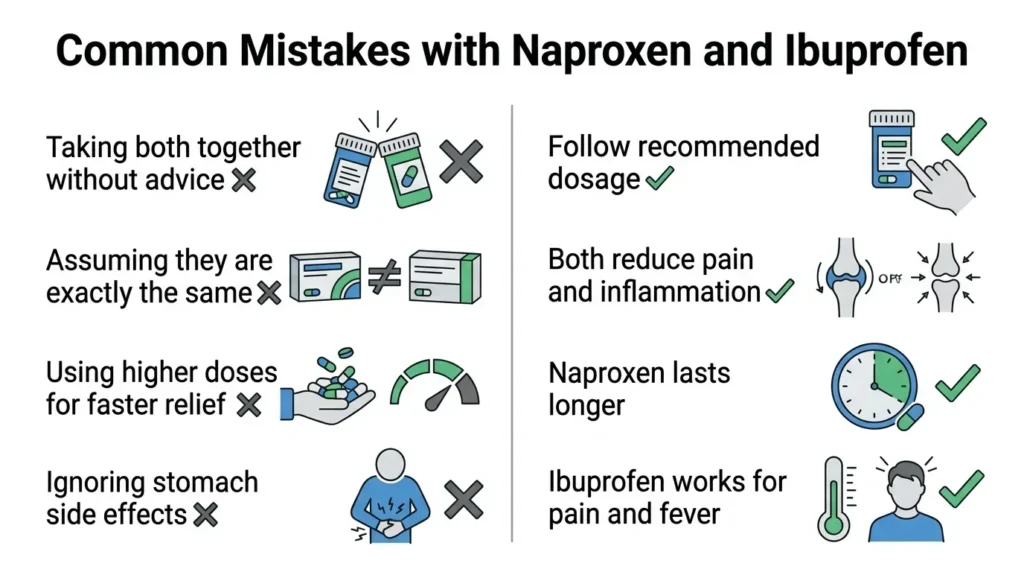
Mistake 1: Taking Both Together Without Advice
Combining NSAIDs may increase side effects.
Mistake 2: Assuming Longer Lasting Means Stronger
Duration does not always mean greater pain relief.
Mistake 3: Ignoring Label Instructions
Many problems occur because recommended dosages are exceeded.
Mistake 4: Using NSAIDs Long-Term Without Medical Guidance
Extended use increases risk of complications.
Mistake 5: Taking Them on an Empty Stomach
Doing so may increase stomach irritation.
Real Life Examples with Naproxen and Ibuprofen

Personal Use Example
A person with a headache chooses ibuprofen for temporary relief.
Chronic Pain Example
Someone managing arthritis symptoms uses naproxen for longer coverage.
Sports Medicine Example
Athletes may use NSAIDs after minor injuries.
Healthcare Example
Doctors may recommend different NSAIDs depending on symptoms and medical history.
Workplace Example
Long work shifts may make longer-lasting relief more convenient.
When to Use Each
Situations Where Naproxen May Be Preferred
- Arthritis pain
- Long-lasting inflammation
- Conditions requiring fewer doses
Cases Where Ibuprofen May Be Preferred
- Headaches
- Fever
- Minor aches and pains
- Short-term symptom management
Signs You Should Seek Medical Advice
A healthcare professional should evaluate persistent pain, recurring symptoms, or underlying health conditions.
Why People Get Confused Between Naproxen and Ibuprofen
Same Drug Family
Both belong to the NSAID category.
Similar Benefits
Both reduce pain, inflammation, and fever.
Similar Availability
Both are available over the counter.
Similar Marketing
Many consumers see them displayed side by side in pharmacies.
Overlapping Uses
Doctors often recommend both medications for similar conditions.
How Search Engines Understand Difference Between Naproxen and Ibuprofen and User Intent
Search engines such as Google recognize that users searching for the difference between naproxen and ibuprofen typically want medication comparisons, pain-relief guidance, dosage information, and side-effect explanations.
Health discussions on YouTube, Instagram, and Meta often compare common medications, which contributes to user interest and search demand.
Search algorithms prioritize content that clearly explains effectiveness, duration, safety considerations, and practical usage because these directly satisfy comparison intent.
Expert Insight
One useful way to think about these medications is that they are more similar than different. The most practical distinction for many people is duration. If two medications provide similar pain relief, needing fewer doses may improve convenience and adherence.
Clinicians often choose the best option based on the person’s symptoms, medical history, other medications, and how frequently they need relief. There is rarely a universal “best” option for everyone.
FAQs
What is the main difference between naproxen and ibuprofen?
Naproxen generally lasts longer, while ibuprofen typically requires more frequent dosing.
Is naproxen stronger than ibuprofen?
Not necessarily. They differ more in duration than overall strength.
Which lasts longer?
Naproxen usually provides longer-lasting relief.
Can I take naproxen and ibuprofen together?
Healthcare professionals generally recommend combining NSAIDs only under medical guidance.
Which is better for arthritis?
Many people use naproxen to control arthritis symptoms for a longer period.
Which works faster?
Ibuprofen may act slightly faster for some people.
Are both anti-inflammatory drugs?
Yes. Both belong to the NSAID family.
Which is better for headaches?
Many people use ibuprofen to relieve headaches, although individual responses vary.
Conclusion
Understanding the difference between naproxen and ibuprofen can help people choose the most appropriate option for pain, inflammation, and fever management. Both medications belong to the NSAID family and work through similar biological mechanisms, but they differ in duration, dosing frequency, and common usage patterns.
Naproxen typically provides longer-lasting relief and may be preferred for chronic inflammatory conditions such as arthritis. Ibuprofen often works well for short-term pain, headaches, fever, and everyday aches. Choose the medication based on the condition being treated, symptom duration, personal health factors, and your healthcare provider’s advice.
The key takeaway is simple: if longer-lasting relief is important, naproxen may be beneficial. If short-term flexibility and common pain relief are the goal, ibuprofen may be appropriate. Follow the label directions and consult a healthcare professional if your symptoms persist or you have a medical condition.
Read more about!
Difference Between BS and BA: Complete Guide
Difference Between Zyrtec and Claritin: Complete Guide

I am Emily Johnson, a USA-based content writer who creates easy-to-read blogs on language and daily life topics. I explain complex ideas in simple English for students and beginners so they can understand easily.